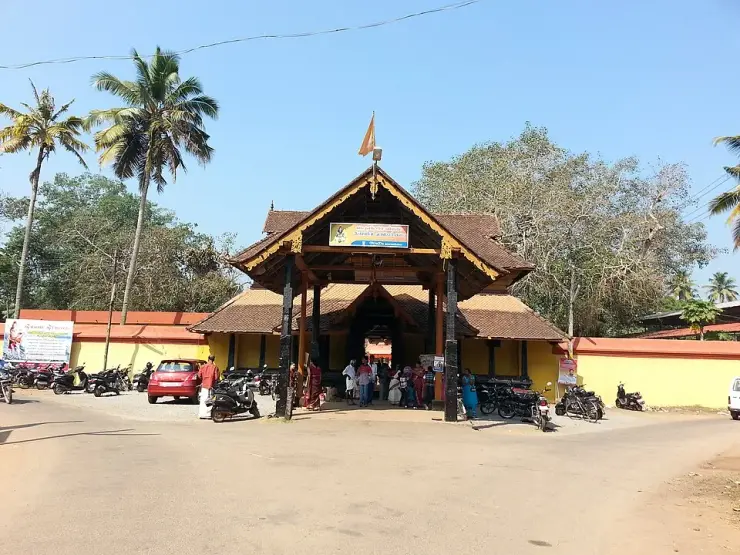
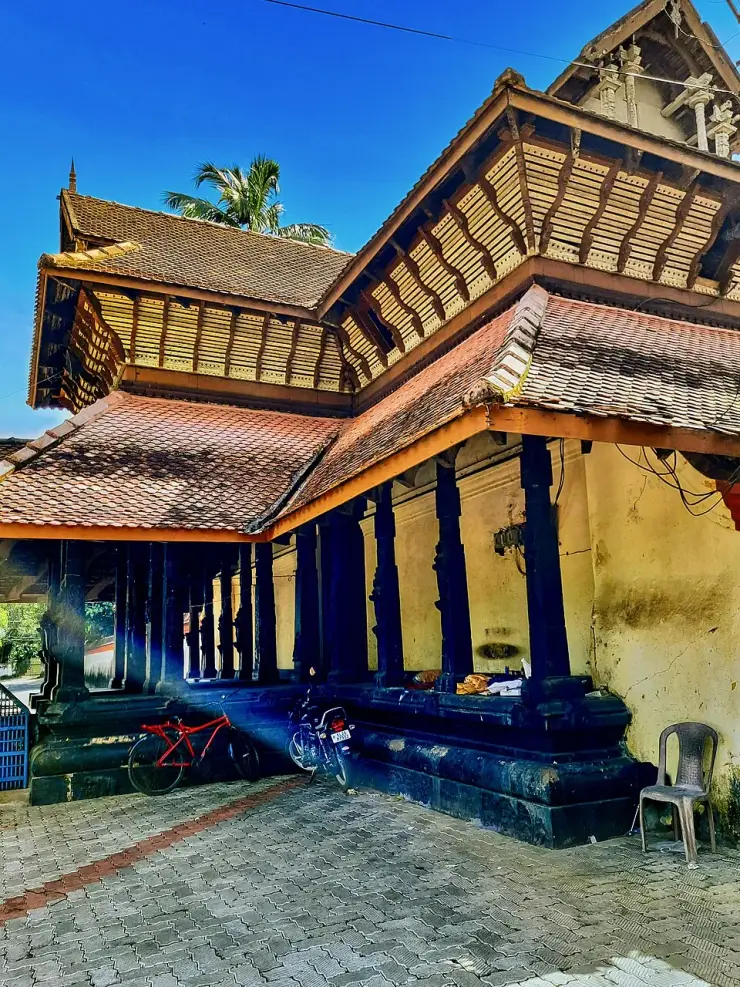
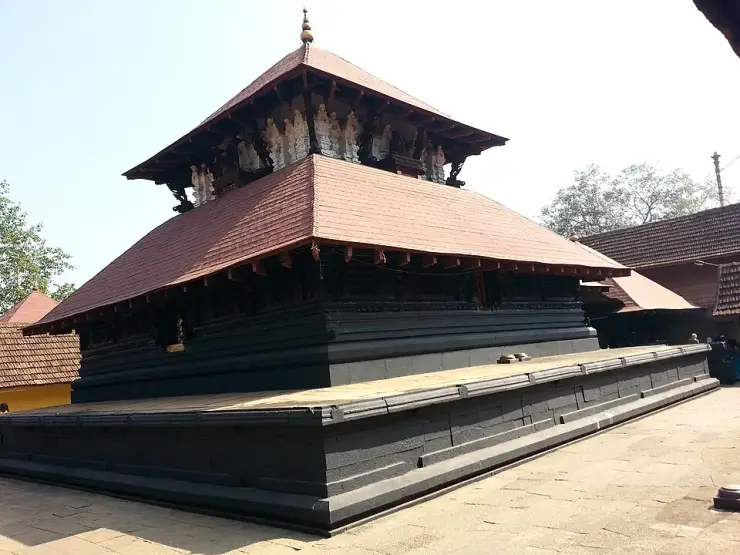
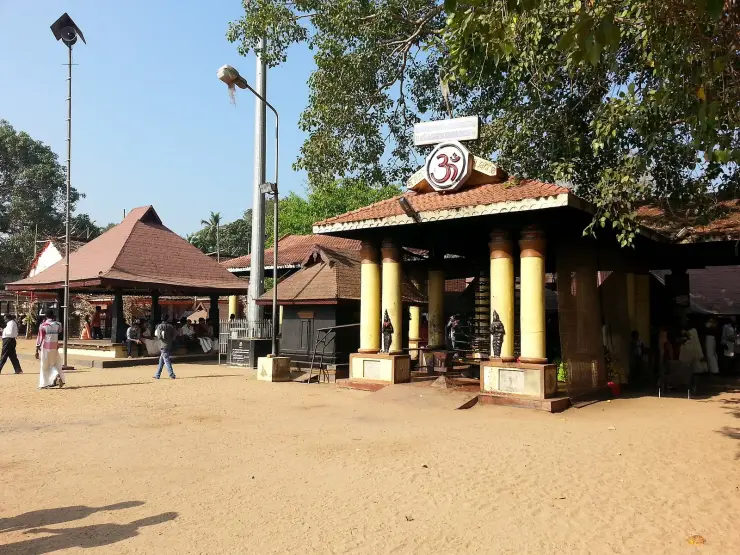
A market and temple town on the Achankovil river in eastern Alappuzha, in the old Onattukara country. Its name is on one of the decisive documents of Kerala's history: the Treaty of Mavelikkara, signed here on 15 August 1753, which ended Dutch power on this coast. It also holds an old Buddha image, enshrined in a small shrine at a junction named for it, and a temple whose inscription is the earliest dated foundation record of any Kerala temple.
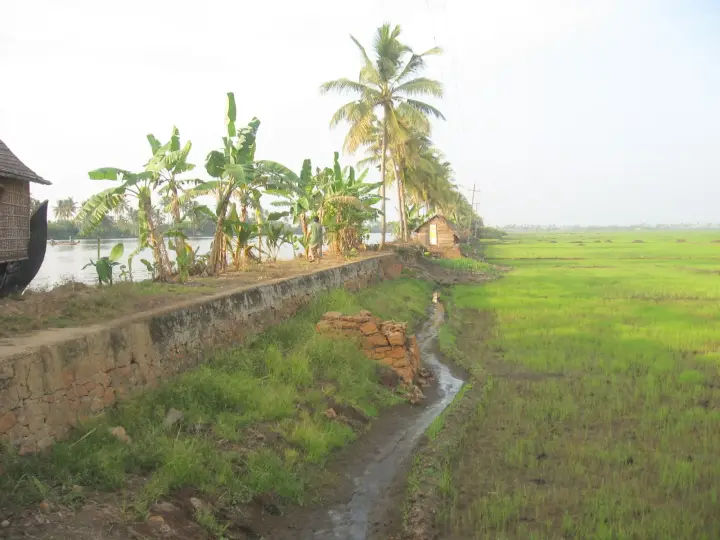
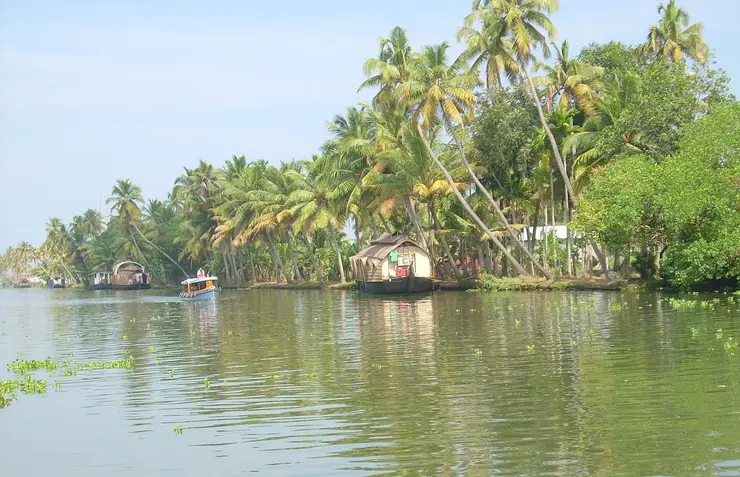
Mavelikkara stands on the Achankovil, one of the rivers that drains the Western Ghats into the Vembanad system, in the eastern, drier, higher part of Alappuzha district — a long way in feel from the houseboats and paddy of Kuttanad even though they share a district. This is Onattukara: an old regional name for the tract covering roughly Mavelikkara, Karthikappally and Karunagappally, sandy soil, sesame country, and a distinct cultural identity within central Travancore.
The town's claim on history is a single day. On 15 August 1753, at Mavelikkara, Anizham Thirunal Marthanda Varma of Travancore and the Dutch East India Company signed a treaty of peace and friendship. It is worth being precise about what it did, because it is one of the most frequently misdescribed documents in Kerala's history and it is misdescribed almost everywhere.
The Dutch undertook a strict policy of peace and to stay out of disputes involving Travancore. They renounced their alliances with the other chiefs and nobles of Malabar — which was the heart of it, because those alliances were the instrument through which the Company had intervened in Kerala politics for a century. There were provisions on the extradition of deserters and the restoration of Dutch goods and people shipwrecked on the Travancore coast. The Dutch were to supply Travancore with war material annually, and Travancore was to sell them a fixed quantity of pepper at fixed rates. An annual present of 5,000 guilders was agreed, with the final say on payment left to Batavia.
Read as a list of clauses that is a commercial arrangement. Read as a settlement it is a surrender. A trading company that had spent a century making and breaking Malabar chiefs agreed to stop doing so, and agreed to supply weapons to the power that had beaten it — the same power that had destroyed a Dutch force at Colachel eleven years earlier. It effectively ended Dutch political and commercial dominance on the Kerala coast and left Marthanda Varma free to go on consolidating without foreign interference. That happened here.
What it did not do is settle Karappuram, and that confusion is worth naming because it is everywhere. The transfer of Karappuram and Alangad from Cochin's orbit to Travancore is a separate matter, and the battle at Purakkad is 1755 and was fought against the Zamorin. The treaty signed at Mavelikkara concerned the Dutch and nothing else.
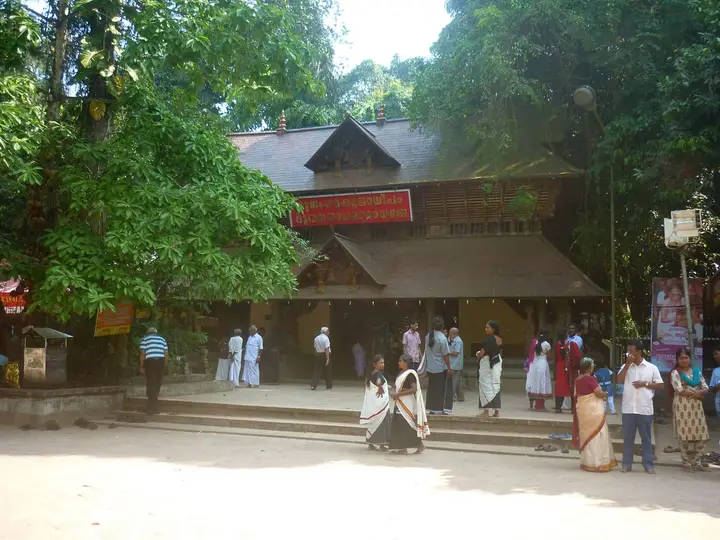
The town's second layer is much older and much stranger. At a road junction in front of the Krishna Swamy temple sits a Buddha in the meditation posture, and the junction is called Buddha Junction for it. The image is attributed to the ninth or tenth century, when this part of Kerala held Buddhist settlements that were later comprehensively overwritten — one of the few periods of Kerala's religious history that is hard to see precisely because so little of it survives above ground.
It is not, as it is usually described, standing in the open at the foot of a tree. It is enshrined — housed in a small white masonry shrine with decorated pilasters, a gabled front and a domed superstructure carried up into a tiered gold finial, set inside a low perforated wall with its own gate, beneath a large tree. The form of that crown is worth a look, because it reads as a stupa rather than as an ordinary Kerala shrine roof, which is an unusual thing to raise over an image here. And the pedestal is dated: 1923 AD, cut into the base. That dates the pedestal and the enshrinement rather than the image, and it is a useful corrective to accounts that present the whole thing as an ancient survival sitting where it was found.
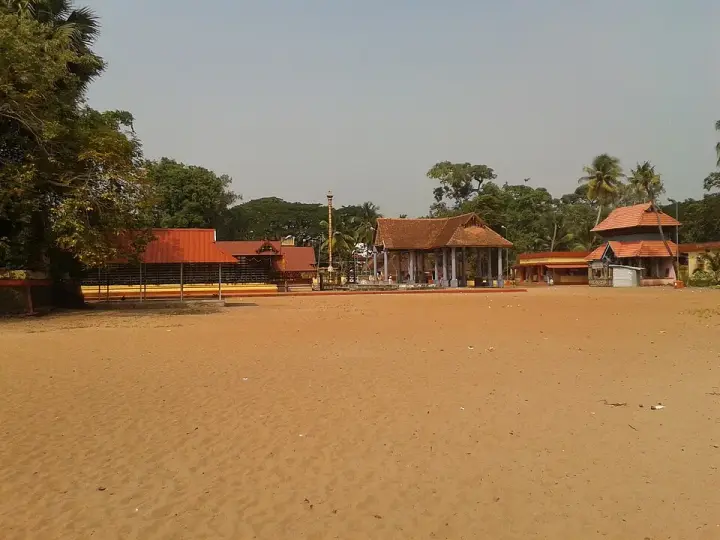
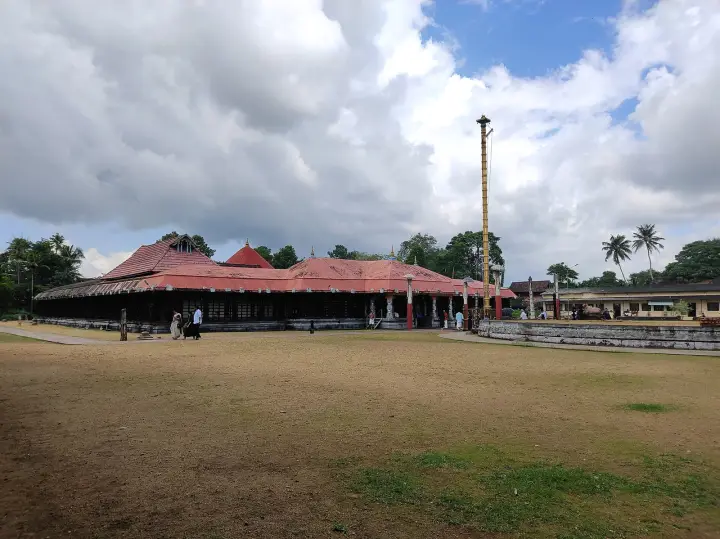
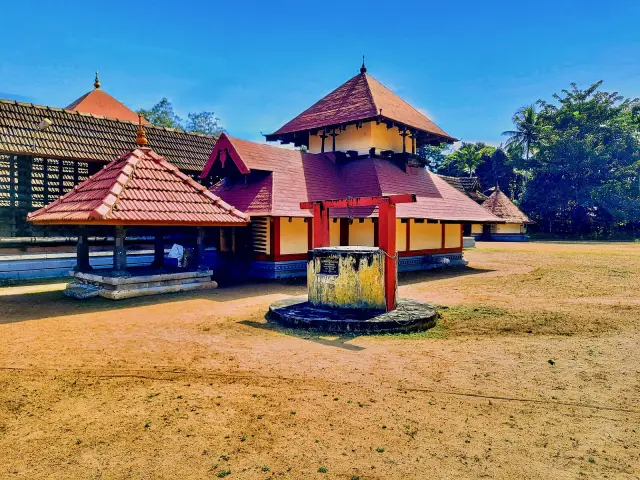
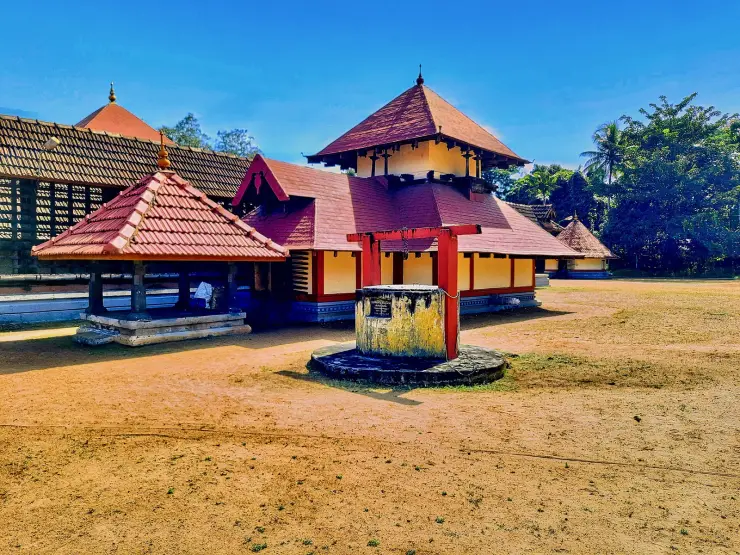
A short way west of the town is the Kandiyoor Sree Mahadeva Temple, which carries what is, as far as we can establish, the earliest dated inscription any Kerala temple holds about its own foundation — an epigraph of 823 AD — along with a local era counted from that foundation and a thirteenth-century inscription naming a devadasi of the temple who was also the wife of the king of Venad. That page tells it properly. It is the single best reason to come out this way.
Mavelikkara also has a quieter reputation as a schooling town: an Anglo-Vernacular School was operating here under Travancore by 1865, and the town has kept an association with education and with Carnatic music and the arts since. Today it is a taluk headquarters and a market town — buses, shops, the river, temples — with an unusual density of history for its size and very little signage to tell you so.
Legend & myth
The first and most useful thing we can do here is unpick a confusion, because the Treaty of Mavelikkara is one of the most commonly misdescribed events in Kerala's history and we know that from having got it wrong ourselves. Our own pages once said that Travancore attacked in 1753 in what is remembered as the Purakkad war and annexed Karappuram outright under the Treaty of Mavelikkara. Three separate things in that sentence were wrong, and correcting them is the clearest way to say what the treaty was.
The treaty was between Travancore and the DUTCH. It was signed at Mavelikkara on 15 August 1753 and its subject was the Dutch East India Company's position in Kerala: non-intervention, the renunciation of Company alliances with the other chiefs and nobles of Malabar, extradition of deserters, restitution of shipwrecked Dutch goods and men, an annual Dutch supply of war material, a fixed quantity of Travancore pepper at fixed rates, and an annual present of 5,000 guilders subject to Batavia's decision. It did not concern Karappuram and settled nothing about it.
The battle at Purakkad is dated 1755, not 1753, and was fought against the Zamorin of Calicut — a different opponent and a different war from the Karappuram transfer. And Karappuram, with Alangad, was a tributary territory of Cochin rather than a Travancore conquest of that year; "attacked and annexed outright" overstates what happened. We would add, having looked again while writing the Cherthala page, that even the year usually given for the Karappuram transfer is not secure: 1753, 1755 and 1762 all appear in print and the Alappuzha district administration's own history gives no year at all.
The second area is the Buddha, where the written accounts and the photographs disagree and the photographs win. Sources describe a large bronze Dhyana Buddha at the foot of a tree — some placing it in the eastern courtyard of the Krishna Swamy temple, others at the road junction in front, which is named Buddha Junction in consequence. The photographs show something more specific and more interesting: the image is enshrined, housed in a small white masonry shrine with decorated pilasters, a gabled front, a domed superstructure and a tiered gold finial, inside its own low perforated wall with a gate, beneath a big tree. Seen that way, "in the eastern courtyard" and "at the junction" are probably not rival claims at all but the same walled compound described from inside and from the road. The description that is simply wrong is the one everybody repeats: the image is not sitting in the open at the foot of a tree.
Two further things follow from looking rather than reading. The material is everywhere given as bronze; in the photographs it reads as dark stone, which is what most surviving Kerala Buddhas of this period are. We will not certify either from a photograph, so this page states no material. And the pedestal carries a date cut into its base — 1923 AD — which no written account we found mentions at all. It dates the pedestal and the enshrinement rather than the image, but it matters, because it means the setting you see is an early twentieth-century act of preservation and not an ancient survival left where it fell. The provenance is contested too: one account has the image retrieved from paddy fields near Kandiyoor, another recovered from the Achankovil river. Both are published, both are plausible, and picking one to make the sentence flow better would be inventing a fact. What is not in dispute is the context: this tract held Buddhist settlement in that period, and the image is a survivor of it.
The third is a caution about superlatives in this district, which we apply to ourselves. Claims of the "only such temple in India" kind attach easily to places around Mavelikkara — the Chunakkara temple carries one — and they are almost always unverifiable as stated. Where we repeat one we will say who is making it. Where we cannot attribute it, we leave it out, and that is why some things you may read elsewhere about this area do not appear on our pages.
The fourth is scale, and it is the practical one. Mavelikkara is a working taluk town of ordinary size with an extraordinary quantity of history attached to it and almost no interpretation on the ground. There is no treaty museum, no marker of the 1753 signing that a visitor can easily find, and the Buddha stands at a road junction with traffic going round it. If you come expecting the history to be presented, you will be disappointed; if you come knowing what happened here, it is one of the more remarkable small towns in Kerala.
More about Mavelikkara
History
Mavelikkara lies on the Achankovil river in eastern Alappuzha district, in the old regional tract of Onattukara, which covers roughly the Mavelikkara, Karthikappally and Karunagappally areas and is distinguished by its sandy soils and its own cultural identity within central Travancore.
The town gives its name to the Treaty of Mavelikkara, concluded between Maharaja Anizham Thirunal Marthanda Varma of Travancore and the Dutch East India Company and signed here on 15 August 1753. Under it the Dutch undertook a strict policy of peace and non-interference in Travancore's disputes and renounced their alliances with the other chiefs and nobles of Malabar; provision was made for the extradition of deserters and the restoration of Dutch goods and personnel shipwrecked on the Travancore coast; the Company was to supply war material annually and Travancore to sell it a fixed quantity of pepper at fixed rates; and an annual present of 5,000 guilders was agreed, subject to the decision of the Dutch authorities at Batavia.
Its effect was to end Dutch political and commercial dominance on the Kerala coast, eleven years after Travancore's defeat of a Dutch force at Colachel, and to leave Marthanda Varma free to continue his expansion and consolidation without foreign intervention. The treaty is frequently and wrongly cited as the instrument by which Karappuram passed to Travancore; it concerned the Dutch alone.
The area holds evidence of Buddhist settlement in the ninth and tenth centuries. A Buddha image in the meditation posture, attributed to that period, stands at Mavelikkara — described in some accounts in the eastern courtyard of the Krishna Swamy temple and in others at the road junction before it, which is named Buddha Junction for it. It is enshrined in a small masonry shrine with a domed, stupa-like crown and a tiered finial, and its pedestal is dated 1923 AD. Accounts of its recovery differ, one giving paddy fields near Kandiyoor and another the Achankovil river; it is usually described as bronze, though photographs suggest dark stone.
West of the town, the Kandiyoor Sree Mahadeva Temple carries an epigraph of 823 AD — the earliest dated inscription of any Kerala temple concerning its own foundation — together with the Kandiyoorabdam, a local era counted from that foundation, and a 1218 inscription naming a devadasi of the temple who was also the wife of the king of Venad.
Mavelikkara has a long association with education and the arts in Travancore; an Anglo-Vernacular School was operating in the town by 1865. It is today a taluk headquarters and market town of Alappuzha district.
Why visit
To stand where the Treaty of Mavelikkara was signed on 15 August 1753 — the settlement that ended Dutch political and commercial power on the Kerala coast.
For the bronze Dhyana Buddha of the 9th–10th century at Buddha Junction, one of the visible survivors of a Buddhist Kerala that was very thoroughly overwritten.
For the Kandiyoor Sree Mahadeva Temple just west of town, whose 823 AD epigraph is the earliest dated foundation inscription of any Kerala temple, with its own local era counted from it.
For Onattukara itself — the sandy, sesame-growing eastern tract of Alappuzha that feels nothing like the district's backwater half.
As an unusually dense piece of history for a small working town, almost none of it signposted, which makes it a rewarding stop for anyone who reads before they travel.
For the Achankovil riverfront and the temple town rhythm of a place that is a market and a taluk headquarters first and a destination second.