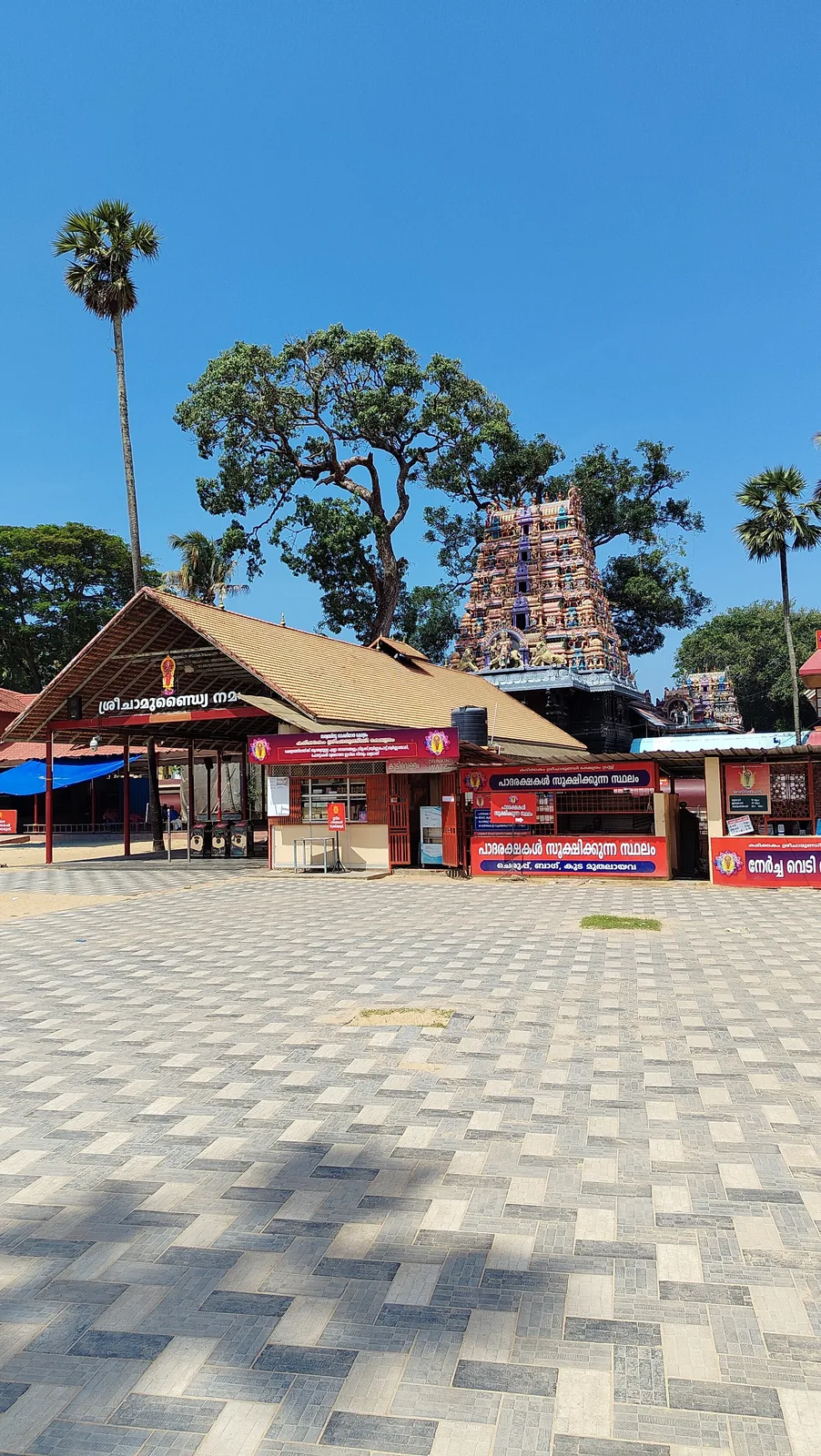
Most Devi temples in Kerala are built around a single goddess. The Karikkakom Chamundi Temple is built around three aspects of her, in one compound, each with a distinct character, a distinct following and a distinct set of things people bring to it. Understanding that arrangement is the difference between reading the temple as one busy shrine and reading it as what it actually is — three quite different transactions happening under one roof.
Maha Chamundi, calm, at the centre
The arrangement most consistently described gives Maha Chamundi as the principal form, in the central sanctum, in her calm aspect. This is the surprise for anyone arriving with expectations set by the temple’s reputation. Chamundi is a fierce form of the Devi to begin with, and Karikkakom is known across Thiruvananthapuram for potency rather than serenity — so the fact that the deity at the heart of the compound is her settled, composed aspect is a genuine structural point about the place. The fierceness is real, but it is arranged around a calm centre rather than occupying it.
Raktha Chamundi, and the weight she carries
Raktha Chamundi is the fierce form, and she is the one with the history. Under the Travancore Maharajas this temple served as a place of judicial ordeal, and the oath attached specifically to her: an accused person swore innocence before Raktha Chamundi, laying twenty-one panam at the nada, on the understanding that the goddess protected the truthful and punished the liar. That is documented practice rather than legend, and it is why the temple carries its reputation as a seat of truth and justice to this day. We have written that history up separately in The Temple Where the Truth Was Compelled. One further detail is worth knowing and is not always mentioned: some descriptions of the compound record that Raktha Chamundi is present as wall painting rather than as an installed idol.
Bala Chamundi, the child form
The third is Bala Chamundi, the goddess in her child aspect, and she is approached for a specific purpose — she is particularly associated with couples hoping for children. This is the quietest of the three followings and the least likely to be described in a guidebook, but it is a large part of what brings people to Karikkakom year after year, and it is the clearest illustration of why the multiplicity matters. A visitor sees one temple. A devotee sees the shrine you go to for a court case, the shrine you go to for a child, and the shrine at the centre of the whole arrangement.
What we cannot settle
Honesty requires a caveat here, because the naming is genuinely unsettled. Alongside the Maha–Raktha–Bala arrangement, you will find the principal deity described locally as Bhadrakali, with Raktha Chamundi and Balachamundi alongside. Both framings are in current use, sometimes in sources of equal standing, and they are not straightforwardly rival claims — Bhadrakali and Maha Chamundi are overlapping identities in Kerala practice rather than competing ones. We have set out the better-attested version and flagged the alternative rather than quietly picking one, which is also our position on the temple’s age: both ‘five hundred years’ and ‘more than six hundred’ circulate widely, no foundation record fixes either, and the correct answer is that it is several centuries old by consistent local reckoning.
Reading the compound
On the ground, the first thing you meet is the rajagopuram — a tall, many-tiered tower covered in sculpted figures, which most visitors do not expect at a temple whose fame rests on efficacy rather than architecture. Past it the compound opens into a working urban shrine: purposeful, busy, transactional in atmosphere, with people moving between the forms of the goddess according to what they came for. It is a very different register of Kerala worship from the grand formality of Padmanabhaswamy in the centre of the city, and it is a twenty-minute auto ride from it. Practical detail — timings, dress code, entry rules and festival dates — is on the Karikkakom Chamundi Temple page.
Frequently asked questions
Which three forms are worshipped at Karikkakom?
Most consistently: Maha Chamundi as the principal form in the central sanctum, in her calm aspect; Raktha Chamundi as the fierce form; and Bala Chamundi as the child form. A parallel local framing names the principal deity Bhadrakali instead of Maha Chamundi.
What is Bala Chamundi approached for?
She is the child form of the goddess and is particularly associated with couples hoping for children. It is one of the main reasons people come to the temple, though it is rarely mentioned in general listings.
Is Raktha Chamundi an idol or a painting?
Sources differ. Some descriptions of the compound record that Raktha Chamundi is present as wall painting rather than as an installed idol. She is nonetheless the form to which the temple’s judicial-ordeal tradition attached.
How old is it?
Unsettled. Both ‘five hundred years’ and ‘more than six hundred years’ are in wide circulation, and no inscription or charter fixes a foundation date. It is several centuries old by consistent local reckoning; the specific number is tradition rather than evidence.