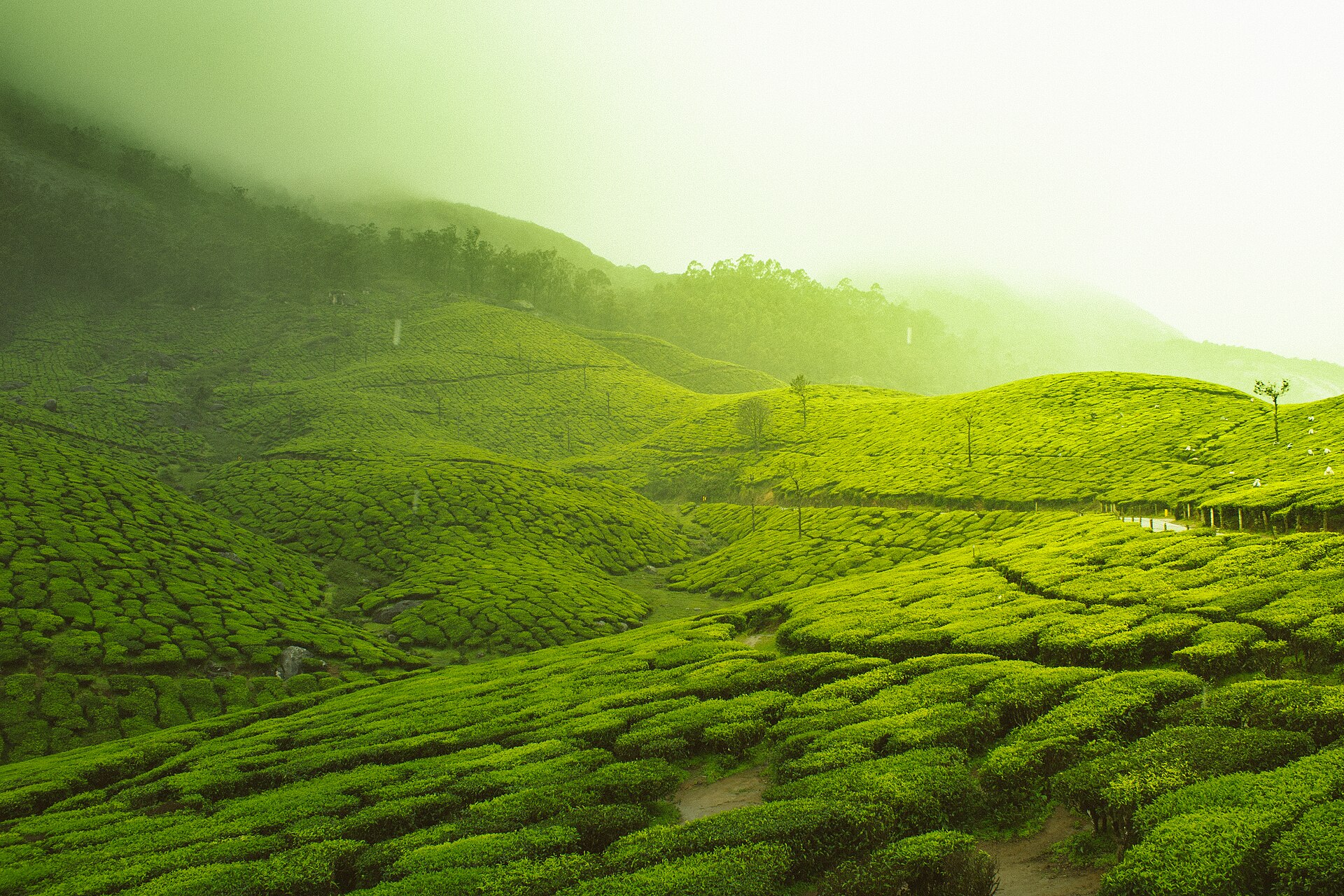
The Western Ghats run the length of Kerala’s eastern edge and give the state a string of cool-climate hill stations — tea estates, spice plantations, rainforest and grassy meadows, all a world away from the humid coast. They are at their best from about September to May, when the air is crisp and the views are clear. Here’s how the main ones compare.
Munnar
Munnar is the best-known and the easiest to love — mile after mile of manicured tea estates rolling into the hills, cool enough to need a jacket at night. Eravikulam National Park nearby protects the endangered Nilgiri tahr and is a highlight, but it usually closes for a few weeks during the late-winter calving season, so confirm it is open before you go. Add the high viewpoint at Top Station and the small Tea Museum to round out a couple of days.
Wayanad
Wayanad, in the north, is wilder and greener — rainforest, spice plantations and wildlife rather than tea gardens. The climb up Chembra Peak to its heart-shaped lake, the prehistoric carvings at the Edakkal Caves, and the border wildlife sanctuaries are the draws. Several treks and sites have seasonal closures for weather or forest-department reasons, so check locally before planning your days.
Vagamon
Vagamon, on the Idukki–Kottayam border, swaps tea slopes for open grassy meadows, pine forest and quiet — a softer, less-visited landscape that is a favourite for gentle walks and paragliding. It is greener and calmer than Munnar and rarely crowded, which is much of its appeal.
Thekkady / Periyar
Thekkady is the gateway to the Periyar Tiger Reserve, set in the cardamom hills around a lake. The reservoir boat cruise is the classic way to spot elephant, gaur and birds along the shore, and the surrounding spice plantations — pepper, cardamom, cinnamon, coffee — make for fragrant guided walks. It pairs naturally with Munnar on a hill-country loop.
Ponmudi
For travellers based in the south, Ponmudi is the closest hill station to Thiruvananthapuram — a compact, forested range of tea slopes and hairpin roads that makes an easy escape from the capital and the southern beaches. It is smaller and quieter than the big three, and a good add-on rather than a destination in itself.
Best time & getting there
Roughly September to May is the sweet spot: the post-monsoon months are lush and clear, and the winter is crisp, with Munnar dropping into single digits on cold nights. The hills are reached by winding mountain roads — Munnar is a few hours inland from Kochi, Wayanad a similar drive up from Kozhikode — that are slow and best not driven after dark. See our best-time-to-visit guide for a fuller month-by-month breakdown.
Frequently asked questions
Which Kerala hill station is best for a first trip?
Munnar — it’s the most accessible, the scenery (tea estates and viewpoints) is the most iconic, and it pairs easily with Fort Kochi and the backwaters on a classic loop.
What is the best time to visit Kerala’s hill stations?
About September to May. The weeks after the monsoon are lush and green, and December to February are crisp and clear — though Munnar can get genuinely cold at night in winter.
Munnar or Wayanad?
Munnar for tea-estate scenery, viewpoints and easy access; Wayanad for rainforest, wildlife, waterfalls and a wilder, quieter feel. Munnar suits a short first trip; Wayanad rewards a little more time.
How do I get to the hill stations?
By road, on winding ghat roads — Munnar and Thekkady inland from Kochi, Wayanad up from Kozhikode. A hired car with a driver is the usual choice; the mountain roads are slow and best avoided after dark.
Are the hill stations good in the monsoon?
They’re at their greenest, with waterfalls in full flow, but expect heavy rain, mist that can hide the views, leeches on forest trails, and the risk of landslides closing roads. Travel with flexibility if you go in the monsoon.