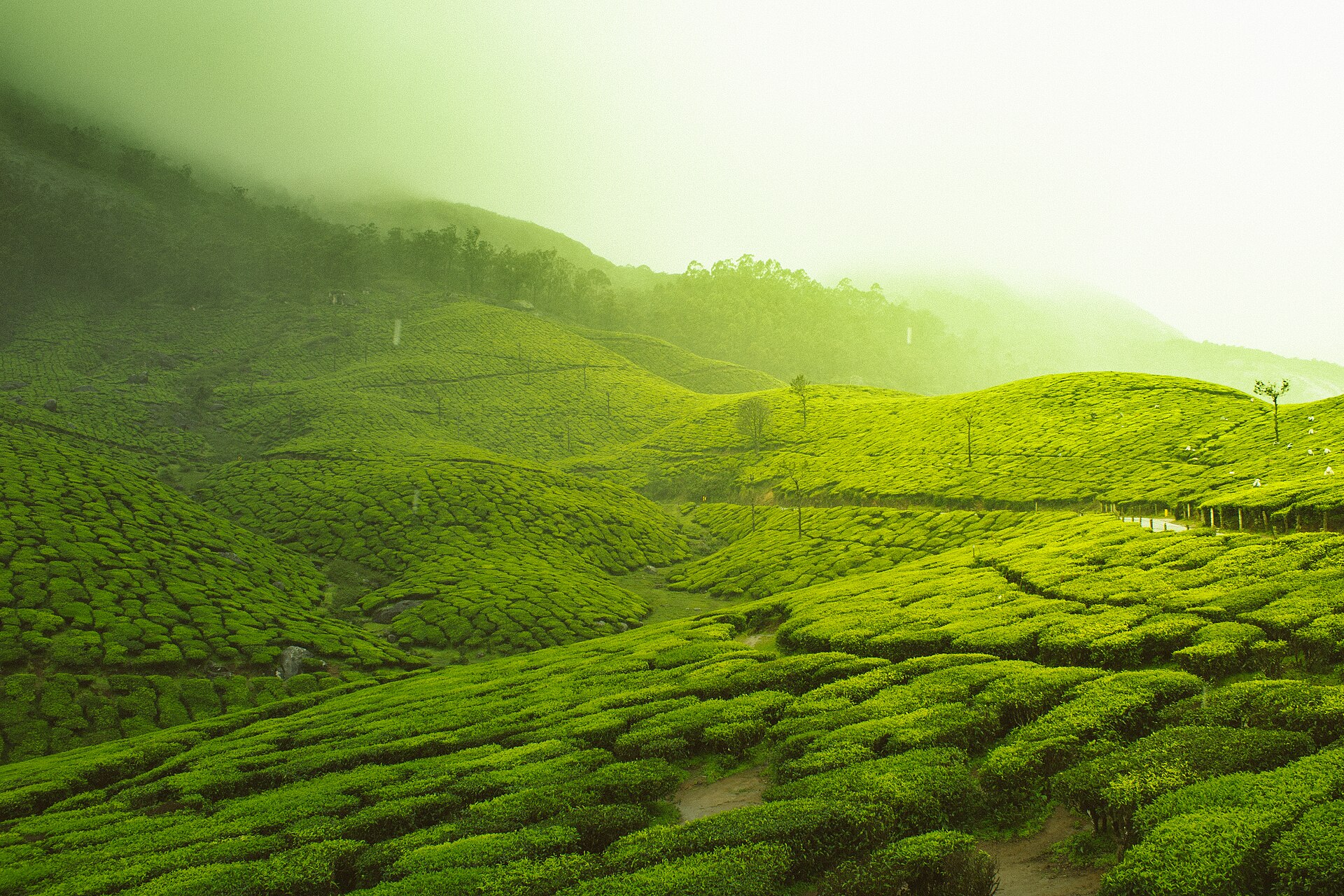
Kerala’s wildlife lives in the Western Ghats, the forested mountains that run down its eastern edge — one of the world’s biodiversity hotspots. This route strings together three of the best bases: the Periyar Tiger Reserve at Thekkady, the high grasslands of Eravikulam above Munnar, and the sanctuaries of Wayanad in the north. A fair warning up front: this is wild forest, not a safari park, and sightings are never guaranteed — the reward is the habitat itself.
The wildlife route at a glance
| Days | Base | Focus |
|---|---|---|
| 1–2 | Thekkady (Periyar) | Lake cruise, guided trails, spice country |
| 3 | Munnar | Eravikulam N.P. — Nilgiri tahr, shola grasslands |
| 4–5 | Wayanad | Wildlife sanctuary, Edakkal caves, forest trails |
Days 1–2 — Thekkady & Periyar
Base in Thekkady, the gateway to the Periyar Tiger Reserve. The classic experience is a boat cruise on Periyar Lake, where herds of elephant and gaur sometimes come to the water’s edge; go for the first morning cruise for the best chance and the calmest light. The reserve also runs guided nature walks and border-hikes with forest guides — booked through the reserve — which put you on foot in the forest. Add a spice-plantation walk in the surrounding hills.
Day 3 — Munnar & Eravikulam
Move to Munnar for Eravikulam National Park, whose shola grasslands hold the largest surviving population of the endangered Nilgiri tahr — often seen close to the path. Confirm the park is open before you go: it usually closes for a few weeks during the late-winter calving season. The tea slopes and high viewpoints around Munnar fill the rest of the day.
Days 4–5 — Wayanad
Head north to Wayanad, a green plateau of forest, spice and rice country. The Wayanad Wildlife Sanctuary offers jeep safaris (subject to seasonal closures and forest-department rules), while the Neolithic Edakkal caves and the climb up Chembra Peak round out the days. Wayanad is a longer drive from the south, so give it two nights rather than a rushed overnight.
Seasons, ethics & how to travel it
The dry months of October to March give the best forest access and water-hole activity; many sanctuaries restrict access or close during the monsoon and fire seasons, so always check current forest-department rules before you travel. Book cruises and safaris through official reserve channels, keep your distance and never feed animals. Our wildlife & national parks guide has more on each park, and the getting-around guide covers the long drives this route involves.
Frequently asked questions
Will I see a tiger in Kerala?
Almost certainly not — tigers in Periyar and Wayanad are elusive and sightings are rare. The realistic wildlife here is elephant, gaur, Nilgiri tahr, deer, langur and rich birdlife, plus the forest itself. Treat any big-cat sighting as a bonus, not a plan.
What is the best time for wildlife in Kerala?
October to March, the dry season, when animals gather near water and forest access is most open. Many sanctuaries close or restrict entry during the June–September monsoon and the fire season.
How do I book a Periyar boat cruise or safari?
Through the official reserve and forest-department channels at Thekkady and Wayanad — book the first morning slot for the best chance, and expect seasonal closures and daily limits.
Is Wayanad worth the extra drive?
If wildlife and forest are your focus, yes — but it’s a longer haul from the south, so give it two nights. If you’re short on time, Periyar and Eravikulam alone make a solid wildlife trip.