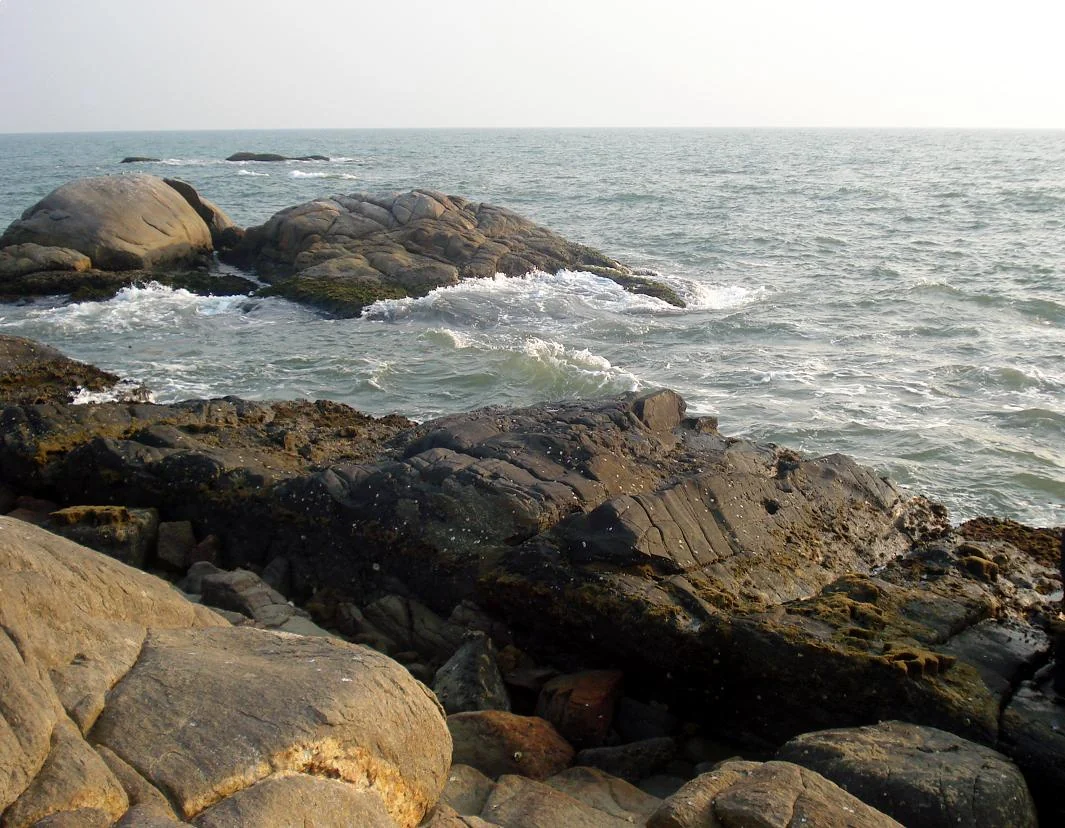
The rocks divide the view
Kizhunna’s photographs show more than an uninterrupted strip of sand. Rounded dark rocks, flatter layered surfaces and narrow openings between them change the shape of the shore. The story image focuses on white water around the rocks, making clear that these are part of the active wave zone rather than decorative objects beside it.
From farther back, the same outcrops can form attractive divisions between views of the beach. A palm-lined sandy section may feel sheltered in a photograph, while the nearby rock edge is receiving breaking water. Those conditions can coexist within a short distance.
A visual boundary is also a walking decision
On open sand, a visitor can usually see the route ahead and the direction back to the approach. At a rocky interruption, that clarity can disappear. A gap may lead into water, a wet shelf may slope away, or the next dry section may not be visible. Treat the change as a reason to reassess the walk.
The decision does not need a dramatic warning sign. If the return would depend on crossing wet rock or waiting between waves, choose a shorter outing. Turning around at the last continuous dry section preserves the beach visit without converting it into an improvised coastal scramble.
A photograph made in another season cannot settle the question. Water reach and exposed sand vary, while a tightly framed image can hide the access behind the photographer. Use the actual conditions at the time of the visit and any local directions.
Notice form without climbing onto it
The rock shapes remain interesting from a suitable position on shore. Compare the rounded surfaces that break individual waves with flatter shelves over which water spreads. Watch where foam collects and where the next wave changes the pattern. This gives the rocky section a purpose in the visit without needing to stand on it.
A wider photograph can show the relationship between the rocks, sand and palms. A close view of surf can be striking, but it should be made from a safe public position and captioned for what is visible. Do not imply that a rock pool is a bathing place simply because the water looks smoother between waves.
Keep the return approach in mind throughout. Private houses and homestays behind the beach have their own boundaries, and their stairs are not a fallback public exit if the shore route becomes awkward. An out-and-back plan from the known public access is easier to adapt.
Kizhunna’s rocky edge is therefore both a subject and a limit. It enriches the landscape by breaking the long coast into smaller forms, while reminding the walker that a beach outing need not cover every visible stretch. A shorter route can still include the open sand, the changing surf and the distinctive meeting of rock and sea.
Sources: Kerala Tourism: Kizhunna and Ezhara coastal setting and the Wikimedia Commons photographs credited below.
Plan the visit: Kizhunna Beach.