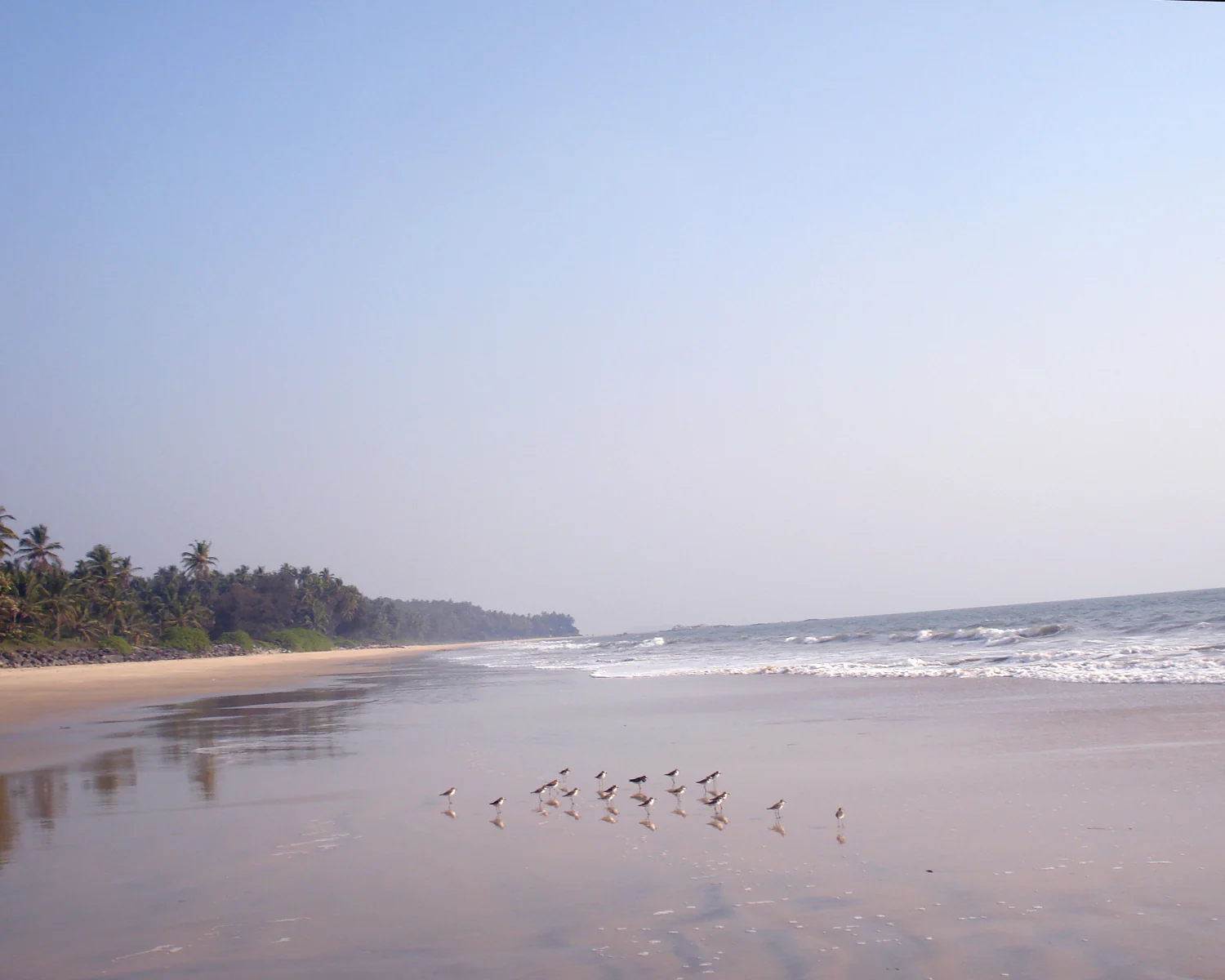
A smaller subject on an open coast
The Kizhunna photograph contains small birds at the meeting of wet sand and low rock. They occupy only a modest part of the landscape, which is precisely what makes the frame useful. A beach visit can reward attention to small movements and changing positions without requiring a rare species or a large flock.
Kerala Tourism includes birdwatching in its description of Kizhunna’s appeal. That is an invitation to observe what is present, not a guaranteed checklist. The photograph itself supports the presence of birds in that recorded moment; it does not establish the same gathering every morning or a species identity that the visible detail cannot support.
Watch the boundary, not just the bird
The rock-and-sand edge provides a series of small changes in surface. Water reaches some patches more often than others, and a bird’s position can change as a wash advances or retreats. Watching the whole setting for a little time reveals more than immediately moving closer for a large image.
Choose a position that leaves the birds room. If they repeatedly move away as you advance, the approach is affecting the observation. Stop and increase the distance rather than following them along the shore. The aim is to see their behaviour in place, not to make them relocate for a photograph.
The low rocks can be tempting as a closer platform, but their wet surfaces and gaps introduce a separate risk. Remain on a suitable part of the public shore and let the available angle determine the image. A distant bird within its setting is an honest record of a beach observation.
Keep identification proportionate to the view
Colour, bill shape, leg length and behaviour can all matter when identifying a bird, but a small silhouette may not show enough. It is better to record an unidentified shore bird than to attach a confident species name based on a vague outline. Keep an uncertain sighting unnamed in your notes until you can identify it.
For a personal record, note the date, the visible habitat and what the bird was doing. A photograph retaining the wet sand and rock edge can help explain the observation later. Avoid inventing feeding or nesting behaviour when the image shows only a bird standing.
Birdwatching also changes the pace of the outing. Instead of covering the entire frontage, remain for a while in one suitable place and notice how the scene develops. If no birds are present, the same pause can reveal the water’s movement across the rock and the changing line of the shore.
Kizhunna’s value for this kind of attention is its combination of open sand and rocky interruptions. The birds add a living scale when they appear, while the landscape remains interesting in their absence. That makes a quiet shore observation a useful part of the visit without turning wildlife into a promise.
Sources: Kerala Tourism: Kizhunna and Ezhara and the Wikimedia Commons photograph credited below.
Plan the visit: Kizhunna Beach.