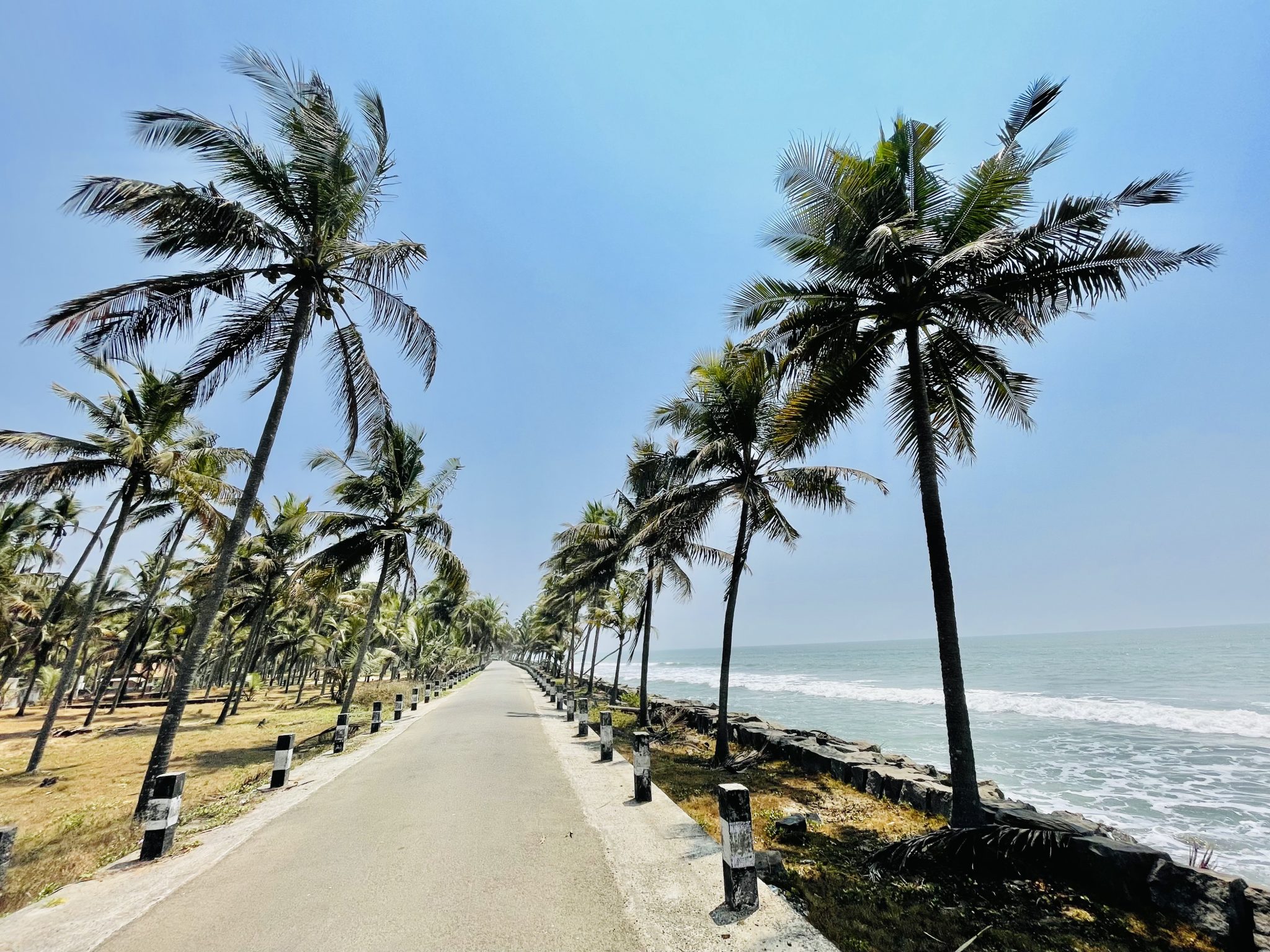
Every winter, olive ridley turtles come ashore on Kolavipalam Beach to lay their eggs. For a long time the village saw them as food. From September to March, turtle meat and eggs were part of the daily menu, and some families sold the meat in nearby places. Until 1992 the eggs that people missed mostly went to stray dogs and jackals.
The change began with one man and a newspaper. Surendra Babu, an autorickshaw driver from the village who had left school early, was reading the paper one morning when he saw an item about the threats facing olive ridley turtles in Orissa. He realised that the turtles on his own beach were the same species. He started asking his neighbours to stop eating the meat and the eggs, and to his surprise most of them agreed.
That campaign grew into a group called Theeram Prakriti Samrakshana Samithi. Most of its members are poor fishermen from the village, and Down To Earth reported in 2001 that the majority belonged to the local Thiyya fishing community. Autorickshaw drivers, private college teachers, boatmen and shop owners joined them too. After a full day of fishing or daily-wage work, the men walk the beach at night and in the early morning, looking for fresh nests.
The method they settled on is simple, because the danger is simple. Eggs left in the sand are dug up by animals and people. So the volunteers lift freshly laid eggs out of each nest and bury them again at once in a guarded hatchery. Their first temporary hatchery had little success. It began to work only when they kept the eggs of each nest in a separate pit. About fifty days later, the two-inch hatchlings dig their way out and are carried down to the sea.
The numbers soon showed that the idea worked. In 1998-99, 52 turtles came to the beach, and the villagers collected 4,501 eggs, of which 3,328 hatched. The next season 65 turtles came, and the number of hatchlings rose to 4,900. The group's secretary, Dinesh Babu, told Down To Earth that the same turtles seemed to return each year, because one turtle with damaged flippers came back season after season. Visitors began to come as well, and the hatchlings were kept in a tank for a day so that people could see them before they went to the sea.
The beach itself became the next problem. Sand mining in the Kottapuzha estuary was stripping the shore so fast that the villagers had to move their hatchery four times in two years. Scientists from the Zoological Survey of India's Western Ghats station at Kozhikode confirmed that the sandy stretch had lost its sand. In November 1998 Theeram went to the Kerala High Court. The court told the District Collector to set up a committee, and the committee recommended only limited sand removal, but illegal mining went on. Open magazine reported in 2009 that several volunteers had been roughed up because their work got in the way of the mining.
Help came from outside, but only in part. From 1998 the Kerala Forest Department paid six guards for six months a year through the World Bank-aided Kerala Forestry Project. The villagers also planted mangroves near the estuary, and Down To Earth found the young trees healthy two years later.
Science later measured what the volunteers had seen. Researchers from the Central Marine Fisheries Research Institute studied Theeram's nest records for the eight-kilometre stretch between Thikkodi and the Kottapuzha estuary from 1998-99 to 2015-16. They counted 410 nests in all. The highest count, 65 nests, came in 1999-2000 and again in 2000-01. Hatching success fell from a best of 89.29 per cent to a low of 33 per cent. The study, published in 2018, linked the threat to the nesting ground itself.
The volunteers have always dreamt bigger than the numbers. One activist, Sajeevan, told Open magazine that olive ridleys return to the beach where they were born, and that he hoped one day Kolavipalam would see more nesting than Gahirmatha in Odisha.
Frequently asked questions
When do the turtles come to Kolavipalam?
The nesting season runs through the winter, from about September to March.
Who looks after the eggs?
Theeram Prakriti Samrakshana Samithi, a village group made up mostly of local fishermen.
How long do the eggs take to hatch?
About fifty days after they are reburied in the hatchery.
Why did the beach lose nests?
Sand mining in the Kottapuzha estuary stripped the shore, and the hatchery had to be moved four times in two years.