What to expect
Highlights
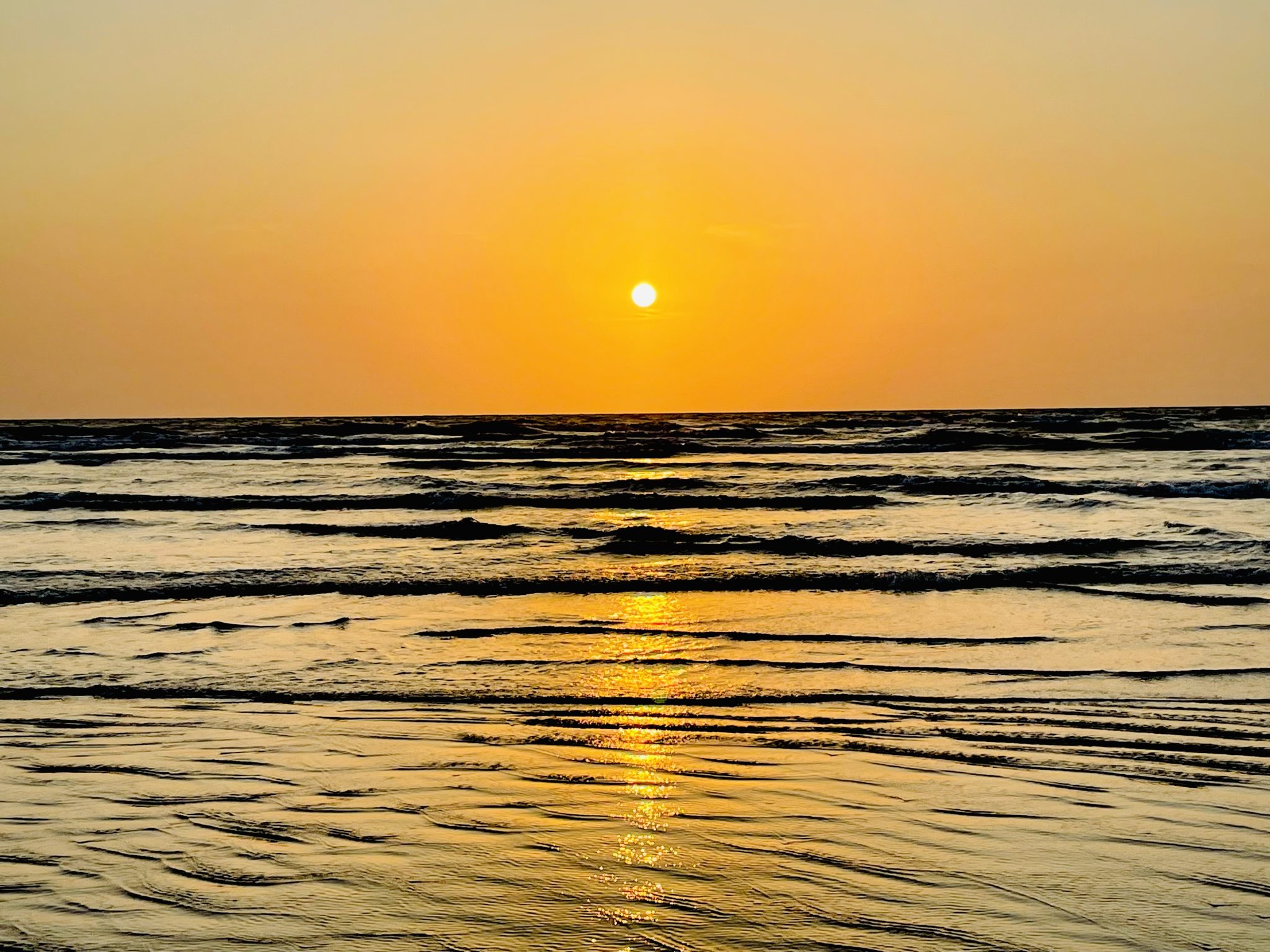
- Sea views and sunset at Kolavipalam Beach
- Nearby seafood, cafes or beach walks where available
- Easy pairing with local stays and short day trips
An 8 km olive ridley nesting shore at Iringal, protected since 1992 by a village committee of twelve — and now largely armoured with seawalls, with seven nesting females recorded across the four seasons to 2023.
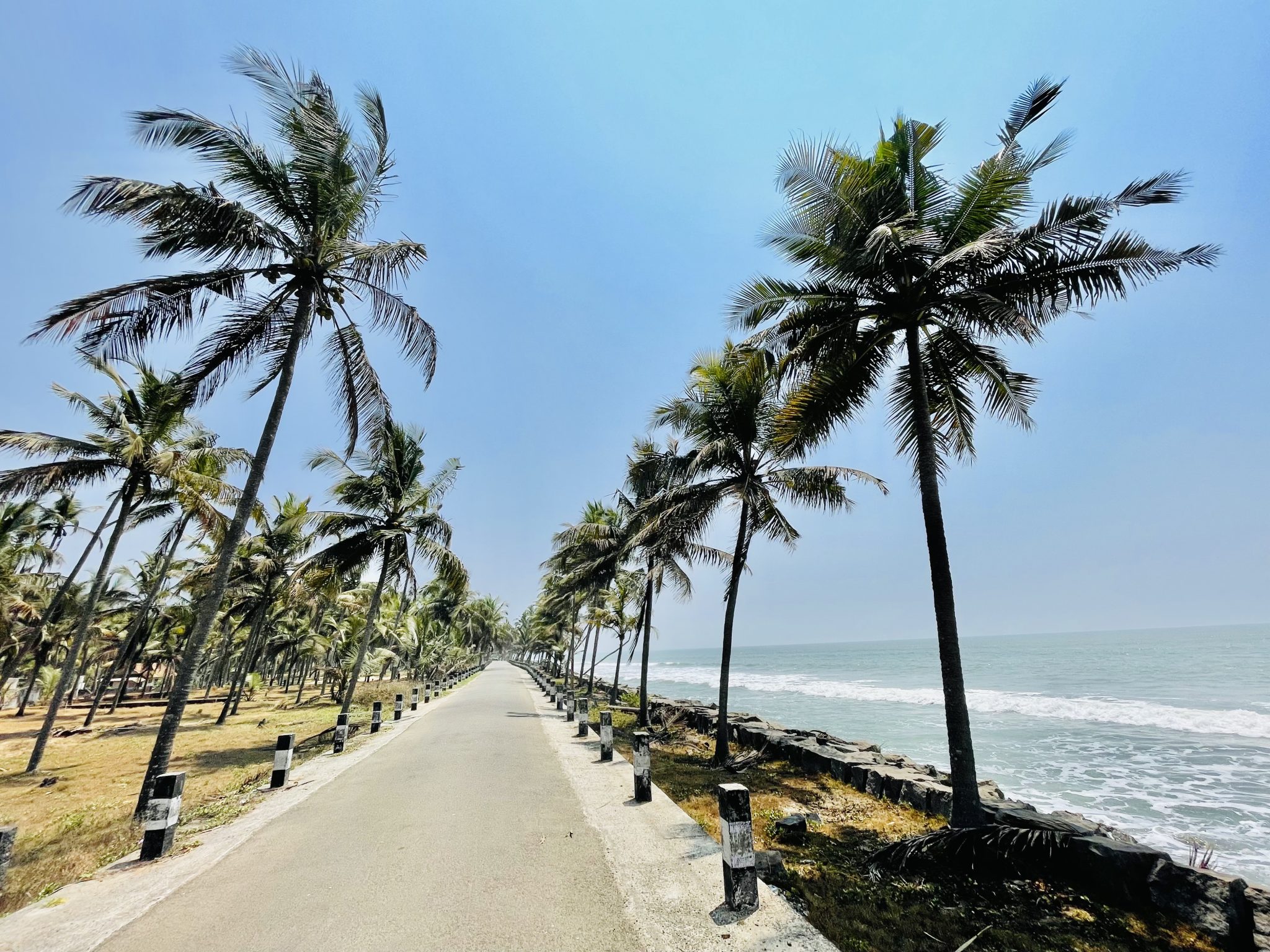
Kolavipalam is an eight-kilometre stretch of nesting shore at Iringal, north of Kozhikode, where olive ridley turtles come out of the Arabian Sea to lay in the sand — and where, since 1992, twelve villagers have gone out at night to find the clutches before the dogs and the jackals do. It is one of the best community conservation stories in Kerala, and it is also, now, a hard one. Across the four seasons from 2019 to 2023, seven adult females came ashore in total. One of those seasons had none at all. Come here for what a village did, not for what you will see.
It started with a newspaper. An autorickshaw driver from Kolavipalam read a report about threats to olive ridleys — the coverage was of Gahirmatha in Odisha, most of a coastline away — and worked out that the turtles coming ashore on his own village beach were the same animal. Until then the eggs were dug up and eaten locally, which nobody had thought of as anything other than ordinary. His name is published as Surendra Babu, and also, in other sources, as Suresh Babu; the group's own co-authored scientific paper manages to use both spellings in the same document, so we give both and settle nothing.
What he founded, with eleven others, is the Theeram Prakriti Samrakshana Samithi — the Shore Nature Protection Committee, rendered in English variously as a coastal ecosystem or coastal environment protection group. Twelve members. Self-funded at the start. The best-sourced founding year is 1992; some accounts say 1998, and the likeliest reconciliation is that 1998 is when the Forest Department began paying them rather than when they began, since departmental daily-wage support is separately dated to 1997.
The method is the story, so it is worth describing precisely. Members walked the beach at night through the season and read the crawl-tracks in the sand. Where the tracks led, they either watched the female lay or found the clutch by probing carefully with a stick — carefully, because the point is not to pierce the eggs. The eggs were then lifted and immediately reburied in a makeshift hatchery: a fenced enclosure about seven feet high, built of palm thatch, bamboo stakes and old fishing net.
They moved the eggs rather than leaving them in place because of stray dogs, jackals and poaching; the 2025 paper puts it flatly, that in-situ hatching was not attempted because of predators. And they kept written records — dates of laying, expected dates of hatching. In the first years they did not actually know how long incubation took. So they camped beside the nests to find out, and afterwards went and read books on turtle biology.
It spread. Fishermen at Thikkodi, twelve kilometres south, started reporting nests and carrying eggs up to the Kolavipalam hatchery. School programmes began. From 1998 the group planted something like five acres of mangrove, with reported gains in the nearby fish catch and in groundwater.
The recognition, such as it is, is thin and we will not inflate it. The group received the P. V. Thampy award in November 2000. We looked for others and found none we could confirm. There is also a film — Aamakaar, The Turtle People, seventy-six minutes, made in 2003 by Surabhi Sharma and produced by Sunil Shanbag — which won the Ramsar and MedWet prize at EcoCinema on Rhodes in June 2004. That prize belongs to the film, not to the committee, and the difference matters.
Then there is the thing that has been eating the beach. Kolavipalam's sand is delivered by the Kottapuzha — the local name for the lower Kuttiyadi river — and dropped at its mouth. Heavy sand mining in the estuary interrupted that delivery, and without it the shore did not hold. By 2003 the beach was reported to have narrowed from over a kilometre wide to a strip of about five hundred metres. Erosion forced the hatchery to be relocated four times in two years, and in January 2001 the sea took it outright.
Theeram went to the Kerala High Court over the mining in the late 1990s — November 1998 by one account, 1999 by another — and obtained a restraining order; the court had the District Collector appoint a committee, which recommended restricted removal. Every source agrees that enforcement was ineffective and that the mining continued, and the group later sought contempt proceedings. We can find no case number, no bench and no order text anywhere, so that is as precise as this page will get. It is also reported that members faced armed confrontation, including one being seized and assaulted. No source names anyone and no conviction is recorded, so neither do we.
And here is the part that the obvious version of this story leaves out, because it is the uncomfortable half. Both peer-reviewed studies of this beach put seawalls, not sand mining, first among the causes of the nesting collapse. The 2018 paper records that shore armouring alters the nesting area from sandy to rocky. The 2025 paper explains the biology: a seawall blocks a female from reaching the upper beach, so she nests low down instead, where the waves drown the nest.
Put those together and the honest thesis is this. The sand was mined away. The state built a wall to hold the coast. And, as far as the turtles are concerned, the wall finished what the mining started. Neither of those decisions was made by anyone who wished the turtles ill, which is what makes it worth telling properly.
The first thing to correct is the one that will actually affect your day: you cannot plan a trip here to watch olive ridleys nest. The four seasons from November 2019 to March 2023 produced seven adult females coming ashore in total, and 2020-21 produced none. Malayalam reporting records no turtles at all in 2022-23 or 2023-24, two in 2024-25, and a single clutch of 116 eggs in 2025-26 — and that one was found on 21 February 2026, at Payyoli beach, by a fisherman and his son on a morning walk.
Set that against what this shore used to be. From 1998-99 to 2015-16 it took 410 nests, peaking at 65 nesting females in a season. The collapse is more than ninety-five per cent, and it happened mostly inside a single decade. That is the story here. It is a better one than a turtle sighting, and it has the advantage of being true.
The second correction is about the beach's length. You will see twenty kilometres of nesting shore, and you will see ten. Both peer-reviewed papers give eight kilometres, from the Kottapuzha estuary in the north to Payyoli beach in the south, and eight is what we print.
The third is the season, which is genuinely contested rather than simply wrong. Kerala Tourism says November to December. The Forest Department says September to November, peaking in October. Both scientific papers say early November to March covers more than ninety-five per cent of activity, and one conservation reference says October to March. The real-world check settles the argument in favour of the wide range and against planning: the 2025-26 clutch was laid around 21 February and released on 13 April.
The fourth is a status claim that gets attached to this place constantly. Kolavipalam is not a sanctuary and not a notified community reserve. The most detailed case study of it records the legal status as simply not available, and notes that the Wildlife Division had no proposal for one. What protects this beach is twelve people and a fence.
The hatchery is a working village conservation site rather than a staffed attraction. Theeram publishes no website, opening hours, admission fee or booking channel. A small Forest Department structure has served as an informal interpretation centre with turtle specimens, but it may be unstaffed. Ask in the village before planning around an indoor visit.
The sixth concerns a number that circulates as a fact. The peak figure of 5,508 hatchlings released in a season is real and is in the literature twice — but the 2018 paper assigns it to 2000-01 and the 2025 paper assigns it to 1998-99. Since the two cannot both be right, we give the number with a range of years rather than pretending to know which.
The seventh is the funding, and it is the correction that matters most to anyone who wants to help. The often-quoted arrangement of about ₹2,500 a month for six members is a figure from 2001, originally routed through a World Bank project. Regular funding ceased around 2021. In February 2026 the group was reported as close to collapse, with members paying out of pocket to feed an injured turtle three times a day. It was revived within weeks, after a Union Budget announcement of turtle centres in Kerala and Karnataka — on which the group's own joint secretary said only that he hoped this announcement would not meet the same fate as earlier ones.
And the eighth is a piece of framing rather than a fact. It is tempting to write this beach up as villagers versus miners, and the villagers-versus-miners part is real. But the 2025 paper also records that roughly half the local population derives income from selling to visitors and therefore supports tourism development here despite its effects; that the estuary has acquired the nickname Mini Goa; and that the lack of amenities has made parts of it a site for drug use and antisocial behaviour. A conservation story with a clean cast of characters is usually one that has been simplified.
The scientific record of this beach exists because a village kept it. Theeram counted every nest for a quarter of a century, and then the ledger went to scientists — twice.
The 2018 paper, in Ecology, Environment and Conservation, was written by researchers at ICAR-CMFRI together with two members of Theeram, who appear as co-authors rather than as informants. That is unusual enough to be worth pausing on: the village is credited as a scientific collaborator on the study of its own beach.
Its findings are the backbone of everything anyone knows about this shore. Study area, eight kilometres from Thikkodi to the Kottapuzha estuary. Between 1998-99 and 2015-16, 410 olive ridley nests. A peak of 65 nesting females, reached in 1999-2000 and again the following season. A low of four nests in 2015-16. Hatchling releases ranging from 5,508 at the top to 237 at the bottom, and hatching success from 89.29 per cent in 2002-03 down to 33 per cent in 2014-15. Patrols ran November to March, fortnightly, from six in the morning to half past eight.
The second paper, published in the Uttar Pradesh Journal of Zoology in January 2025, covers November 2019 to March 2023 and was done with Theeram. Its central number is the one this page keeps returning to: seven adult turtles came ashore across the whole four-season period, with 2020-21 at zero. In 2019-20, 363 eggs were collected and 136 hatched. Overall nesting success across the study was 25.73 per cent. The retrievable version of that paper is anonymised, so we cite the work and not the authors.
That paper's own bar chart of nesting females, read season by season from 1998-99, traces the shape better than any narrative can: the thirties, then a peak in the sixties, then the forties and thirties, and then — from about 2002-03 to 2005-06 — a fall into single figures from which it has never recovered. The values are read off a chart rather than a table and individual figures are approximate. The shape is not in doubt.
The causes both papers list are cumulative rather than singular. Seawalls and shore armouring first, in the 2025 paper. Then tourism development and artificial lighting; changing rainfall; sand mining; coconut plantations replacing natural coastal habitat; private road construction fragmenting the beach; waste and plastic dumping; incidental capture in fishing gear; and predation of nests by feral animals. The 2018 paper's own framing is that seawalls turned a sandy nesting area into a rocky one.
The turtle itself is Lepidochelys olivacea, the olive ridley, listed as Vulnerable by the IUCN and on Schedule I of the Indian Wild Life (Protection) Act, 1972 — the strictest category the Act has. Incubation runs about 45 to 60 days and a clutch can be over two hundred eggs. The Kerala Forest Department records 24 documented olive ridley nesting sites on the state's coast, in Kannur, Kasaragod and Kozhikode districts.
The most recent chapter is only months old. On 13 April 2026 the Forest Department and Theeram together released 91 hatchlings from that single clutch of 116 — the season's first release, attended by the Payyoli municipal chairperson and a division councillor. Ninety-one hatchlings is a good morning and it is also a rounding error against 5,508. Both of those things are true, and this page would rather say both than pick one.
It is one of the genuinely important community conservation sites in Kerala: twelve villagers who read a newspaper, worked out what was on their own beach, and have been walking it at night since 1992.
It pairs naturally with Sargaalaya, the Kerala Arts and Crafts Village at Iringal about 1.5 km east, which is the practical anchor for a visit — and a good place to ask locally whether the interpretation centre is staffed.
The shoreline itself is an unusually legible piece of coastal science: an estuary that used to deliver the sand, a beach that lost it, and a seawall built to hold what was left.
There are dunes over ten metres high at the northern end, descending southward, on medium-to-coarse quartz sand — this is a genuinely wild-feeling coast rather than a developed one.
Boat rides are available on the Kottapuzha, and the estuary and its brackish mudflats are worth the detour in their own right.
🛑 And one honest reason not to come: if you are travelling to see turtles nest, this is not the place any more. Seven females in four seasons, one season with none. Come for the beach, the estuary and the story.
Kolavipalam’s association with Olive Ridley nesting makes a responsible shoreline visit more rewarding than simply looking for a turtle photograph. Kerala Tourism credits local conservation work through Theeram. A nesting season is not a public hatchling-release timetable: ask the conservation team about any permitted activity, keep away from marked nests and avoid lights or close approaches around turtles.
Road km to Kozhikode; ghat roads and traffic vary — allow extra.
November to February for dry weather; avoid rough-sea days during monsoon warnings.
Live forecast loads in your browser.
Check the official alert before you travel. Kerala’s beaches, waterfalls and trekking routes close at short notice during heavy rain, and district alert levels change day to day. We do not publish an alert level of our own — read it from the state authority: Kerala State Disaster Management Authority, or the district control room on 1077.
Sun and moon are calculated for this location and shown in IST. Photography windows are the hour around sunrise and sunset; the sunset bearing is degrees clockwise from true north. Moon phase is accurate to about half a day.
Verified hotels, homestays, restaurants, experiences, sights, shops and rentals around Kolavipalam Beach — commission-free, with direct contact. Filter by what you need.
Four-star hotel in central Vadakara with 18 rooms and the SAMRAT multi-cuisine restaurant. It sits by the Kannur-Calicut bypass, steps from the town bus terminal.
Four-star business hotel at the heart of Vadakara near the NH bypass. It sits close to the Arabian Sea shoreline with an infinity pool, gym and banquet halls.
Kerala Tourism accredited hotel at Link Road Junction, beside the national highway through Vadakara.
Kerala Tourism accredited tourist home beside Vadakara's old bus stand, walkable to the town centre.
Kerala Tourism accredited hotel at Vadakara's new bus stand, the easiest base if you arrive by bus.
Vadakara's cooperative coffee house, on Nut Street, run by the Kannur society since 1958.
Gayathri Hotels' restaurant by the new bus stand at Edodi, open for breakfast, lunch and dinner.
Fine-dining restaurant of Queens Tourist Home, on Queens Road, with a rooftop section.
Vadakara's state bus depot, on the NH66 corridor, run by an Assistant Transport Officer. Office of the Assistant Transport Officer, KSRTC Vadakara, Kozhikode, Kerala 673513.
Station code BDJ, on the Shoranur-Mangalore line, open since 1907 and busy with about 9,967 passengers a day.
Book with the place itself. India’s cyber-crime coordination centre warned in April 2025 that convincing copies of hotel and pilgrimage booking sites are being pushed through sponsored search and social ads, taking payment for rooms the property never hears about. Every listing here links to the business’s own contact details and its own Google or Bing profile — we take no commission and sit in nobody’s payment path. If a booking page reached you through an ad, check the address bar against the property’s own site before you pay. Fraud can be reported on cybercrime.gov.in or on 1930.
Find food, accommodation and activities across Vadakara. Browse the guides for places to eat, stay and explore along your route.
4 more places around Vadakara. Open a guide to plan the visit and onward journey.
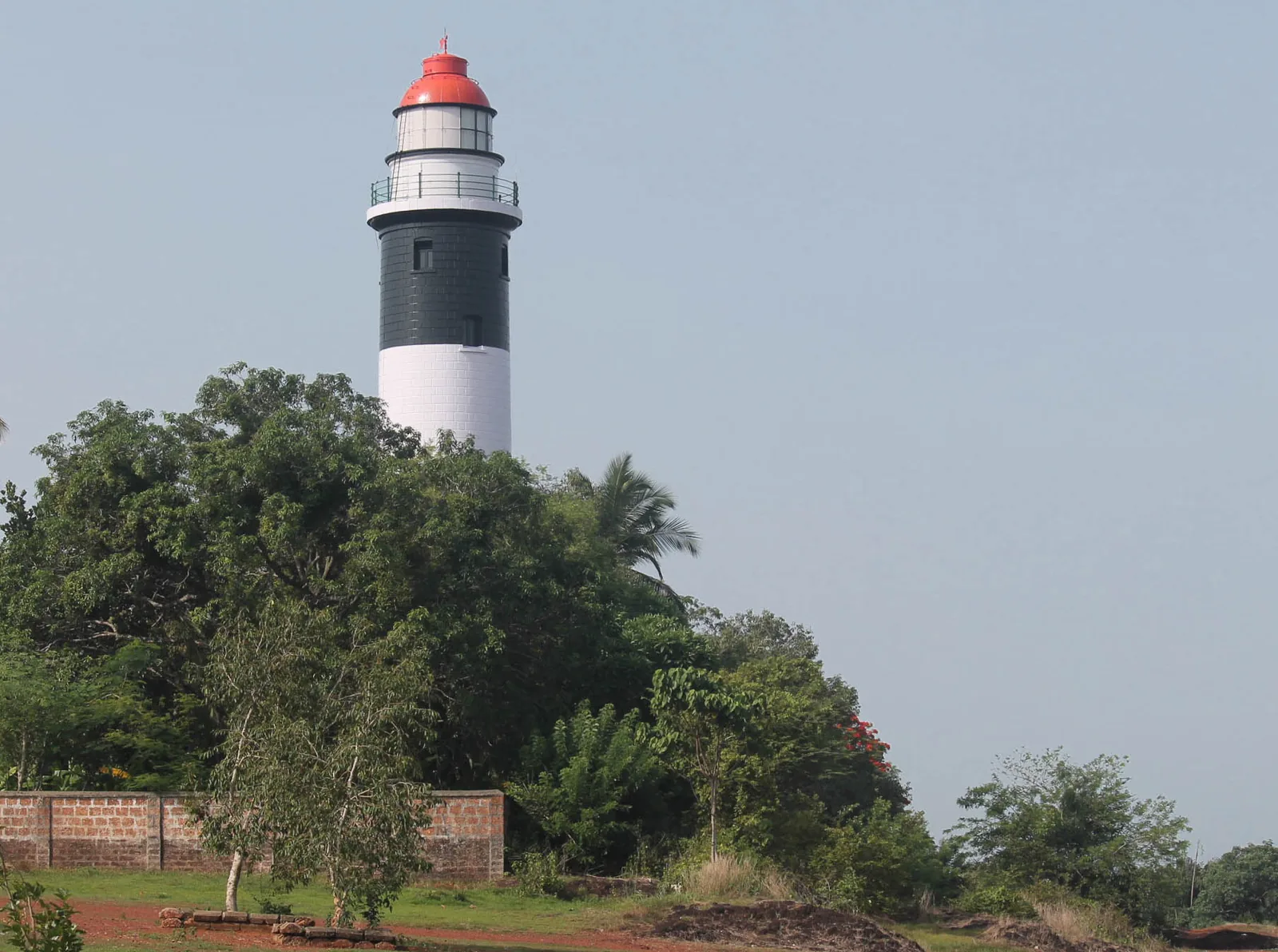
9.8 km · ~16 min by cab
A 1909 lighthouse on the laterite headland at Kadalur Point, built to mark the submerged Sacrifice Rock eight kilometres offshore.
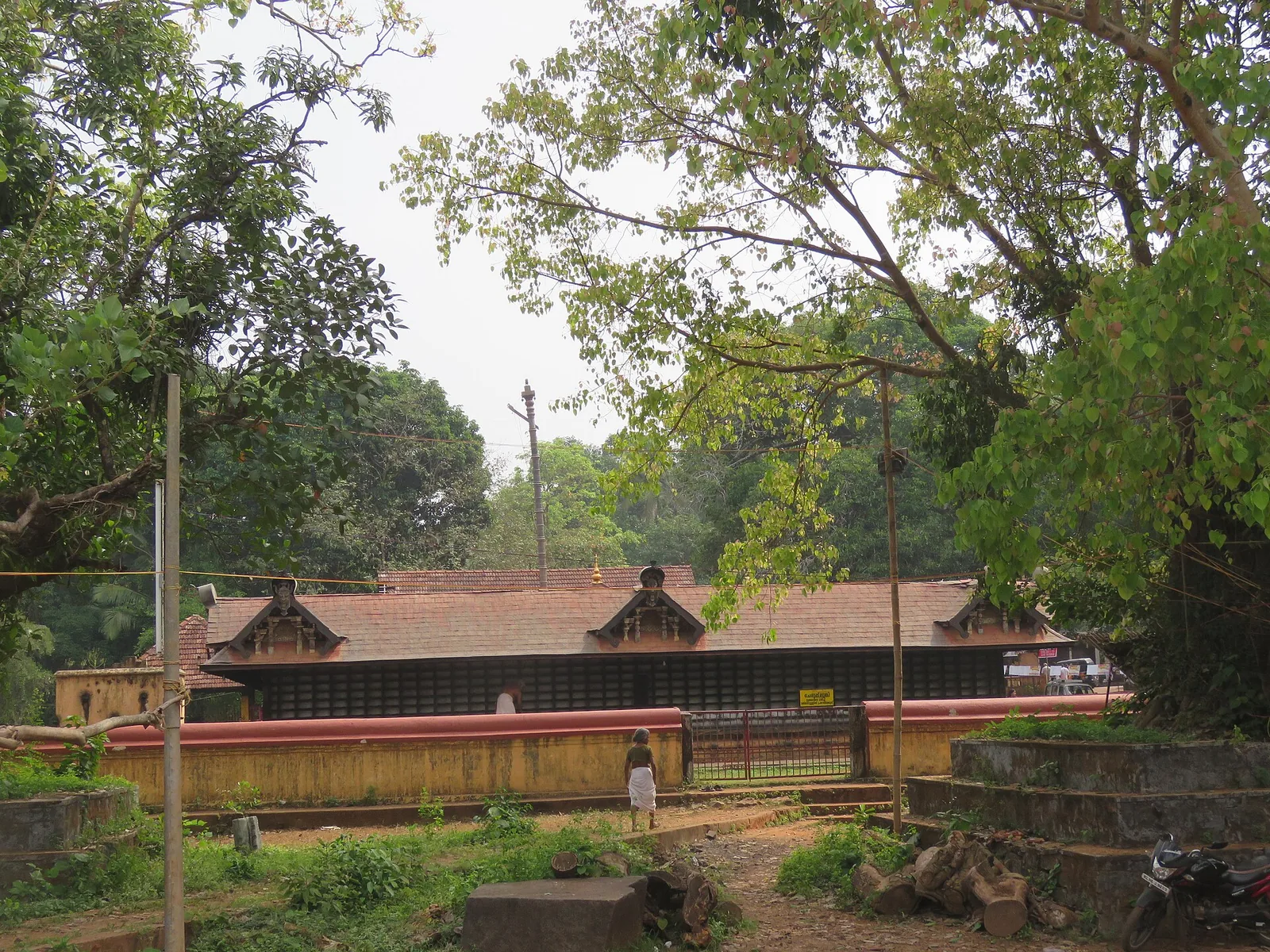
6.2 km · ~15 min by auto
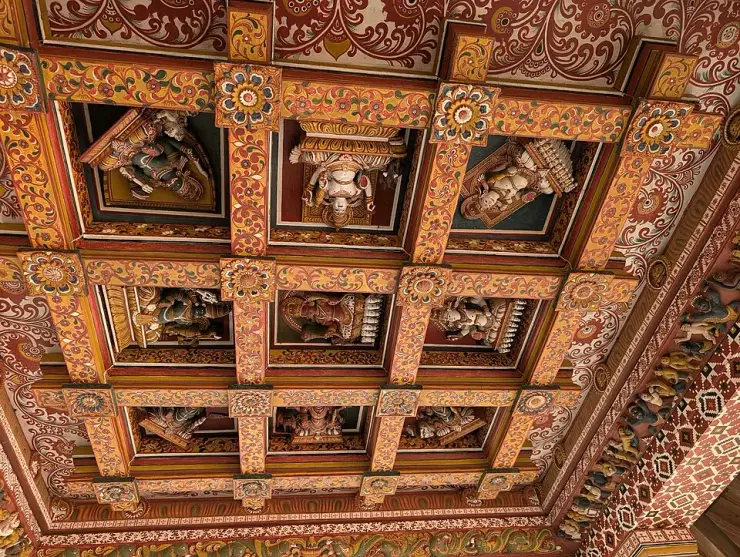
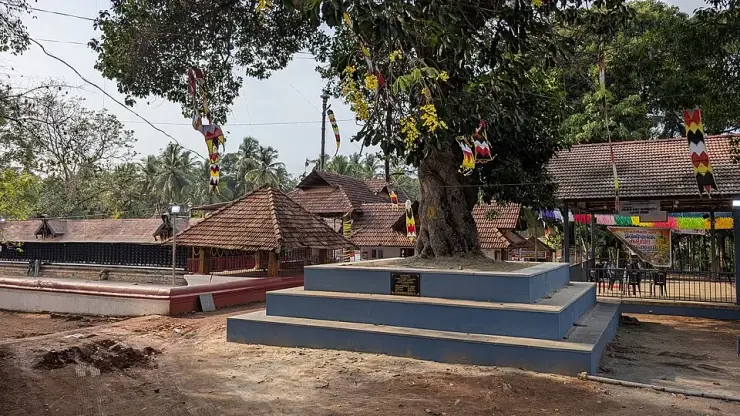
Ancient Durga/Bhagavathy temple at Vadakara, celebrated in the Vadakkan Pattukal and linked to the Kalaripayattu hero Thacholi Othenan.
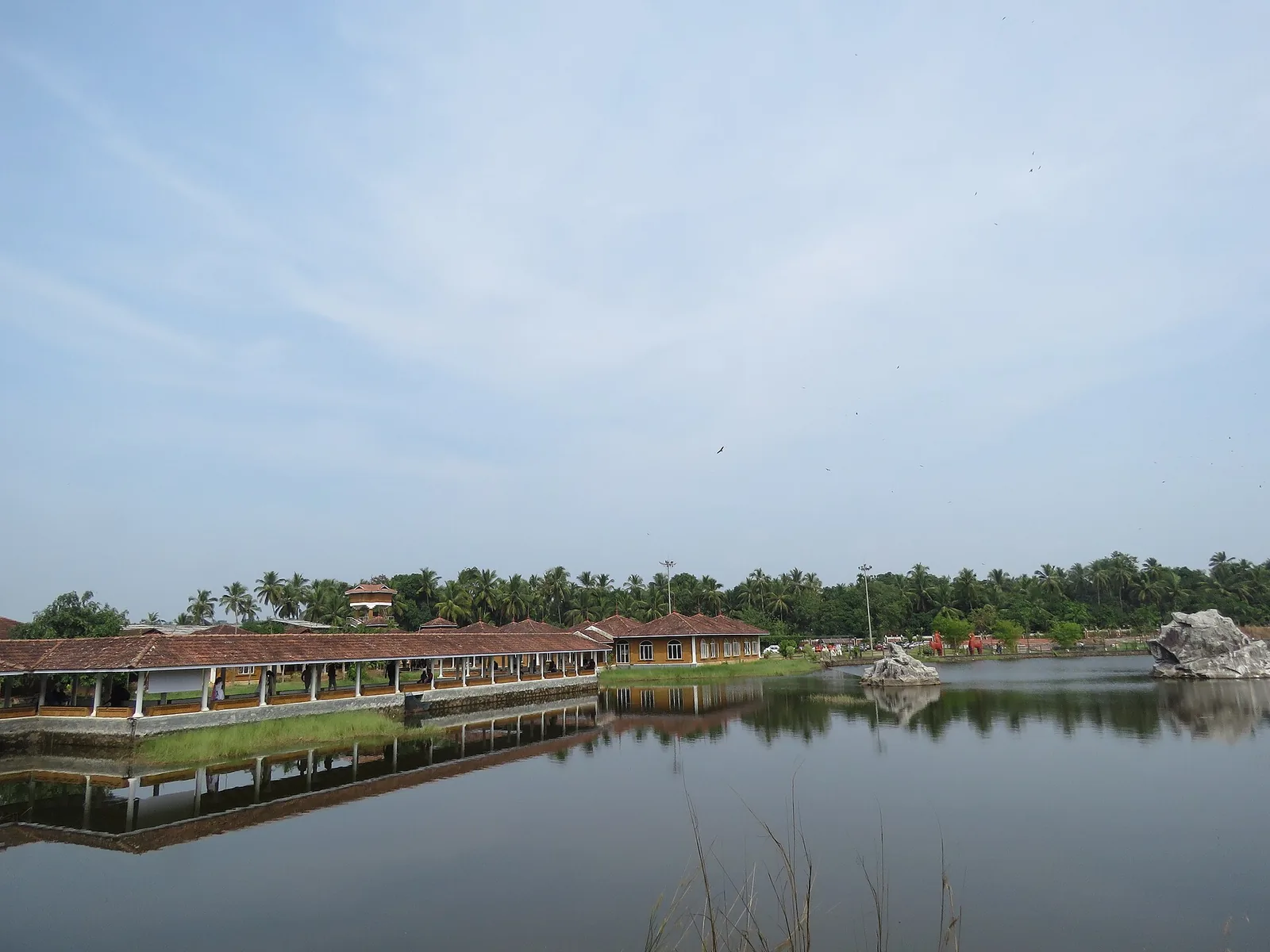
1.8 km · 22 min walk
Kerala Arts & Crafts Village at Iringal near Vadakara — a riverside campus of working artisans and crafts pavilions.
1.6 km · 19 min walk
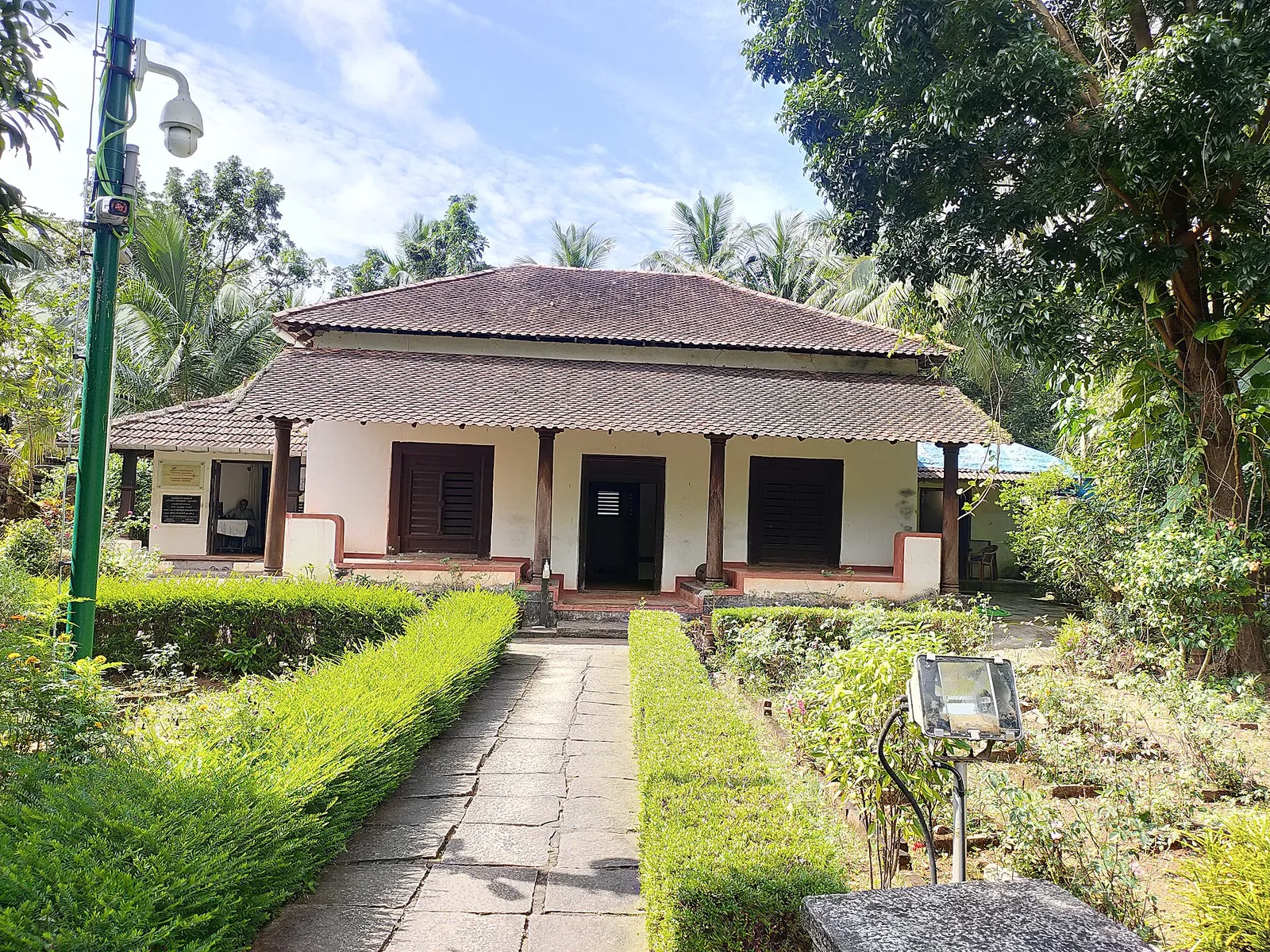
The Kerala Archaeology Department’s museum in the surviving part of the Marakkar family house at Kottakkal, Iringal — three rooms and a vestibule holding swords, stone shot and megalithic finds, with an Indian Navy obelisk in the garden. Not the fort: that was razed in 1600.
Roampedia is commission-free — own or know a stay, eatery, guide or shop near Kolavipalam Beach? List it and it appears here once verified.
Add a nearby businessEntry: None published, for the beach or the hatchery. There is no admission counter and no booking channel.
Dress code: None. Sun cover and shoes you can walk on soft sand in — the dunes at the northern end run over ten metres.
Photography: 🛑 NO FLASH PHOTOGRAPHY ON THE BEACH AFTER DARK, AND NO TORCHES. This is not general etiquette, it is documented for this beach specifically in the 2025 study: artificial light deters nesting females and disorients hatchlings, which head towards the light instead of towards the sea. If a hatchling release is happening, it is a Forest Department and Theeram operation and not a photo opportunity.
If you are travelling by bus or ferry, check the return service with the operator before setting out. Leave time to reach the stop or jetty after your visit.
Ask at the bus stand for the time of the last service back, not the next one. If you miss it, an auto or app cab is the fallback — agree the fare before you get in.
If you need step-free access, contact the site before travelling. Ask about a level entrance, steps along the route, the nearest drop-off point, seating and accessible toilets.
Emergency numbers are verified against official government and state tourism sources. 112 works anywhere in India.
The Kerala Archaeology Department’s museum in the surviving part of the Marakkar family house at Kottakkal, Iringal — three rooms and a vestibule holding swords, stone shot and megalithic finds, with an Indian Navy obelisk in the garden. Not the fort: that was razed in 1600.
1.6 km · 19 min walk · straight lineKerala Arts & Crafts Village at Iringal near Vadakara — a riverside campus of working artisans and crafts pavilions.
1.8 km · 22 min walk · straight lineAncient Durga/Bhagavathy temple at Vadakara, celebrated in the Vadakkan Pattukal and linked to the Kalaripayattu hero Thacholi Othenan.
6.2 km · ~15 min by auto · straight lineA 1909 lighthouse on the laterite headland at Kadalur Point, built to mark the submerged Sacrifice Rock eight kilometres offshore.
9.8 km · ~16 min by cab · straight line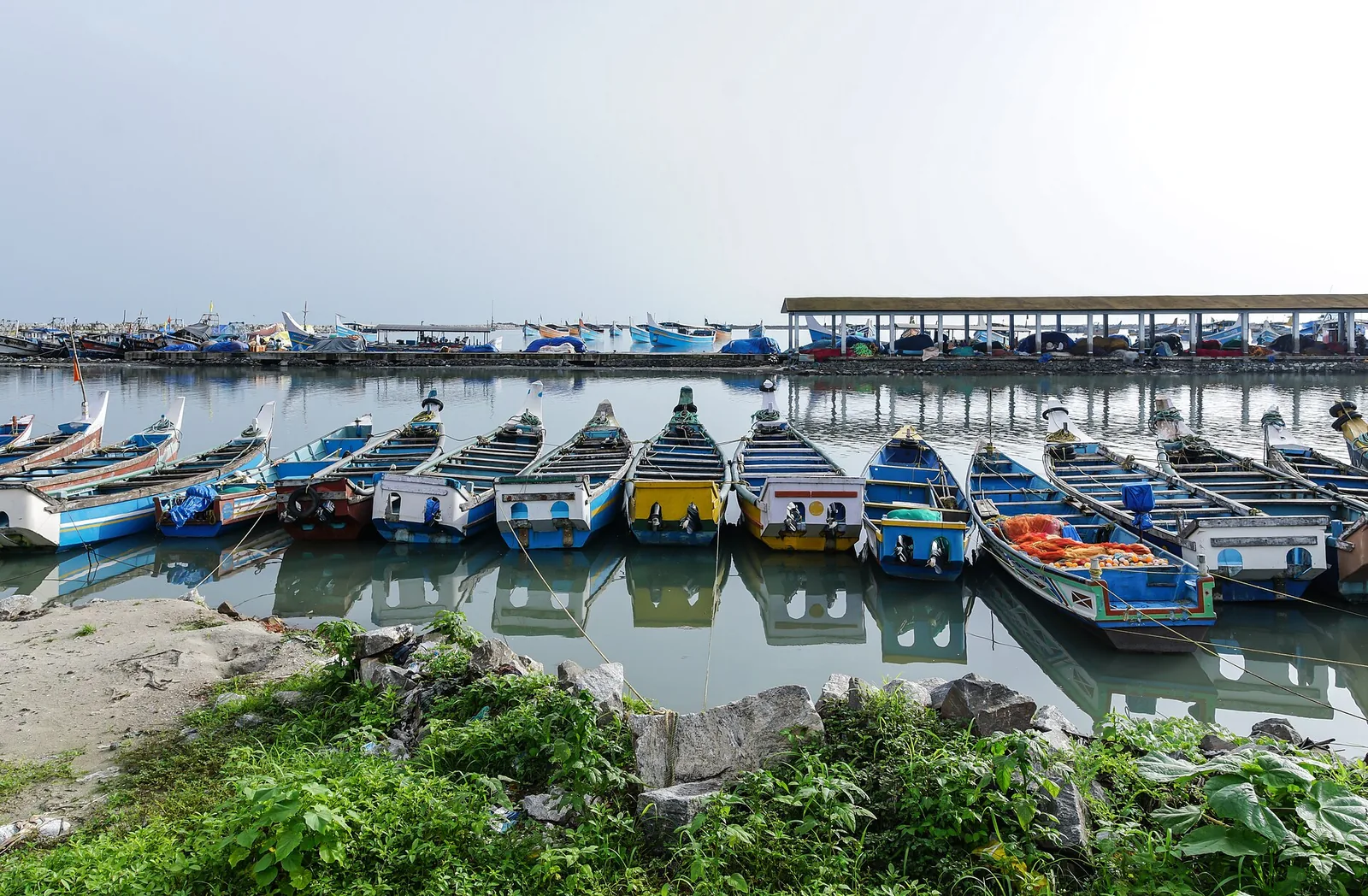
The medieval port of Panthalayani Kollam — Ibn Battuta’s Fandarayna, where Chinese junks wintered, and the anchorage where da Gama’s fleet lay 88 days in 1498. Nothing of the port survives above ground; the working fishing harbour is what you come for.
16.3 km · ~27 min by cab · straight line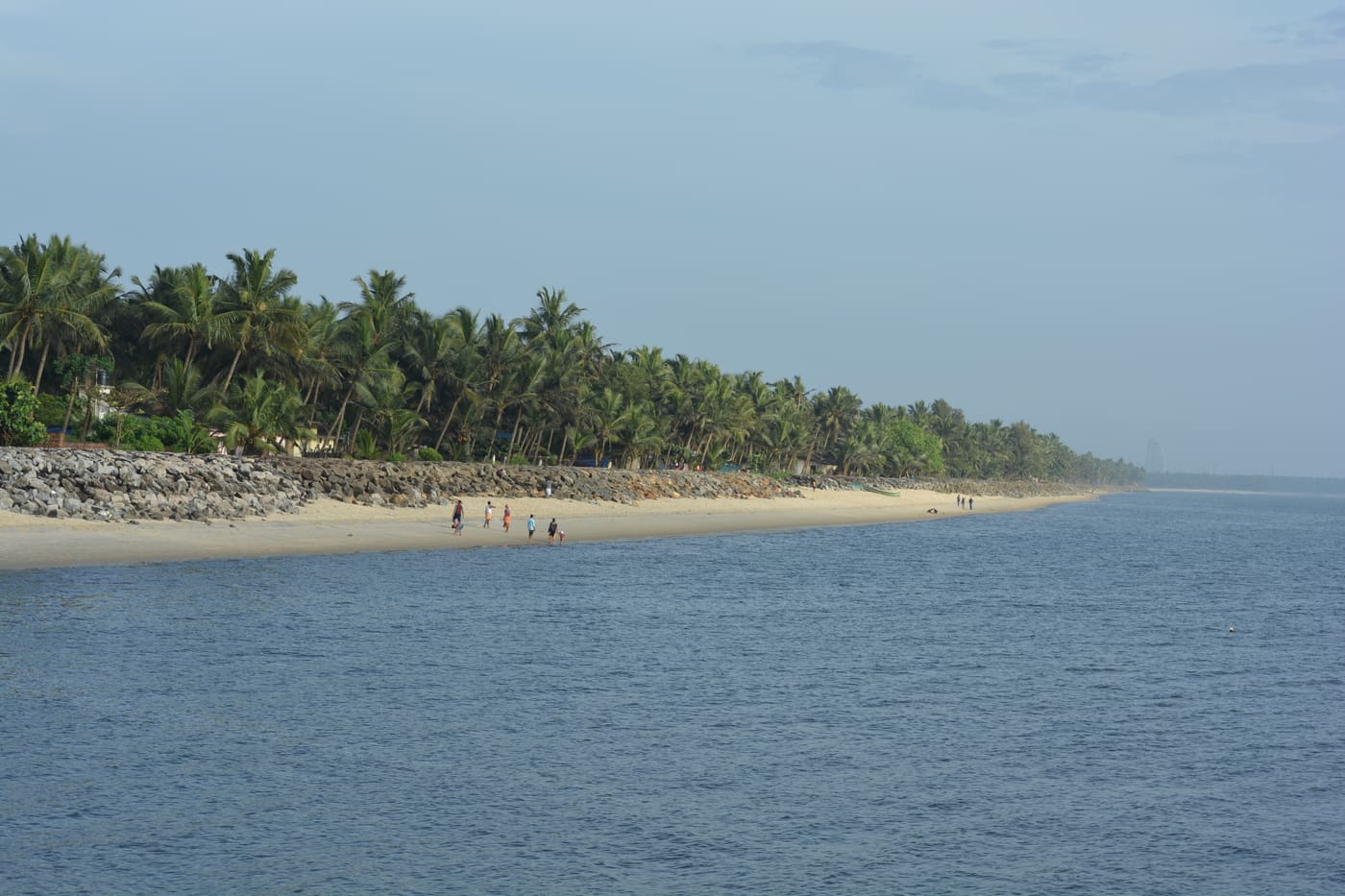
Historic beach associated with Vasco da Gama’s arrival on the Malabar coast.
22.4 km · ~37 min by cab · straight line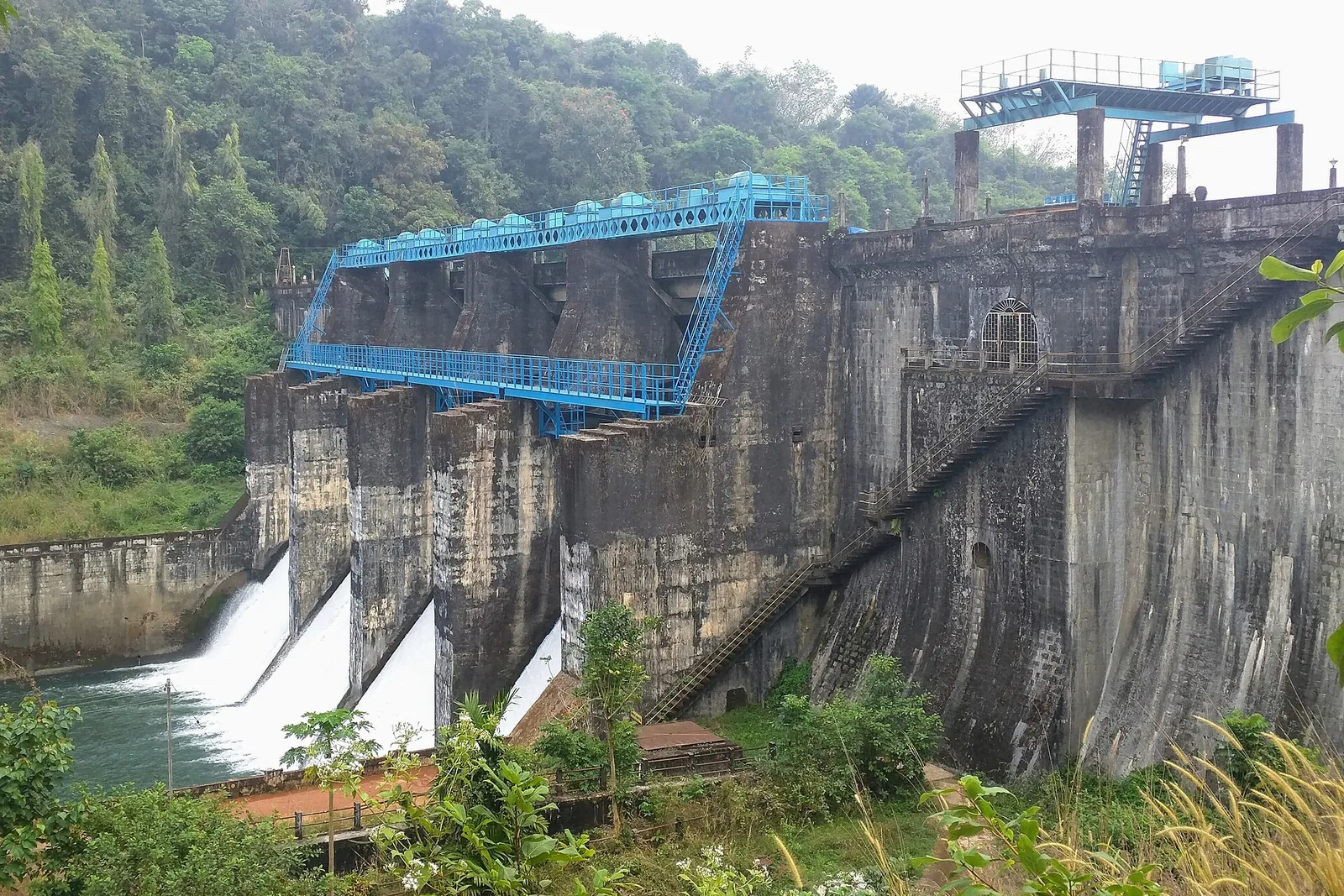
Irrigation reservoir and boating spot in the Kozhikode high ranges, with a 1977 government crocodile breeding centre on the shore.
25.3 km · ~42 min by cab · straight line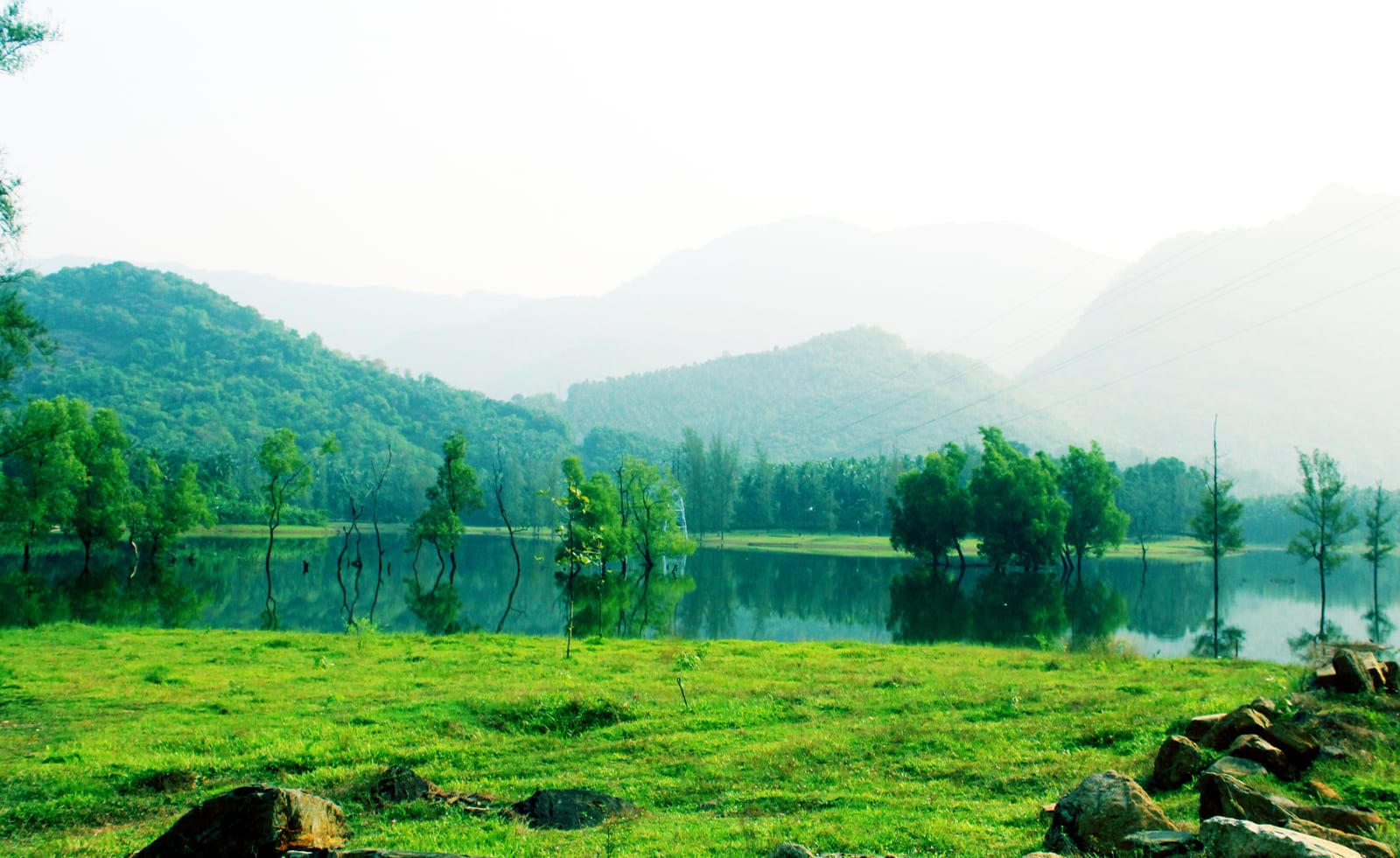
A ticketed riverside bathing and picnic centre on Irrigation Department land where the Kuttiyadi runs over a bedrock sheet into the head of the Peruvannamuzhi backwater — at 57 m, with no drop and no forest permit, but a serious drowning history.
32.5 km · ~54 min by cab · straight line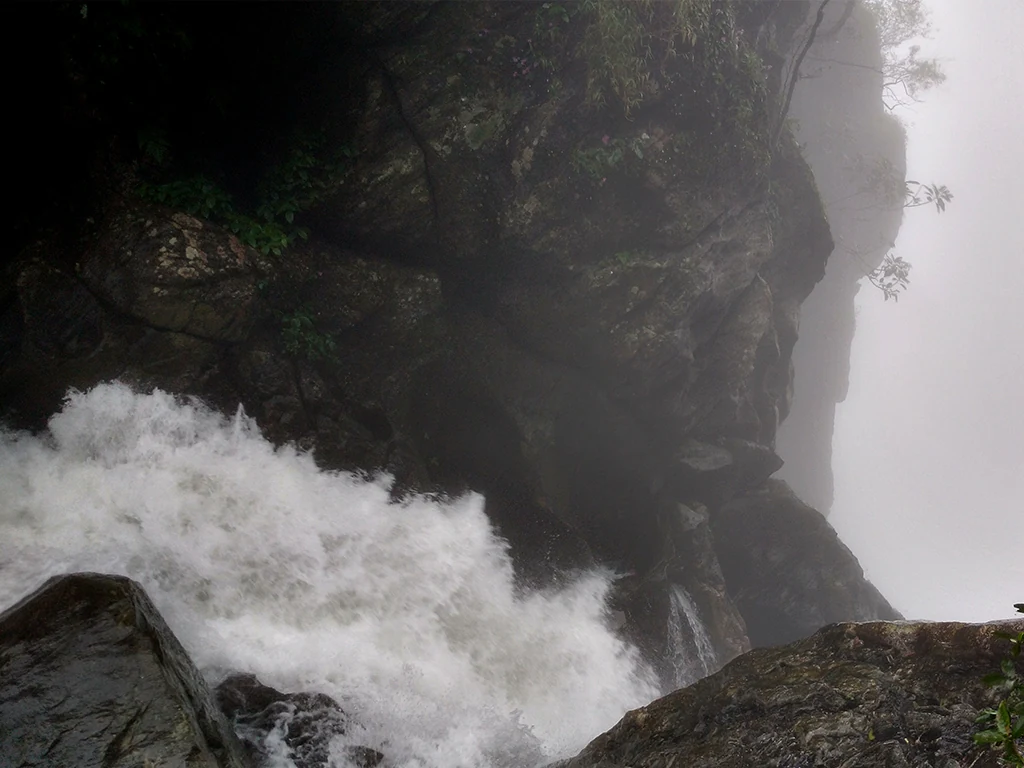
The managed forest outing towards Urakkuzhi Falls above Kakkayam, distinct from reservoir boating. Confirm the admitted route with the forest counter: recent reports describe restrictions at the waterfall viewpoint and Shankaranpuzha.
32.6 km · ~54 min by cab · straight line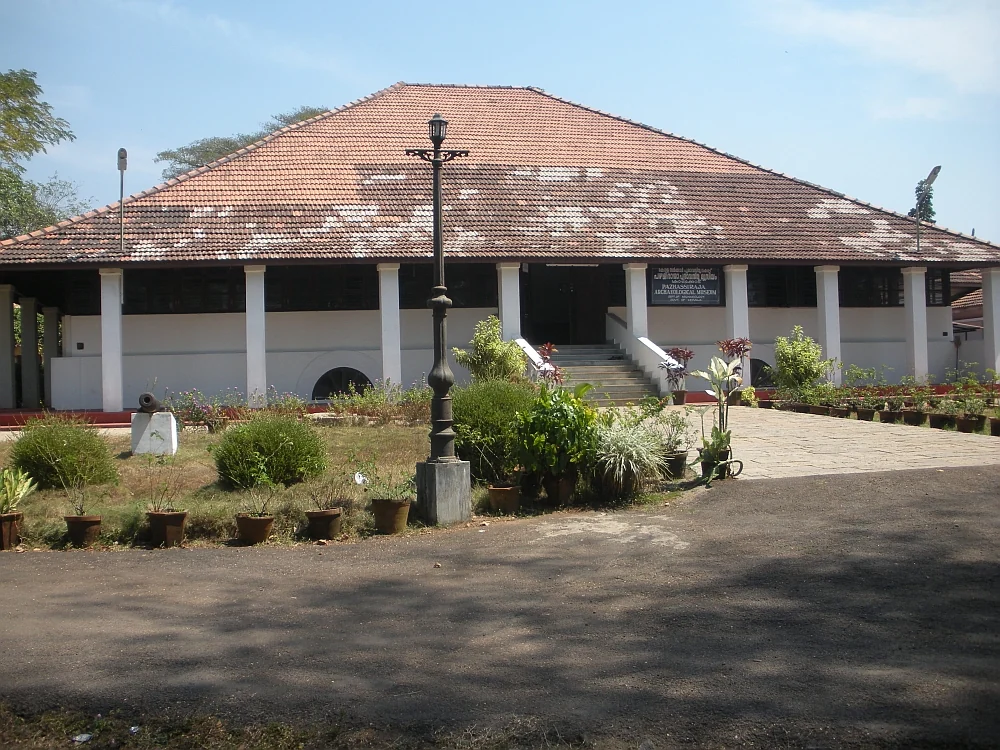
State archaeology museum at East Hill in an 1812 bungalow, with murals, bronzes, coins and megalithic monuments.
34.6 km · ~58 min by cab · straight line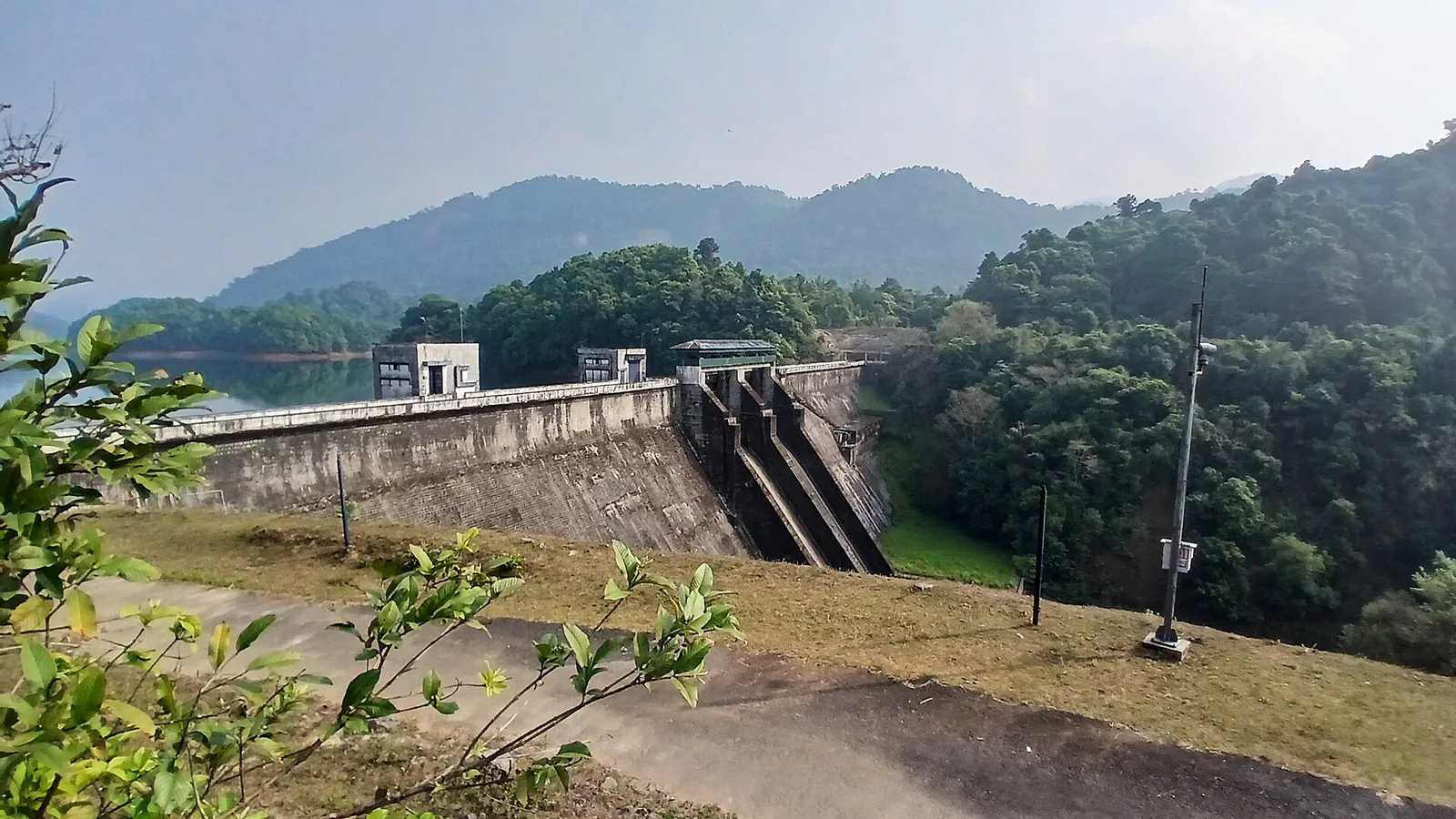
Reservoir and forested day-trip area in the Western Ghats foothills.
35.8 km · ~60 min by cab · straight line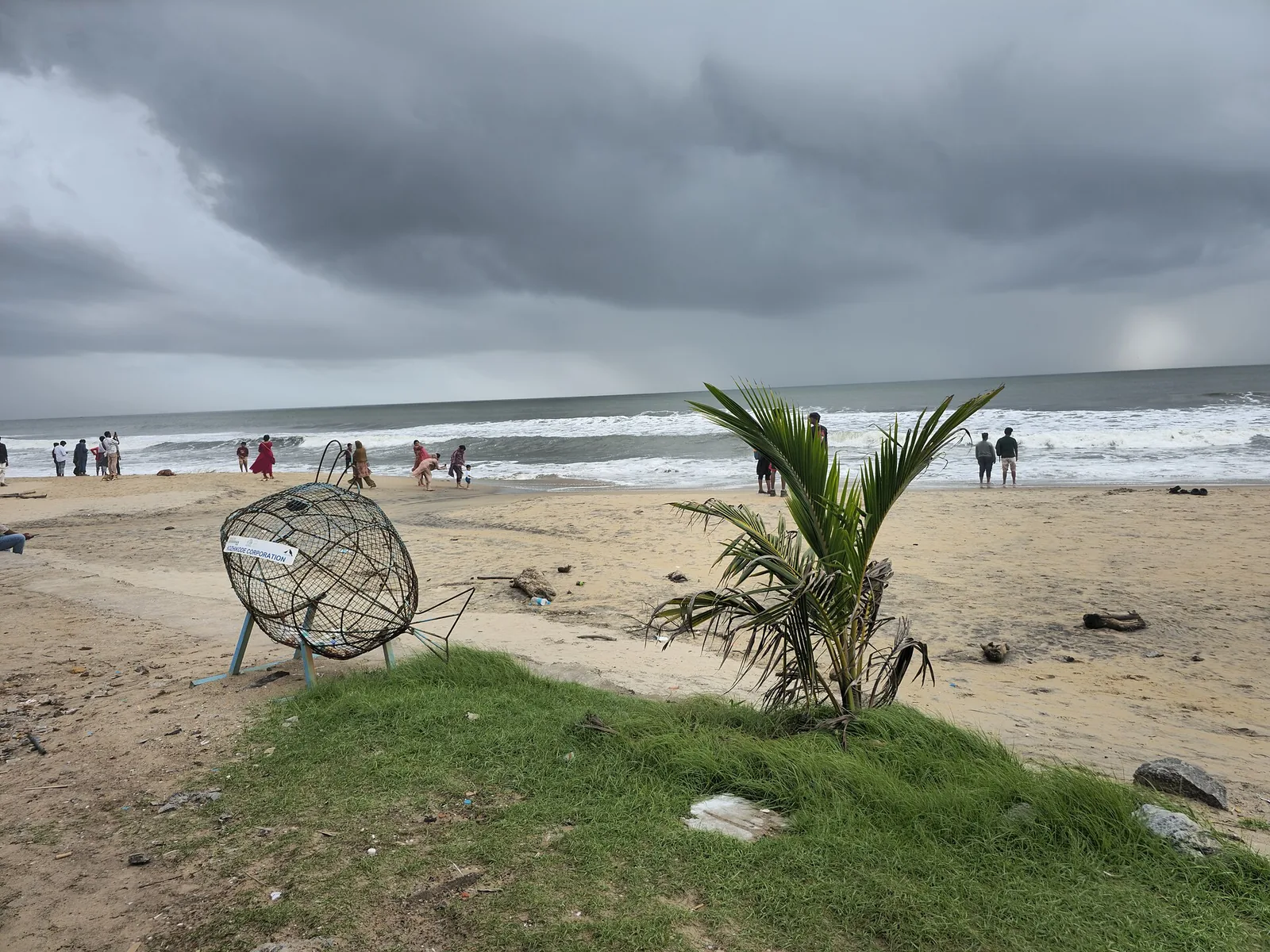
City beach with old pier remains and sunset food stalls.
37.5 km · ~63 min by cab · straight lineRealistically, no. Across the four seasons from November 2019 to March 2023, seven adult females came ashore in total, and 2020-21 had none. Malayalam reporting records no turtles at all in 2022-23 or 2023-24, two in 2024-25 and a single clutch in 2025-26. This beach used to take up to 65 nesting females a season. It does not now, and no listing that promises turtle-watching here is being straight with you.
Genuinely contested. Kerala Tourism says November to December; the Forest Department says September to November peaking in October; both peer-reviewed papers say early November to March covers over 95% of activity. Releases follow 45–60 days after laying, so they can fall as late as April — the 2025-26 clutch was laid around 21 February 2026 and released on 13 April. Timing is now erratic and cannot be planned around.
There are no published opening hours, no admission fee and no booking channel, and the group has no website we could find. A small Forest Department structure has served as an informal interpretation centre with turtle specimens. Treat it as a working village hatchery rather than an attraction, and ask locally or at Sargaalaya, 1.5 km east.
The Theeram Prakriti Samrakshana Samithi, a village committee of twelve founded in 1992, with Forest Department daily-wage support from 1997–98. Regular funding ceased around 2021 and the group was reported close to collapse in February 2026 before being revived weeks later following a Union Budget announcement.
Cumulatively, but both peer-reviewed papers put seawalls first: armouring blocks turtles from the upper beach and forces them to nest low down, where the waves drown the nests. Behind that sits the sand mining in the Kottapuzha estuary that stopped the beach being replenished in the first place. Add artificial lighting, fishing-gear capture, feral predators, plastic and private roads across the beach.
No. The most detailed case study of the site records its legal status as not available, and notes that the Wildlife Division had no proposal for one. The olive ridley itself is on Schedule I of the Wild Life (Protection) Act, 1972, so the animals, eggs and nests are legally protected even though the beach is not.
No artificial light on the beach at night and no flash photography — that is the most important one, and it is specifically documented for this beach: light deters nesting females and disorients hatchlings, which head towards it instead of the sea. Never handle a turtle, hatchling, egg or nest; that is a Schedule I matter, not an etiquette one. Keep well back from any nesting female and never get between her and the water. Take all your plastic away, do not drive on the beach, and do not buy or eat turtle eggs. If a release is happening, it is a Forest Department and Theeram operation, not a photo opportunity.
About 45–46 km north. The nearest railway stations are Payyoli and Vadakara, both a few kilometres away — we have not been able to source exact road distances from either, so confirm locally. One widely copied listing says 30 km from Kozhikode, which is wrong.
November to February for dry weather; avoid rough-sea days during monsoon warnings.
Entry: None published, for the beach or the hatchery. There is no admission counter and no booking channel. Timings: The beach is open shore. The small Forest Department structure used as an informal turtle interpretation centre has no published schedule and may be unstaffed; ask in the village or at Sargaalaya, 1.5 km east, before planning around it.
Base yourself in Vadakara or a nearby town in Kozhikode, then confirm the last-mile route locally before leaving. Arrive before sunset if you want photos and a calmer walk; beach roads can slow down in the evening. If the visit depends on forest, temple, boat, ferry, weather or seasonal access, check the official/local rule on the day before travel.
1 to 3 hours, longer if staying for food or sunset.
Nearby you can pair Kunjali Marakkar Museum (1.6 km), Iringal Sargaalaya (1.8 km), Lokanarkavu Temple (6.2 km), Thikkoti Lighthouse (9.8 km).
Do not swim during rough-sea warnings. Avoid isolated stretches after dark unless with a trusted local/operator.
Written about Kolavipalam Beach itself — its history, its legends and the arguments about them.
These guides explore Vadakara and the surrounding area. Choose a visit that fits your interests, allowing separately for travel between stops.
Route-level itineraries and practical guides for the rest of Kerala.
Photographs: Bigul Malayi (CC0 1.0), Kerala Tourism (© Kerala Tourism; externally hosted official photograph). Wikimedia Commons.


