A Kumbalangi village walk is not a walk in the sense of scenery. The lanes are flat, short and entirely ordinary, and you could wander them alone for nothing. What a host actually sells you is a doorway: the standing invitation to enter a yard where somebody is working, and to watch them do it without it being strange.
Coir, which is just a coconut husk and a great deal of patience
Coir is fibre from the husk of the coconut, and turning one into the other is a slow, wet, physical process. Husks are soaked — traditionally in backwater for months — until the softer tissue rots away and the fibre can be separated. It is then beaten, cleaned, and spun into yarn, which is twisted into rope or woven into matting.
Watching it done by hand in a Kumbalangi yard tells you two things at once. The first is how much labour is buried in a material most of the world thinks of as a doormat. The second is why coir spinning is a household trade rather than a factory one here: the raw material is free and everywhere, and the process needs time and hands rather than capital.
Toddy, and the part that makes visitors nervous
Toddy is the fermented sap of the coconut palm, and it is collected by a tapper who climbs the tree, cuts the flower spathe and binds a pot beneath it to catch the drip. The sap is sweet and non-alcoholic when it comes out of the tree and begins fermenting almost immediately; by a few hours old it is mildly alcoholic, and by the end of the day it is sour.
The climb is the thing people remember. A tapper goes up a smooth, branchless trunk of considerable height with a knife, a pot and a loop of rope around the feet, and no harness whatsoever. It is done several times a day, on many trees. It is a genuine skill, it is dangerous, and it is not a performance — so watch, do not applaud, and do not ask anybody to go up again for a better photograph.
- Fresh toddy is sweet and barely alcoholic; a few hours old it is mildly so; by evening it is sour.
- Buy from a licensed toddy shop or through your homestay, never from an unknown roadside seller.
- Adulteration is a real and documented problem in the trade. Provenance matters.
- It does not travel and it does not keep. This is a drink you have where it is made.
Boats, built by eye on the bank
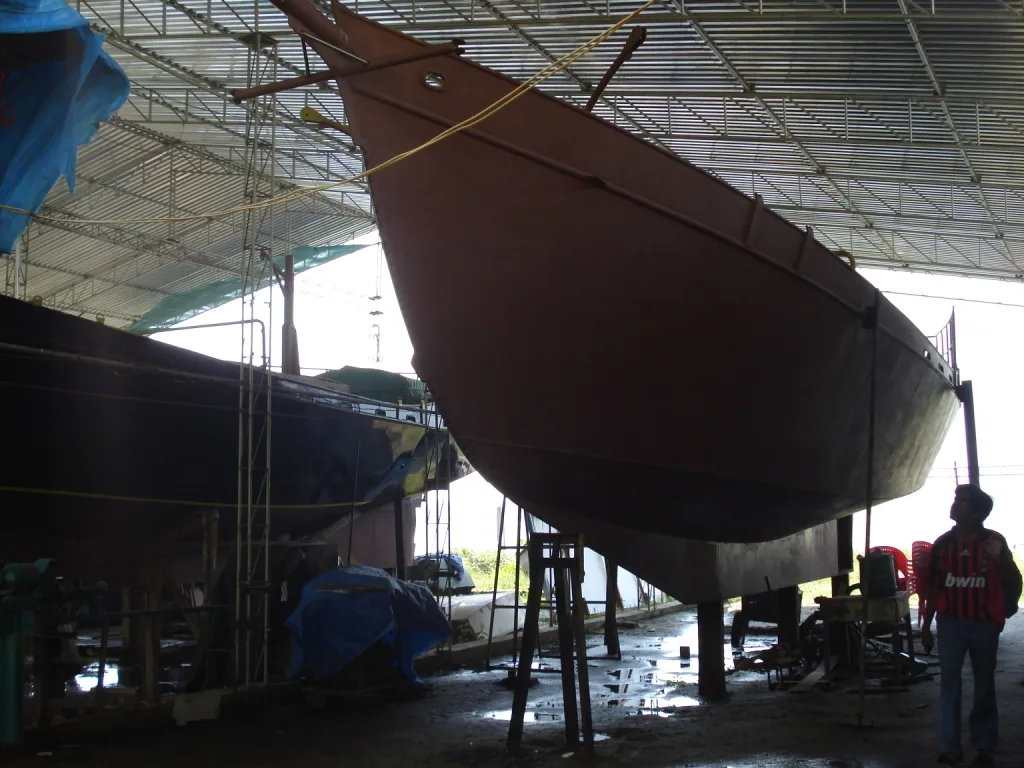
Kumbalangi builds and repairs its own canoes, on the bank, in the open. There is no drawing and no mould — the shape lives in the head and hands of the carpenter, adjusted by eye as the planks go on, in the same tradition that produces the great wooden urus at Beypore on a vastly larger scale.
If a hull is under construction on your route, stop for it. A boat being built without a plan is one of the more remarkable things you can watch anybody do, and it is entirely unremarkable to the person doing it.
How to book, and how to behave
Arrange the walk through your homestay rather than at the roadside — the host knows which yards are working today, and the arrangement is the reason you are welcome. Go early, when it is cool and people are at work. Ask before photographing anyone, and accept a no.
And treat the whole thing as the transaction it is. These are working households letting a stranger stand in their yard. The money you pay is what makes that reasonable rather than intrusive, which is exactly what Kumbalangi’s model tourism village designation was designed to achieve — and one of the few parts of it that demonstrably works.
Frequently asked questions
What do you actually see on a Kumbalangi village walk?
Coir being made from soaked coconut husk, toddy tapping, boat building on the bank, clam-shell processing and prawn filtration at the sluice gates, along with pokkali fields. The lanes are ordinary; the access to working households is the point.
How is coir made?
Coconut husks are soaked — traditionally in backwater for months — until the soft tissue rots and the fibre separates. The fibre is then beaten, cleaned and spun into yarn, which is twisted into rope or woven into matting. It is slow, wet, physical work done by hand.
What is toddy and is it safe to drink?
Fermented coconut palm sap, collected in a pot tied under a cut flower spathe. Fresh it is sweet and barely alcoholic; it ferments through the day and turns sour by evening. Buy only from a licensed toddy shop or through your homestay — adulteration is a documented problem in the trade.
Do toddy tappers really climb without a harness?
Yes. The climb is made up a smooth, branchless trunk with a knife, a pot and a foot loop, several times a day across many trees. It is a serious skill and a genuinely dangerous job — watch respectfully and never ask someone to repeat a climb for a photograph.
Are the boats really built without plans?
Yes. Canoes are built and repaired on the bank in the open, with the shape held in the carpenter’s head and adjusted by eye as the planks go on — the same plan-free tradition that produces the far larger uru dhows at Beypore.
How do I book a village walk in Kumbalangi?
Through your homestay. The host knows which households are working on a given day and the arrangement is what makes your presence welcome rather than intrusive. Go early while it is cool, and always ask before photographing people.