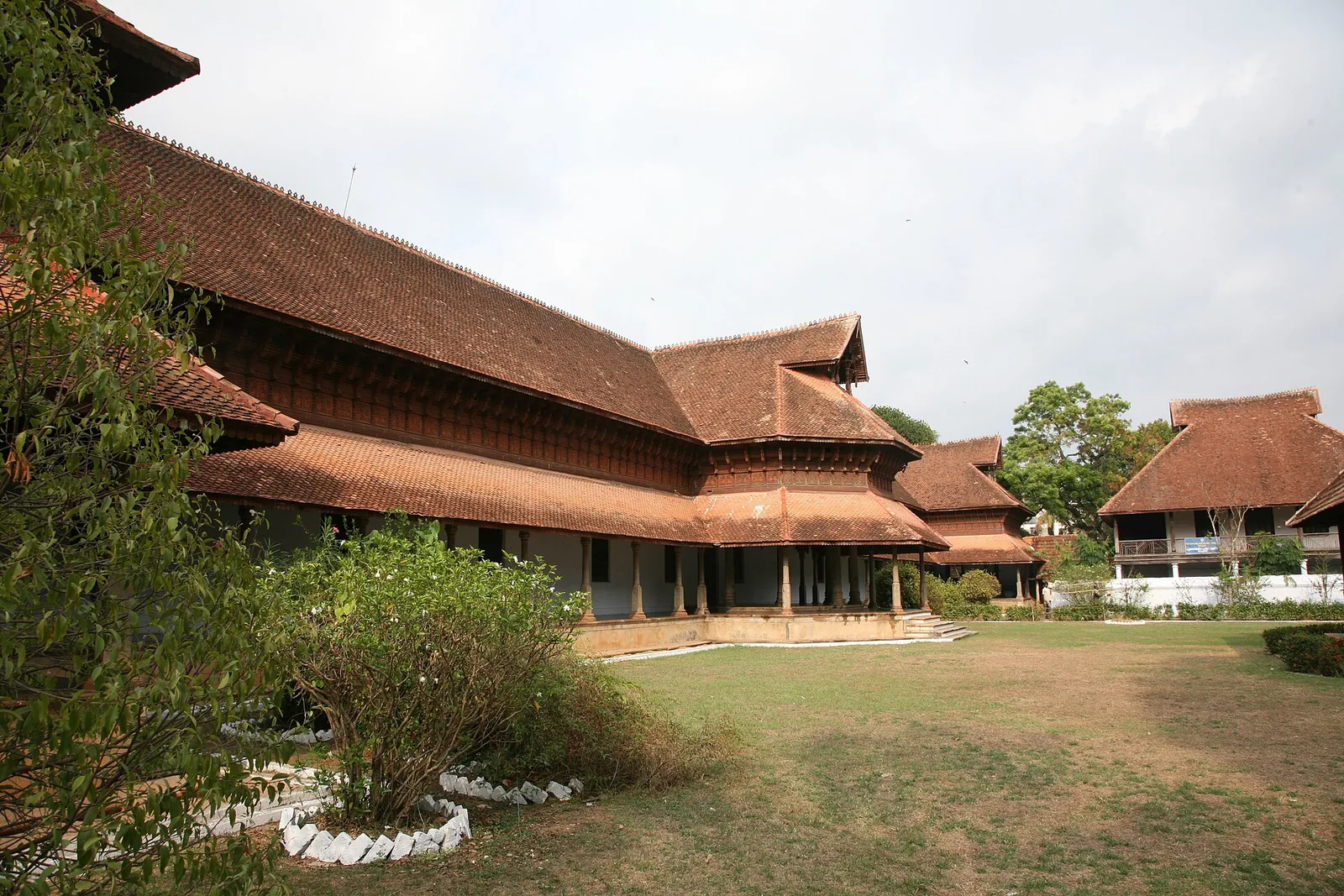
The horses stay under the eaves all year. The music brings another rhythm to Kuthiramalika Palace. At this house beside Sree Padmanabhaswamy Temple, the memory of Maharaja Swathi Thirunal passes between carved wood, a museum collection and performances of his compositions. Following that connection gives a palace visit a thread: begin with the building he commissioned, then follow the music that still carries his name.
A name written along the roof
Look beneath the southern roof and the name begins to make sense. Kerala Tourism’s palace photo account identifies 122 wooden horses carved into the brackets. They form a repeating line across the building, giving Kuthiramalika its familiar meaning, the Mansion of Horses. The architecture story follows these details more closely; here, they are the first clue to the ruler’s house.
Kerala Tourism’s heritage account dates the palace to the 1840s under Swathi Thirunal Balarama Varma of Travancore. Teak, rosewood, marble and granite belong to its material story. The tiled roofs and timber work give that history a scale a visitor can study: a bracket, a pillar, a stretch of verandah. Begin outside, where the building’s name is visible before any museum label is read.
The house of a ruler who composed
Swathi Thirunal’s musical life gives the palace another route into the past. A Kerala Tourism museum account describes a raised alcove where he met musicians, with a view towards the neighbouring temple. The relationship between house, music and temple is therefore part of the recorded history of the place. Ask the guide how that space relates to the route open to visitors.
The museum brings together objects preserved from the Travancore royal family. Kerala Tourism lists sculptures, Kathakali figures, mirrors and paintings among its holdings. Their variety rewards a slower visit. Follow a few objects that interest you, and use their labels and the guide’s explanation to connect them with the household and its artistic interests. Our collection story takes that thread further.
When the compositions return to Kuthiramalika
The Swathi music festival brings the composer’s work back into the palace setting. Kerala Tourism’s January 2020 festival account traces this series to 1999 and credits musician Rama Varma, a descendant of Swathi Thirunal, with its development. It describes a repertoire crossing Carnatic and Hindustani traditions, with established performers and younger musicians sharing the programme.
That continuity is the heart of the story. A palace preserves a building; a concert requires people to learn, rehearse and perform the music again. Each performance makes the connection between the ruler and his compositions audible to another audience. The house supplies the setting, while the musicians carry the work forward. You can appreciate that relationship even if your visit falls outside the festival season.
Two ways to follow the same story
For an ordinary museum visit, start with the horse brackets and continue along the permitted interior route. Leave time to ask about Swathi Thirunal’s musical associations and the objects on display. If a concert is your reason for travelling, confirm the forthcoming festival’s dates, venue arrangements and entry details with its organiser; the linked 2020 programme is a historical account.
The palace visitor page connects the story with its East Fort location. Museum admission and access to the neighbouring temple are separate arrangements. Whether you come for the collection or a confirmed performance, keep one question in mind as you leave: how does a place keep an artist present? At Kuthiramalika, the answer runs from a row of wooden horses to music learned by the next generation.