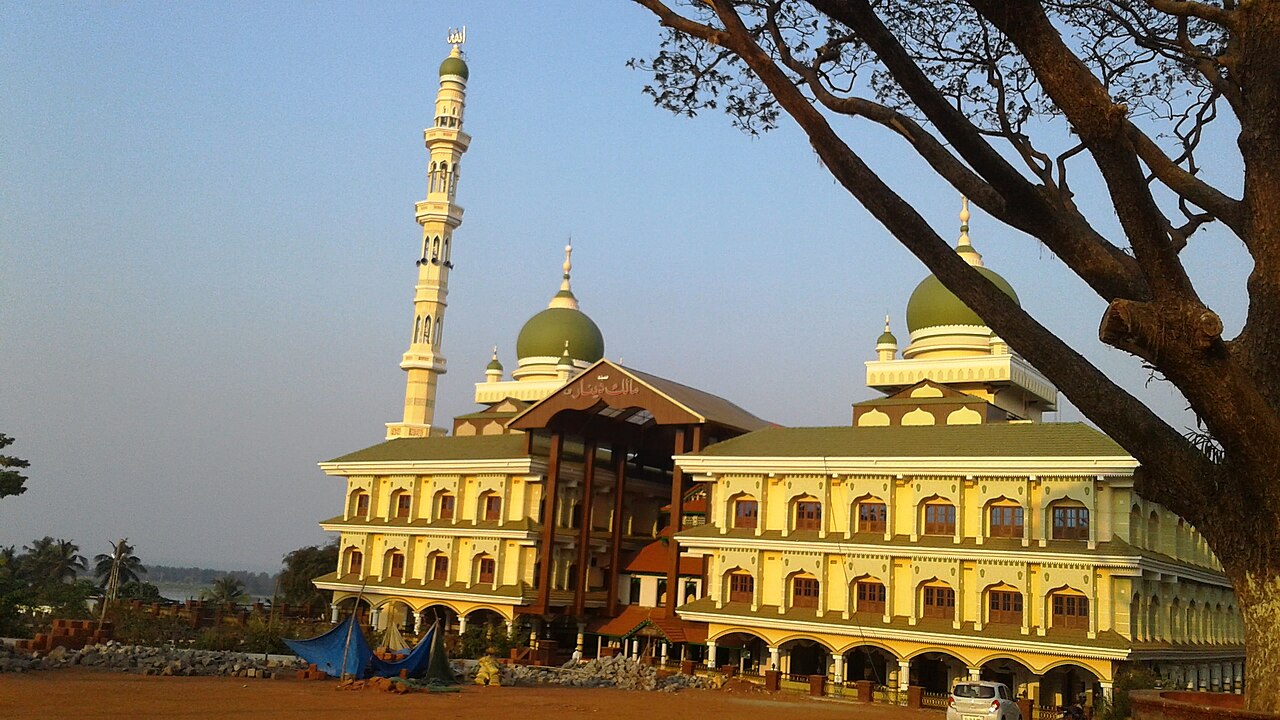
Islam is younger than most of the religions of Kerala — and yet it reached this coast almost the moment it began. At Thalangara, in the town of Kasaragod, stands a mosque said to have been raised within a generation of the Prophet himself: Malik Deenar Mosque, reckoned among the very oldest mosques in India, and named for the man who is remembered as the first to bring the faith to Indian shores.
The man who came with the faith
Malik bin Dinar — Malik Deenar — was a Tabi‘i, one of the generation that followed the companions of the Prophet Muhammad. Tradition holds that he and a small band of associates, perhaps a dozen, sailed to the Malabar coast in the earliest years of Islam to trade and to spread their new religion, and that they founded a chain of mosques along the coast as they went. The Kasaragod mosque is traditionally dated to around 642–643 CE — within about a decade of the Prophet’s death — which, if the date holds, would make it one of the first mosques anywhere in the subcontinent.
The king who sailed away
Woven through the story is one of Kerala’s most famous and most debated legends: that of Cheraman Perumal. As the tale goes, the ruler of the land was so struck by the honesty of the Arab traders and by what they told him of their faith that he embraced Islam himself, helped establish their mosques — and, some versions say, secretly sailed away to Arabia to meet the Prophet, never to return. Historians argue hard over how much of this is true, and the dates are difficult; it is best held as tradition rather than settled fact. But the town believes it, and it is that belief, more than any document, that gives this mosque its aura.
A mosque built like a temple
What is unmistakable is the building’s deep local roots. For centuries the mosque wore the traditional Kerala-Islamic style — tiered, timber-framed, gabled roofs that from a distance could almost be a temple or a great tharavad house, the same architecture Kerala gave to shrines of every faith. A major remodelling in 2018 recast much of it in a more overtly Islamic idiom, but the complex remains a whole world of its own: mosque and dargah, a madrasa, a cemetery and an orphanage clustered together at Thalangara.
The Uroos
Once a year the mosque becomes the heart of the Uroos, a grand festival that commemorates the arrival of Malik Deenar and his companions on this coast, drawing pilgrims from across Kerala and beyond. It is the living continuation of a memory more than thirteen centuries old — of the day, real or remembered, when a few travellers stepped off a ship and changed the faith-map of a coastline.
Visiting Malik Deenar Mosque
The mosque stands at Thalangara in Kasaragod town, in the far north of Kerala near the Bekal coast. Visitors of all faiths are generally welcomed to the precincts; dress modestly and check prayer times. Details are on the Malik Deenar place page; more of the district is on the Kasaragod hub.
Frequently asked questions
How old is the Malik Deenar mosque?
Tradition dates its founding to around 642–643 CE, within about a decade of the Prophet Muhammad’s death, making it one of the oldest mosques in India. It is named for Malik bin Dinar, remembered as the first to bring Islam to Indian shores.
What is the Cheraman Perumal legend connected to the mosque?
Tradition holds that a Kerala king, Cheraman Perumal, was drawn to Islam by Arab traders, helped establish their mosques and — in some versions — sailed to Arabia to meet the Prophet. Historians debate the story and its dating, so it is best treated as tradition rather than confirmed history; the same legend is attached to the Cheraman Juma Masjid near Kodungallur.
What is the Uroos festival at Malik Deenar?
The Uroos is the mosque’s grand annual festival, commemorating the arrival of Malik Deenar and his companions in Kerala. It draws pilgrims from across the region to the Thalangara complex.