What to expect
Highlights
- Mosque visit at Malik Deenar Mosque
- Local Islamic heritage and coastal/trade history where relevant
- Nearby food streets and markets
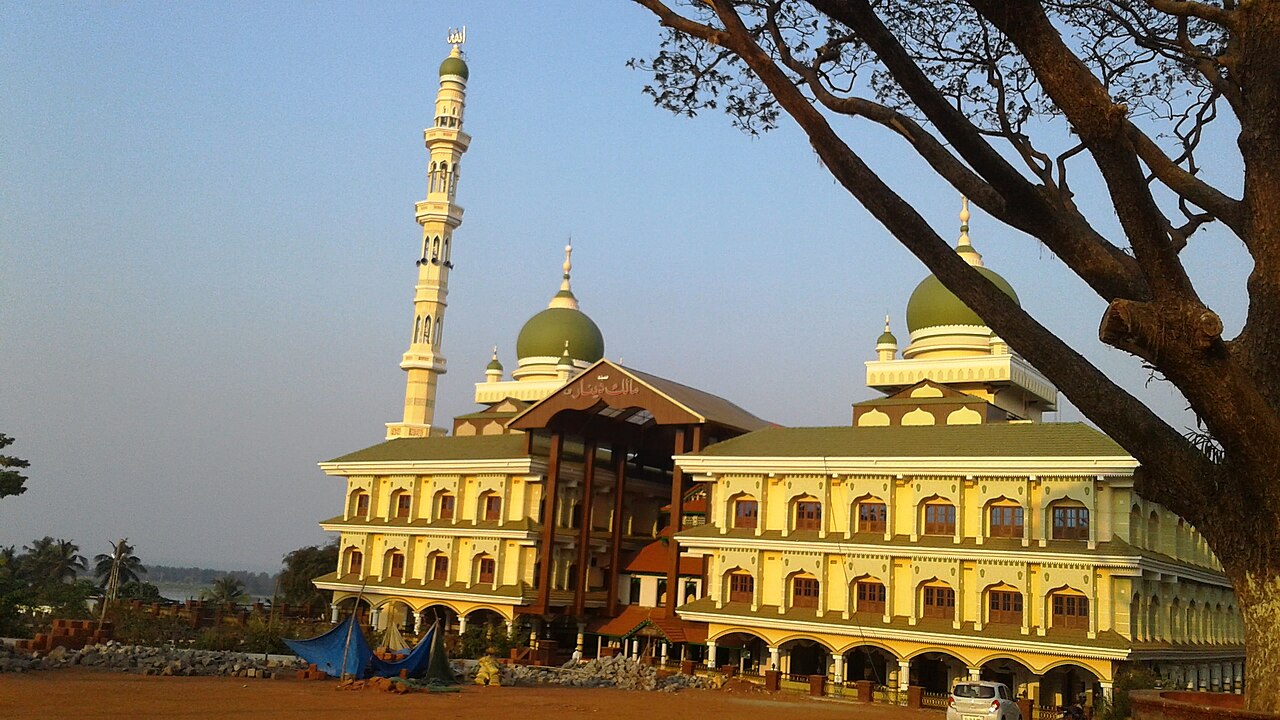
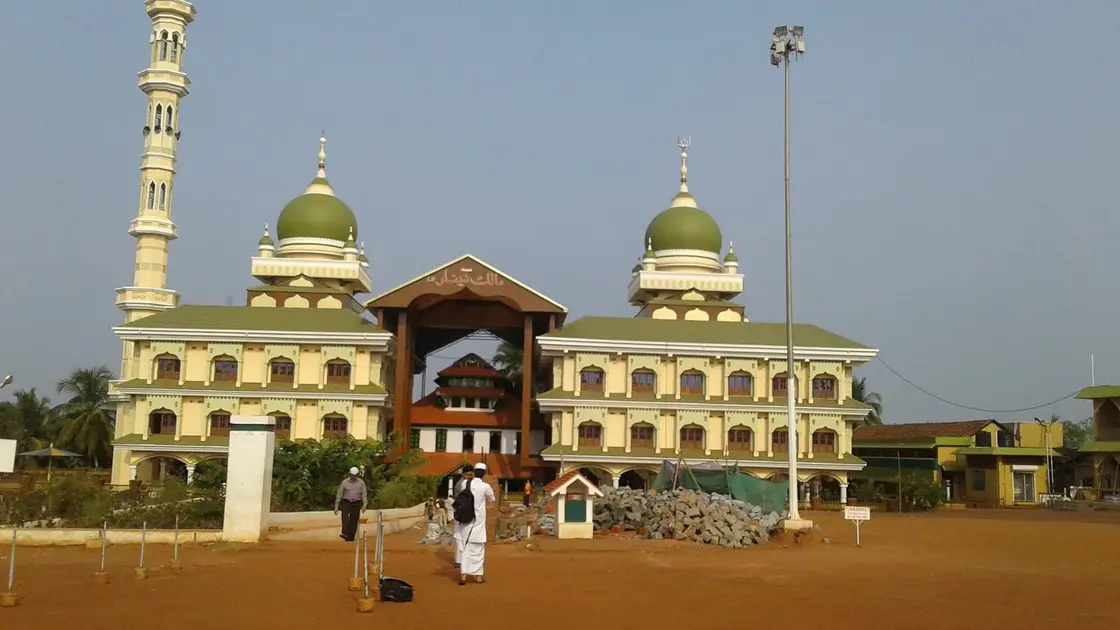
The Malik Ibn Dinar Juma Masjid in Thalankara, Kasaragod — by tradition among the oldest mosques in India, linked to the earliest arrival of Islam on the Malabar coast.
Check entry arrangements. Ask the mosque when sightseeing visits are welcome and which areas you may enter. Check dress and footwear requirements before going inside, and avoid interrupting prayers.
Dress respectfully and follow the institution’s admission and photography rules.
At Thalankara in Kasaragod town stands a mosque said to be among the very first raised on Indian soil — a tiered, timber-carved shrine that tradition ties to Malik Ibn Dinar, the traveller-saint remembered as one of the earliest bearers of Islam to the Malabar coast, and believed by many to be buried in its very grounds.
The Malik Deenar Grand Juma Masjid rises quietly in the Thalankara (also spelt Thalangara) neighbourhood of Kasaragod town, in Kerala’s northernmost district. To the traveller it may first read as a handsome, whitewashed mosque with domes and a minaret; but locals will tell you that beneath the later stonework lies one of the oldest continuously venerated Muslim places of worship in India, wound tightly around the memory of Malik Ibn Dinar (Malik Deenar) and his companions.
Malik Ibn Dinar is remembered in Islamic tradition as a Tabi‘i — a member of the generation that followed the Prophet Muhammad’s Companions. He is said to have belonged to a group of early Muslim travellers and traders who reached the Malabar coast in the seventh century AD and, alongside their commerce, carried the new faith into the port towns of what is today Kerala and coastal Karnataka. In this telling, the Kasaragod mosque is not an isolated shrine but one link in a chain of early mosques planted by Malik Ibn Dinar and his followers along the coast (traditional account — dating and details are debated by scholars).
The building the pilgrim sees today is layered. Older descriptions recall a humble original structure with a thatched or tiled roof, later rebuilt on a grander scale in the region’s distinctive idiom — a two-storeyed timber edifice with tiered, sloping roofs and gables, its massive beams and pillars carved with Arabic inscriptions. This blend of Kerala temple-and-palace carpentry with Islamic devotional purpose gives the mosque its unusual character, quite unlike the domed skyline most visitors associate with mosques elsewhere.
What draws pilgrims above all is the mazar — the tomb within the complex. By long tradition it is revered as the resting place of Malik Deenar himself, making the mosque a major ziyarat (pilgrimage) destination for Muslims across South India and beyond. Some historians, however, hold that the grave is that of a descendant — variously named as Malik Ibn Muhammad — and that the burial of Malik Ibn Dinar himself is uncertain. Roampedia repeats this as devotional tradition rather than settled fact; the accounts genuinely differ (traditional/contested — verify locally).
The mosque remains a living place of worship, not a museum. Five daily prayers, the Friday congregation and the rhythms of the Islamic calendar continue here as they have for centuries. The most vivid moment in its year is the annual Uroos (Urs), a commemoration of Malik Ibn Dinar’s arrival and legacy, when the shrine fills with visitors, flags, recitation and communal feeding (dates vary with the Islamic calendar — confirm before travelling).
For the respectful visitor, the appeal is threefold: a genuinely ancient thread of Kerala’s Islamic history; a rare surviving example of Kerala-style mosque architecture; and the quiet, lived devotion of a shrine still central to Kasaragod’s Muslim community. It sits within easy reach of the town’s other heritage — the great Bekal Fort lies a short drive south — making Thalankara a natural stop on any thoughtful tour of Kerala’s north.
The story most often told here belongs to the wider Malabar tradition of Islam’s arrival. In it, a Chera ruler remembered as Cheraman Perumal is said to have witnessed the splitting of the moon, sought out its meaning, and — moved by what he learned of the new faith — travelled towards Arabia, where he is believed to have embraced Islam. Malik Ibn Dinar and his companions, in this account, arrived on the Malabar coast in the wake of that encounter and founded a chain of mosques, of which Kasaragod is counted one.
The same tradition names the sister-mosque at Kodungallur — the Cheraman Juma Masjid — as the first of these foundations, with Kasaragod, Kollam, Madayi, Mangalore, Kannur, Dharmadam, Panthalayini, Chaliyam and others following. Several of these accounts trace back to a medieval text, the Qissat Shakarwati Farmad. It is a beautiful and deeply held story, and it anchors the community’s sense of its own antiquity.
Historians, though, treat the seventh-century dating with caution. The traditional narrative — the moon-splitting, the royal conversion, the precise founding years such as 642–643 CE — rests largely on later chronicles rather than contemporary evidence, and scholarly opinion on when exactly Islam reached the coast, and how, remains divided. Roampedia presents all of this respectfully as living tradition and legend, not as verified history.
Written and devotional sources describe the Kasaragod mosque as part of a coastal network of early mosques associated with Malik Ibn Dinar. The Qissat Shakarwati Farmad and later Kerala Muslim histories list foundations at Kodungallur, Kollam, Madayi, Barkur, Mangalore, Kasaragod, Kannur, Dharmadam, Panthalayini and Chaliyam — the tradition placing their establishment in the years after Malik Ibn Dinar’s arrival on the Malabar coast (seventh century AD, by tradition; scholars debate the dating).
The Thalankara mosque is traditionally said to have been completed around 22 AH — roughly 642–643 CE — a date carried in local accounts and repeated by tourism sources, which would rank it among the oldest mosques in India (traditional dating — historically contested, confirm as tradition rather than fact). Whatever its true age, the site has clearly been a centre of Muslim worship in northern Kerala for a very long time.
The mazar, or tomb, is the mosque’s spiritual heart. Popular tradition holds that Malik Deenar died at Thalankara and is buried here, which is why the shrine remains such a powerful draw for pilgrims. Some historians instead identify the principal grave as that of a descendant of Malik Ibn Dinar — Malik Ibn Muhammad is one name given — while noting the tradition that Malik Ibn Dinar himself lies here. The differing accounts sit side by side and should be treated as such (contested tradition).
Architecturally, the mosque is prized as a surviving expression of the Kerala-Islamic building style: a two-storeyed timber structure with tiered, sloping roofs, gables and richly carved wooden beams and pillars, several bearing Arabic inscriptions that record its history. Older descriptions speak of an early, simpler shrine — even of marble floor-stones said to have been brought from Arabia — later rebuilt in grander, palace-like form by local artisans (traditional detail — verify on site).
The building has been repaired and enlarged more than once; sources point to a major restoration in the nineteenth century and a comprehensive renovation in recent years that added wings, domes and a minaret in Islamic style, raising its congregational capacity while retaining the shrine’s traditional core. Today the mosque functions both as a prominent pilgrim centre of Kasaragod district and as an active neighbourhood mosque.
Stand at one of India’s oldest and most revered mosques, woven into the earliest chapter of Islam on the Malabar coast (by tradition).
See a rare surviving example of Kerala-style mosque architecture — tiered timber roofs, gables and carved wooden beams inscribed in Arabic.
Pay respects at the mazar traditionally venerated as the tomb of Malik Deenar, a major South Indian pilgrimage draw.
Experience a living shrine — daily prayers, Friday congregation and the rhythms of a centuries-old community — rather than a museum piece.
Time a visit with the annual Uroos festival for flags, recitation, ziyarat and communal feasting (dates shift with the Islamic calendar).
Combine it with Kasaragod’s wider heritage — Bekal Fort, backwaters and the town’s old quarters lie close by.
Road km to Kasaragod; ghat roads and traffic vary — allow extra.
Outside prayer rush, unless visiting for worship.
Live forecast loads in your browser.
Sun and moon are calculated for this location and shown in IST. Photography windows are the hour around sunrise and sunset; the sunset bearing is degrees clockwise from true north. Moon phase is accurate to about half a day.
Verified hotels, homestays, restaurants, experiences, sights, shops and rentals around Malik Deenar Mosque — commission-free, with direct contact. Filter by what you need.
Kerala Tourism-listed three-star hotel at Nullipady on the national highway through Kasaragod town, near Carewell Hospital and the new bus stand. It offers air-conditioned rooms with a multi-cuisine restaurant and banquet hall, a convenient mid-range base for highway and business travellers in Kasaragod.

Kerala Tourism-listed three-star suites hotel on Fort Road in central Kasaragod town, close to Kasaragod Fort and the railway station. It offers modern air-conditioned suites and rooms with a multi-cuisine restaurant and banquet facilities, a comfortable mid-range town-centre base for business and transit travellers.

Town hotel in Kasaragod town. Kasaragod town, Kerala · Budget hotel (2-star class) · kasaragod-town, stay, Town hotel.

Taxi service in Kasaragod town. Kasaragod, Kerala · Taxi, Kasaragod transfers, Bekal transfers.
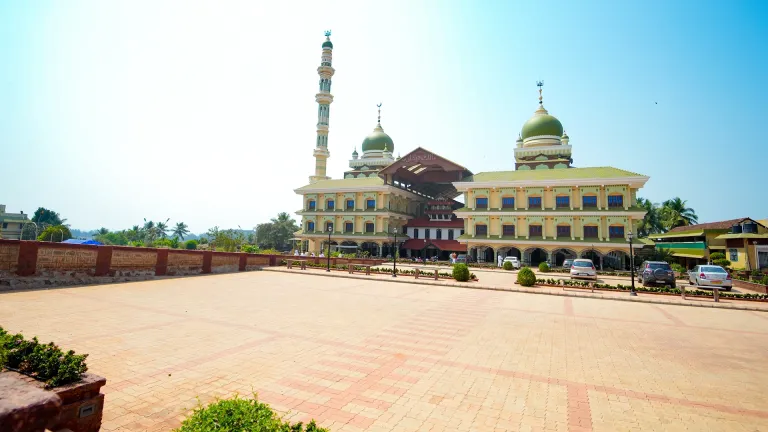
Malik Deenar Mosque is a historic Thalankara mosque and Kasaragod heritage stop, best planned respectfully around prayer times and local access customs. Religious site; check local access · Malik Deenar Mosque, Thalankara, Kasaragod heritage.
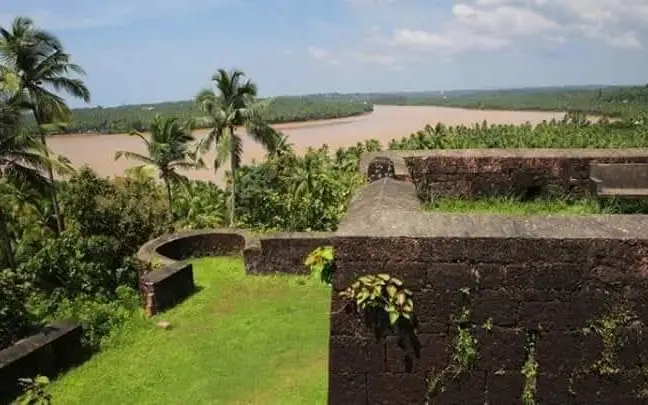
Chandragiri Fort is the Kasaragod town-side fort and river viewpoint, useful for short heritage, backwater and sunset planning with DTPC contact context. Chandragiri Fort, Kasaragod town, River view.
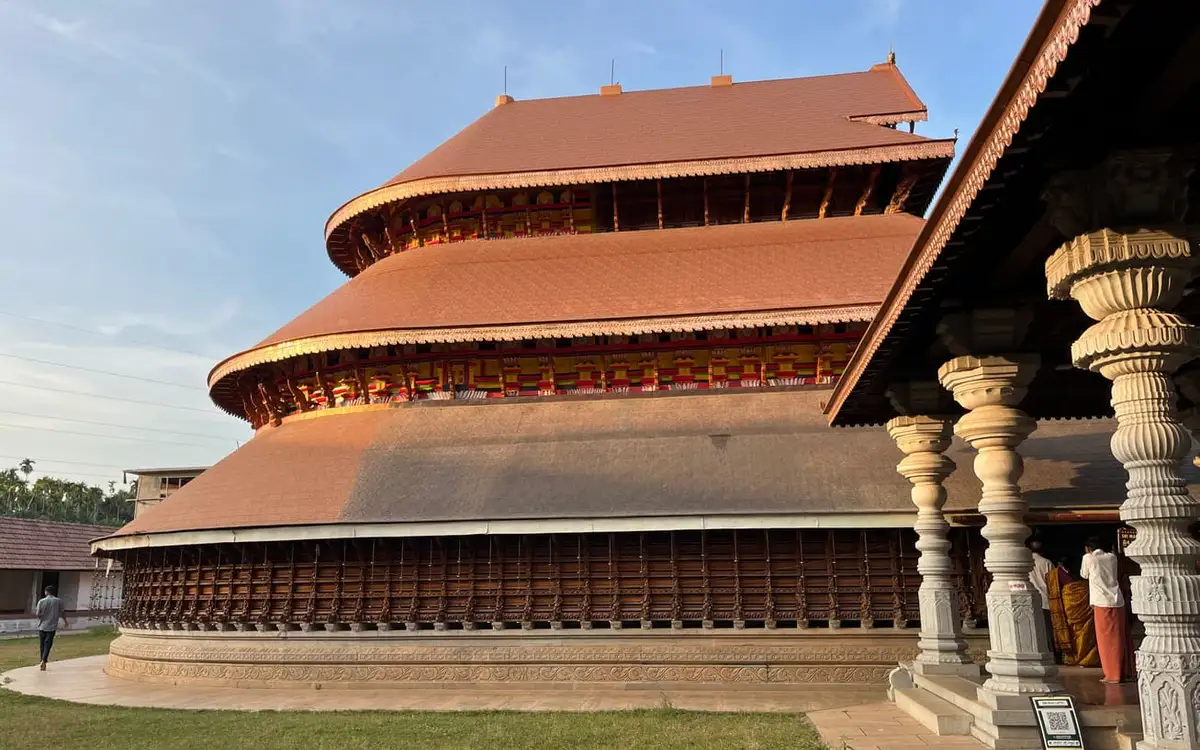
Temple in Kasaragod town. Sri Madanantheshwara Siddhivinayaka Temple, P.O. Madhur, Kasaragod, Kerala 671124 · Temple visit; check seva details direct · Madhur Temple, Kasaragod, Temple.
Contemporary suites hotel on Fort Road in central Kasaragod town. Rooms offer AC, memory-foam beds and free breakfast, with parking and EV charging.
Town restaurant in Kasaragod town. Kasaragod town, Kerala · kasaragod-town, eat, Town restaurant.
Official DTPC Kasaragod contact anchor for district visitor planning. Public information · DTPC Kasaragod, Tourist information, District contact.
Book with the place itself. India’s cyber-crime coordination centre warned in April 2025 that convincing copies of hotel and pilgrimage booking sites are being pushed through sponsored search and social ads, taking payment for rooms the property never hears about. Every listing here links to the business’s own contact details and its own Google or Bing profile — we take no commission and sit in nobody’s payment path. If a booking page reached you through an ad, check the address bar against the property’s own site before you pay. Fraud can be reported on cybercrime.gov.in or on 1930.
Find food, accommodation and activities across Kasaragod town. Browse the guides for places to eat, stay and explore along your route.
5 more places around Kasaragod town. Open a guide to plan the visit and onward journey.
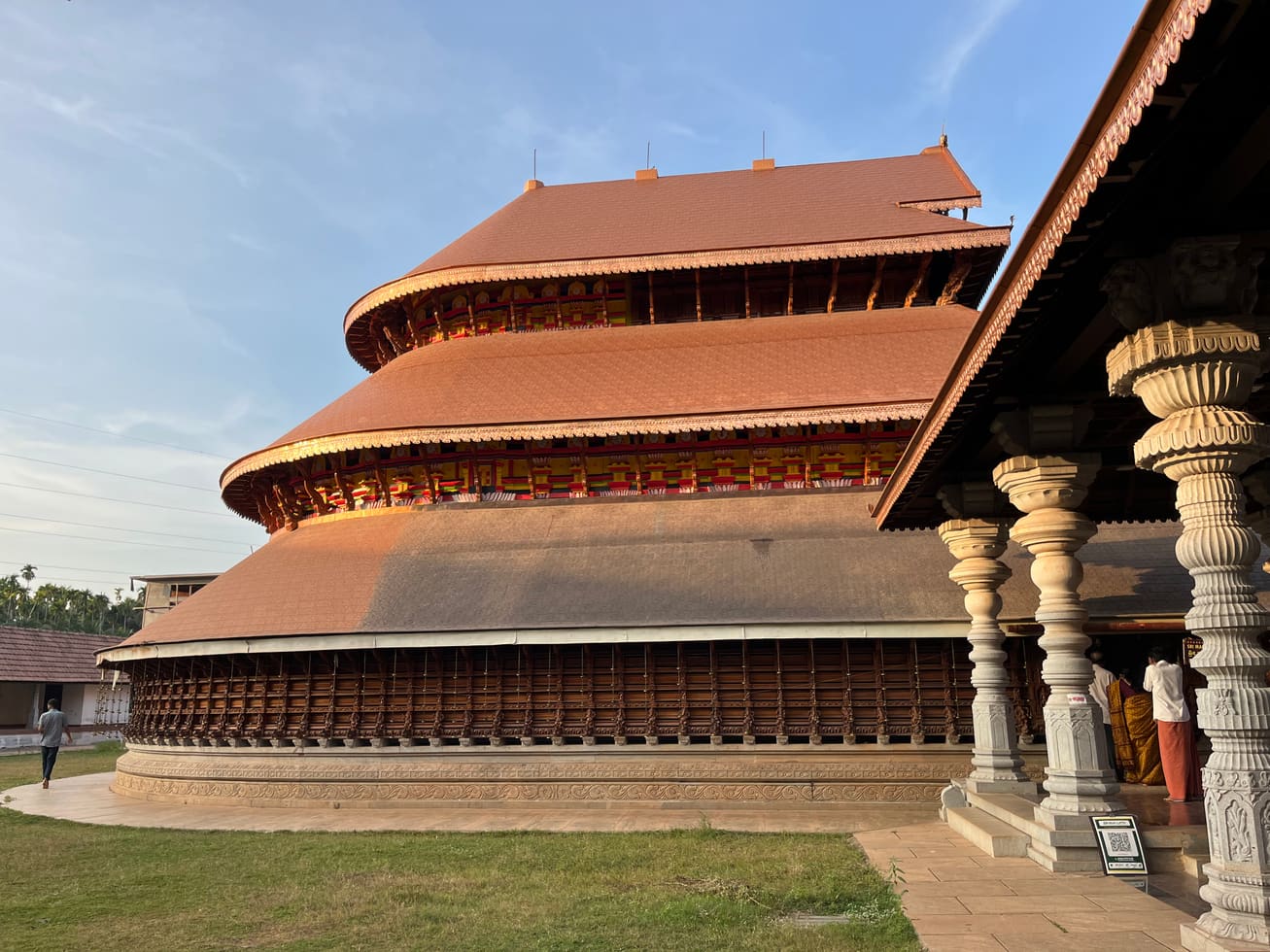
8.0 km · ~20 min by auto
The Madhur Sree Madanantheshwara-Siddhivinayaka temple on the Madhuvahini river — a Shiva temple better known for its beloved “Bodajja” Ganapathi and a Tipu Sultan sword-mark on its well.
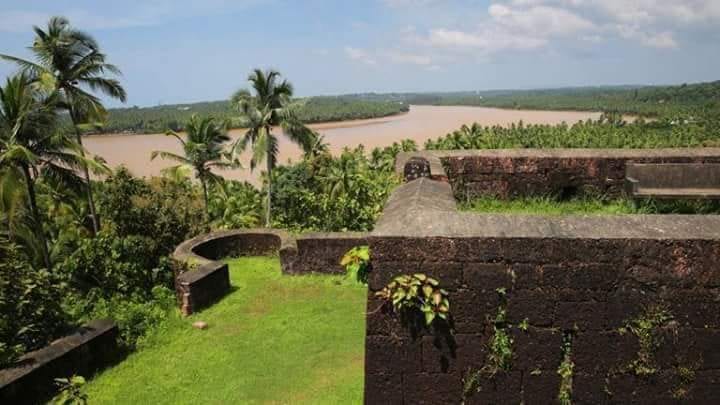
2.2 km · 28 min walk
A 17th-century hilltop fort above the Chandragiri river built by the Keladi Nayakas, with sweeping views of the river mouth and the Arabian Sea — good at sunset.
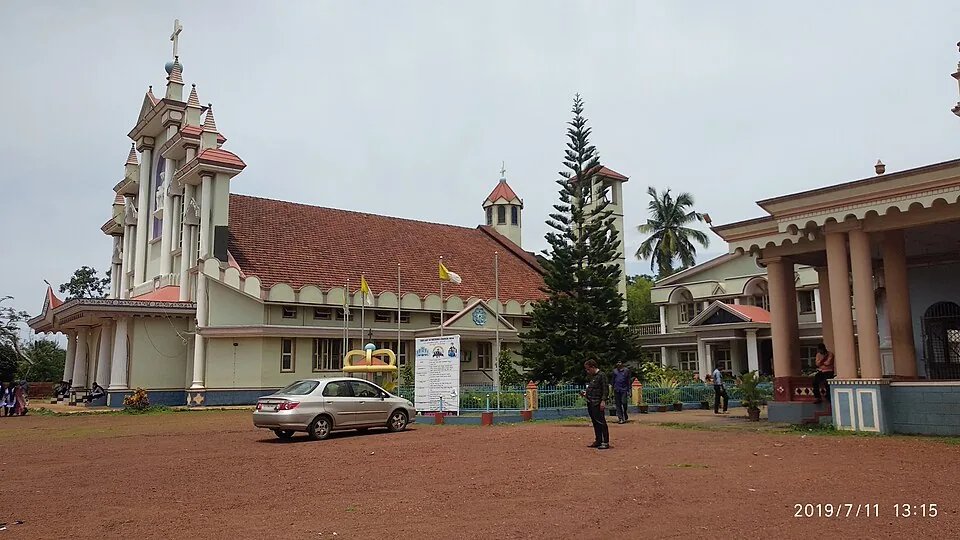
11.9 km · ~20 min by cab
Our Lady of Sorrows (Dolours) Church at Bela near Badiadka, built in 1890 — the oldest church and parish in Kasaragod district, founded by Konkani Catholics; a Gothic Revival church known for its statue of Mother Mary.
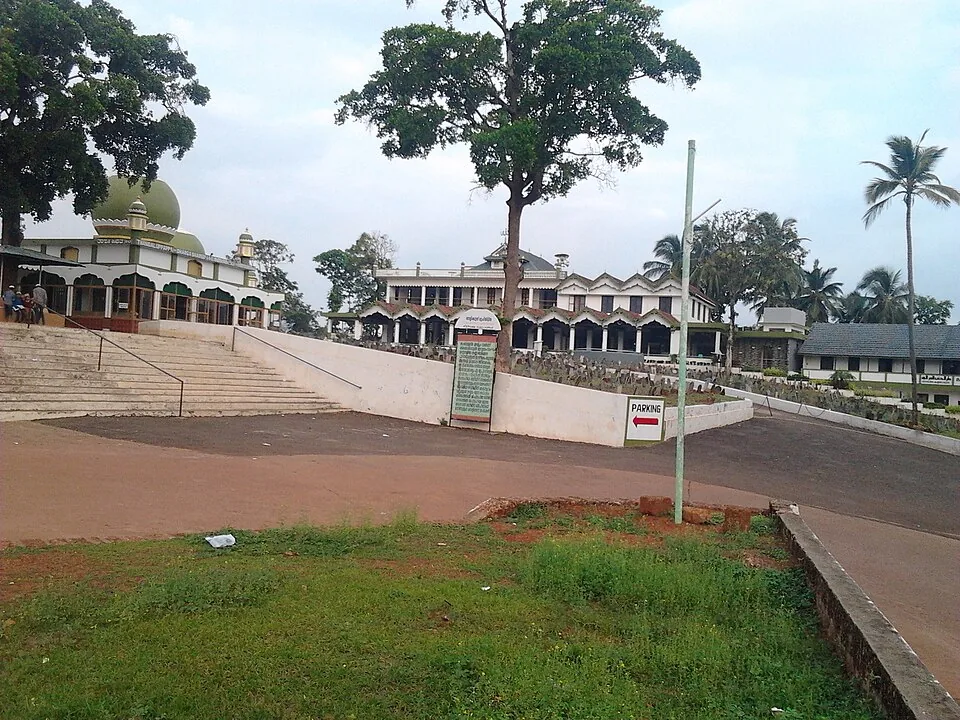
2.0 km · 26 min walk
The Nellikunnu Muhyaddin Juma Masjid, a Sunni Friday mosque and dargah near the Kasaragod town beach that houses the tomb of Saint Thangal Uppapa; a local pilgrimage centre whose annual Nercha draws large crowds.
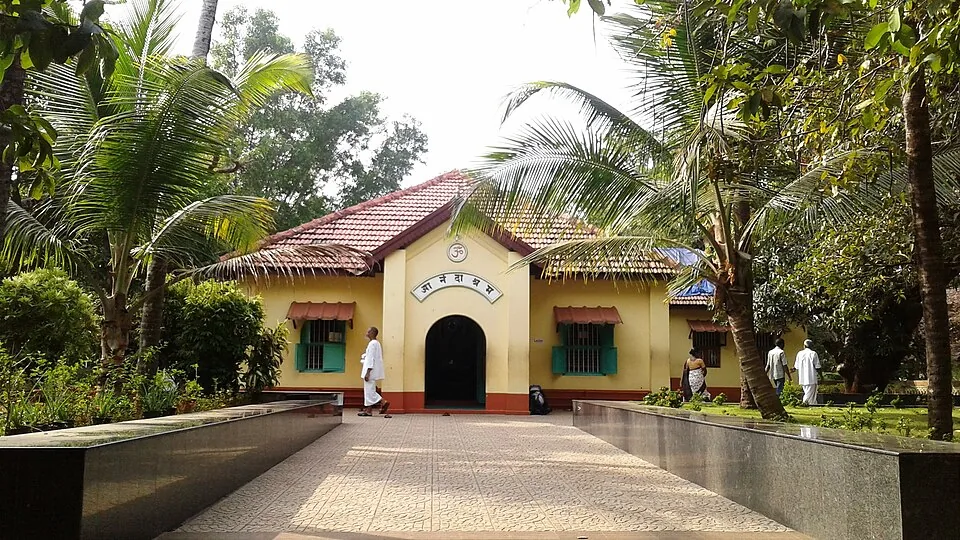
21.0 km · ~35 min by cab
A tranquil spiritual retreat at Kanhangad founded in 1931 by Swami Ramdas (Papa) and Mother Krishnabai, set in quiet wooded grounds; open to visitors of every faith under its motto of “universal love and service”.
Roampedia is commission-free — own or know a stay, eatery, guide or shop near Malik Deenar Mosque? List it and it appears here once verified.
Add a nearby businessEntry: No entry fee is charged; it is a place of worship, though donations for the mosque and its upkeep are welcomed.
Dress code: Modest dress is expected — shoulders and knees covered; women may be asked to cover their hair, and a head-scarf is advisable. Footwear is removed before entering; wudu (ablution) areas are on site. Norms can vary by area of the mosque and by occasion, so confirm on the day.
Festivals: The annual Uroos (Urs) commemorating Malik Ibn Dinar is the principal event — described as observed around Muharram and lasting roughly a month, with ziyarat, flag hoisting (Pataka Uyarthal) and communal feasting (Annadanam). The mosque also follows the wider Islamic calendar, including Ramadan and the two Eids (dates vary with the lunar calendar — confirm locally).
Photography: Exterior and architectural photography is usually tolerated, but avoid photographing worshippers, women and the interior prayer areas without permission, and refrain entirely during prayers. Always ask a caretaker first, especially near the mazar.
If you are travelling by bus or ferry, check the return service with the operator before setting out. Leave time to reach the stop or jetty after your visit.
Ask at the bus stand for the time of the last service back, not the next one. If you miss it, an auto or app cab is the fallback — agree the fare before you get in.
If you need step-free access, contact the site before travelling. Ask about a level entrance, steps along the route, the nearest drop-off point, seating and accessible toilets.
Charge cap and free-transaction limits: Reserve Bank of India, in force since 1 May 2025.
These services are listed within about 1.2 km of Malik Deenar Mosque. Walking distances follow mapped routes; access and opening hours can change. Other services may be closer but are not included here.
Emergency numbers are verified against official government and state tourism sources. 112 works anywhere in India.
The Nellikunnu Muhyaddin Juma Masjid, a Sunni Friday mosque and dargah near the Kasaragod town beach that houses the tomb of Saint Thangal Uppapa; a local pilgrimage centre whose annual Nercha draws large crowds.
2.0 km · 26 min walk · straight lineA 17th-century hilltop fort above the Chandragiri river built by the Keladi Nayakas, with sweeping views of the river mouth and the Arabian Sea — good at sunset.
2.2 km · 28 min walk · straight lineThe Madhur Sree Madanantheshwara-Siddhivinayaka temple on the Madhuvahini river — a Shiva temple better known for its beloved “Bodajja” Ganapathi and a Tipu Sultan sword-mark on its well.
8.0 km · ~20 min by auto · straight line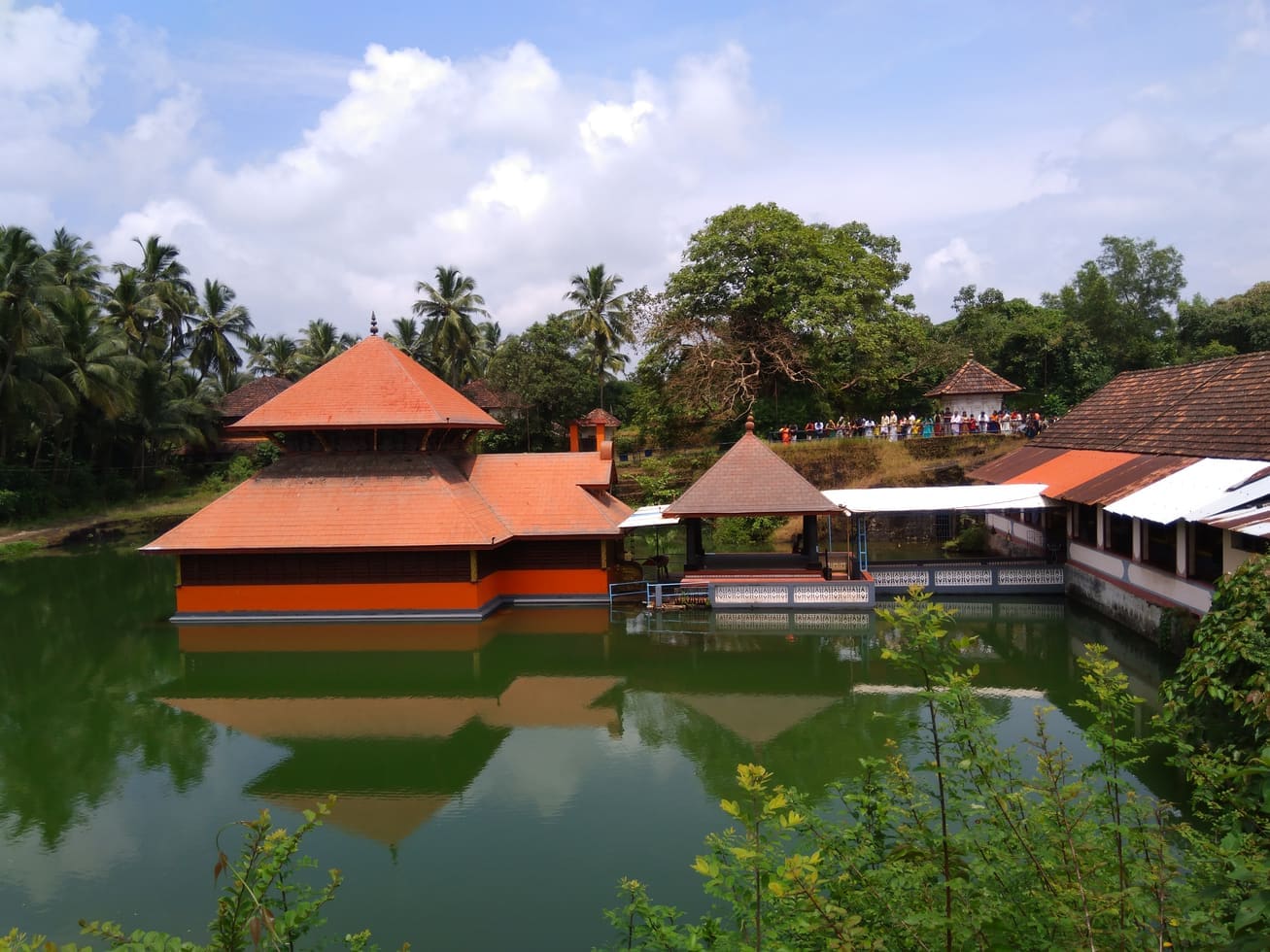
Kerala’s only lake temple, near Kumbla, the moolasthanam of Ananthapadmanabha — and home by tradition to Babiya, the temple’s resident vegetarian crocodile.
11.1 km · ~18 min by cab · straight line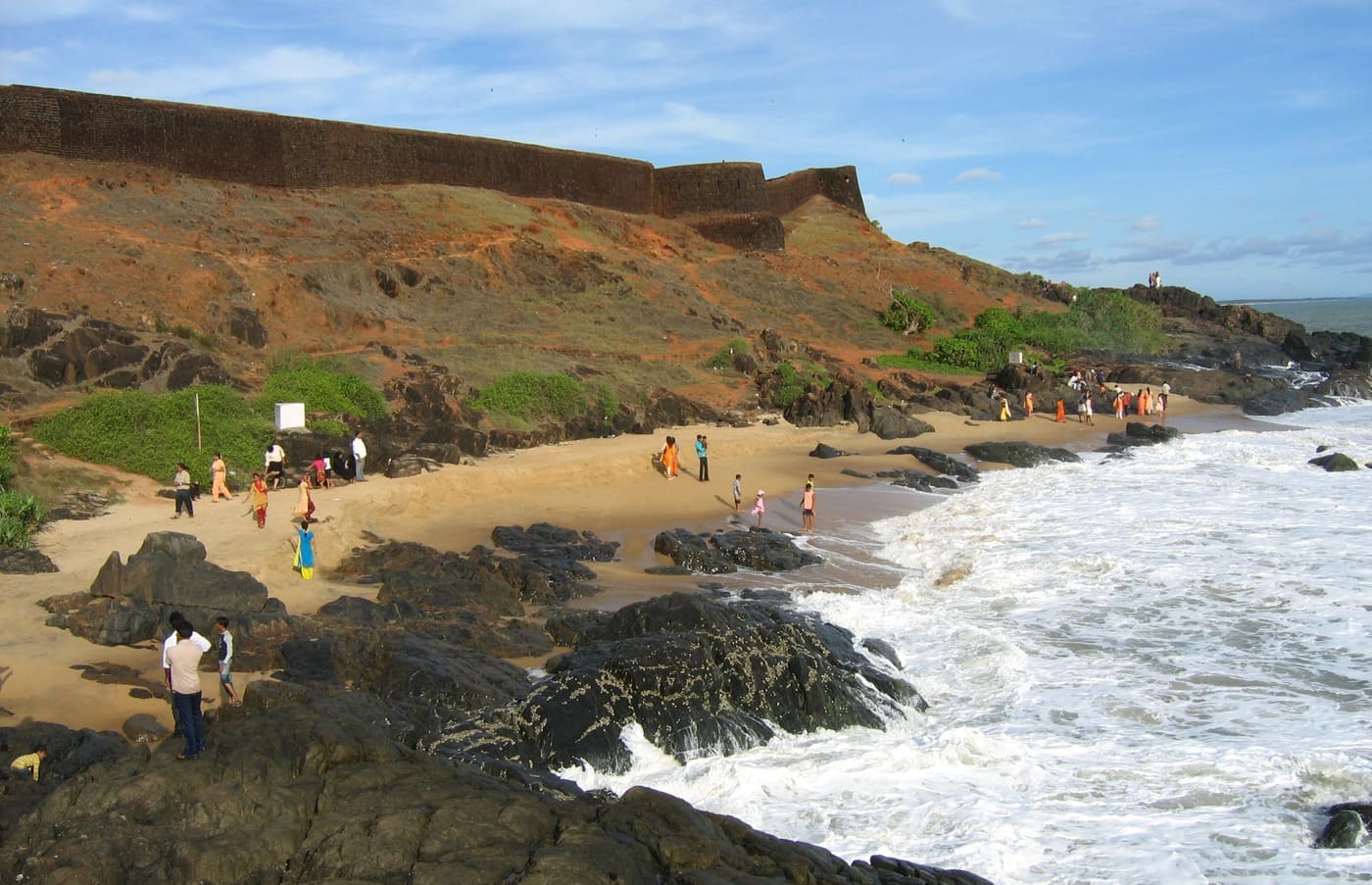
Kerala’s largest fort (~40 acres), a keyhole-shaped laterite bastion jutting into the Arabian Sea, built around 1650 by the Keladi Nayakas; its observation tower once mounted cannons.
11.3 km · ~19 min by cab · straight lineOur Lady of Sorrows (Dolours) Church at Bela near Badiadka, built in 1890 — the oldest church and parish in Kasaragod district, founded by Konkani Catholics; a Gothic Revival church known for its statue of Mother Mary.
11.9 km · ~20 min by cab · straight line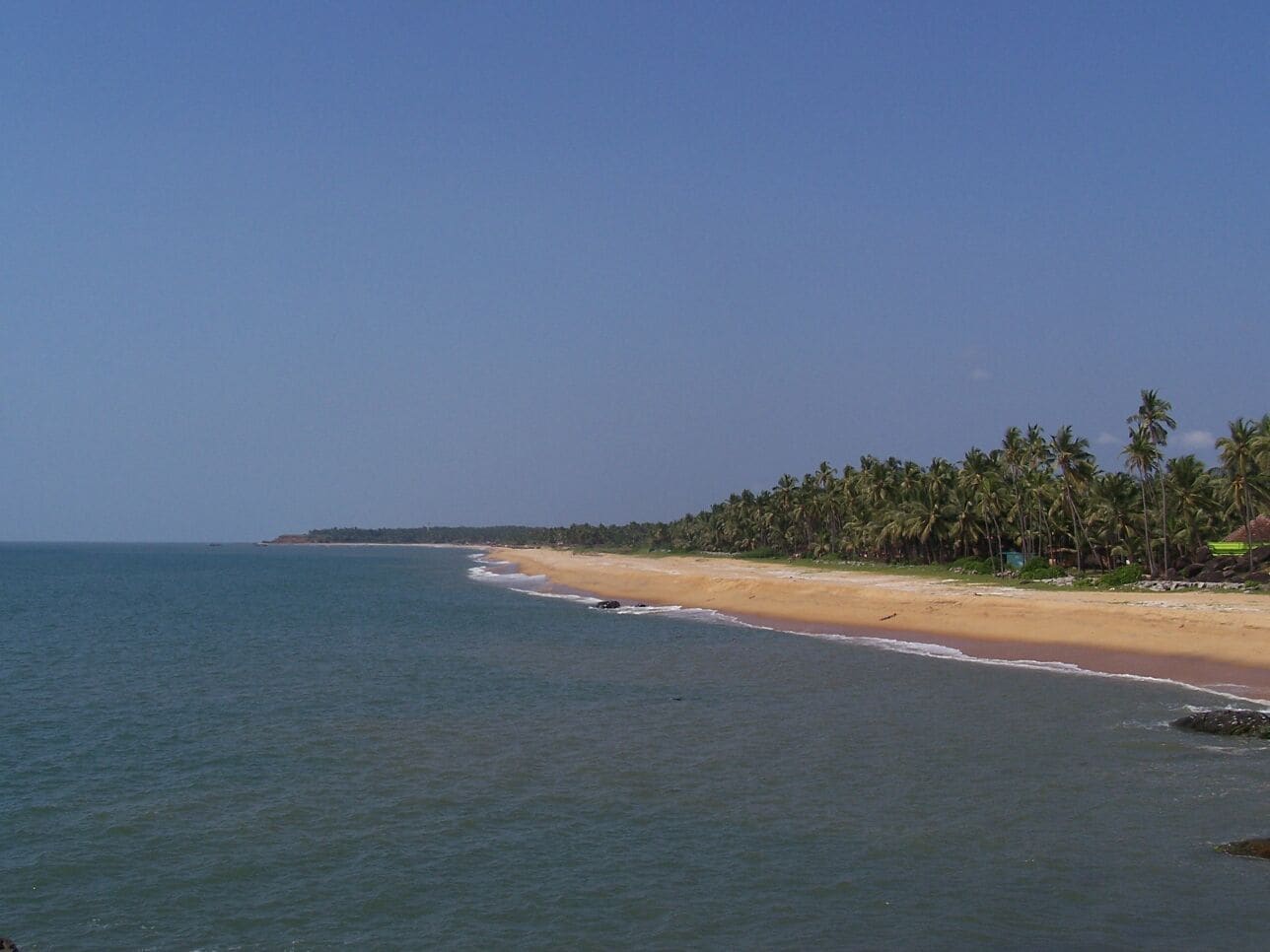
The beach stretch below Bekal Fort, with a landscaped park — famously the setting of the song “Uyire” from the film Bombay.
12.1 km · ~20 min by cab · straight lineA tranquil spiritual retreat at Kanhangad founded in 1931 by Swami Ramdas (Papa) and Mother Krishnabai, set in quiet wooded grounds; open to visitors of every faith under its motto of “universal love and service”.
21.0 km · ~35 min by cab · straight line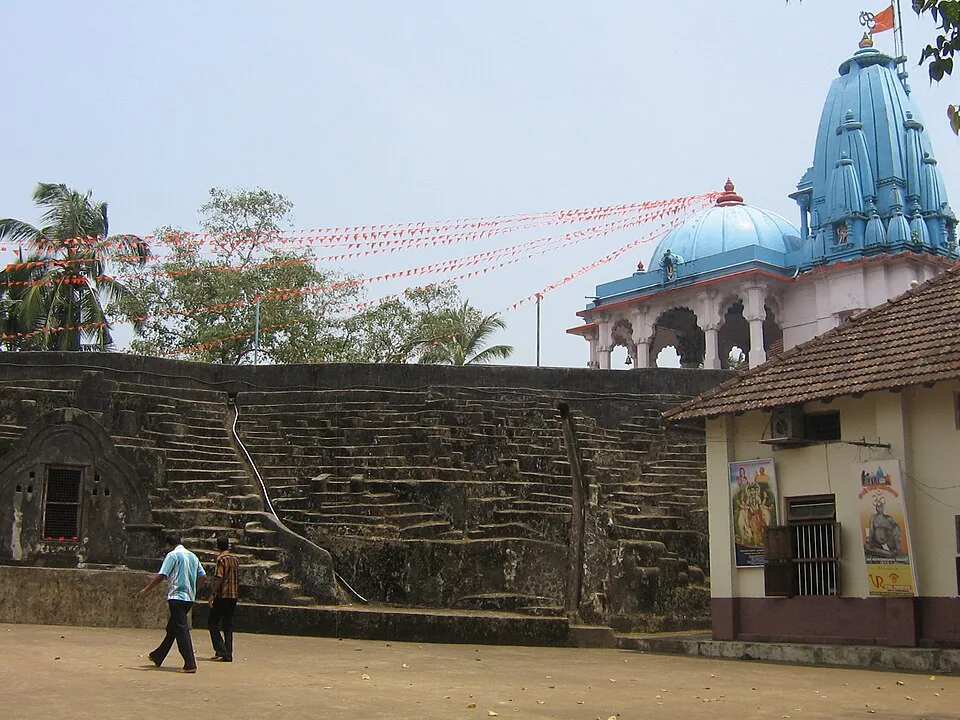
The hillside cave complex at Hosdurg where Bhagawan Nityananda cut meditation chambers by hand out of a single mass of laterite — 43 by the ashram’s own account — with the Nithyananda Temple built above them in 1963. Mobile phones are prohibited in the caves.
22.6 km · ~38 min by cab · straight line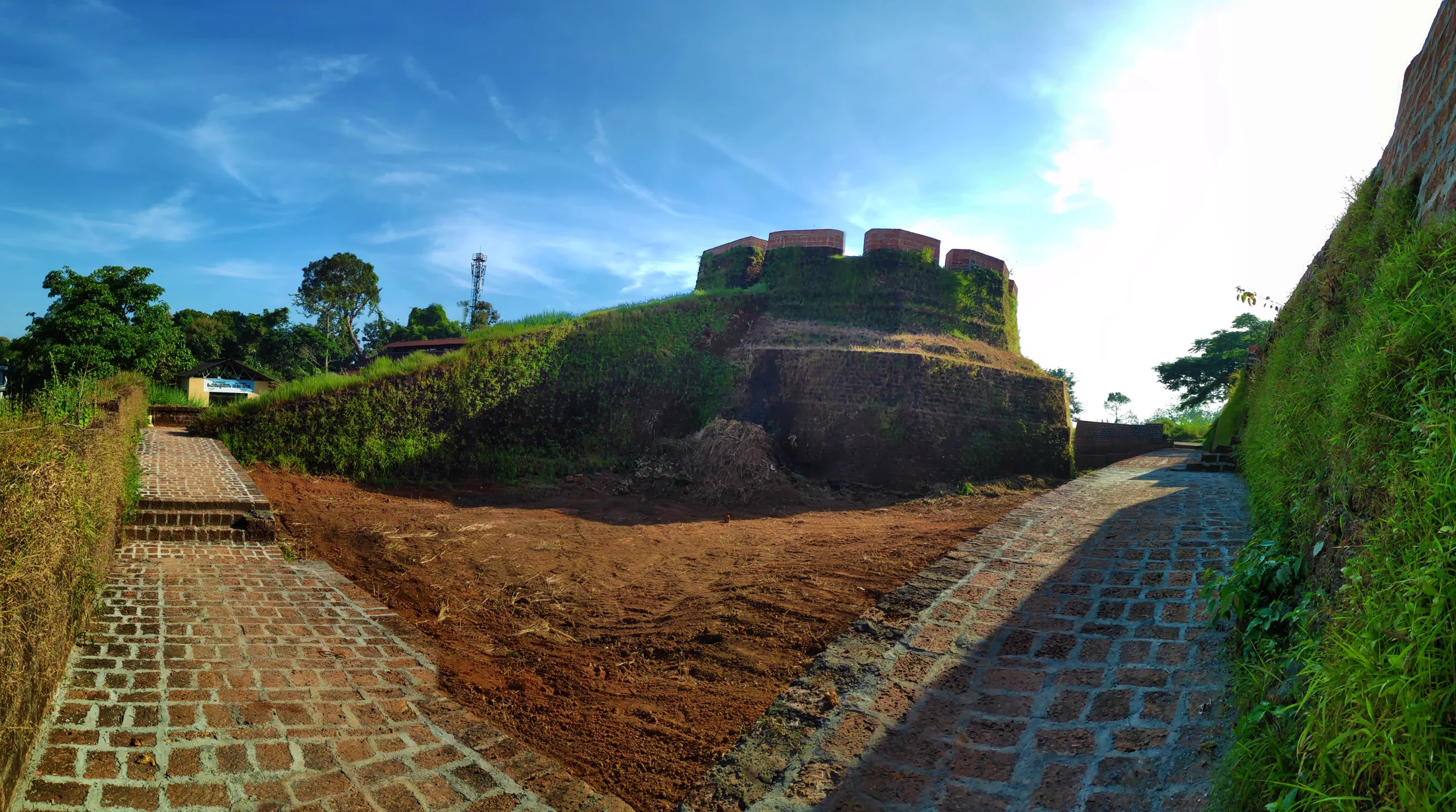
The surviving laterite fort at Hosdurg in Kanhangad is associated with the Ikkeri Nayakas and recognised by its rounded bastion and broad ramp; Nithyananda Ashram is a separate neighbouring institution.
22.7 km · ~38 min by cab · straight line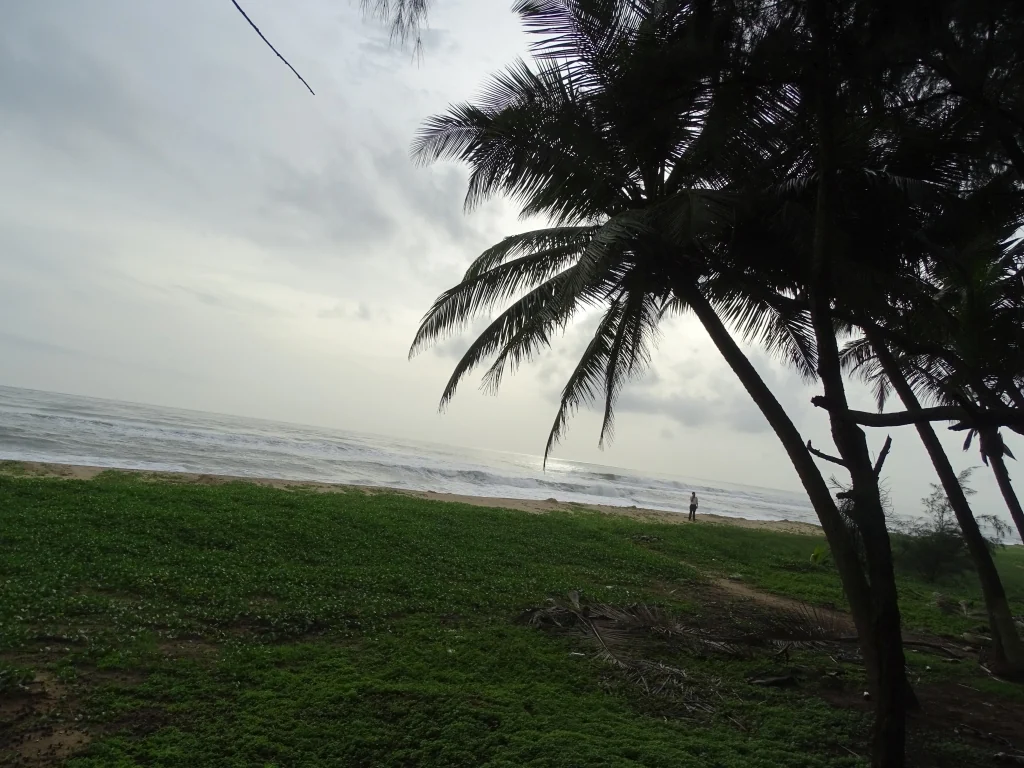
Kanhangad Beach is the Hosdurg coastal frontage of Kanhangad in Kasaragod district, with a broad sandy shore and an established fish-landing setting. It is a beach visit from Kanhangad town, distinct from Hosdurg Fort, the town’s ashrams and the separately named beaches at Ajanur, Ozhinhavalappu and Thaikadappuram. Use the named beach approach rather than a generic Kanhangad map result. The shore’s working character is central to the visit: leave boats, nets and landing passages clear while enjoying the sea-facing sand.
23.6 km · ~39 min by cab · straight line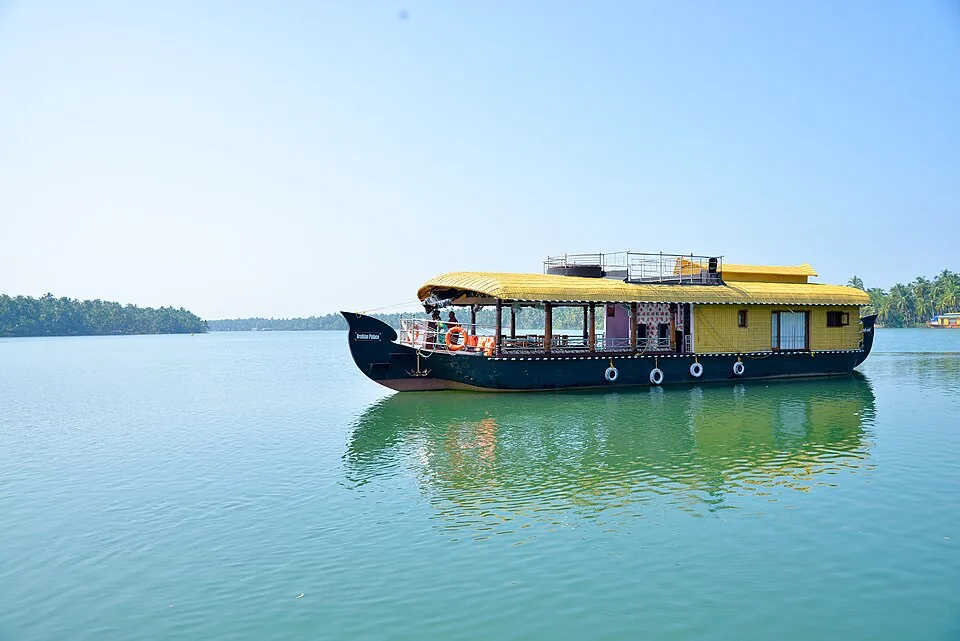
The cultural capital of Kasaragod — a Theyyam and folk-arts town on the Nileshwaram backwaters, with kovilakams, kavus and a lively ritual-arts season.
29.3 km · ~49 min by cab · straight lineNearby toilets, pharmacies, ATMs, seating and vets are community-mapped and may be incomplete or out of date. Map data © OpenStreetMap contributors | Walking times © openrouteservice.org by HeiGIT
Malik Ibn Dinar (Malik Deenar) is remembered in Islamic tradition as a Tabi‘i — of the generation after the Prophet’s Companions — and as one of the earliest travellers to bring Islam to the Malabar coast in the seventh century AD. Tradition holds that he and his companions founded a chain of coastal mosques, of which the Thalankara mosque at Kasaragod is counted one (traditional account — scholars debate the dating).
The mosque houses a revered mazar (tomb), and long tradition holds that Malik Deenar died at Thalankara and is buried here, which makes it a major pilgrimage site. Some historians instead identify the grave as that of a descendant, such as Malik Ibn Muhammad. Roampedia repeats the burial as devotional tradition, not settled fact — the accounts genuinely differ.
Local and traditional accounts date its founding to around 642–643 CE (22 AH), which would make it one of the oldest mosques in India. Historians treat this seventh-century dating cautiously, as it rests largely on later chronicles rather than contemporary evidence (traditional dating — confirm as tradition rather than fact).
It is an active mosque and pilgrimage centre, and visitors are generally welcomed to see the heritage structure, particularly outside prayer times. Norms on access to prayer areas — and for women — can vary, so dress modestly, remove footwear where required, ask before entering inner areas and follow the guidance of caretakers on the day.
The Uroos is the mosque’s annual commemoration of Malik Ibn Dinar’s arrival and legacy. Sources describe it as observed around the Islamic month of Muharram and lasting roughly a month, with rituals such as ziyarat (visiting the tomb), flag hoisting (Pataka Uyarthal) and communal feeding (Annadanam). Exact dates shift with the lunar calendar, so confirm before travelling.
The mosque sits within Kasaragod town, close to the railway station and the town’s old quarters. The magnificent Bekal Fort — one of Kerala’s largest — lies a short drive to the south, along with backwaters and beaches, making Thalankara a natural stop on a northern Kerala heritage circuit.
Outside prayer rush, unless visiting for worship.
Entry: No entry fee is charged; it is a place of worship, though donations for the mosque and its upkeep are welcomed. Timings: Generally open through the day around the five daily prayer times, with the mazar accessible to pilgrims; casual sightseeing is best done outside prayer hours and away from the busy Friday midday congregation.
Base yourself in Kasaragod town or a nearby town in Kasaragod, then confirm the last-mile route locally before leaving. Plan around prayer times and local visitor rules. If the visit depends on forest, temple, boat, ferry, weather or seasonal access, check the official/local rule on the day before travel.
30 minutes to 1 hour.
Nearby you can pair Nellikunnu Mosque (2.0 km), Chandragiri Fort (2.2 km), Madhur Temple (8.0 km), Ananthapura Lake Temple (11.1 km).
Avoid crowding entry areas during prayer times. Respect gendered or restricted spaces.
Written about Malik Deenar Mosque itself — its history, its legends and the arguments about them.
Route-level itineraries and practical guides for the rest of Kerala.
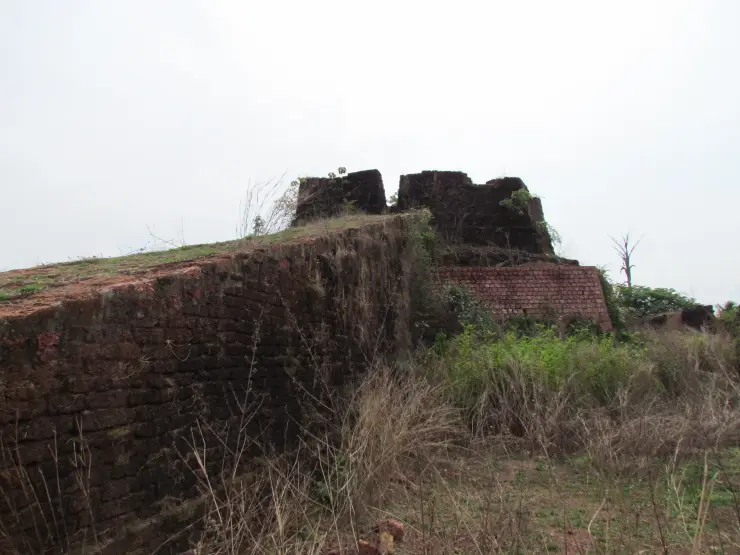
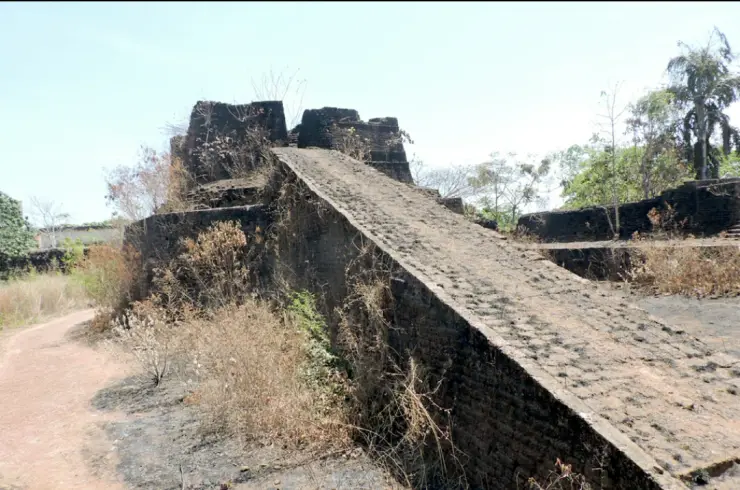
Photographs: Prof tpms (CC BY-SA 4.0), Ashrafulkhalq (CC BY-SA 3.0), Mahshooq05 (CC BY-SA 4.0), Shareef Taliparamba (CC BY-SA 2.0). Wikimedia Commons.