Highlights
- Unique lake-temple setting near Kumbla/Ananthapura.
- Good pairing with Kasaragod town, Bekal, Madhur Temple and northern temple circuits.
- What you arrange on the ground here: pilgrim stays, vegetarian food, drivers and guides.
Ananthapura Lake Temple near Kumbla is Kerala's distinctive lake-temple shrine, set within a water tank and linked by tradition to Padmanabhaswamy worship. It is one of Kasaragod's most memorable temple pages because the setting is visually and culturally specific.

Check entry arrangements. Ask temple staff about visitor entry, dress requirements and access to the inner shrine before you travel, especially if you are visiting as a non-Hindu.
Dress respectfully and follow the institution’s admission and photography rules.
Plan it respectfully as an active temple, not only a photo location. Current darshan, dress, photography and local visitor rules should be checked before arrival.
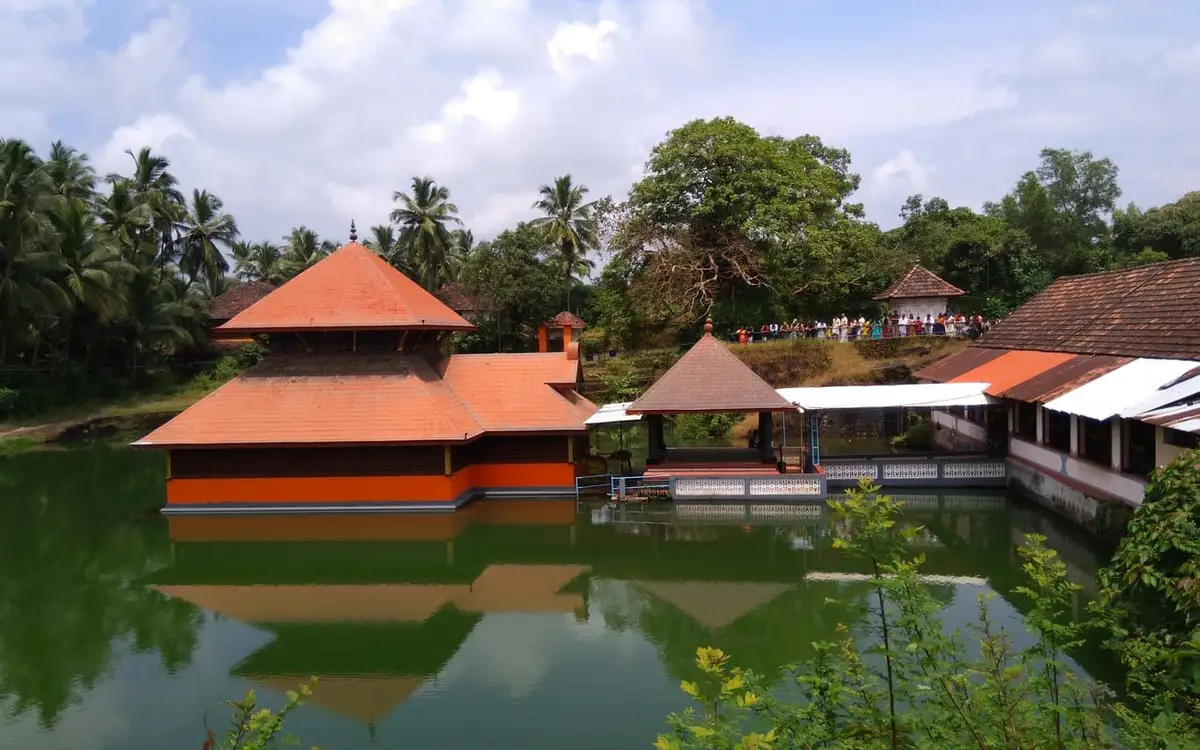
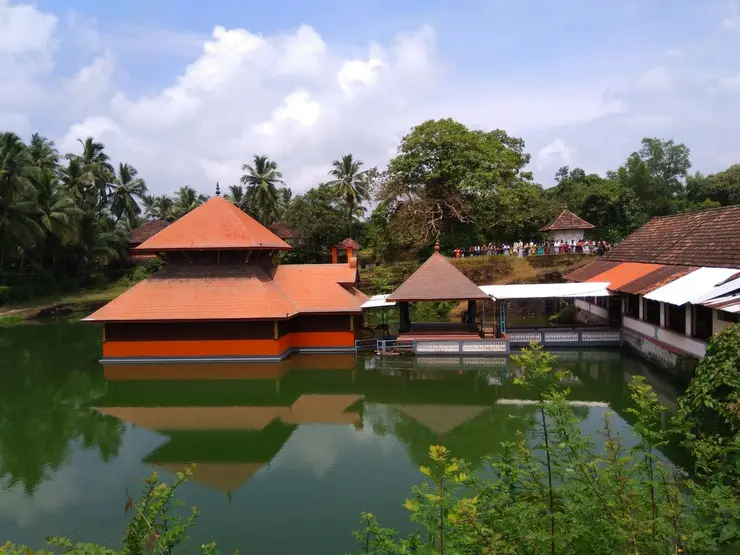
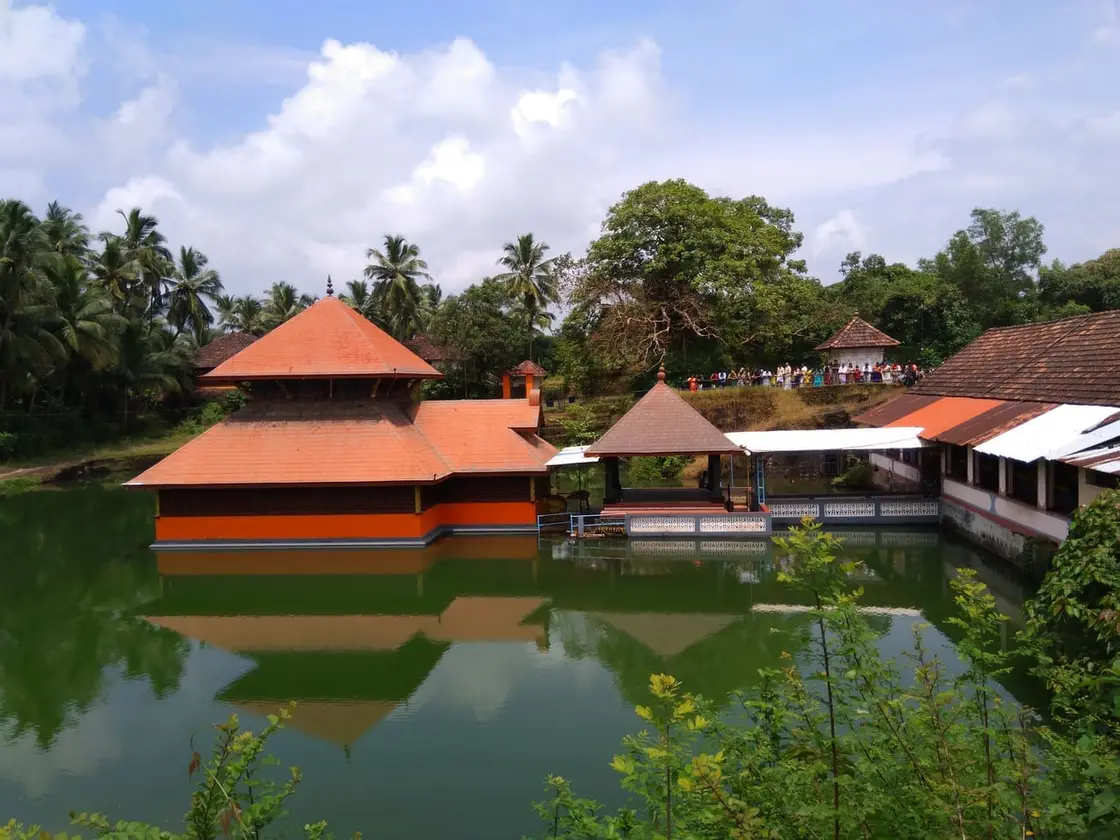
Set in the middle of a spring-fed lake near Kumbla in Kasaragod, the Ananthapura Lake Temple is the only lake temple in Kerala — a serene shrine reached by a single footbridge, revered as the original seat of Ananthapadmanabha and famous for its long tradition of a guardian crocodile.
Roughly 6 km inland from the town of Kumbla, in the little village of Ananthapura in Kasaragod district, a small stone shrine sits alone at the centre of a rectangular, spring-fed lake. Reached only by a narrow footbridge, the Sri Ananthapadmanabha Swamy Temple is the sole lake temple in Kerala, and the water around it — said to be fed by perennial springs and never to run dry — is as much a part of the sanctity as the sanctum itself.
The temple enshrines Vishnu as Ananthapadmanabha, reclining upon the coils of the great five-hooded serpent Anantha. For devotees, this quiet spot carries an unusually grand claim: it is held to be the moola-sthanam, the original abode, of the very deity later worshipped at the world-renowned Sree Padmanabhaswamy Temple in Thiruvananthapuram. To stand here is, in the tradition, to stand where the story began.
The setting shapes the whole experience. The lake, described by Kerala Tourism as roughly 302 feet on each side, mirrors the low shrine and the surrounding greenery, and the crossing of the footbridge — the namaskara mandapam is linked to the eastern rock by the bridge that is the only passage to the sreekovil — gives arrival a deliberate, ceremonial feel. It is a compact temple rather than a towering one, and its magic lies in the stillness of the water and the sense of a place set apart.
Among the temple's most beloved traditions is its guardian crocodile. For decades a single crocodile was believed to live in the lake and its adjoining cave, gentle towards people and — as devotees hold — taking only the temple prasadam offered to it. The best-known of these, affectionately called Babiya, was mourned across Kerala when she reportedly died in October 2022 after living at the shrine for many years; a smaller crocodile was later sighted in the lake, and the tradition of a lone sacred crocodile continues (see the FAQ for the current, carefully hedged status).
Above the worshippers, the ceiling of the mandapam carries an exceptional set of wooden carvings depicting the Dashavataram, the ten incarnations of Vishnu — a reminder that beyond the legends and the lake, this is a living shrine of real artistic and devotional worth. Unusually for Kerala, it is open to visitors of all faiths and castes, so travellers as well as pilgrims can cross the bridge and take in its unusual, watery calm.
The temple's central legend ties it directly to Thiruvananthapuram. As the story is traditionally told, the sage Vilwamangalathu Swamiyar (Vilwamangalam) was performing penance at Ananthapura when a radiant young boy began serving him. One day the sage, disturbed during his worship, spoke harshly to the child — who, feeling slighted, declared that if the sage wished to see him again he must go to Ananthankadu, and then vanished into a cave beside the temple.
Pursuing the boy through the cavern, the sage is said to have realised that the child was none other than Lord Vishnu himself, who reappeared far to the south reclining upon the thousand-hooded serpent — at the spot that became the Padmanabhaswamy Temple in Thiruvananthapuram. From this legend flows the belief that Ananthapura is the moola-sthanam, the original abode, from which the deity moved to the capital.
In keeping with the tale, a cave near the temple is popularly said to connect, underground, all the way toward Thiruvananthapuram. This underground passage belongs firmly to the realm of legend rather than verified fact, but it is central to how devotees understand the bond between the two shrines. The guardian crocodile of the lake is likewise woven into this lore, believed to watch over both the cave and the sanctity of the shrine.
The temple is an ancient one, and its origins are most commonly placed in the 9th century, though — as with many shrines of such age — precise founding dates are a matter of tradition rather than firm documentary record. What is clear is that Ananthapura has been a venerated centre of Ananthapadmanabha worship for many centuries, its fame amplified by the belief that it is the source-shrine of the great temple at Thiruvananthapuram.
A remarkable feature of the temple concerns its idols. Rather than the usual stone or metal, the original images are traditionally said to have been fashioned from kadu-sarkara-yogam — a rare composite of more than seventy medicinal and herbal substances bound with jaggery. This unusual material, prized in some Kerala shrines, was eventually replaced.
In 1972 the herbal idols were substituted with images of panchaloha, the traditional five-metal alloy used for temple murtis. Accounts associate this consecration with the Kanchi seer Jayendra Saraswathi. The change gave the sanctum its present metal images while the temple retained its older character elsewhere.
The temple is administered as a functioning shrine with daily worship, and over the years it has seen restoration and upkeep of its structure, its lakeside setting and its celebrated wooden ceiling carvings. Its status as Kerala's only lake temple, together with the guardian-crocodile tradition, has made it both a pilgrimage site and a notable heritage attraction in the Kasaragod region.
Today the temple sits within easy reach of Kumbla and the wider Kasaragod circuit, drawing pilgrims who come for its Padmanabha connection and travellers curious about its singular setting. Its openness to visitors of all communities is itself part of its modern identity, distinguishing it from some other Kerala temples that restrict entry to Hindus.
It is the only lake temple in Kerala — a shrine set alone at the centre of a spring-fed lake and reached by a single footbridge, a setting you will not find anywhere else in the state.
It is revered as the moola-sthanam, the original abode of Ananthapadmanabha, giving even a short visit a strong sense of connection to the famous Padmanabhaswamy Temple in Thiruvananthapuram.
The guardian-crocodile tradition — most famously the beloved Babiya — makes this one of Kerala's most distinctive temple stories, and the lakeside cave adds an air of gentle mystery.
The wooden ceiling carvings of the Dashavataram in the mandapam are a genuine artistic highlight, rewarding travellers who look up as well as around.
Unusually, the temple welcomes visitors of all faiths and castes, so non-Hindu travellers can also cross the bridge and experience the shrine and its tranquil water.
Its calm, photogenic setting near Kumbla makes it an easy and rewarding detour on any Kasaragod or Bekal itinerary, pairing well with the district's beaches and forts.
Road km to Kasaragod; ghat roads and traffic vary — allow extra.
November to February is easiest for travel; festival days need crowd planning.
Live forecast loads in your browser.
Sun and moon are calculated for this location and shown in IST. Photography windows are the hour around sunrise and sunset; the sunset bearing is degrees clockwise from true north. Moon phase is accurate to about half a day.
Verified hotels, homestays, restaurants, experiences, sights, shops and rentals around Ananthapura Lake Temple — commission-free, with direct contact. Filter by what you need.

Ananthapura Lake Temple is Kerala unique lake temple near Kumbla, best planned with direct temple timing and contact details before pairing it with Bekal, Madhur or Kasaragod town. Temple visit; check offerings direct · Ananthapura Lake Temple, Kumbla, Temple.
Named Kasaragod-side hotel support for Kumbla and Ananthapura temple visitors. Mid-range 3-star hotel · stay, Hotel, Kalluvalappil Holiday Inn Kasaragod.
Multi-cuisine restaurant in Kumbla and Ananthapura. Kumbla-Badiadka Road, near Doctors Hospital, Kumbla, Kasaragod, Kerala 671321 · eat, Multi-cuisine restaurant, Royal Quba Multi Cuisine Restaurant Kumbla.
Route-planning record for reaching Ananthapura Lake Temple from Kumbla, Kasaragod and nearby rail/road points.
Kumbla homestay near Ananthapura Lake Temple, useful for travellers needing a local overnight base. BB, Homestay near lake temple, kumbla-and-ananthapura.
Book with the place itself. India’s cyber-crime coordination centre warned in April 2025 that convincing copies of hotel and pilgrimage booking sites are being pushed through sponsored search and social ads, taking payment for rooms the property never hears about. Every listing here links to the business’s own contact details and its own Google or Bing profile — we take no commission and sit in nobody’s payment path. If a booking page reached you through an ad, check the address bar against the property’s own site before you pay. Fraud can be reported on cybercrime.gov.in or on 1930.
Find food, accommodation and activities across Kumbla and Ananthapura. Browse the guides for places to eat, stay and explore along your route.
4 more places around Kumbla and Ananthapura. Open a guide to plan the visit and onward journey.

4.6 km · ~12 min by auto
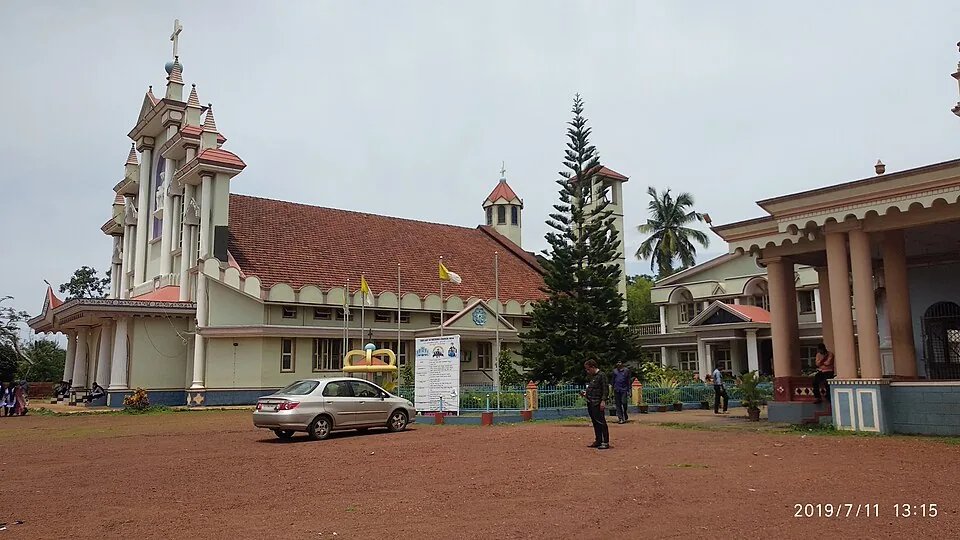
Our Lady of Sorrows (Dolours) Church at Bela near Badiadka, built in 1890 — the oldest church and parish in Kasaragod district, founded by Konkani Catholics; a Gothic Revival church known for its statue of Mother Mary.

4.7 km · ~12 min by auto
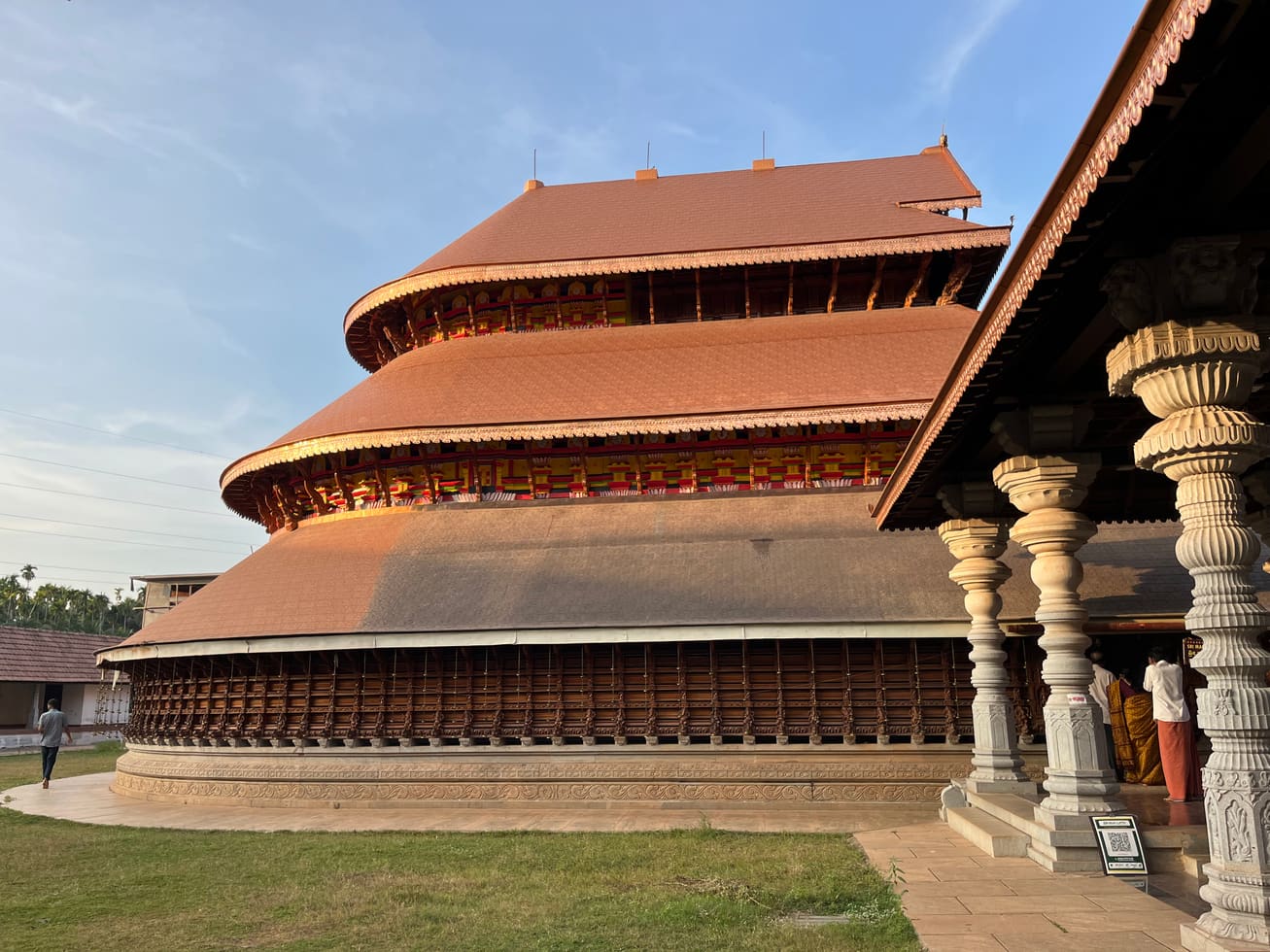
The Madhur Sree Madanantheshwara-Siddhivinayaka temple on the Madhuvahini river — a Shiva temple better known for its beloved “Bodajja” Ganapathi and a Tipu Sultan sword-mark on its well.

9.3 km · ~16 min by cab
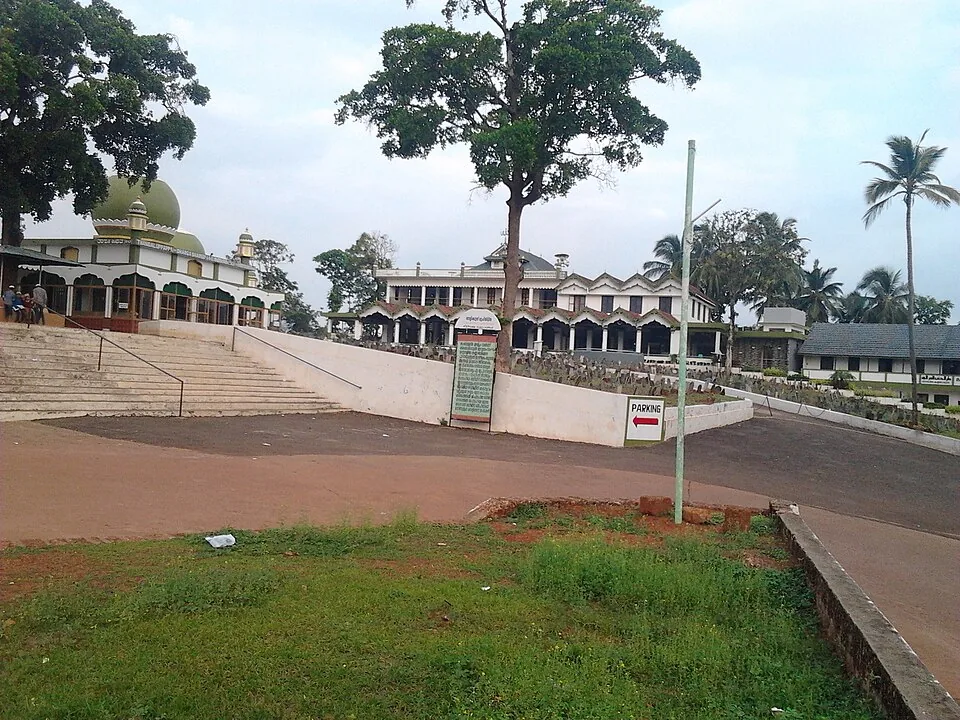
The Nellikunnu Muhyaddin Juma Masjid, a Sunni Friday mosque and dargah near the Kasaragod town beach that houses the tomb of Saint Thangal Uppapa; a local pilgrimage centre whose annual Nercha draws large crowds.

11.1 km · ~18 min by cab
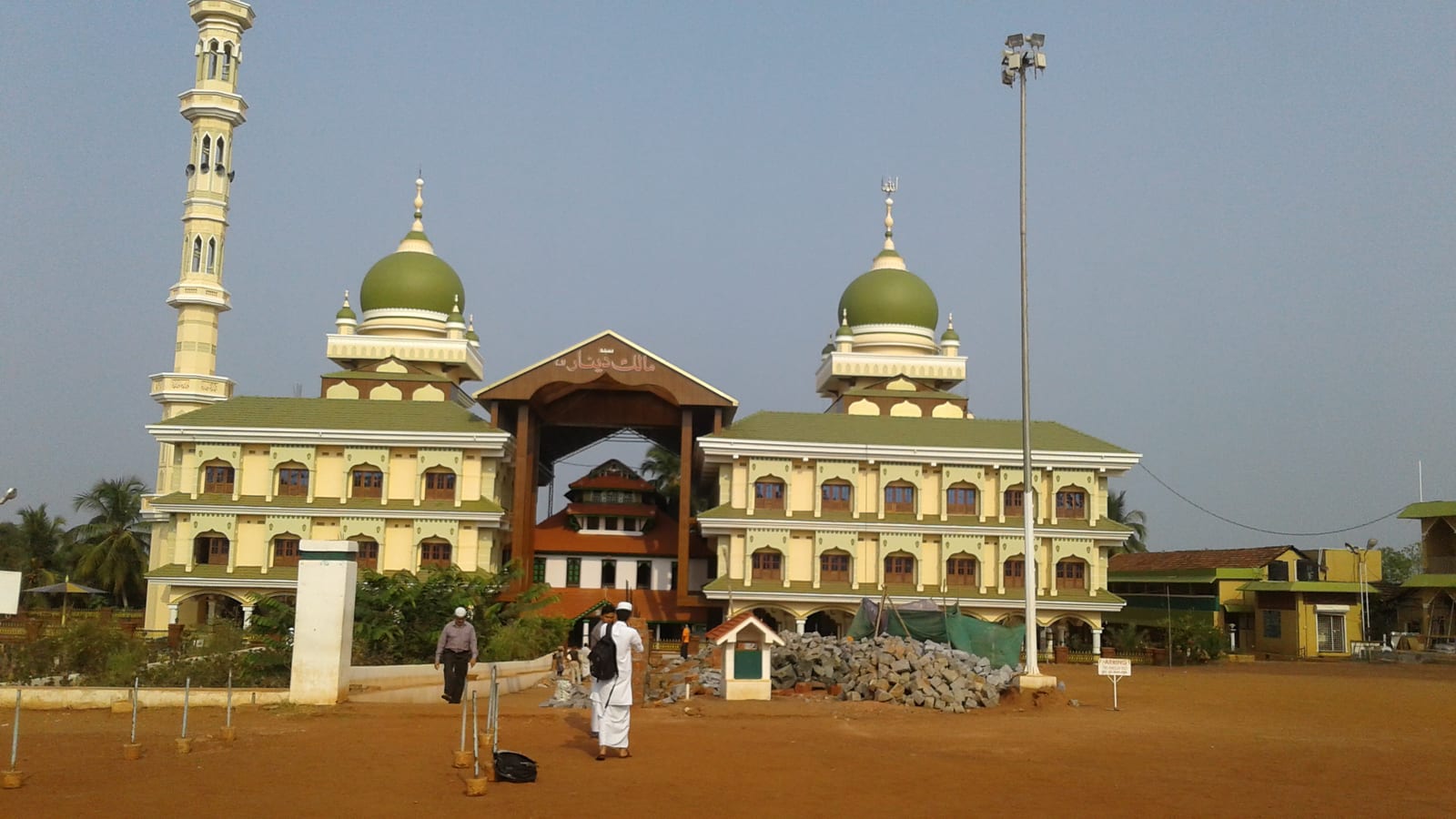
The Malik Ibn Dinar Juma Masjid in Thalankara, Kasaragod — by tradition among the oldest mosques in India, linked to the earliest arrival of Islam on the Malabar coast.
Roampedia is commission-free — own or know a stay, eatery, guide or shop near Ananthapura Lake Temple? List it and it appears here once verified.
Add a nearby businessEntry: No entry fee for temple visits is generally charged; any specific pooja or offering costs are payable at the temple.
Dress code: Traditional temple attire is expected — men in a dhoti/mundu (upper body often bare or minimally covered; dark dhotis may be discouraged), women in a saree or salwar-kameez with dupatta, modestly covering shoulders and knees.
Festivals: The annual temple festival, usually in March or April, is a multi-day celebration with processions, traditional music and rituals. Vishu (Malayalam New Year, April) and Vaikunta Ekadasi (around December) are also observed with special fervour.
Photography: Photography of the lake, bridge and exterior is popular, but restrictions often apply inside the sanctum and around rituals — always check and follow the temple staff's guidance before photographing.
If you are travelling by bus or ferry, check the return service with the operator before setting out. Leave time to reach the stop or jetty after your visit.
Ask at the bus stand for the time of the last service back, not the next one. If you miss it, an auto or app cab is the fallback — agree the fare before you get in.
If you need step-free access, contact the site before travelling. Ask about a level entrance, steps along the route, the nearest drop-off point, seating and accessible toilets.
Emergency numbers are verified against official government and state tourism sources. 112 works anywhere in India.

Our Lady of Sorrows (Dolours) Church at Bela near Badiadka, built in 1890 — the oldest church and parish in Kasaragod district, founded by Konkani Catholics; a Gothic Revival church known for its statue of Mother Mary.
4.6 km · ~12 min by auto · straight line
The Madhur Sree Madanantheshwara-Siddhivinayaka temple on the Madhuvahini river — a Shiva temple better known for its beloved “Bodajja” Ganapathi and a Tipu Sultan sword-mark on its well.
4.7 km · ~12 min by auto · straight line
The Nellikunnu Muhyaddin Juma Masjid, a Sunni Friday mosque and dargah near the Kasaragod town beach that houses the tomb of Saint Thangal Uppapa; a local pilgrimage centre whose annual Nercha draws large crowds.
9.3 km · ~16 min by cab · straight line
The Malik Ibn Dinar Juma Masjid in Thalankara, Kasaragod — by tradition among the oldest mosques in India, linked to the earliest arrival of Islam on the Malabar coast.
11.1 km · ~18 min by cab · straight line
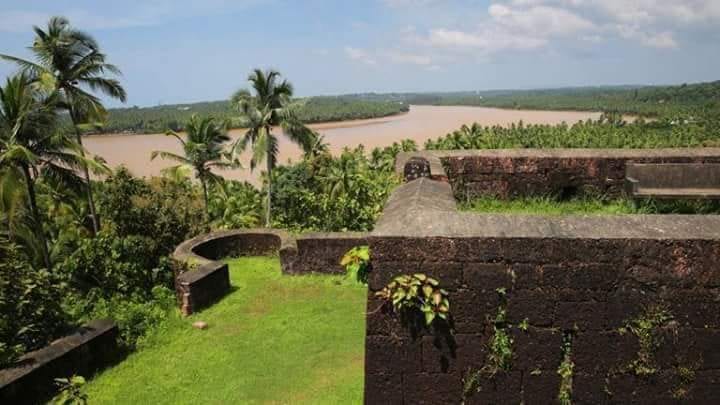
A 17th-century hilltop fort above the Chandragiri river built by the Keladi Nayakas, with sweeping views of the river mouth and the Arabian Sea — good at sunset.
12.9 km · ~22 min by cab · straight line
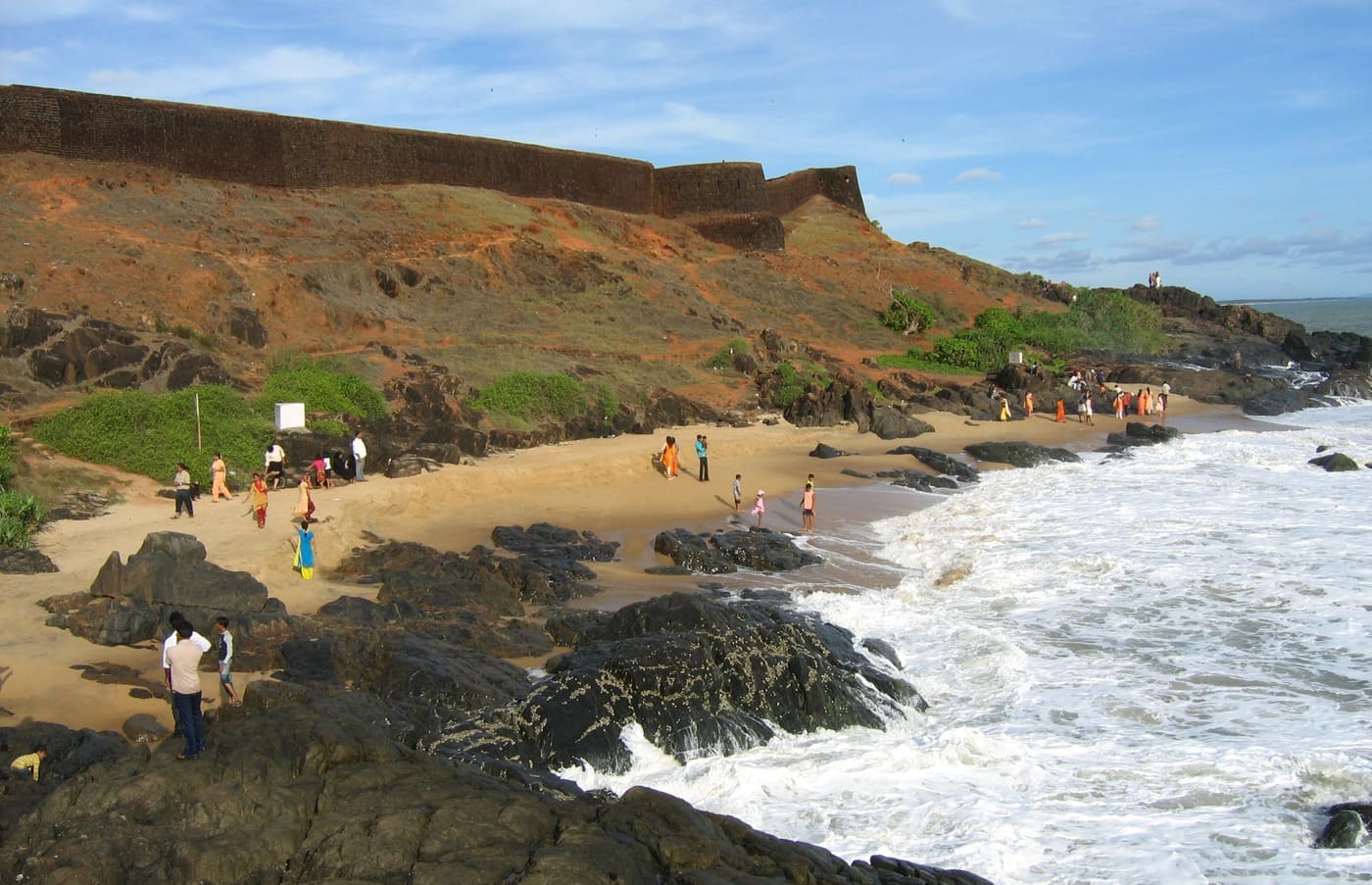
Kerala’s largest fort (~40 acres), a keyhole-shaped laterite bastion jutting into the Arabian Sea, built around 1650 by the Keladi Nayakas; its observation tower once mounted cannons.
22.1 km · ~37 min by cab · straight line
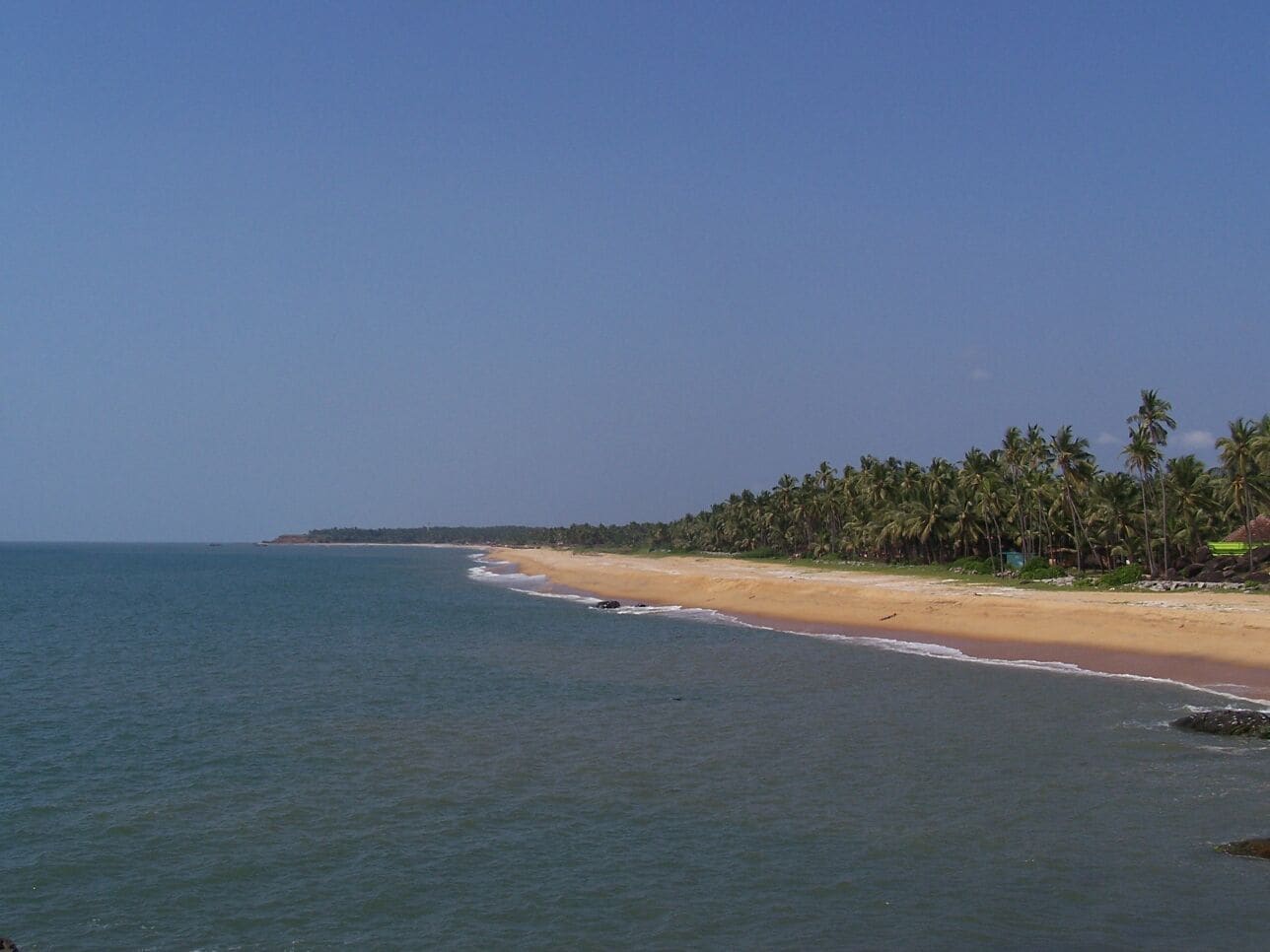
The beach stretch below Bekal Fort, with a landscaped park — famously the setting of the song “Uyire” from the film Bombay.
22.7 km · ~38 min by cab · straight line
A tranquil spiritual retreat at Kanhangad founded in 1931 by Swami Ramdas (Papa) and Mother Krishnabai, set in quiet wooded grounds; open to visitors of every faith under its motto of “universal love and service”.
30.8 km · ~51 min by cab · straight line
The hillside cave complex at Hosdurg where Bhagawan Nityananda cut meditation chambers by hand out of a single mass of laterite — 43 by the ashram’s own account — with the Nithyananda Temple built above them in 1963. Mobile phones are prohibited in the caves.
33.0 km · ~55 min by cab · straight line
The surviving laterite fort at Hosdurg in Kanhangad is associated with the Ikkeri Nayakas and recognised by its rounded bastion and broad ramp; Nithyananda Ashram is a separate neighbouring institution.
33.1 km · ~55 min by cab · straight line
Kanhangad Beach is the Hosdurg coastal frontage of Kanhangad in Kasaragod district, with a broad sandy shore and an established fish-landing setting. It is a beach visit from Kanhangad town, distinct from Hosdurg Fort, the town’s ashrams and the separately named beaches at Ajanur, Ozhinhavalappu and Thaikadappuram. Use the named beach approach rather than a generic Kanhangad map result. The shore’s working character is central to the visit: leave boats, nets and landing passages clear while enjoying the sea-facing sand.
34.2 km · ~57 min by cab · straight line
The cultural capital of Kasaragod — a Theyyam and folk-arts town on the Nileshwaram backwaters, with kovilakams, kavus and a lively ritual-arts season.
39.6 km · ~66 min by cab · straight lineBy long tradition a single crocodile is believed to live in the lake and adjoining cave, taking temple prasadam. The best-known crocodile, Babiya, died in October 2022; a smaller crocodile was later reported in the lake. Treat any sighting as a fortunate bonus, keep a respectful distance and follow temple instructions.
By tradition, Ananthapura is the moola-sthanam — the original seat — of Ananthapadmanabha, the deity later worshipped at the Padmanabhaswamy Temple in Thiruvananthapuram. The belief is rooted in the legend of the sage Vilwamangalathu Swamiyar and the boy who was Vishnu, who is said to have vanished into a cave here and reappeared in the capital. This is devotional legend rather than documented history, but it is central to the temple's significance.
Yes. Unlike some Kerala temples that admit only Hindus, Ananthapura Lake Temple is traditionally open to visitors of all faiths and castes. Visitors of every background are welcome to cross the bridge and experience the shrine, while observing the temple's dress code and customs.
A traditional temple dress code applies. Men are generally expected to wear a dhoti or mundu with the upper body bare or minimally covered, and dark-coloured dhotis may be discouraged; women typically wear a saree, or a salwar-kameez with dupatta, in modest attire covering the shoulders and knees. Norms can vary, so it is wise to dress conservatively and confirm details on arrival.
The temple's original images are traditionally said to have been made not of stone or metal but of kadu-sarkara-yogam — a rare herbal-and-jaggery composite of more than seventy medicinal substances. These were replaced with panchaloha (five-metal) images in 1972.
The temple lies about 6 km from Kumbla in Kasaragod district; Kumbla is the nearest railway station and Mangalore is the nearest airport (roughly 30–55 km depending on the source). A visit of about one to one-and-a-half hours is usually enough to cross the bridge, take darshan, admire the ceiling carvings and enjoy the lakeside setting.
November to February is easiest for travel; festival days need crowd planning.
Entry: No entry fee for temple visits is generally charged; any specific pooja or offering costs are payable at the temple. Timings: Generally open daily around 05:30–12:30 and 17:30–19:30, with principal poojas around 07:30, 12:30 and 19:30.
Base in Kasaragod, Kumbla, Bekal or Mangalore-side routes depending on onward travel. Check temple timings and dress/photography rules before visiting. Pair with Madhur Temple or Bekal only with realistic road-time buffers.
45 minutes to 1.5 hours; half day with nearby temple/coast stops.
Nearby you can pair Bela Church (4.6 km), Madhur Temple (4.7 km), Nellikunnu Mosque (9.3 km), Malik Deenar Mosque (11.1 km).
Follow temple staff instructions and stay away from restricted water edges. Respect worshippers and photography restrictions. Use known transport for early or late visits.
Written about Ananthapura Lake Temple itself — its history, its legends and the arguments about them.
Route-level itineraries and practical guides for the rest of Kerala.


Photographs: Kateelkshetra (CC BY-SA 4.0), Niraksheran (Public domain), Sureshan at English Wikipedia (Public domain), Ms Sarah Welch (CC0), Rahulblr22 (CC BY-SA 3.0), Kuldeep S (CC BY-SA 4.0), Pavanaja (CC BY-SA 4.0), Soorajna (CC BY-SA 3.0), Prathvi Acharya (CC BY-SA 4.0), Pkdinuu (CC BY-SA 3.0), Akhila Madangal (CC BY-SA 4.0), Vijayakumarblathur (CC BY-SA 4.0). Wikimedia Commons.