What to expect
Highlights
- Heritage experience at Nithyanandashram
- Architecture, local stories and old trade/cultural routes
- Good fit for guided walks and nearby cafes/shops
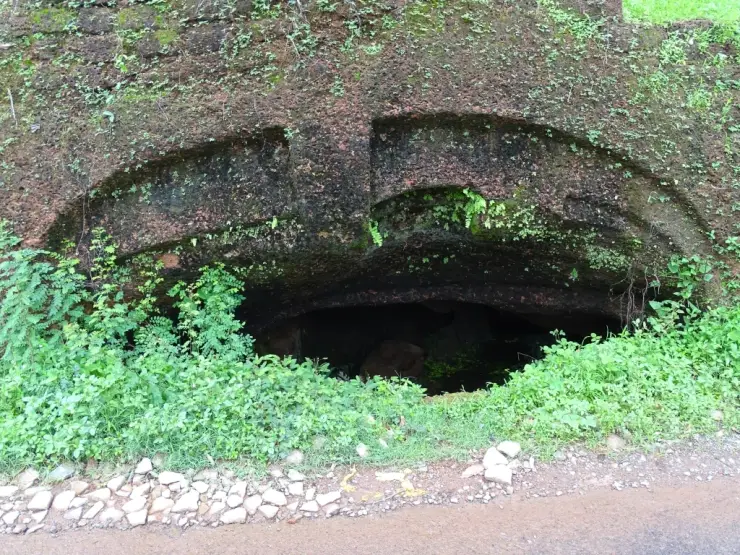
The hillside cave complex at Hosdurg where Bhagawan Nityananda cut meditation chambers by hand out of a single mass of laterite — 43 by the ashram’s own account — with the Nithyananda Temple built above them in 1963. Mobile phones are prohibited in the caves.
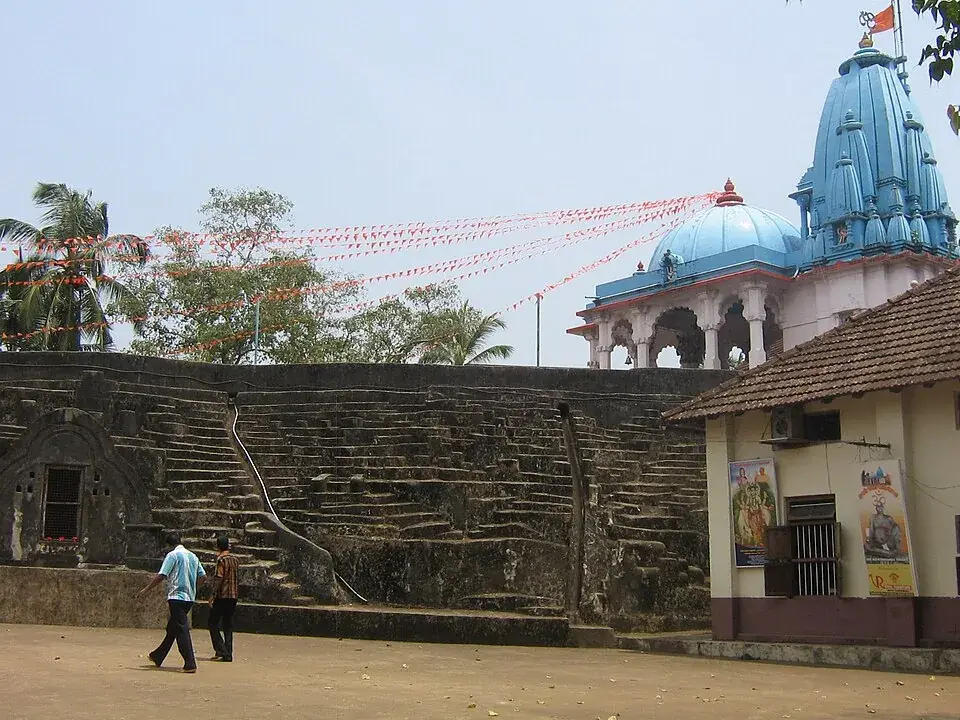
The hillside cave complex at Hosdurg, on the southern edge of Kanhangad town, where Bhagawan Nityananda had meditation chambers cut by hand out of a single mass of laterite — 43 of them by the ashram’s own account — with a temple built above them in 1963. It is a place of practice rather than a monument, and mobile phones are prohibited in the caves.
The approach is unpromising: an ordinary road out of an ordinary town, past a polytechnic and a couple of colleges that carry the same name. Then the ground rises into a laterite bluff, and the bluff turns out to be cut. Rows of steps and openings run across the rock face, and behind the openings are chambers — low, dark, cool, deliberately austere — designed as places to sit alone.
The chambers were made under Bhagawan Nityananda, who arrived in Kanhangad in the 1920s. Accounts of the man are thin on biography and thick on incident, which is characteristic; what is not in doubt is the rock. Cutting dozens of chambers out of one laterite mass by hand is an enormous piece of work, and it is the reason the site is remarkable whatever you make of the tradition around it.
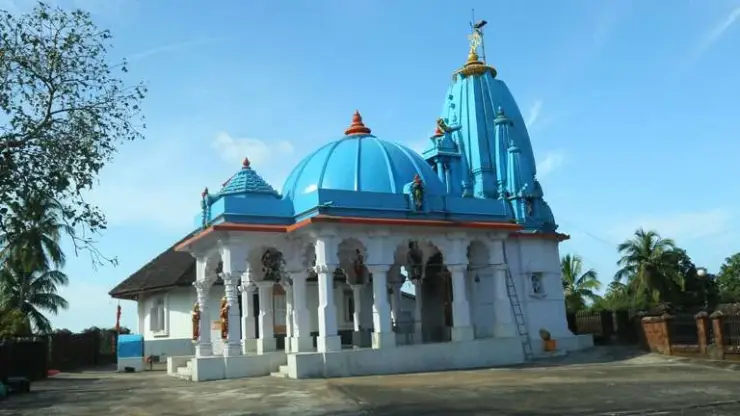
Above the caves stands the Nithyananda Temple, built in 1963 — blue-domed, arcaded, unmistakable from the road, and quite unlike a Kerala temple in style. At Onam the ashram courtyard carries elaborate pookkalam flower carpets, which is when most photographs of the place are taken.
It is worth being precise about who this is. The Nityananda associated with these caves is Bhagawan Nityananda, c.1897–1961, who left Kerala for Ganeshpuri in Maharashtra and was the guru of Swami Muktananda. He is not any later public figure using a similar name, and confusing the two is the commonest error made about this place.
The second commonest is confusing it with Anandashram, three kilometres north-east, which is a different ashram with a different founder. Both are in Kanhangad and both were founded within about a decade of each other; they are not versions of the same story.
Bhagawan Nityananda arrived in Kanhangad somewhere between 1923 and 1927, by the ashram’s own account, and the caves were cut during his time here.
The ashram gives the number of caves as 43. Kerala Tourism and a number of travel sources give 45, and some give 44. We follow the ashram, and note the disagreement rather than choosing the roundest figure.
The Nithyananda Temple above the caves was built in 1963, two years after Bhagawan Nityananda’s death at Ganeshpuri.
The name later attached itself to a cluster of local institutions — a polytechnic, an engineering college, a school — which is why a map search for “Nithyananda” around Kanhangad returns campuses before it returns the ashram.
The rock itself. Dozens of meditation chambers cut by hand into a single laterite mass is a piece of work with very few parallels anywhere in Kerala.
It is quiet and it is free. There is no ticket, no guide and no queue.
The 1963 temple above the caves is architecturally unlike anything else in the district — blue domes and arcades rather than tiled Kerala roofs.
It sits within a few minutes of Hosdurg Fort, so the fort and the caves are one stop rather than two.
At Onam the courtyard carries large pookkalam flower carpets, which is the one date worth timing a visit to.
Road km to Kasaragod; ghat roads and traffic vary — allow extra.
November to February and early mornings are best for walking; avoid midday heat where possible.
Live forecast loads in your browser.
Sunset is in about 2 hours.
Sun and moon are calculated for this location and shown in IST. Photography windows are the hour around sunrise and sunset; the sunset bearing is degrees clockwise from true north. Moon phase is accurate to about half a day.
Browse listed stays, food, activities, sights, shops and rentals around Nithyanandashram. Check each listing’s locality and contact the business directly for current arrangements.
Budget business-class hotel opened in 2020 in the heart of Kanhangad. Steps from the town bus stand, with five room grades and two banquet halls.
Kerala Tourism Gold House homestay at Alamipally, serving home-cooked meals on request.
Business-class hotel on TB Road in central Kanhangad, fully renovated in 2022. A short walk from the Nithyanandashram caves, with an Ayurvedic spa and banquet halls.
Riverside retreat on four acres beside the Arayi River between Kanhangad and Nileshwar. Cottage stays and recreation grounds set among coconut groves off NH-66.
Multi-cuisine restaurant at Kanhangad South junction on the NH-66. Serves Malabar, Arabian, North Indian, Chinese and continental dishes.
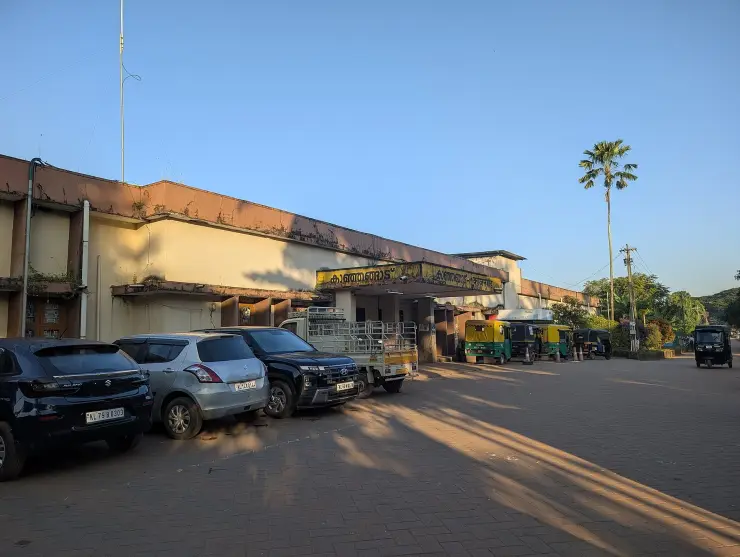
Kanhangad's own state bus depot, run by an Assistant Transport Officer. Office of the Assistant Transport Officer, KSRTC Kanhangad, Kasaragod, Kerala 671531.
Four-star business hotel just south of the new bus terminal at Alamipally, Kanhangad.
Station code KZE, on the Shoranur-Mangalore line, opened in 1910 and the usual railhead for Bekal. Railway Station Road, Kanhangad, Kasaragod, Kerala.
Book with the place itself. India’s cyber-crime coordination centre warned in April 2025 that convincing copies of hotel and pilgrimage booking sites are being pushed through sponsored search and social ads, taking payment for rooms the property never hears about. Use the contact and source details on each profile to confirm the exact business and booking channel. A directory entry or map pin alone does not establish an operator’s identity or current availability. Roampedia takes no commission and does not collect booking payments. If a booking page reached you through an ad, check the address bar against the property’s own site before you pay. Fraud can be reported on cybercrime.gov.in or on 1930.
Find food, accommodation and activities across Kanhangad. Browse the guides for places to eat, stay and explore along your route.
3 more places around Kanhangad. Open a guide to plan the visit and onward journey.
440 m · straight line
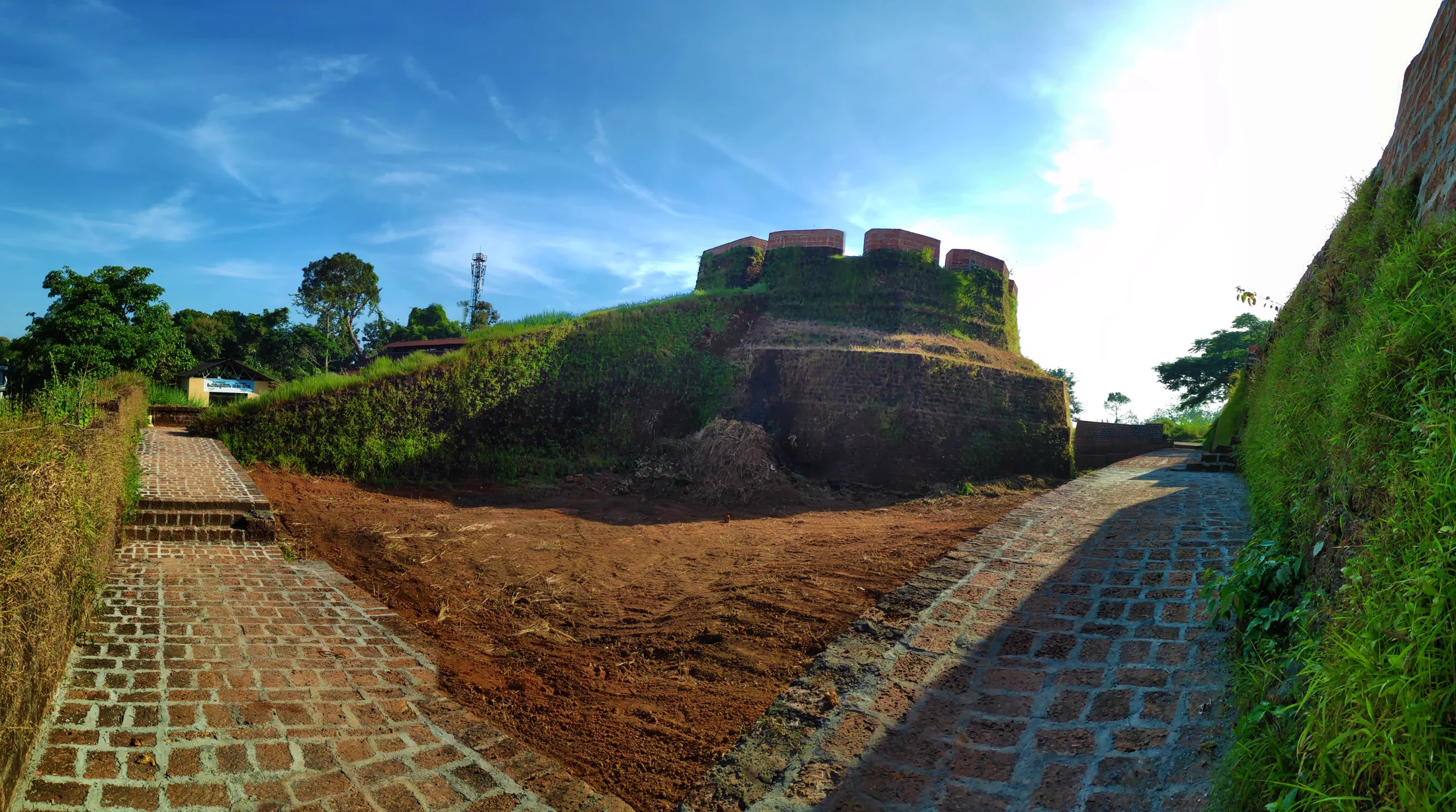
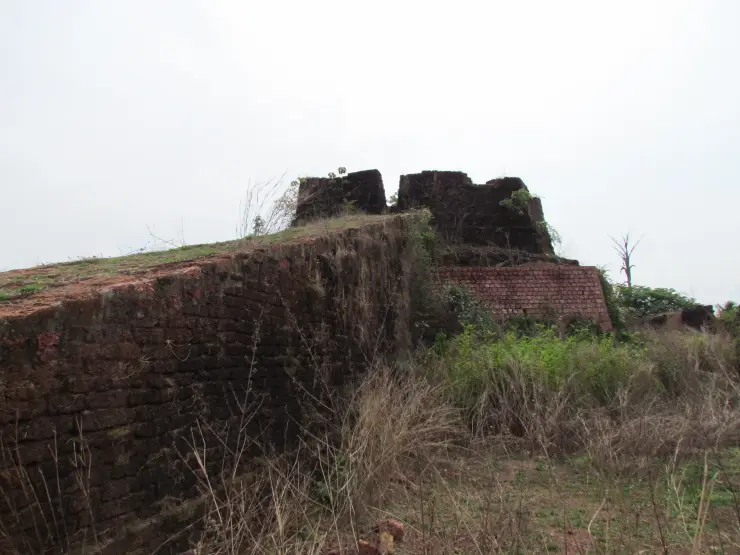
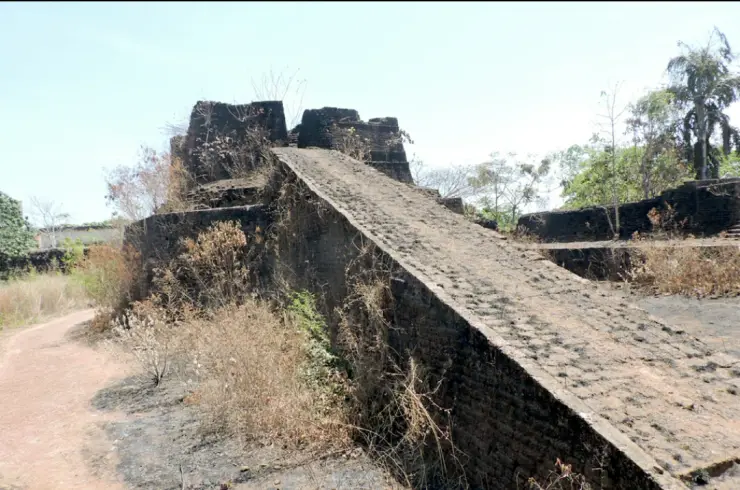
The surviving laterite fort at Hosdurg in Kanhangad is associated with the Ikkeri Nayakas and recognised by its rounded bastion and broad ramp; Nithyananda Ashram is a separate neighbouring institution.
4.2 km · straight line
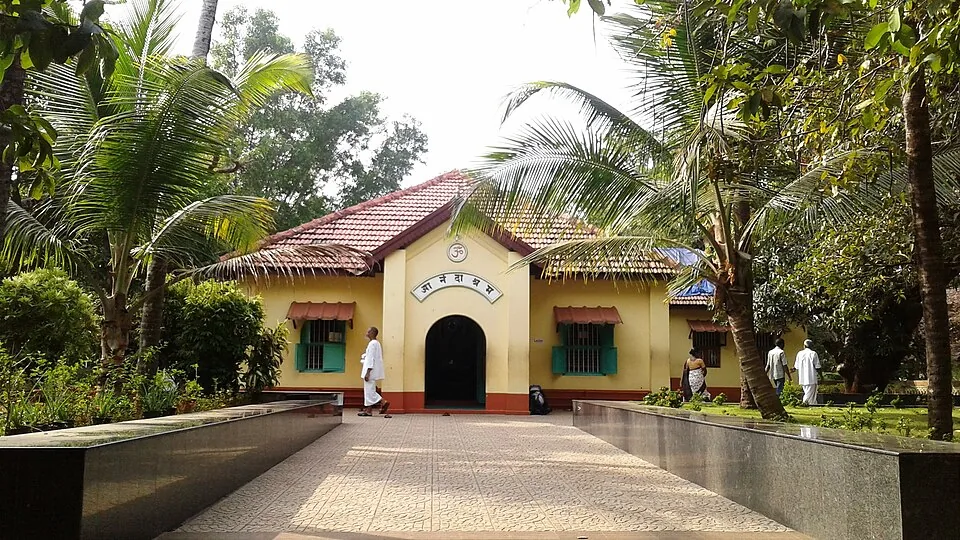
A tranquil spiritual retreat at Kanhangad founded in 1931 by Swami Ramdas (Papa) and Mother Krishnabai, set in quiet wooded grounds; open to visitors of every faith under its motto of “universal love and service”.
1.7 km · straight line
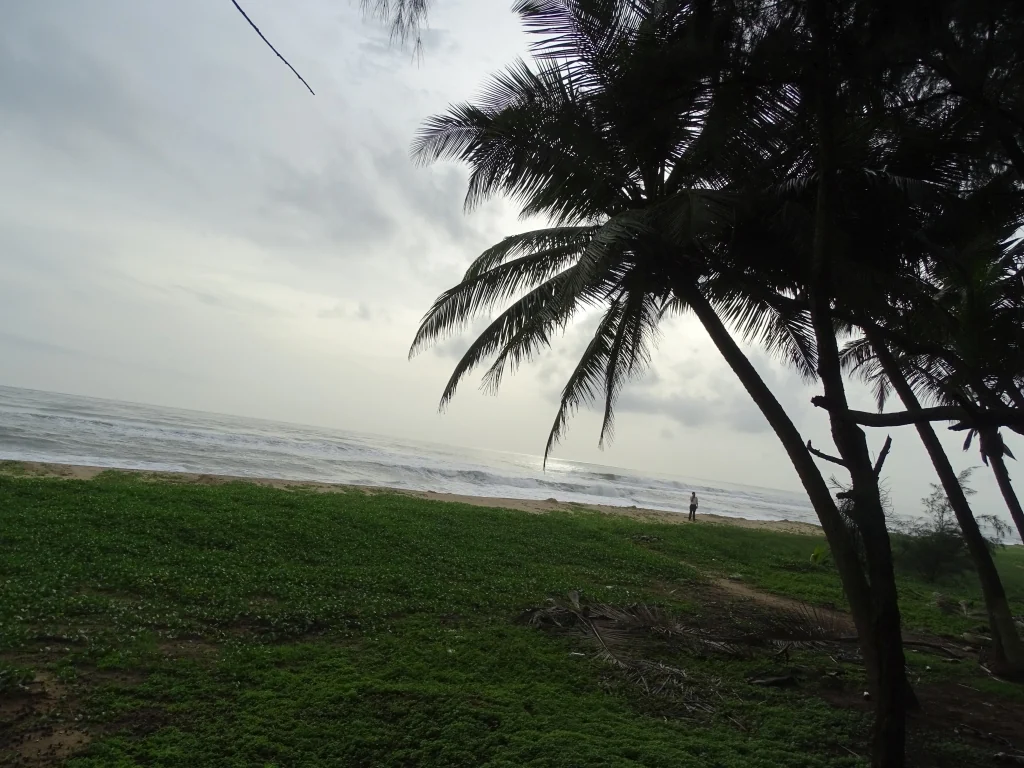
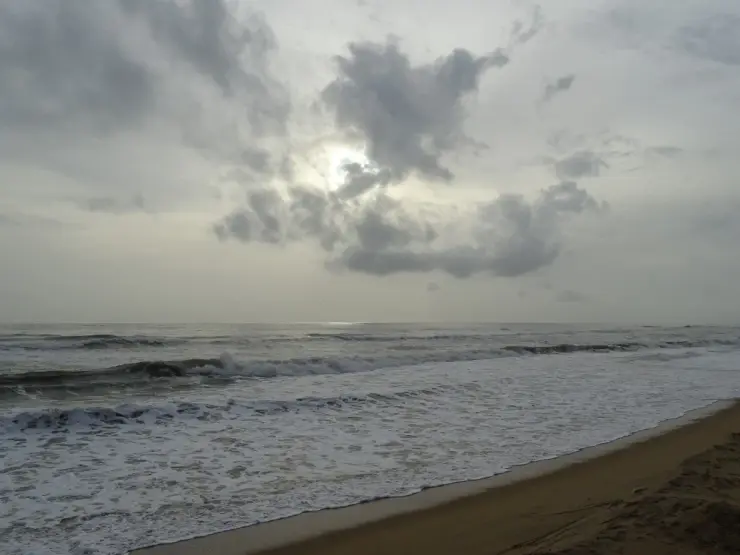
Kanhangad Beach is the Hosdurg coastal frontage of Kanhangad in Kasaragod district, with a broad sandy shore and an established fish-landing setting. It is a beach visit from Kanhangad town, distinct from Hosdurg Fort, the town’s ashrams and the separately named beaches at Ajanur, Ozhinhavalappu and Thaikadappuram. Use the named beach approach rather than a generic Kanhangad map result. The shore’s working character is central to the visit: leave boats, nets and landing passages clear while enjoying the sea-facing sand.
Roampedia is commission-free — own or know a stay, eatery, guide or shop near Nithyanandashram? Submit public business details for review.
Add a nearby businessEntry: Free. There is no ticket and no guide fee. Offerings are voluntary.
Dress code: Modest dress. This is a working place of practice, not a monument — cover shoulders and knees, remove footwear where indicated, and keep quiet around the caves and the chanting hall.
Photography: 🛑 Mobile phones are prohibited in the cave area by the ashram’s own instruction. Elsewhere, photograph the buildings rather than the people, and ask first.
If you are travelling by bus or ferry, check the return service with the operator before setting out. Leave time to reach the stop or jetty after your visit.
Ask at the bus stand for the time of the last service back, not the next one. If you miss it, an auto or app cab is the fallback — agree the fare before you get in.
If you need step-free access, contact the site before travelling. Ask about a level entrance, steps along the route, the nearest drop-off point, seating and accessible toilets.
Published emergency and visitor-assistance contacts. For an immediate emergency, call 112. Shared Kerala contact sources checked 4 October 2026; publication does not establish a tested live response.
The surviving laterite fort at Hosdurg in Kanhangad is associated with the Ikkeri Nayakas and recognised by its rounded bastion and broad ramp; Nithyananda Ashram is a separate neighbouring institution.
440 m · straight lineKanhangad Beach is the Hosdurg coastal frontage of Kanhangad in Kasaragod district, with a broad sandy shore and an established fish-landing setting. It is a beach visit from Kanhangad town, distinct from Hosdurg Fort, the town’s ashrams and the separately named beaches at Ajanur, Ozhinhavalappu and Thaikadappuram. Use the named beach approach rather than a generic Kanhangad map result. The shore’s working character is central to the visit: leave boats, nets and landing passages clear while enjoying the sea-facing sand.
1.7 km · straight lineA tranquil spiritual retreat at Kanhangad founded in 1931 by Swami Ramdas (Papa) and Mother Krishnabai, set in quiet wooded grounds; open to visitors of every faith under its motto of “universal love and service”.
4.2 km · straight line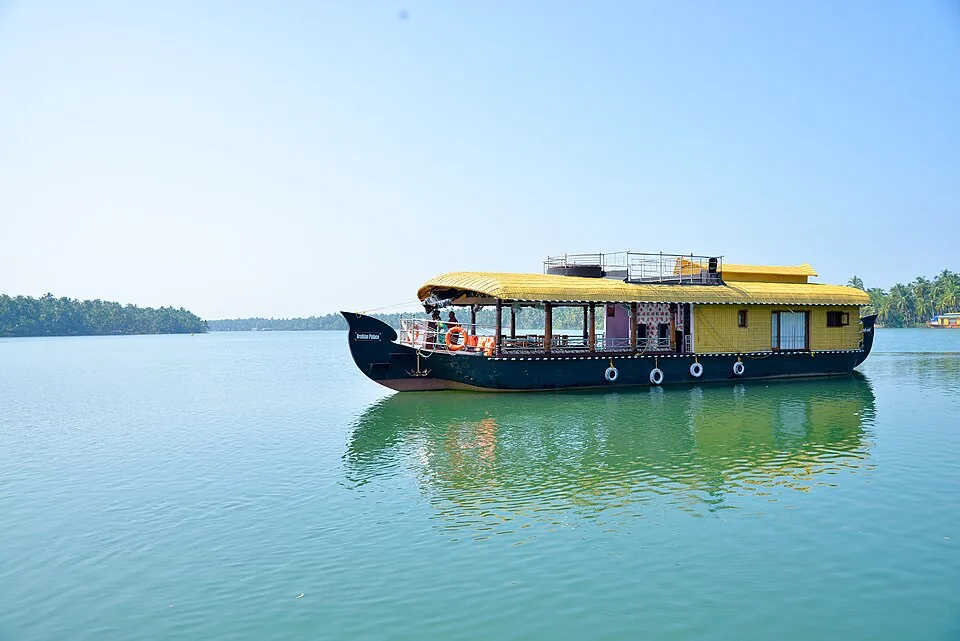
The cultural capital of Kasaragod — a Theyyam and folk-arts town on the Nileshwaram backwaters, with kovilakams, kavus and a lively ritual-arts season.
6.8 km · straight line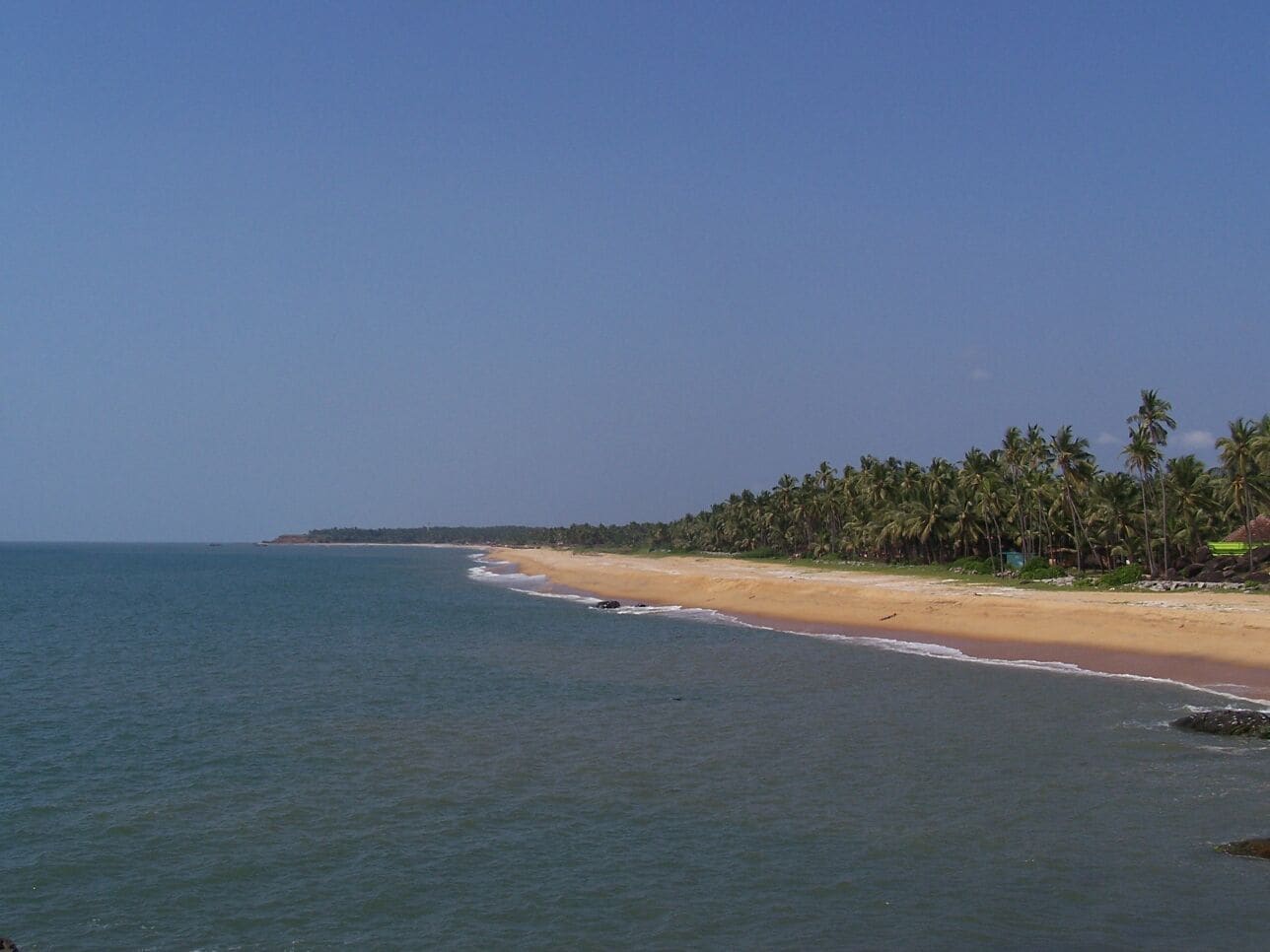
The beach stretch below Bekal Fort, with a landscaped park — famously the setting of the song “Uyire” from the film Bombay.
10.6 km · straight line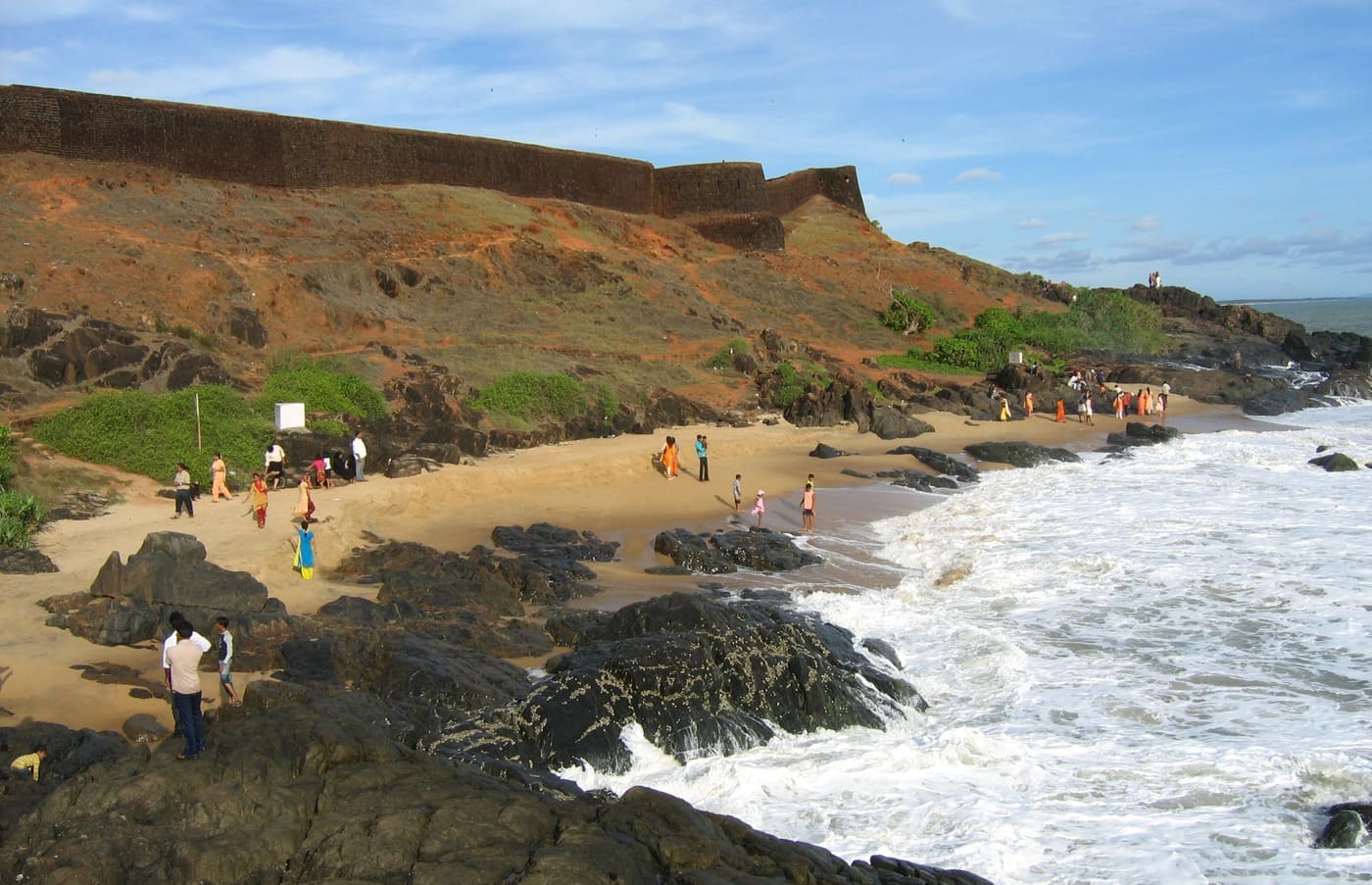
Kerala’s largest fort (~40 acres), a keyhole-shaped laterite bastion jutting into the Arabian Sea, built around 1650 by the Keladi Nayakas; its observation tower once mounted cannons.
11.4 km · straight line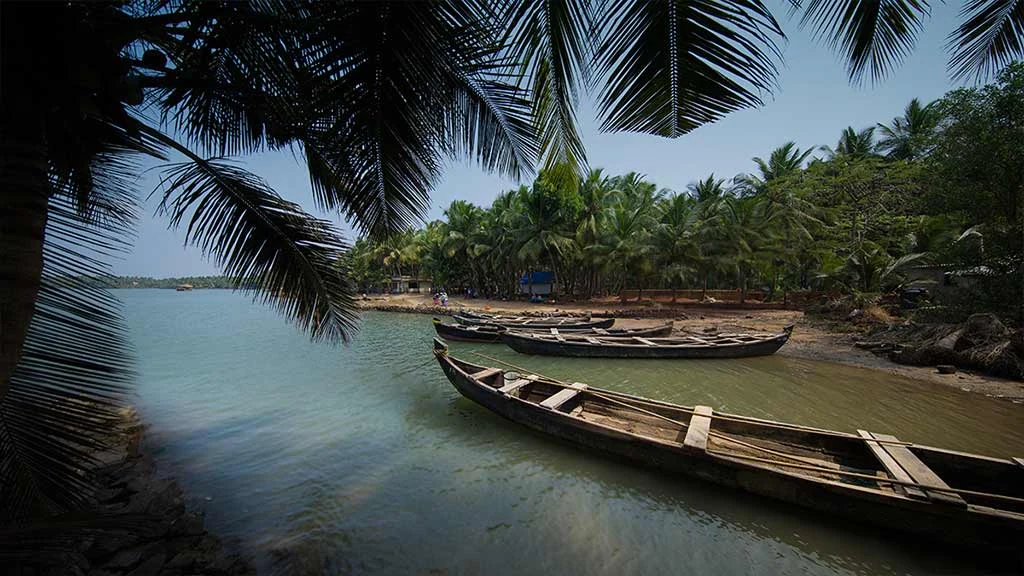
An inhabited coastal backwater landscape in southern Kasaragod, with fishing shores, coconut groves and island settlements. The map uses the Valiyaparamba village jetty as a shoreline orientation base.
19.2 km · straight line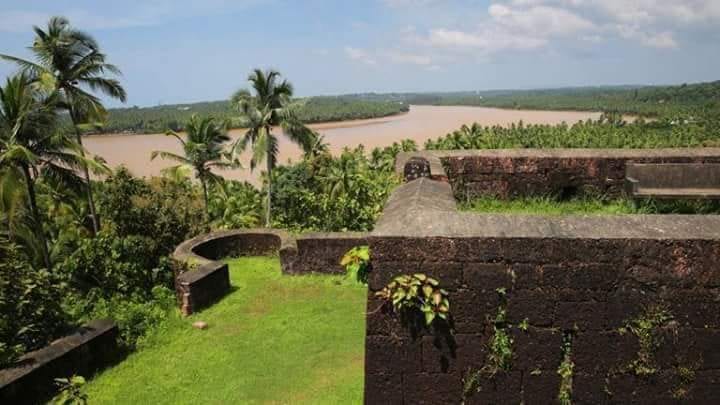
A 17th-century hilltop fort above the Chandragiri river built by the Keladi Nayakas, with sweeping views of the river mouth and the Arabian Sea — good at sunset.
20.4 km · straight line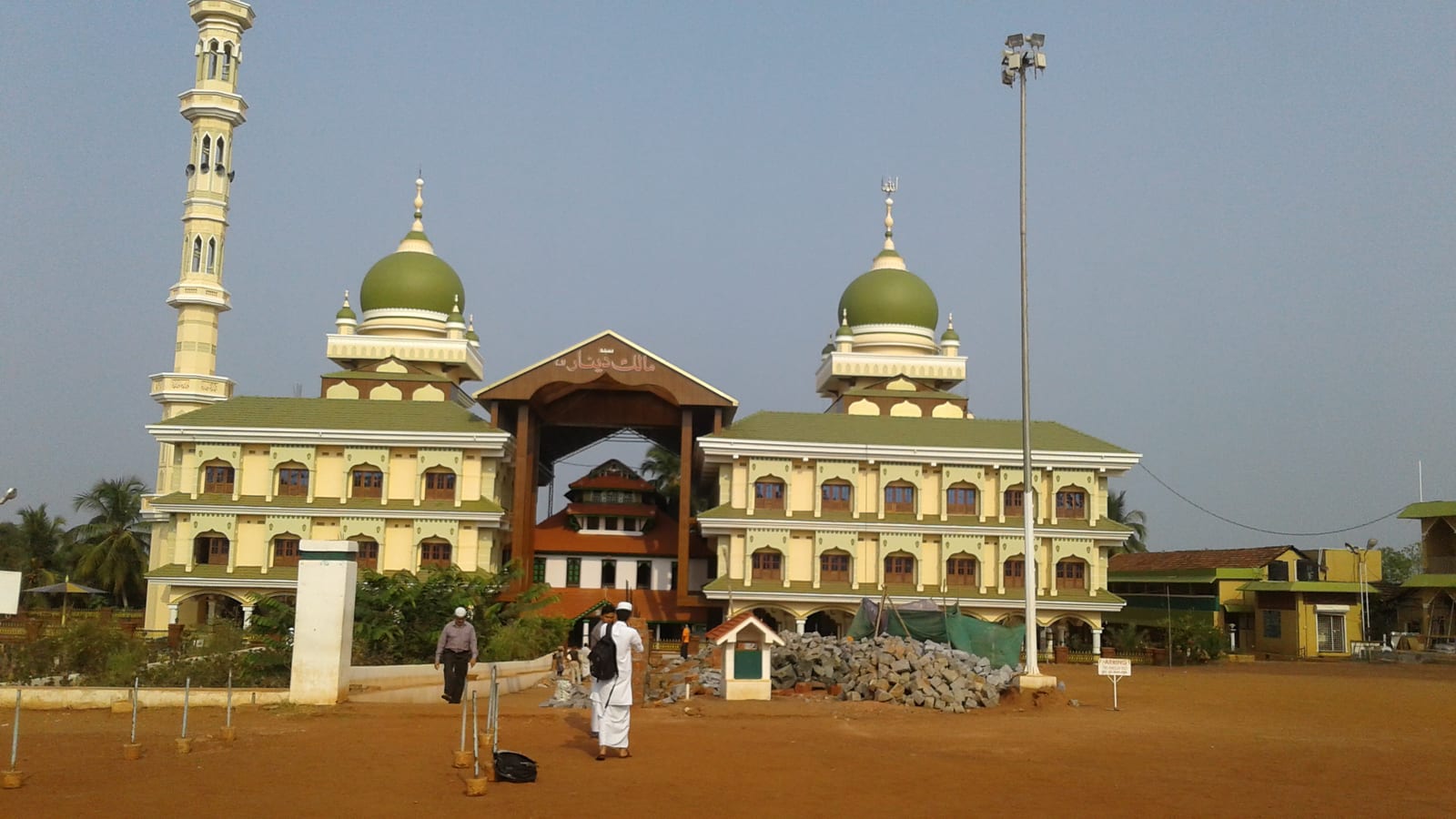
The Malik Ibn Dinar Juma Masjid in Thalankara, Kasaragod — by tradition among the oldest mosques in India, linked to the earliest arrival of Islam on the Malabar coast.
22.6 km · straight line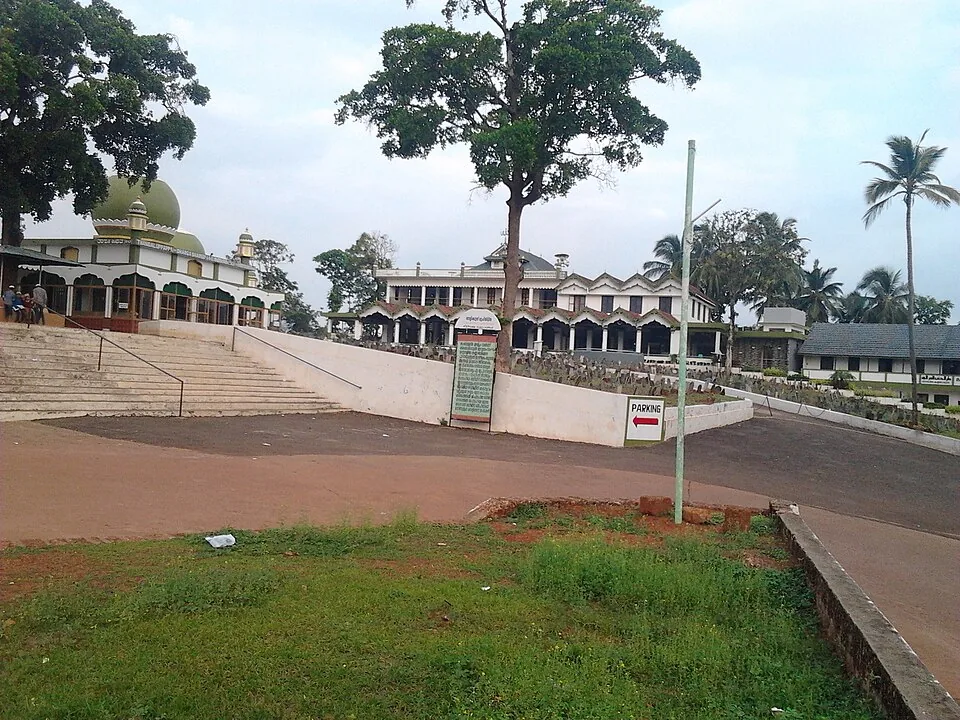
The Nellikunnu Muhyaddin Juma Masjid, a Sunni Friday mosque and dargah near the Kasaragod town beach that houses the tomb of Saint Thangal Uppapa; a local pilgrimage centre whose annual Nercha draws large crowds.
24.7 km · straight line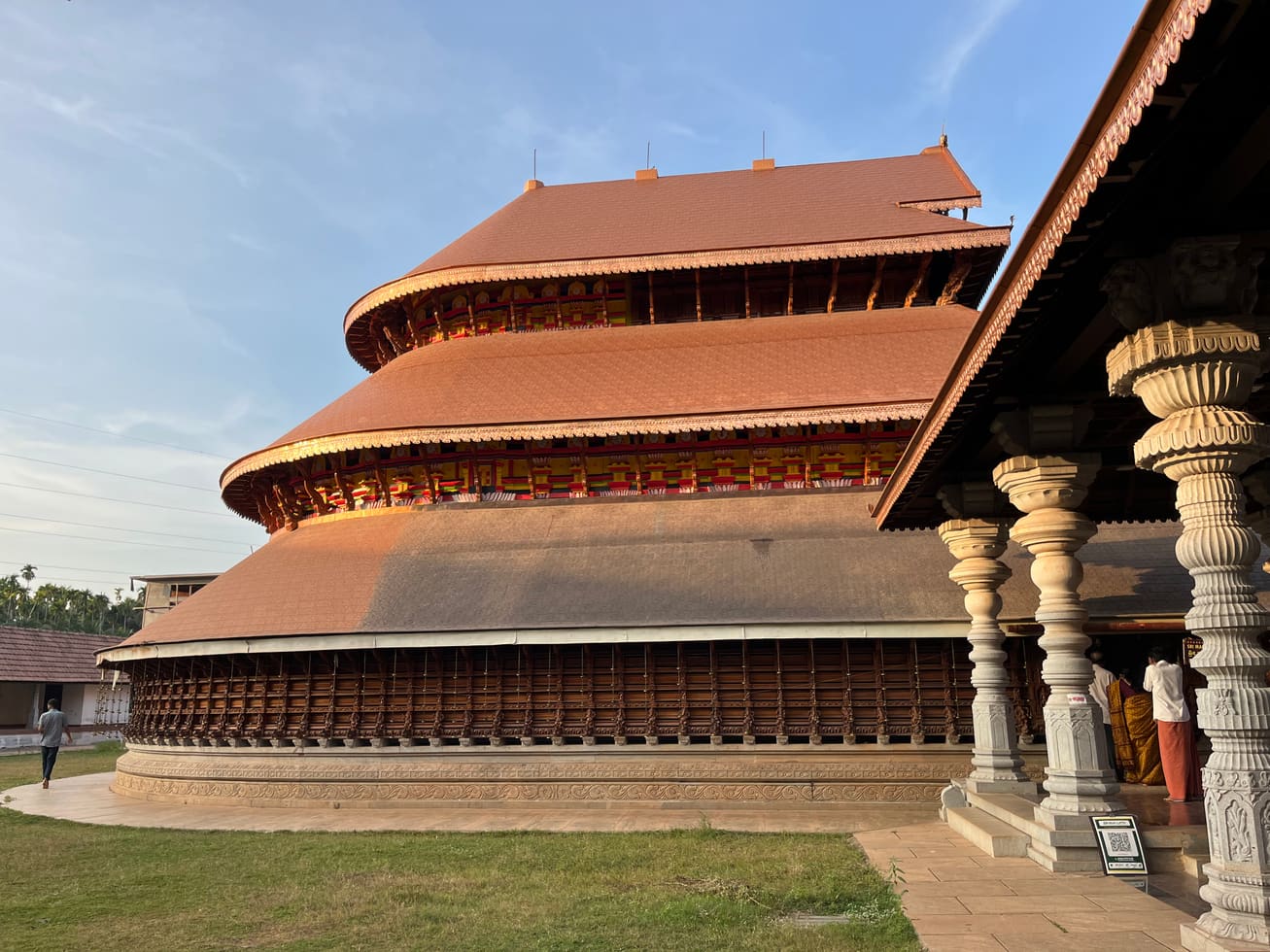
The Madhur Sree Madanantheshwara-Siddhivinayaka temple on the Madhuvahini river — a Shiva temple better known for its beloved “Bodajja” Ganapathi and a Tipu Sultan sword-mark on its well.
28.7 km · straight line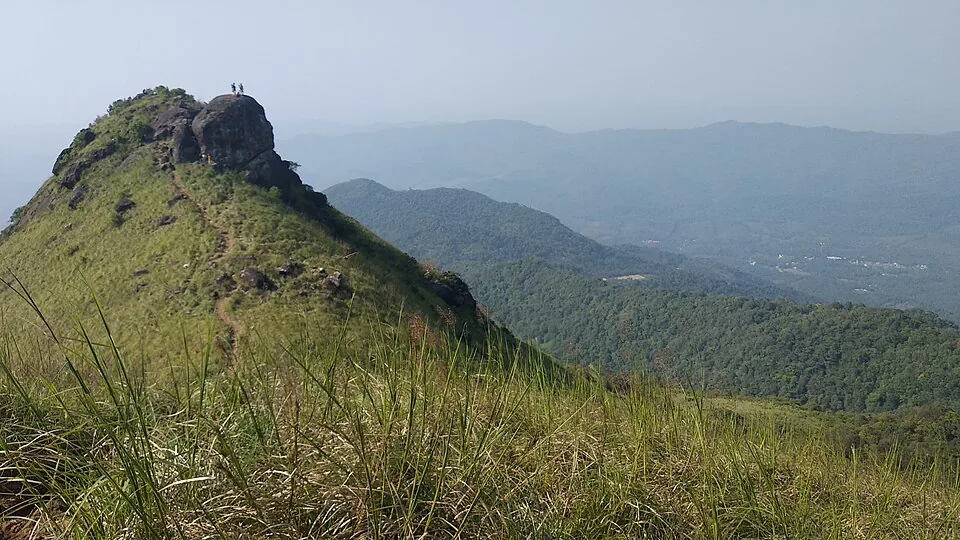
A grassland-and-shola hill topping out at 1,049 m, the “Ooty of Kerala”, with easy treks and montane forest on the Western Ghats edge.
30.8 km · straight line43, by the ashram’s own account, cut by hand out of a single mass of laterite. Kerala Tourism and several travel sources say 45 and some say 44; we follow the ashram.
Bhagawan Nityananda (c.1897–1961), who came to Kanhangad in the 1920s and later moved to Ganeshpuri in Maharashtra, where he was the guru of Swami Muktananda. He is not any later public figure using a similar name.
No. Anandashram is about three kilometres north-east and was opened on 15 May 1931 by Swami Ramdas and Mother Krishnabai. They are separate ashrams with separate founders.
The complex is open to visitors and there is no charge. It is a place of practice: dress modestly, keep quiet, and note that the ashram prohibits mobile phones in the cave area.
In 1963, two years after Bhagawan Nityananda’s death.
November to February and early mornings are best for walking; avoid midday heat where possible.
Entry: Free. There is no ticket and no guide fee. Offerings are voluntary. Timings: The ashram keeps devotional hours, with worship and chanting at set times. Morning and evening are the times to come; the middle of the day is the wrong time to arrive. Confirm before travelling.
Base yourself in Kanhangad or a nearby town in Kasaragod, then confirm the last-mile route locally before leaving. Walkable heritage areas are best done slowly; combine nearby streets, museums, markets and food stops. If the visit depends on forest, temple, boat, ferry, weather or seasonal access, check the official/local rule on the day before travel.
1 to 3 hours.
Nearby you can pair Hosdurg Fort (440 m, approximate straight-line separation), Kanhangad beach (1.7 km, approximate straight-line separation), Anandashram (4.2 km, approximate straight-line separation), Nileshwar (6.8 km, approximate straight-line separation).
Watch traffic on narrow heritage streets. Keep valuables close in crowded markets.
We have not published a story about Nithyanandashram itself yet. These cover Kanhangad and the wider district, with separate journeys between stops.
These guides explore Kanhangad and the surrounding area. Choose a visit that fits your interests, allowing separately for travel between stops.
Route-level itineraries and practical guides for the rest of Kerala.
Photographs: Vaikoovery (CC BY 3.0), Vijayanrajapuram (CC BY-SA 4.0). Wikimedia Commons.