What to expect
Highlights
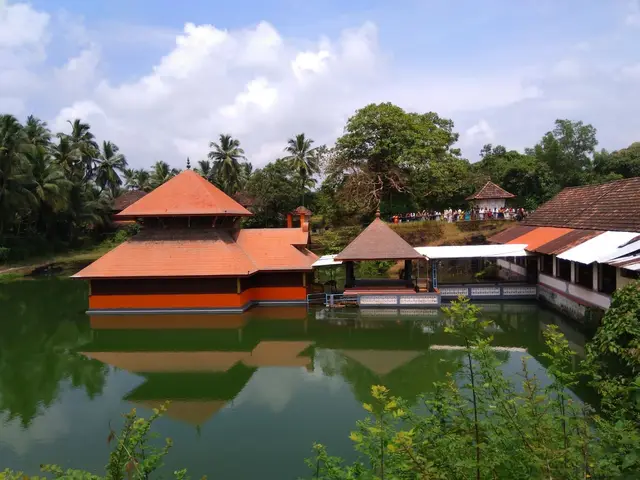
- Ananthapura Lake Temple — Kerala’s only lake temple, near Kumbla, the moolasthanam of Ananthapadmanabha — and home by tradition to Babiya, the temple’s resident vegetarian crocodile.
Northern temple circuit with a lake temple landmark.
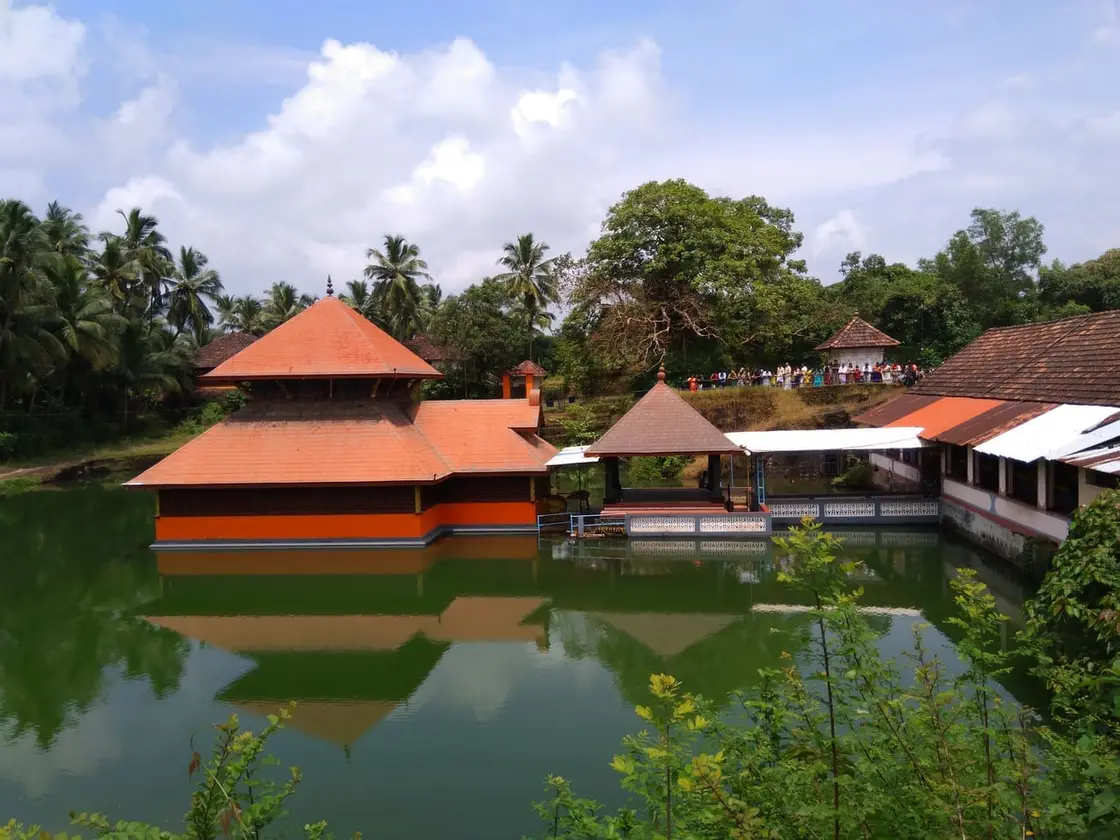
Kumbla sits twelve kilometres north of Kasaragod town, and about three and a half kilometres east of it stands the reason most people come: Ananthapura, described in its own record as the only temple of its kind in Kerala, a shrine standing in the middle of a rectangular tank of roughly two acres extending some 302 feet. Its best-known resident was Babiya, a crocodile that lived in the lake, was fed only on temple offerings twice a week and reportedly never harmed anyone. Babiya died aged seventy-five on 9 October 2022, and in November 2023 a new crocodile was seen in the lake behaving the same way.
Two claims here need to be handled as what they are. Local tradition holds that this is the moolasthanam — the original seat — of Ananthapadmanabhaswamy, the deity of the Padmanabhaswamy temple five hundred kilometres south, and that the god travelled there through a cave; that is tradition, not record, and the sources are explicit that the temple's own past is obscure apart from its myths. The town's history is firmer: Kumbla was the seat of the Kumbla kings, who ruled the southern part of the Tuluva country between the Chandragiri and Netravati rivers from Maipady Palace — a Malayalam-speaking town that was the capital of a Tulu kingdom.
October to February is the comfortable season on this coast. The estuary and mangroves are at their best outside the heaviest monsoon weeks.
Live forecast loads in your browser.
Sun and moon are calculated for this location and shown in IST. Photography windows are the hour around sunrise and sunset; the sunset bearing is degrees clockwise from true north. Moon phase is accurate to about half a day.
Kumbla is a small town twelve kilometres north of Kasaragod that was once the seat of its own kingdom, and it sits on one of the most interesting lines in south India — the frontier where Malayalam gives way to Tulu. The Kumbla rajas ruled the southern Tuluva country from a palace at Maipady, over a territory that tradition divides with unusual precision into thirty-two Tulu villages and thirty-two Malayalam ones. It was a working port when Portuguese travellers came through, and it is remembered in coastal Karnataka for something else entirely: the man credited with fathering Yakshagana, the all-night theatre of this coast, is said to have been born here.
Begin with the frontier, because it is the thing that makes Kumbla different from anywhere further south. Kerala is usually imagined as a Malayalam-speaking strip, but its northern tip is not that. The Chandragiri river near Kasaragod is the classical dividing line, and north of it the language of the soil is Tulu. Kumbla lies in that northern belt, and the district around it is genuinely multilingual in ordinary daily use rather than as a tourist-board slogan.
The old kingdom mapped that frontier directly. The Kumbla dynasty ruled the southern Tuluva country between the Chandragiri and the Netravati — broadly the present Kasaragod and Manjeshwar taluks — from Maipady Palace at Kumbla. The rulers themselves were of mixed descent, described as combining Malayali Nair and Tuluva Brahmin lineage, which is about as neat an expression of a border polity as you could ask for. They held their land as vassals, first under the Kolathunadu kingdom to the south and afterwards under the Vijayanagara empire as its power reached down this coast.
The tradition about the territory is worth repeating because of how specific it is: the Kumbala kingdom is described as containing sixty-four villages, thirty-two of them Tulu-speaking and thirty-two Malayalam-speaking. Whether or not the arithmetic was ever exact, it tells you that the people who lived here understood their country as a bilingual one and counted it that way.
Kumbla was also a port, and a modest but real one. It functioned as a trading centre over the medieval centuries, drawing Arab traders, and in 1514 the Portuguese traveller Duarte Barbosa recorded the pattern of business here: people exporting rice and taking coir in exchange with the Maldives. That is a useful corrective to the usual picture of the Kerala coast, where pepper dominates every account — this was a rice-and-coir port, trading with the islands rather than with Europe.
The kingdom's independent life ended in the general reordering of Malabar: Kumbla was absorbed into British territory in 1804, and what had been a court became a coastal panchayat. Today it is a town of some forty-six thousand people, with the Kumbla river mangroves on one side, the ruins at Arikady, and the Gopalakrishna temple at its centre.
The multilingualism is not loose talk. Kasaragod district is known as Saptha Bhasha Sangama Bhoomi — the meeting place of seven languages — and the seven usually named are Malayalam, Tulu, Kannada, Marathi, Konkani, Beary and Urdu. Very few districts anywhere in India carry a nickname of that kind and can substantiate it, and Kumbla, sitting on the Tulu side of the seam, is one of the places where you hear the mixture rather than read about it.
The fort is worth knowing about before you go looking for it, because it is called two things. Arikady Fort and Kumbla Fort are the same place — about a kilometre from Kumbla off the NH-66, on the ground between the Kumbla and Shiriya rivers, with a Hanuman temple below it. Its builders are genuinely disputed: accounts variously credit the Keladi Nayakas and Tipu Sultan, which between them span a good deal of time and two quite different powers. What is not disputed is what came out of the ground in 2015, when excavation exposed a large hall thought to have been used for assembly, along with roof tiles, pottery and lead bullets — the last of which puts firearms on the site and gives the ruin a harder edge than its quiet setting suggests.
The estuary is the other thing to see. The Kumbla river mouth carries a heavy load of silt, sand and minerals, and the mangrove forest it feeds is among the richer stretches of biodiversity on this coast — an easy, under-visited alternative to the beaches further south.
Two smaller notes that people always want. The Ananthapura lake temple, the district's most photographed sight, lies about six kilometres inland from Kumbla — it has its own page here and its own quite separate story, which this page deliberately leaves alone. And the surname of the cricketer Anil Kumble is commonly said to derive from this town, which is the kind of fact that travels a great deal further than the town itself ever has.
Kumbla's largest claim is not a temple legend but a theatre. Yakshagana — the all-night open-air drama of coastal Karnataka and this northern Kerala fringe, with its towering headgear, painted faces, hammering chande drums and a singer who narrates the whole night from the side of the stage — is traditionally traced to a poet remembered as Parthi Subba, and Parthi Subba is said to have been born at Shedikavu, near Kumbla.
The tradition should be handled with the caution its own sources ask for. Yakshagana scholarship generally places him around 1600; the Wikipedia article on Kumbla instead puts him in the eighteenth century; and the accounts that name Shedikavu as his birthplace note in the same breath that there are alternate opinions about where he was born. He is described as belonging to the Sthanika Brahmin community, and as a bhagavata — a singer-narrator — and an actor himself, not merely an author, who travelled widely. What is attributed to him is substantial: something in the order of eighteen prasangas, the verse texts from which a night's performance is built, a collection of songs called the Sabhalakshana still used in the Poorva Peethika or preliminary section, and a Ramayana which is said to be used across Karnataka by all the styles of bayalata.
What makes this a myth in the useful sense rather than a footnote is how Yakshagana works. A prasanga is not a script in the European sense. It is a body of verse drawn from the Ramayana, the Mahabharata and the Puranas, and the performance builds outward from it — the bhagavata sings the verse, the drums answer, and the actors improvise the spoken dialogue, argue, digress and expand, so that a single episode can occupy an entire night and no two nights are the same. The mythology is not illustrated; it is contested and re-argued in front of a village, every season, by performers who know the material well enough to debate inside it.
So the claim attached to Kumbla is that this coast's way of telling its own gods began, or was decisively shaped, here. Parthi Subba is said to have worshipped at the Gopalakrishna temple of this town — the shrine that carries the name Kanipura — and that link between a specific small temple and the founding repertoire of a whole regional theatre is the closest thing Kumbla has to a sacred origin story of its own.
The town's name carries a second and older layer, and here too the sources disagree in a way worth stating. One tradition holds that Kumbla's original name was Kanvapura, after the sage Kanva — the rishi of the Shakuntala story, whose forest hermitage is one of the most familiar settings in Sanskrit literature. Another gives the old name as Kanipura, the form preserved in the temple's own title. Whether these are two renderings of one name worn down differently over centuries, or two separate traditions that later merged, we cannot say from the sources available, and we are not going to smooth it over. Both are recorded here as they are found.
Taken together they make a coherent picture of what this place has always been: a small state on a seam, holding a Sanskritic naming tradition, a Tulu ritual and performance culture, and a Malayalam administrative world in the same hand at the same time. The theatre that came out of it is performed to this day in a language most of Kerala does not speak, a few kilometres from where Malayalam begins.
The medieval record shows Kumbala as a feudatory principality and a trading centre of some standing, active across roughly the ninth to fourteenth centuries and drawing Arab traders to a coast better known for pepper further south.
Politically the Kumbla rajas were never independent for long. They ruled the southern Tuluva country from Maipady Palace as vassals of Kolathunadu, and passed under Vijayanagara authority when that empire pushed down the Karnataka coast in the medieval centuries; the wider district was annexed from the Kolathiri with Nileshwaram serving as one of the capitals in the sixteenth century.
In 1514 Duarte Barbosa recorded the trade in rice and coir with the Maldives, which remains the single most concrete surviving description of what the port here actually did.
⚠ On Parthi Subba the sources genuinely conflict: around 1600 in the Yakshagana literature, the eighteenth century in the Wikipedia article on the town. We give both rather than choosing, and note that his birthplace at Shedikavu near Kumbla is itself recorded as contested.
The kingdom ended administratively in 1804, when the territory was incorporated into the British Empire, and Kumbla's later history is that of a small coastal town in a district that would eventually be transferred to Kerala at the linguistic reorganisation of the states — leaving a Tulu-speaking population inside a Malayalam state, which is the situation you still find here.
To stand on a real language frontier. North of the Chandragiri the everyday language of the soil is Tulu, and Kumbla is one of the plainest places to feel that Kerala does not end in Malayalam.
For the Yakshagana connection — the town credited with the poet who shaped the coast's great night-long theatre, and the Kanipura Gopalakrishna temple he is said to have worshipped at.
For the remains of a small kingdom: the seat at Maipady, the fort ground at Arikady, and a port that traded rice for Maldivian coir when Duarte Barbosa passed in 1514.
For the Kumbla river mangroves, a quiet and under-visited stretch of estuary on a coast where most visitors head straight for Bekal.
As the base for the Ananthapura lake temple six kilometres inland — which has its own page here, and its own quite different story.
Entry: The town, the Arikady/Kumbla fort ground and the estuary are free to visit. The Ananthapura lake temple has its own arrangements — see its page.
Dress code: Temple dress at Ananthapura and at the Gopalakrishna temple — modest, and men may be asked to remove the upper garment. Nothing special for the town, the fort or the estuary.
Photography: The lake temple in its tank is the picture, and it is a working shrine — follow the posted rules and do not photograph worship. The fort and the estuary are unrestricted.
Parking: Roadside and temple parking; nothing formal at the fort, which is reached by a lane off the highway.
Check your return bus or ferry with the operator before setting out. Leave time to reach the stop or jetty after your visit, and arrange a return vehicle in advance for a remote outing.
Ask at the jetty or the stand for the time of the last service back, not the next one. If you miss it, an auto or a taxi is the fallback — agree the fare before you get in.
Temple facilities at Ananthapura, with a queue arrangement on busy days.Nothing built at the fort — no interpretation, no toilet, no ticket.
Checked 21 August 2026 against source 1source 2. Conditions change and surfaces vary with weather — if step-free access is essential, confirm with the site before you travel.
Emergency numbers are verified against official government and state tourism sources. 112 works anywhere in India.
These services are listed within about 1.2 km of Kumbla and Ananthapura. Walking distances follow mapped routes; access and opening hours can change. Other services may be closer but are not included here.
 District base
Temple, mosque, fort and coastal access base.
 Fort and beach base
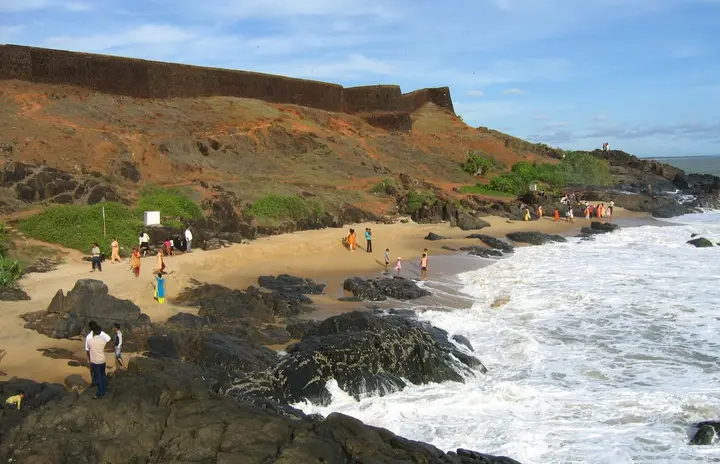
Sea-facing fort and resort beach stretch.
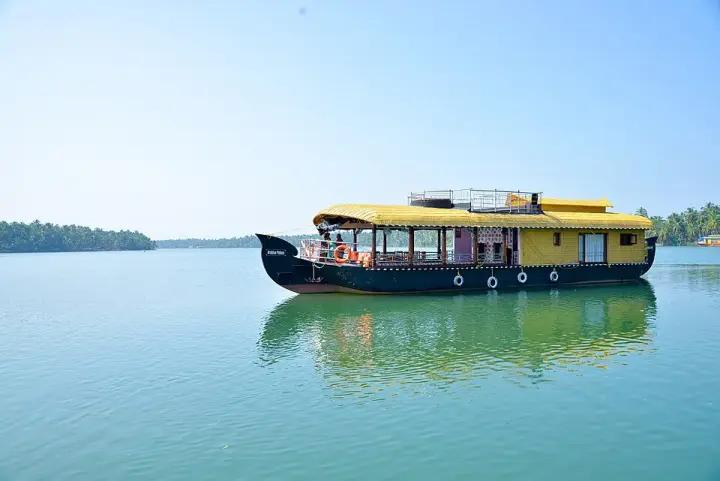 Backwater and Theyyam base
Kavvayi-backwater and Theyyam-culture town north of Bekal, with beach-and-backwater stays.
 Fort and ashram base
Hosdurg town on the Kasaragod coast, holding two separate ashrams a few kilometres apart — the hand-cut Nityananda caves and Anandashram — plus a Keladi Nayaka fort and a quiet shore.
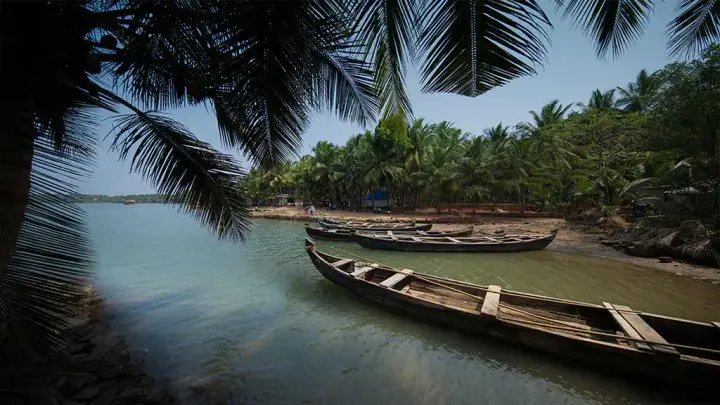 Backwater base
Quiet northern backwater island and boat-trip area.
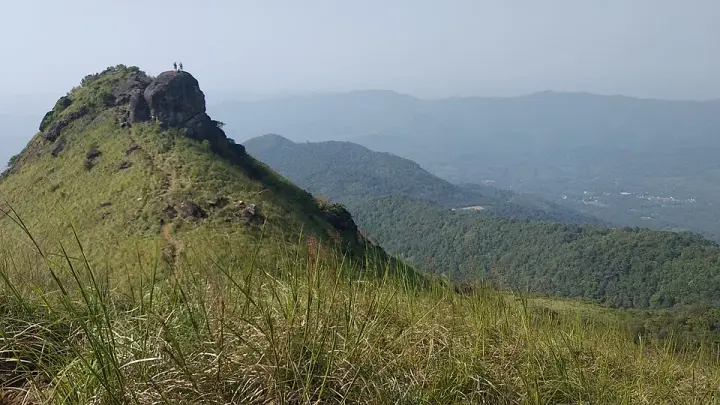 Hill base
Grassland hill and short trek area on the Western Ghats edge.
Kasaragod district is known for: Bekal Fort and beach, Valiyaparamba backwaters, Ranipuram hills and north-Kerala temple traditions.
Every verified place in Kumbla and Ananthapura — filter by what you’re after.
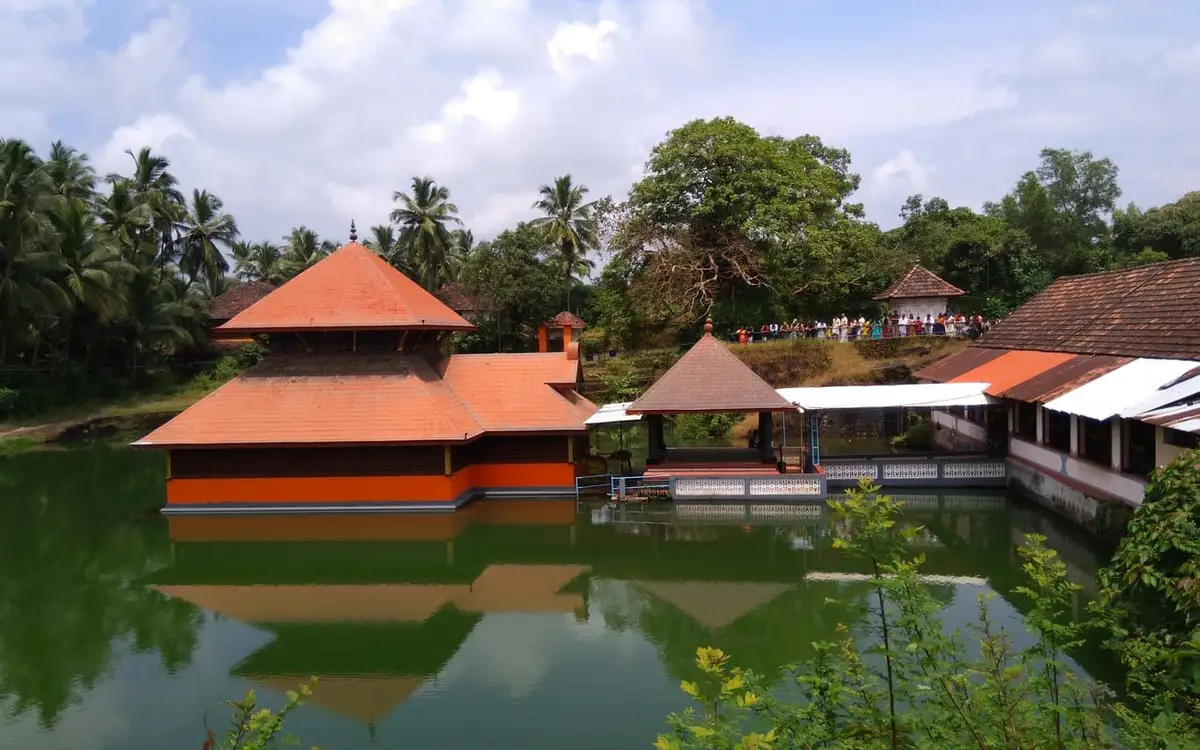
Ananthapura Lake Temple is Kerala unique lake temple near Kumbla, best planned with direct temple timing and contact details before pairing it with Bekal, Madhur or Kasaragod town. Temple visit; check offerings direct · Ananthapura Lake Temple, Kumbla, Temple.
Named Kasaragod-side hotel support for Kumbla and Ananthapura temple visitors. Mid-range 3-star hotel · stay, Hotel, Kalluvalappil Holiday Inn Kasaragod.
Multi-cuisine restaurant in Kumbla and Ananthapura. Kumbla-Badiadka Road, near Doctors Hospital, Kumbla, Kasaragod, Kerala 671321 · eat, Multi-cuisine restaurant, Royal Quba Multi Cuisine Restaurant Kumbla.
Route-planning record for reaching Ananthapura Lake Temple from Kumbla, Kasaragod and nearby rail/road points.
Kumbla homestay near Ananthapura Lake Temple, useful for travellers needing a local overnight base. BB, Homestay near lake temple, kumbla-and-ananthapura.
Book with the place itself. India’s cyber-crime coordination centre warned in April 2025 that convincing copies of hotel and pilgrimage booking sites are being pushed through sponsored search and social ads, taking payment for rooms the property never hears about. Every listing here links to the business’s own contact details and its own Google or Bing profile — we take no commission and sit in nobody’s payment path. If a booking page reached you through an ad, check the address bar against the property’s own site before you pay. Fraud can be reported on cybercrime.gov.in or on 1930.
The best tourist places to visit in Kumbla and Ananthapura — temples, viewpoints, lakes, heritage and nature, each with a full guide, how to reach it and what to see nearby.
Roampedia is commission-free. Travellers discover your business, book directly and contact you through official details. Basic listings are free, while Gold and Platinum package upgrades can be requested from the owner dashboard after approval.
Written about Kumbla and Ananthapura itself — its history, its legends and the arguments about them.

What is documented here is genuinely strange, and it becomes stranger rather than weaker when you separate what was recorded from what is believed.

A very large claim about one of the most famous temples in India rests on tradition, and the sources that carry it say so. That is unusual enough to be worth a page.

A short page of numbers about a temple in a lake, with each one labelled by where it came from — including the one we worked out ourselves.
Wider reading from Kasaragod. The stories about Kumbla and Ananthapura itself are above.
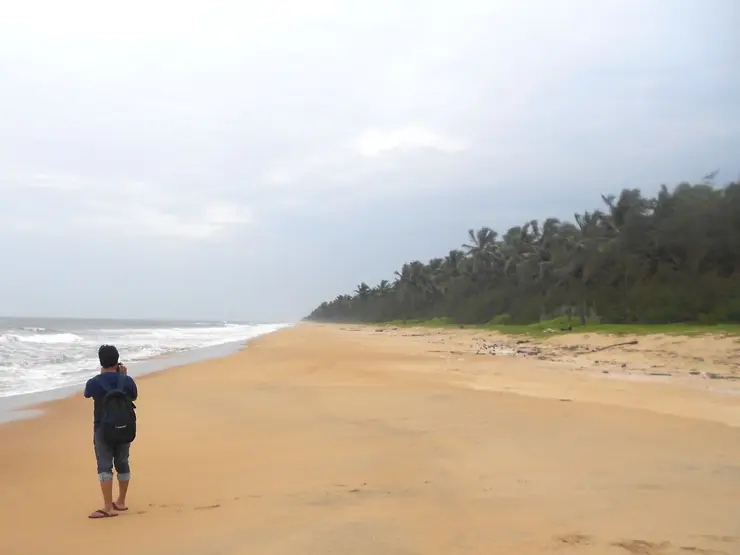
If Alleppey’s houseboat traffic isn’t your idea of backwaters, come north. Valiyaparamba is one of Kerala’s biggest and least commercial backwater stretches — palm-lined, peaceful and barely on the tourist map.
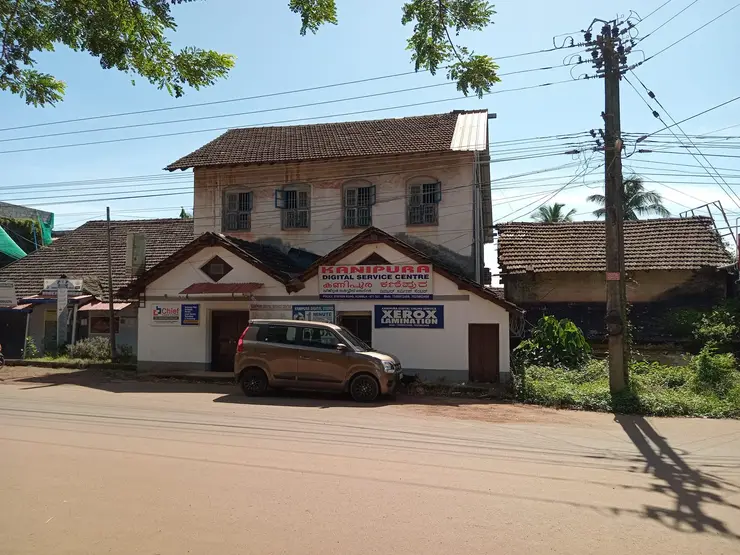
On Kerala’s northern edge, seven languages share one small district. Kasaragod’s nickname — the “land of seven languages” — is the key to understanding this crossroads of the Malabar, Tulu and Konkan worlds.
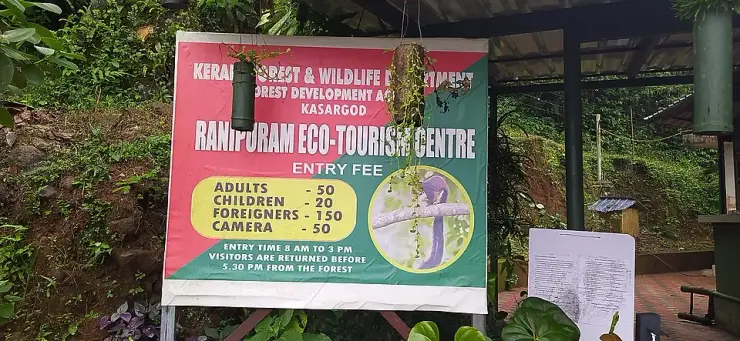
Fifty rupees, eight in the morning until three in the afternoon, everybody out of the forest by half past five — and nearly a thousand tickets a day, so the queue is not the thing to worry about.
The practical half — what is actually here, in what order to see it, and how to arrive.

Two quite different things a short drive apart, and one of them is the only temple of its kind in Kerala.
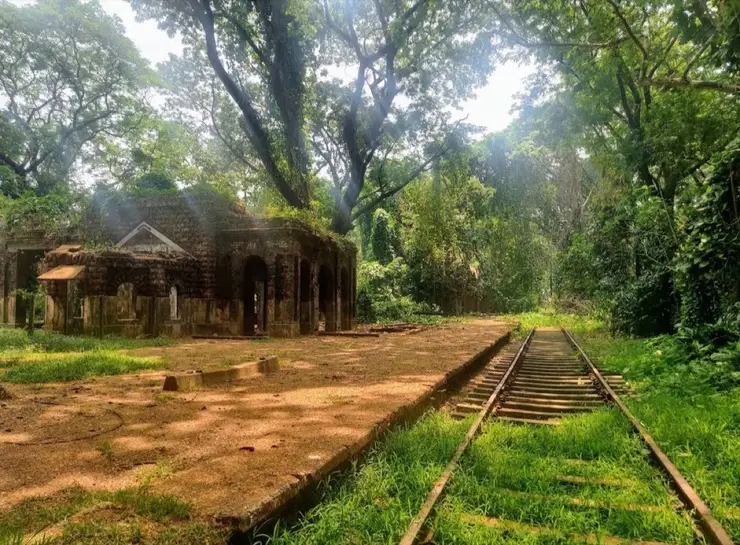
Kerala is long, narrow and easy to travel. Here is how to get in by air or rail, and how to move between the backwaters, hill stations and cities once you arrive.
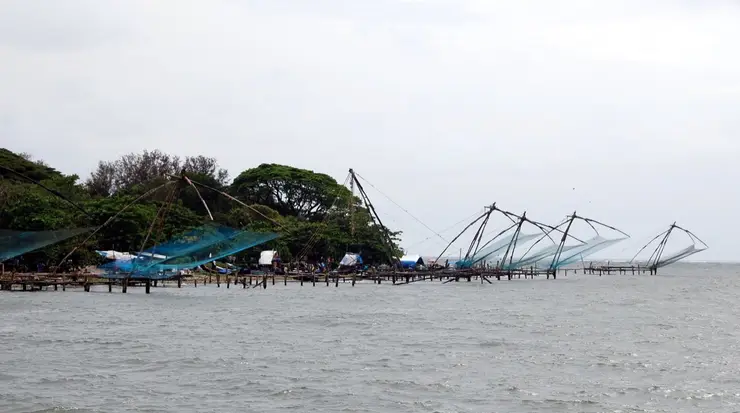
Kerala is one of India’s easier, calmer states to travel solo. Here’s an honest look at safety, the numbers to save, and how to sidestep the usual hassles.
Route-level itineraries and practical guides for the rest of the state.
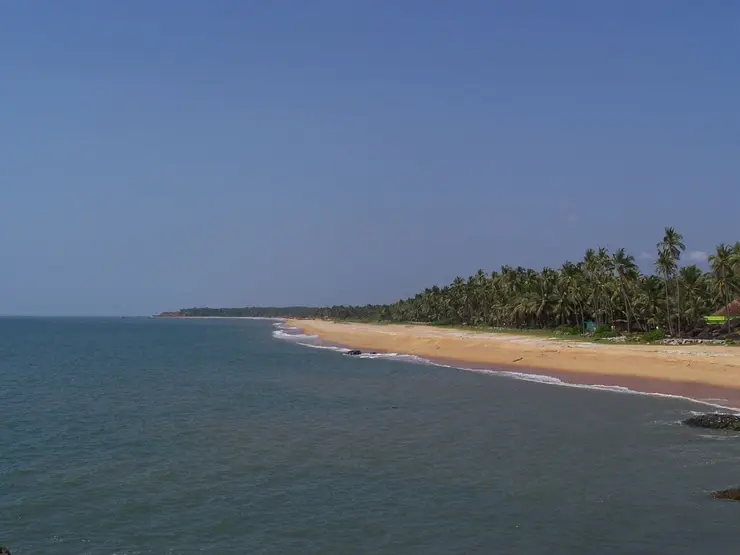
Two days is enough to pair Kerala’s biggest fort with its quietest backwaters and its only lake temple. Here’s a route through the state’s far north.
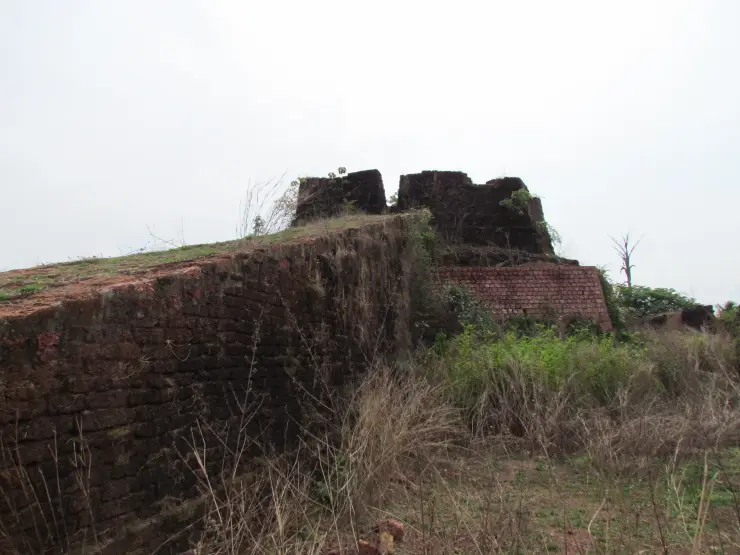
Connect the names Hosdurg, Kanhangad Fort and Puthiya Kotta with the surviving fortification and its Nayaka setting.
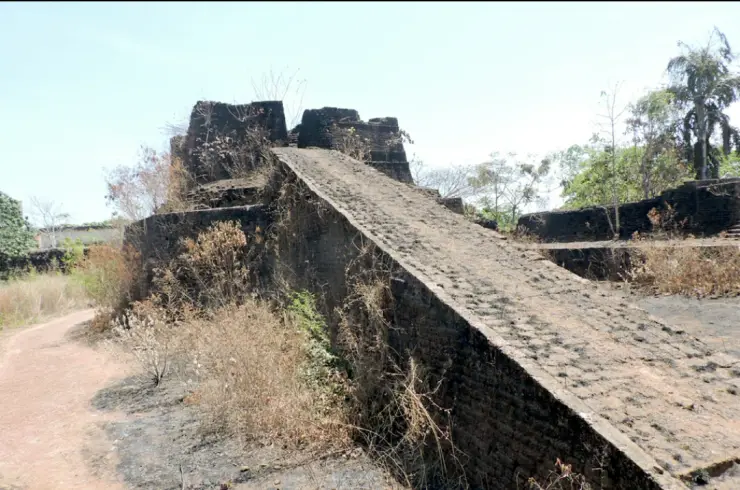
A close look at the shapes that make Hosdurg recognisable, from the broad approach to the curved mass of the surviving bastion.
A small principality that ruled the southern Tuluva country between the Chandragiri and Netravati rivers — broadly today's Kasaragod and Manjeshwar taluks — from Maipady Palace at Kumbla. Its rulers are described as of mixed Malayali Nair and Tuluva Brahmin descent, and they held the land as vassals, first of Kolathunadu and later under Vijayanagara. The territory was traditionally counted as 64 villages: 32 Tulu-speaking and 32 Malayalam-speaking.
Both, which is the point. Kumbla lies north of the Chandragiri river, the classical dividing line, and the language of the soil in that northern belt is Tulu, inside a Malayalam-speaking state. The district is genuinely multilingual in ordinary daily use.
He is the poet traditionally regarded as the father of Yakshagana, the all-night theatre of this coast, credited with around eighteen prasangas, the Sabhalakshana song collection used in the preliminary section, and a Ramayana used across Karnataka. Tradition places his birth at Shedikavu near Kumbla — but the sources that say so also record alternate opinions, so it is a tradition rather than an established fact.
The sources conflict and we do not resolve it. Yakshagana scholarship generally places him around 1600; the Wikipedia article on Kumbla puts him in the 18th century. Both figures are stated flatly by their sources.
Two older names are recorded and they do not agree. One tradition gives Kanvapura, after the sage Kanva; another gives Kanipura, the form preserved in the name of the town's Gopalakrishna temple. They may be worn-down variants of a single name or two separate traditions; the sources available do not settle it.
Rice and coir, not pepper. In 1514 the Portuguese traveller Duarte Barbosa recorded people here exporting rice and taking coir in exchange with the Maldives, and Arab traders had used the coast for centuries before that.
It is about six kilometres inland from Kumbla, and it is the reason most visitors come to this corner of the district. It has its own page on this site with its own story — including the resident crocodile and the connection to Thiruvananthapuram — which is deliberately not repeated here.
Yes — one site, two names, about a kilometre from Kumbla off the NH-66, on the ground between the Kumbla and Shiriya rivers, with a Hanuman temple below it. Who built it is genuinely disputed: accounts credit the Keladi Nayakas and also Tipu Sultan. Excavation in 2015 exposed a large hall thought to have been used for assembly, together with roof tiles, pottery and lead bullets.
Saptha Bhasha Sangama Bhoomi — the meeting place of seven languages. Those usually named are Malayalam, Tulu, Kannada, Marathi, Konkani, Beary and Urdu. It is a district-level nickname that Kumbla, sitting on the Tulu side of the Chandragiri seam, illustrates as directly as anywhere.
Kumbla was incorporated into British territory in 1804. The district later passed to Kerala at the linguistic reorganisation of the states, which is how a Tulu-speaking population came to sit inside a Malayalam-speaking state.
Top places to visit in Kumbla and Ananthapura include Ananthapura Lake Temple — each has a full guide with how to reach it and what to see nearby on this page.
The nearest airport to Kumbla and Ananthapura is Kannur (CNN), ~85–95 km; Mangalore (IXE), ~60–70 km. The rail gateway is Kasaragod (KGQ) or Kanhangad (KZE).
October to March is the driest and most comfortable season to visit Kumbla and Ananthapura and the rest of Kerala. The June–September monsoon is lush and green but wet, and often brings lower low-season prices.
Photographs: Prof tpms (CC BY-SA 4.0), Ajeeshkumar4u (CC BY-SA 4.0). Wikimedia Commons.