What to expect
Highlights
- Nileshwar — The cultural capital of Kasaragod — a Theyyam and folk-arts town on the Nileshwaram backwaters, with kovilakams, kavus and a lively ritual-arts season.
Kavvayi-backwater and Theyyam-culture town north of Bekal, with beach-and-backwater stays.
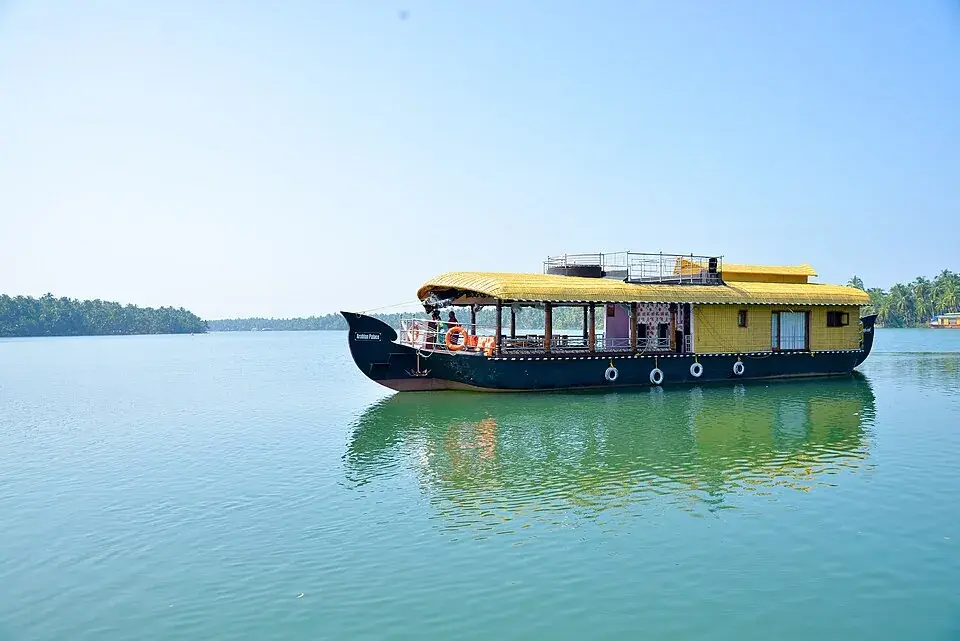
The town's name is a contracted god's name. Neeleswaram is the shortened form of Neelakanteshweram, from Neelakanteshwaran — the blue-throated Shiva who swallowed the poison — of the Thaliyil Siva temple. It stands on the estuary where the Neeleshwaram river meets the Kavvayi backwaters, the third-largest backwater system in Kerala, and the water here is working water: country boats, fish traps and mangrove edges rather than a houseboat circuit. It is the quiet northern alternative to Alappuzha, and that is the whole appeal.
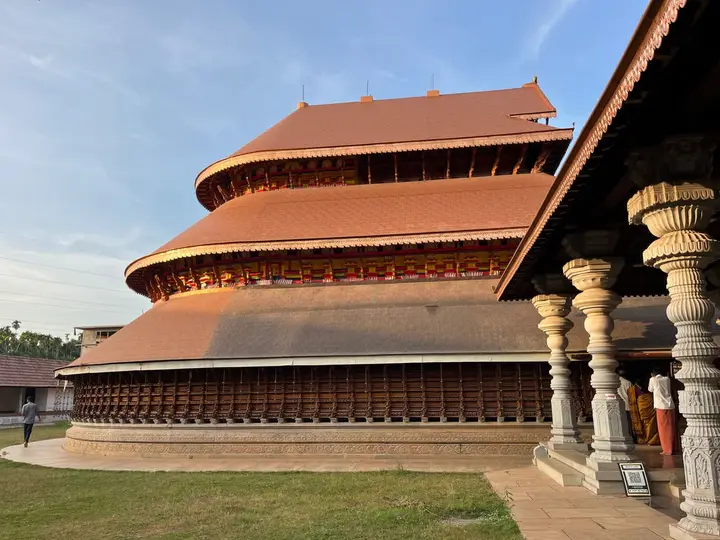
Nileshwar is also a Theyyam town, and its most famous sacred grove is Mannampurathu Kavu; serpent groves sit beside ancestral houses through the area. The old ruling house was unusual in being related to both of the great north Kerala rivals — the Nileshwar Rajas belonged to the clans of the Kolathiri and the Zamorin — and Kerala Tourism records that they migrated from Kozhikode more than six hundred years ago, a round figure with no date attached to it. The two-storeyed Nileshwaram Palace now functions as a folklore centre for the Department of Archaeology, and the town was once described as the cultural capital of the district.
October to May for Theyyam and folk-arts; the backwaters are pleasant October to March.
Live forecast loads in your browser.
Sunset is in about 2 hours.
Sun and moon are calculated for this location and shown in IST. Photography windows are the hour around sunrise and sunset; the sunset bearing is degrees clockwise from true north. Moon phase is accurate to about half a day.
The old cultural capital of Kasaragod district, on the Kavvayi backwaters in Kerala's far north. Nileshwar had its own royal house — a branch of the Kolathiri line, related to both Kolathunadu and the Zamorins of Calicut — and it remains one of the densest theyyam landscapes in the state, where the ritual season, not the tourist season, sets the calendar.
Nileshwar stands in the northern part of Kasaragod district, on the Kavvayi backwaters, in the stretch of Kerala that most visitors never reach — north of Kannur, south of Kasaragod town, in a coastal landscape of lagoons, islands, coconut and small temples. It is routinely described as the cultural capital of the district, and unusually for that kind of phrase, it is a description of something specific rather than a compliment.
The specific thing is a dynasty. Nileshwar was the seat of the Nileshwar Rajas, who are recorded as having migrated here from the Kozhikode side more than six hundred years ago. As the Kolathiri dominion in the north fragmented into independent principalities under separate chieftains, Nileshwaram emerged as one of them, and its ruling family stood in an unusual position: related to the Kolathunadu house and to the Zamorins of Calicut at the same time. Much of what is now Hosdurg taluk, around Kanhangad, and Vellarikundu belonged to this dynasty in the early medieval period.
A ruling house sitting at the junction of two rival powers is a good way to end up with a strong court culture, and that is broadly the explanation offered locally for why this small town carries the weight it does — a palace, temples with royal association, and a performance tradition supported over centuries by patronage rather than by tourism.
The town's name is itself contested, and both explanations are worth having. One derives it from Neelakandeshwara, the presiding deity of the Taliyil temple associated with the royal dynasty established here by about the fourteenth century, Neeleswaram being a shortened form of Neelakanta Ishwaran. The other attributes it to a visit by a sage called Neelamaharshi. The first is the more commonly given and fits the temple's role in the dynasty's identity; we set out both because the sources genuinely differ.
What brings most people here who are not from here is theyyam. This is theyyam country in the fullest sense — the ritual form of northern Malabar in which a costumed, painted performer becomes the deity and is addressed as such, performed in kavus and family shrines rather than on stages. Nileshwar's sites, including the Thali Shiva temple and the Sree Gopalakrishna temple, carry active theyyam traditions. The season runs broadly from around October to May, and outside it there is nothing to see, because there is nothing being performed.
The other landscape here is water. The Kavvayi backwaters are the third of Kerala's backwater systems that almost nobody visits — a network of lagoons and islands running behind the coast, quieter by an order of magnitude than Alappuzha and Kumarakom, with houseboat and canoe operations at a fraction of the scale. If you have been sold the Kerala backwaters as a crowded experience, this is the counter-argument.
There is a beach as well, and a working coastal economy of fishing and coir, and the North Kerala rhythm of a place that is a taluk town with a big past rather than a resort. Nileshwaram Palace, described as a sixteenth-century site retaining remnants of Kolathiri-period architecture, is the physical survivor of the dynasty.
Nileshwar rewards a traveller who arrives in the right months and asks locally what is on. In theyyam season it is one of the most extraordinary places in Kerala. Out of season it is a quiet backwater town with a palace and a good beach, which is a fair thing to be, but it is not the same visit.
The first and most consequential thing to understand about Nileshwar is that its main attraction has a season and does not exist outside it. Theyyam is performed in kavus and shrines on a ritual calendar running broadly from about October to May, temple by temple and shrine by shrine. It is not a show laid on for visitors; there is no venue where it happens nightly, and nothing is staged out of season for anybody. A traveller who arrives in July expecting to see theyyam will see none. This is the single most useful fact on this page.
The second follows from it: theyyam is worship, not performance, and the distinction is not a nicety. The costumed, painted figure is treated as the deity present, is consulted, and gives blessings; the audience are devotees at a rite. Visitors are very often welcome, but the terms are the shrine's — ask before photographing, keep out of the performance space, accept direction from the people running it, and do not treat the performer as a costumed subject. Getting this wrong is the commonest way outsiders cause offence in northern Malabar.
The third is the name, where two derivations circulate and neither can be dismissed. One takes Nileshwar from Neelakandeshwara, the chief deity of the Taliyil temple associated with the royal dynasty established here by about the fourteenth century — Neeleswaram as a contracted form of Neelakanta Ishwaran. The other credits a visiting sage, Neelamaharshi. The temple derivation is the more commonly given and fits the dynasty's relationship with that shrine, but sources explicitly record more than one opinion and we are not going to flatten that into a single sentence.
The fourth is a caution about the dynasty's relationships, which are easy to state too simply. The Nileshwar rajas are described as belonging to the clans of both the Kolathiri and the Zamorins, and Nileshwaram emerged as an independent principality as the Kolathiri dominion broke into chieftaincies. That is a genuinely complicated position — kin to two powers that were frequently opposed — and accounts that present Nileshwar as straightforwardly a Kolathiri sub-branch, or straightforwardly a Zamorin ally, are simplifying. The honest version is that it sat between them.
The fifth is geography, and it is worth saying because one widely repeated sentence is misleading. Ezhimala, the historic hill, is sometimes described as lying on the southern portion of the Kavvayi backwaters of Nileshwaram. Ezhimala is in KANNUR district, not Kasaragod, and it is not Nileshwar's hill. The backwater system does extend south along the coast towards it, which is presumably how the phrasing arose, but a reader should not expect Ezhimala to be a Nileshwar excursion.
The sixth is about the backwaters themselves and cuts against the usual travel-writing instinct. The Kavvayi system is genuinely quiet, and that is its whole value; it is not an undiscovered Alappuzha waiting for the same treatment. Operations here are small, local and limited, and the correct expectation is a canoe or a modest houseboat on empty water rather than a fleet and a jetty. Anyone comparing it unfavourably to Alappuzha on facilities has misunderstood what they came for.
The seventh is scale, stated plainly. Nileshwar is a small town in Kerala's least-visited district. There is limited accommodation, limited English-language information, and very little published about individual shrines and their calendars. Asking locally is not a fallback here; it is the primary method, and the reason this page tells you about the season and the etiquette rather than listing dates it cannot verify.
Nileshwar, also written Nileswaram or Neeleswaram, lies in northern Kasaragod district on the Kavvayi backwaters, and is commonly described as the erstwhile cultural capital of the district.
It was the seat of the Nileshwar Rajas, who are recorded as having migrated from the Kozhikode region more than six hundred years ago. As the Kolathiri dominion of northern Kerala fragmented into independent principalities under separate royal chieftains, Nileshwaram emerged as one of them. The ruling family belonged to the clans of both the Kolathiri and the Zamorins of Calicut, and in the early medieval period the dynasty held much of what is now Hosdurg taluk, around Kanhangad, together with Vellarikundu.
Nileshwaram Palace, a site of the sixteenth century, preserves remnants of architecture of the Kolathiri period.
The town's name is variously explained. The commoner derivation takes it from Neelakandeshwara, the chief deity of the Taliyil temple associated with the royal dynasty established here by about the fourteenth century, Neeleswaram being a contracted form of Neelakanta Ishwaran; another attributes it to a visit by the sage Neelamaharshi.
Nileshwar remains a centre of theyyam, the ritual performance tradition of northern Malabar, with active traditions at sites including the Thali Shiva temple and the Sree Gopalakrishna temple. The theyyam season runs broadly from around October to May. The town sits on the Kavvayi backwaters, a lagoon-and-island system in the far north of Kerala that carries a small fraction of the visitor traffic of the Alappuzha and Kumarakom backwaters.
For theyyam in its own country — performed as worship in kavus and shrines rather than staged for audiences — if you can come between roughly October and May.
For the Kavvayi backwaters, the quietest of Kerala's major backwater systems, with a fraction of the boats and none of the crowds.
For a town that was the seat of its own dynasty, related to both the Kolathiri house and the Zamorins, and is still called the cultural capital of Kasaragod.
For Nileshwaram Palace, a 16th-century site retaining Kolathiri-period architecture, and for temples with long royal association.
For the far-north coast — beaches, fishing, coir — in the least-visited district in Kerala.
As a base for the wider Kasaragod north: Bekal, Kanhangad and Valiyaparamba are all within reach.
Entry: Free town; Theyyam performances at its kavus are open, seasonal ritual events.
Dress code: Modest dress at the kavus, as at any shrine. At a theyyam, dress as the congregation does — this is worship, and a visitor in beachwear is conspicuous for the wrong reason.
Festivals: The theyyam season runs roughly October to May, village by village, on each shrine’s own kaliyattam calendar. There is no central published schedule worth relying on; ask locally for the dates that fall within your visit.
Photography: Ask first, every time. The costumed theyyam figure is regarded as the deity present, not a performer, and photography is at the shrine’s discretion, not yours. Flash into a ritual at night is the surest way to be asked to leave.
Parking: Roadside in town. At a kaliyattam the parking is wherever the village directs you, often a field, and it fills.
Check your return bus or ferry with the operator before setting out. Leave time to reach the stop or jetty after your visit, and arrange a return vehicle in advance for a remote outing.
Ask at the jetty or the stand for the time of the last service back, not the next one. If you miss it, an auto or a taxi is the fallback — agree the fare before you get in.
If you need step-free access, contact the site before travelling. Ask about a level entrance, steps along the route, the nearest drop-off point, seating and accessible toilets.
Published emergency and visitor-assistance contacts. For an immediate emergency, call 112. Shared Kerala contact sources checked 4 October 2026; publication does not establish a tested live response.
Charge cap and free-transaction limits: Reserve Bank of India, ATM FAQ updated 4 July 2025; checked 4 October 2026.
These services are listed within about 1.2 km of Nileshwar. Walking distances follow mapped routes; access and opening hours can change. Other services may be closer but are not included here.
 District base
Temple, mosque, fort and coastal access base.
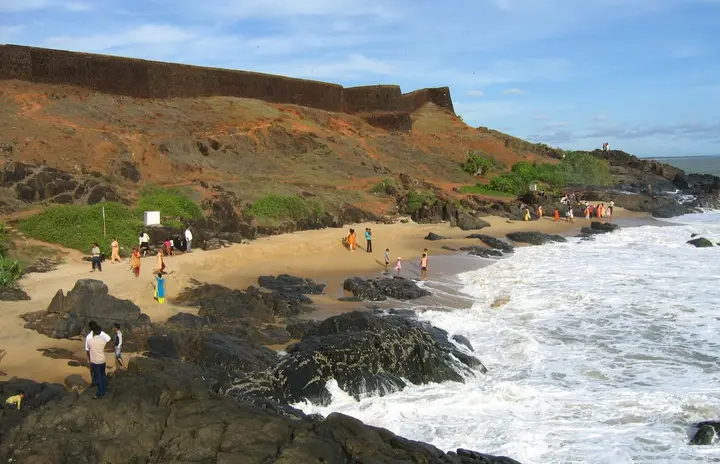 Fort and beach base
Sea-facing fort and resort beach stretch.
 Fort and ashram base
Hosdurg town on the Kasaragod coast, holding two separate ashrams a few kilometres apart — the hand-cut Nityananda caves and Anandashram — plus a Keladi Nayaka fort and a quiet shore.
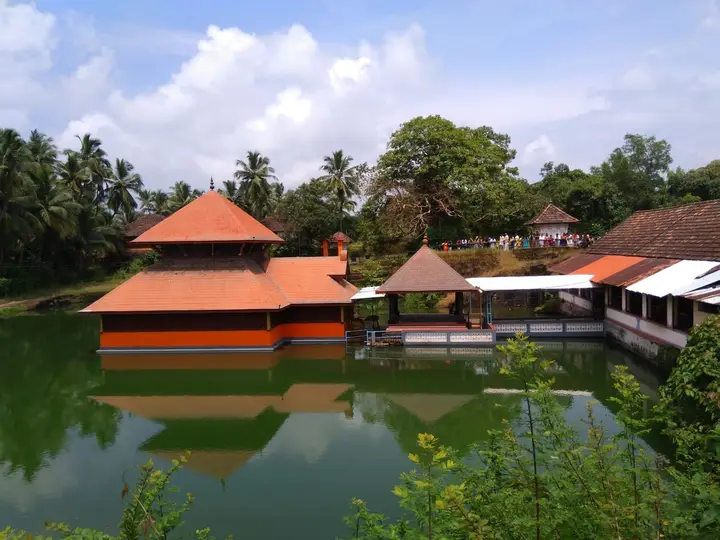 Temple base
Northern temple circuit with a lake temple landmark.
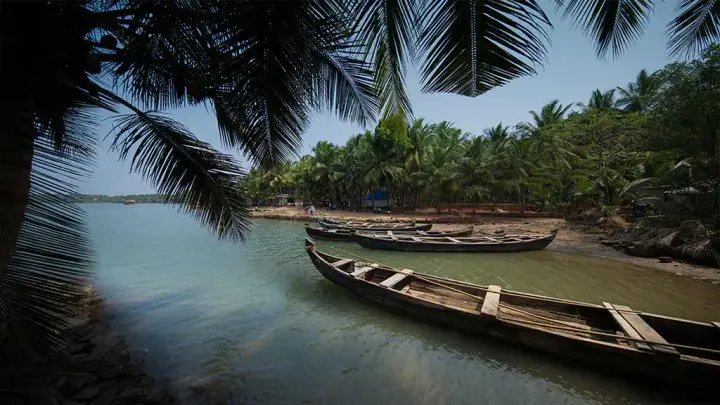 Backwater base
Quiet northern backwater island and boat-trip area.
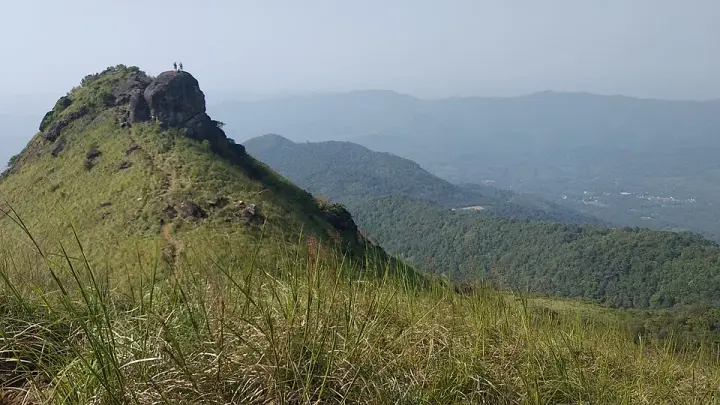 Hill base
Grassland hill and short trek area on the Western Ghats edge.
Kasaragod district is known for: Bekal Fort and beach, Valiyaparamba backwaters, Ranipuram hills and north-Kerala temple traditions.
Every verified place in Nileshwar — filter by what you’re after.
Palm-grove luxury retreat on the Arabian Sea coast at Ozhinhavalappu. Guests join backwater cruises and encounter local Theyyam rituals.
Boutique beachfront resort of ten private cottages facing the Arabian Sea. It sits on the Nileshwar coast north of Bekal at Ozhinhavalappu.
In-town resort on the National Highway junction in central Nileshwar. It lies about 2 km from Nileshwar railway station near the river market.
Traditional home-style beach house on a spit in Valiyaparamba village. Beach lies on one side and the Kavvayi backwaters on the other.
Book with the place itself. India’s cyber-crime coordination centre warned in April 2025 that convincing copies of hotel and pilgrimage booking sites are being pushed through sponsored search and social ads, taking payment for rooms the property never hears about. Use the contact and source details on each profile to confirm the exact business and booking channel. A directory entry or map pin alone does not establish an operator’s identity or current availability. Roampedia takes no commission and does not collect booking payments. If a booking page reached you through an ad, check the address bar against the property’s own site before you pay. Fraud can be reported on cybercrime.gov.in or on 1930.
The best tourist places to visit in Nileshwar — temples, viewpoints, lakes, heritage and nature, each with a full guide, how to reach it and what to see nearby.

The town sits on an estuary where the Neeleshwaram river meets the Kavvayi system, and the water here is working water — country boats, fish traps, coir, and mangrove edges rather than a houseboat circuit. It is the quiet northern alternative to Alappuzha, and the difference is the point: you will share it with more birds than boats.
Open guide →
The Kavvayi backwaters are the third-largest in Kerala and the reason Nileshwar has a shoreline at all — a chain of islands and channels running north towards Payyanur, with Kavvayi island at the centre. Boats are small and arranged locally rather than booked from a jetty counter, so allow time to find one.
Open guide →Roampedia is commission-free. Travellers discover your business, book directly and contact you through official details. Basic listings are free, while Gold and Platinum package upgrades can be requested from the owner dashboard after approval.
Written about Nileshwar itself — its history, its legends and the arguments about them.

Most Kerala place names describe the land. This one names a god, and specifically the moment in his story when he drank something that would have killed the world.
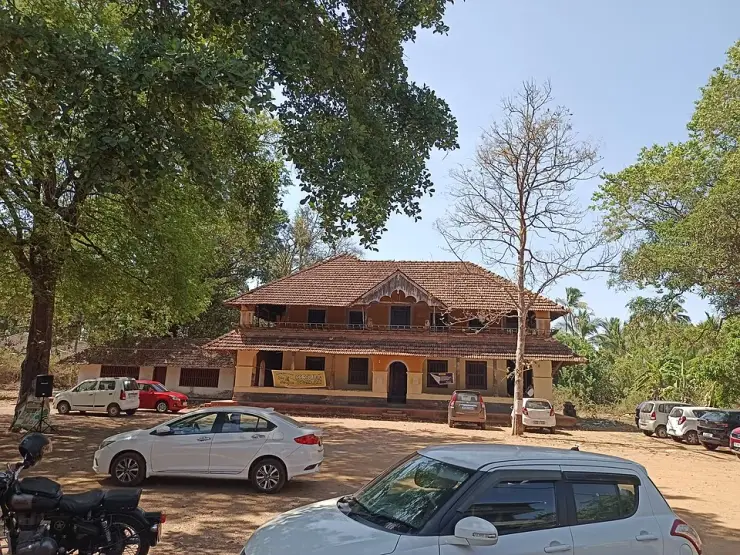
Kolathunadu and the Zamorin spent centuries opposing each other. Nileshwar’s ruling house was related to both, which is the most interesting thing about a town most people drive through.

This is not a comfortable page to write and it is the most useful one we can offer about attending a festival night here. It is reported, not dramatised.
Wider reading from Kasaragod. The stories about Nileshwar itself are above.
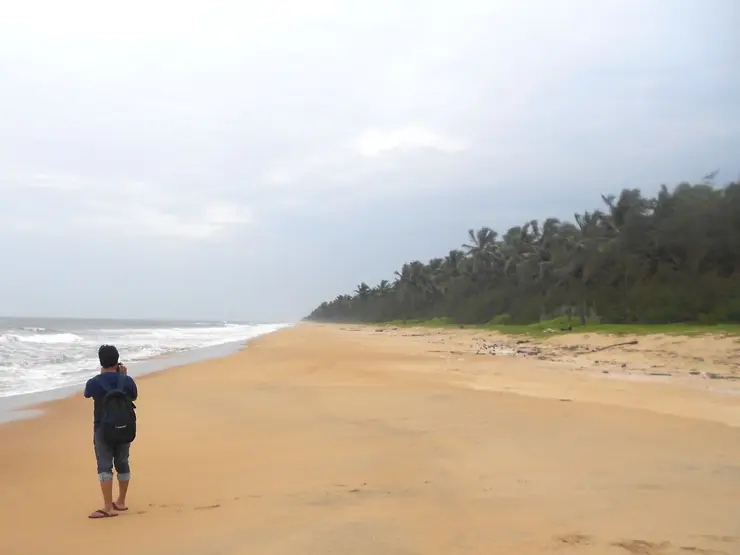
If Alleppey’s houseboat traffic isn’t your idea of backwaters, come north. Valiyaparamba is one of Kerala’s biggest and least commercial backwater stretches — palm-lined, peaceful and barely on the tourist map.
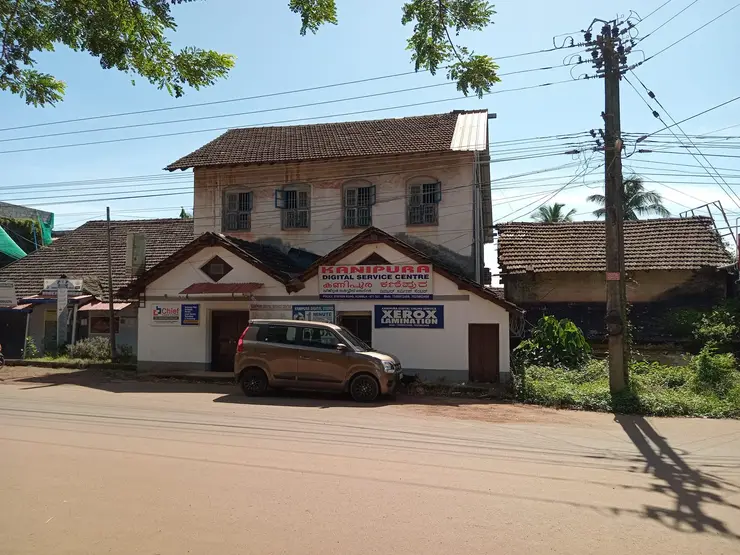
On Kerala’s northern edge, seven languages share one small district. Kasaragod’s nickname — the “land of seven languages” — is the key to understanding this crossroads of the Malabar, Tulu and Konkan worlds.
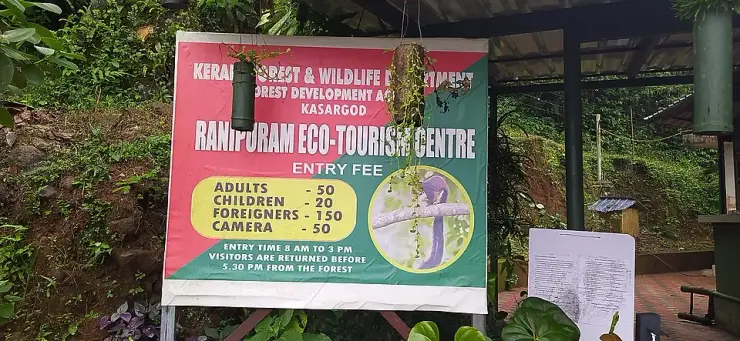
Fifty rupees, eight in the morning until three in the afternoon, everybody out of the forest by half past five — and nearly a thousand tickets a day, so the queue is not the thing to worry about.
The practical half — what is actually here, in what order to see it, and how to arrive.

The single biggest planning decision at Nileshwar is when you come, and the second is how you behave when you get there.
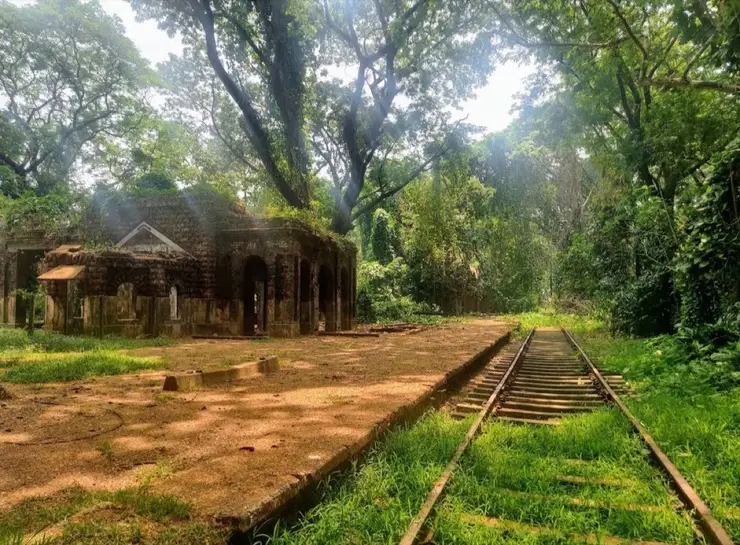
Kerala is long, narrow and easy to travel. Here is how to get in by air or rail, and how to move between the backwaters, hill stations and cities once you arrive.
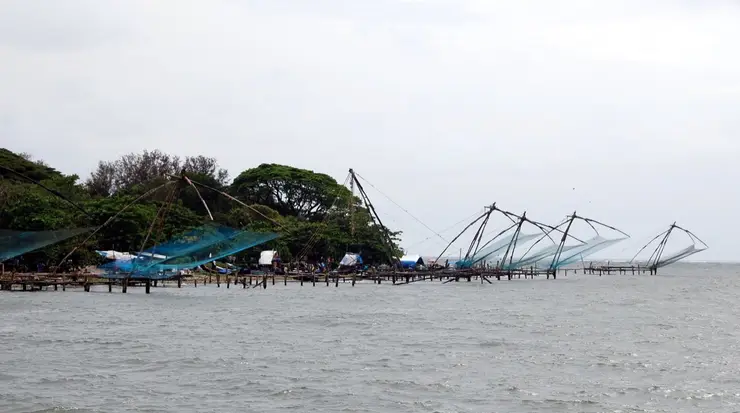
Kerala is one of India’s easier, calmer states to travel solo. Here’s an honest look at safety, the numbers to save, and how to sidestep the usual hassles.
Route-level itineraries and practical guides for the rest of the state.
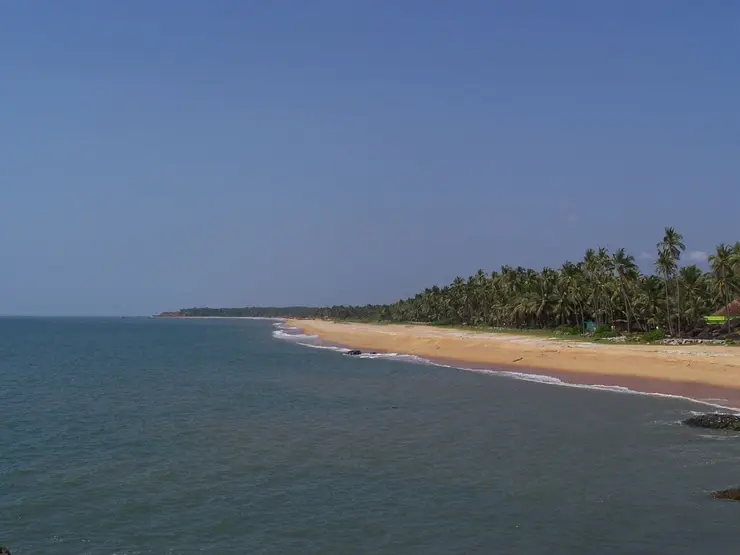
Two days is enough to pair Kerala’s biggest fort with its quietest backwaters and its only lake temple. Here’s a route through the state’s far north.
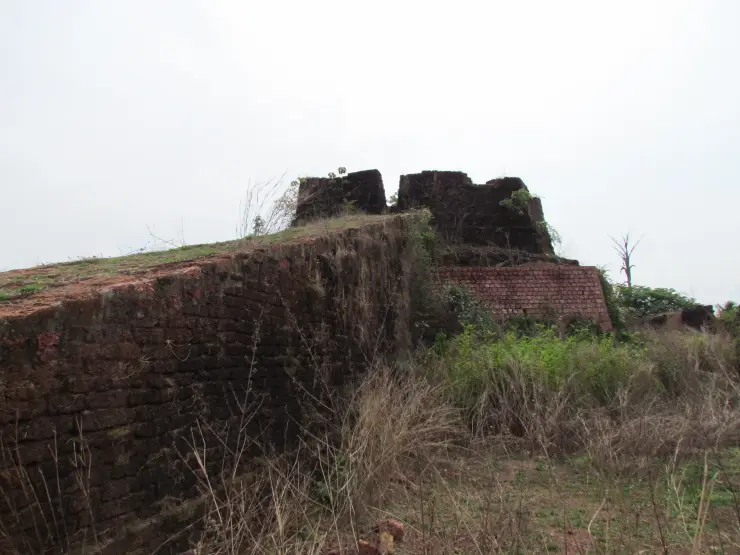
Connect the names Hosdurg, Kanhangad Fort and Puthiya Kotta with the surviving fortification and its Nayaka setting.
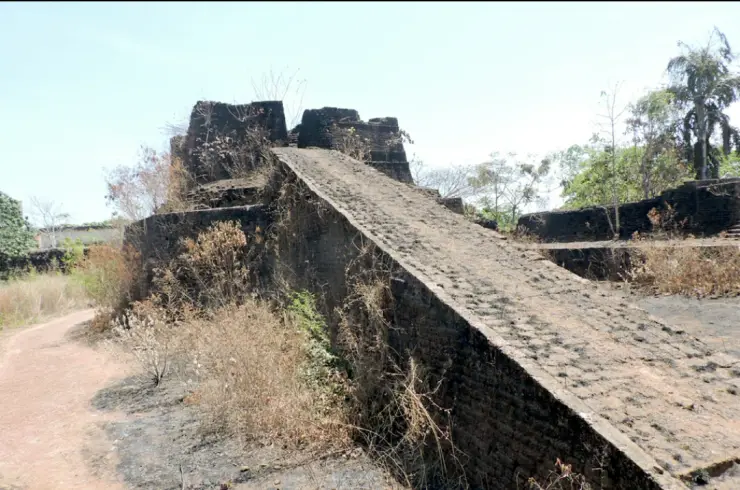
A close look at the shapes that make Hosdurg recognisable, from the broad approach to the curved mass of the surviving bastion.
The theyyam season runs broadly from about October to May, shrine by shrine on a ritual calendar. Outside those months there is nothing to see, because nothing is performed — theyyam is worship on a calendar, not a scheduled show. Ask locally for what is on during your dates; published listings are unreliable.
It is worship, not performance: the costumed, painted figure is treated as the deity present, consulted and giving blessings. Visitors are often welcome, but on the shrine's terms — ask before photographing, stay out of the performance space, and follow the direction of the people running the rite.
Sources give more than one derivation. The commoner one takes it from Neelakandeshwara, the chief deity of the Taliyil temple associated with the royal dynasty established here by about the 14th century — Neeleswaram being a contracted form of Neelakanta Ishwaran. Another attributes it to a visit by the sage Neelamaharshi.
The ruling house of Nileshwaram, recorded as having migrated from the Kozhikode region more than 600 years ago. They emerged as an independent principality as the Kolathiri dominion fragmented, and belonged to the clans of both the Kolathiri and the Zamorins of Calicut. In the early medieval period the dynasty held much of present-day Hosdurg taluk and Vellarikundu.
They are far quieter, with a small fraction of the boats and much more limited infrastructure — small canoe and houseboat operations rather than a fleet. That emptiness is the point; if you want jetties, choice and facilities, Alappuzha is the place, and if you want empty water, this is.
Nileshwar has its own railway station on the Mangalore–Kannur coastal line, and sits on the NH-66 in northern Kasaragod district. Kannur international airport is the nearest airport, with Mangalore also usable.
Top places to visit in Nileshwar include Nileshwar backwaters, Kavvayi backwaters — each has a full guide with how to reach it and what to see nearby on this page.
October to March is the driest and most comfortable season to visit Nileshwar and the rest of Kerala. The June–September monsoon is lush and green but wet, and often brings lower low-season prices.
Photographs: Ajeeshkumar4u (CC BY-SA 4.0), Manojk (CC BY-SA 4.0), Devanandnlr (CC BY-SA 3.0), Prof tpms (CC0), Shareef Taliparamba (CC BY-SA 2.0), Vijayanrajapuram (CC BY-SA 4.0). Wikimedia Commons.