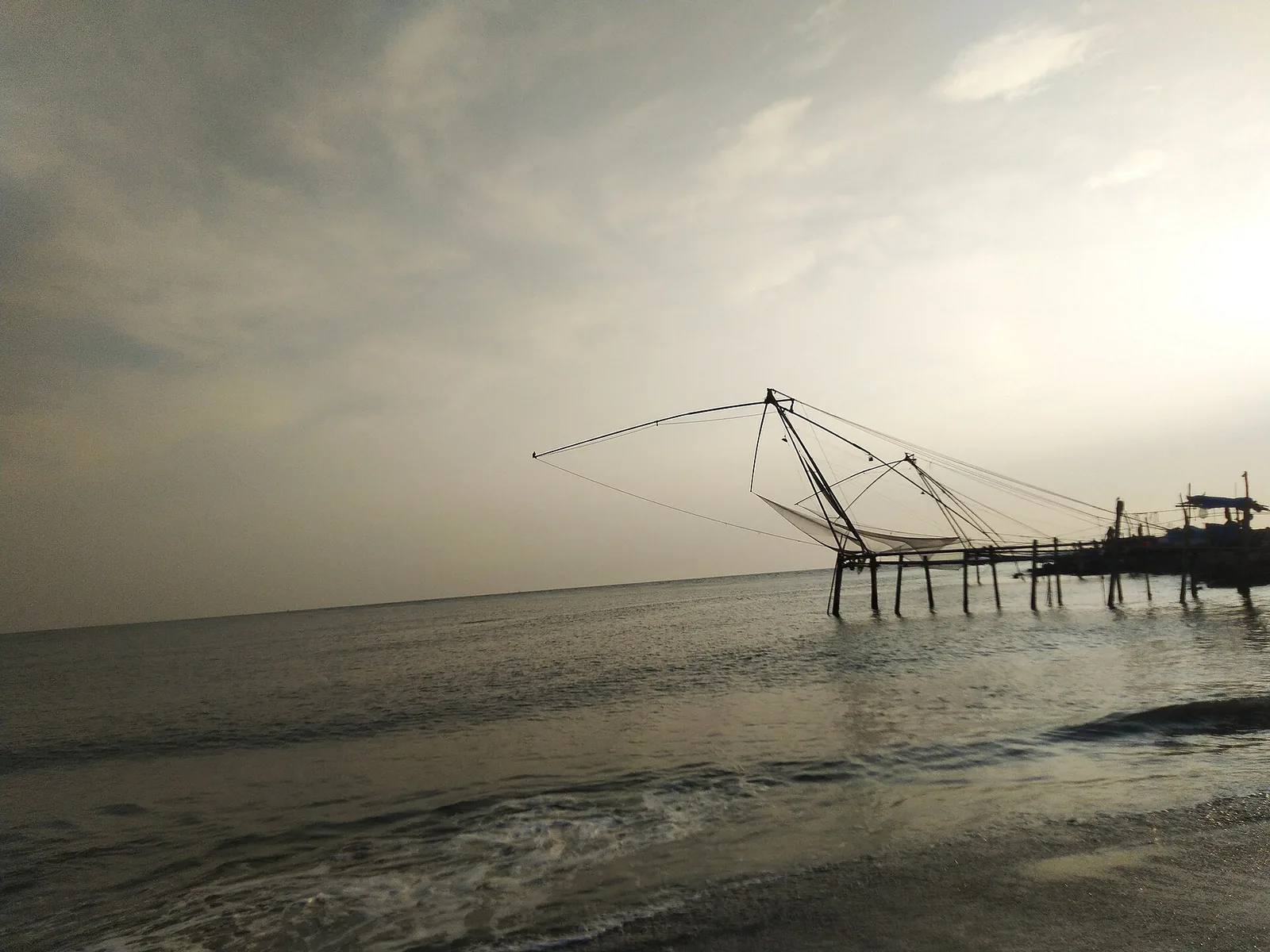
There is one hour at Munambam beach that justifies the whole trip, and it is the last one before dark. The light goes gold over the river mouth, the fleet comes back across the bar, the cantilevered nets on the estuary side start to matter as silhouettes rather than as machinery, and the sky fills with two entirely different kinds of kite.
Why an estuary is full of life
The reason there is so much to look at here is chemistry rather than scenery. Where a large river discharges into the sea, fresh water and salt water mix across a shifting gradient, and that mixing zone concentrates nutrients. Nutrients concentrate plankton; plankton concentrates fish; fish concentrate everything with a beak. An estuary is, biologically, the busiest kind of coastline there is, and the Periyar mouth at Munambam is a substantial one.
That is also, incidentally, why the fishing harbour is here. The birds and the trawlers are exploiting the same phenomenon, roughly two hundred metres apart.
What to look for
Gulls and terns work the open water — terns hovering and dropping, gulls loafing on the bar and mobbing anything that lands with a fish. Along the tideline and the exposed mud at low water you get waders: sandpipers, plovers, the occasional curlew probing the soft ground with a bill built for exactly that job. Brahminy kites and other raptors ride the air over the harbour, which is where the second meaning of the word comes in.
The cooler months, roughly October to March, are much the best. That is when migratory shorebirds are on this coast, when the light is cleanest, and when standing still on an exposed sandspit for forty minutes is a pleasure rather than an endurance test.
- Arrive about ninety minutes before sunset — low tide is better if you get the choice.
- Walk the estuary side first for the waders on the exposed mud.
- Move to the sea side for the last thirty minutes and the boats crossing the bar.
- Binoculars change this visit completely. There is nothing here to hire them from.
- Stay out of the water. This is a river mouth with strong offshore currents, not a bathing beach.
The other kites
Kite-flying at Munambam is a genuine local pastime, not something laid on for visitors, and it is one of the pleasanter things about the place. The wide open sand and the steady onshore breeze off the Arabian Sea make it near-ideal ground, and on a good evening there will be families out with paper and plastic kites in numbers.
The distinction matters when you are deciding where to point a camera. A beach that has been staged for tourism produces posed activity. Munambam produces the thing itself, which is less polished and considerably better — and it means the ordinary courtesies apply. Ask before photographing people, particularly children.
The nets on the river side
The cheena vala here are worth a closer look than the famous ones at Fort Kochi, mostly because there is nobody else looking at them. These stand on the estuary side, dipping into the brackish water on the same cantilever principle: a fixed shore platform, a counterweighted arm, a horizontal net lowered and raised by a small crew walking the weights.
They are not a performance here. They are gear, worked when the water is right, in a place where the audience is four people and a dog. If you have already seen the Fort Kochi nets with a hundred phones pointed at them, this is the version that will tell you what they are actually for.
Frequently asked questions
What birds can I see at Munambam beach?
Gulls and terns over the open water, waders along the tideline and exposed mud at low tide — sandpipers, plovers and curlews among them — and Brahminy kites and other raptors over the harbour. The estuary concentrates fish, which concentrates everything that eats them.
When is the best time for birdwatching at Munambam?
The cooler months from roughly October to March, when migratory shorebirds are on this coast. Within the day, the last ninety minutes before sunset, ideally around low tide when the mud is exposed. Bring your own binoculars — there is nowhere here to hire them.
Is kite-flying at Munambam a tourist activity?
No, and that is the appeal. It is a local pastime, helped by wide open sand and a steady onshore breeze, and on a good evening families come out with kites in numbers. Ask before photographing people, especially children.
Are the Chinese fishing nets at Munambam different from the Fort Kochi ones?
Same cantilever principle — a shore platform, a counterweighted arm and a horizontal net raised and lowered by a small crew — but at Munambam they stand on the estuary side and are worked as ordinary gear rather than watched by crowds. If you want to understand how the nets actually function, this is the better place to see them.
What is the best time of day at Munambam beach?
The last hour before sunset, comfortably. The light over the river mouth is the best on northern Vypin, the fleet is crossing the bar, the nets become silhouettes and the birds are most active. Early morning is the other good window and pairs with the harbour auction next door.
Can I swim while I am there?
No. Munambam is a river mouth beside a working harbour channel, with fast, shifting, largely offshore currents and no breaking waves to warn you. It looks like the calmest water on the coast and is the most dangerous. Cherai Beach, a short drive north, is where you swim.