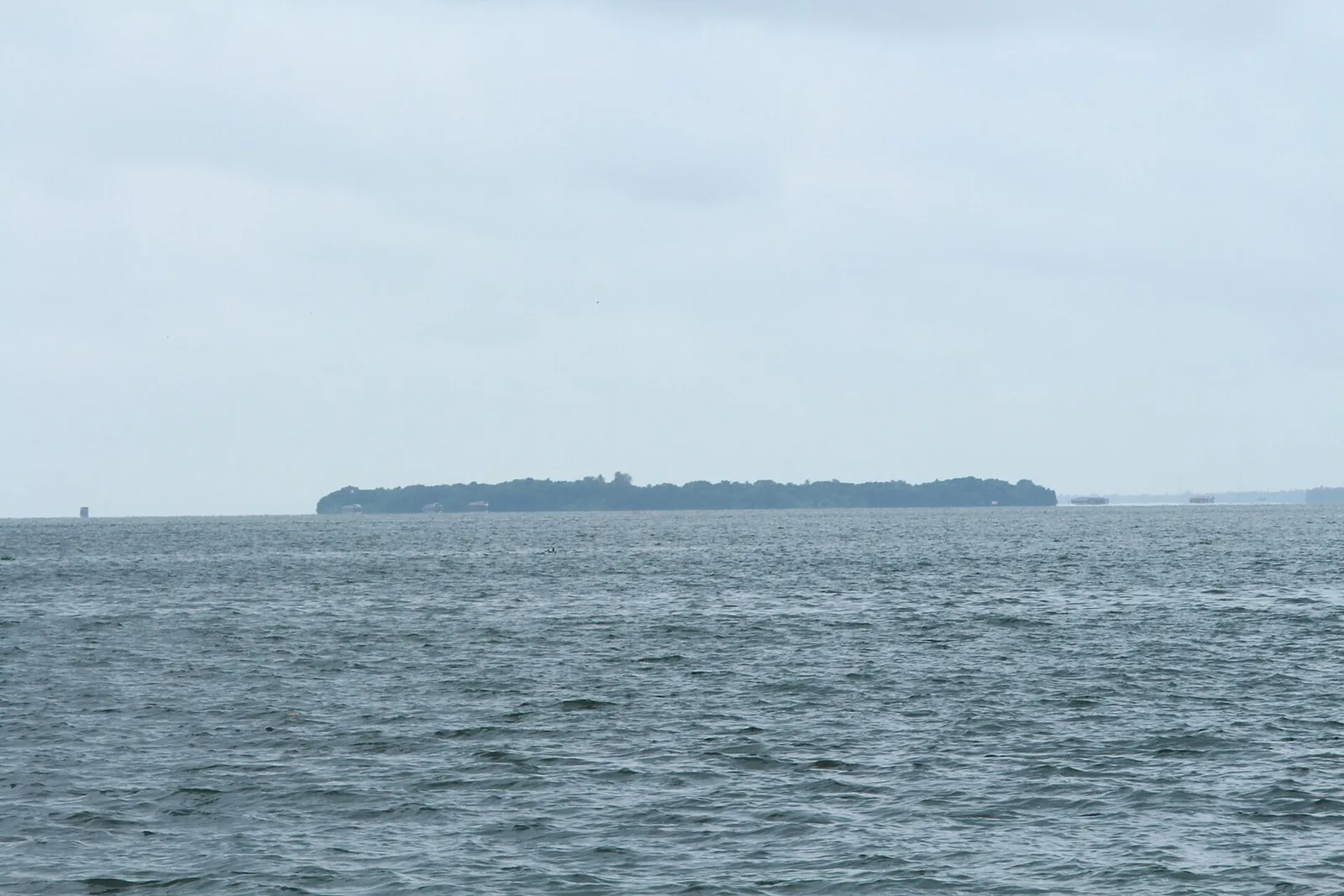
Most islands in Vembanad Lake have a name that tells you who lives there. Pathiramanal tells you when it was born. The word means "midnight sand". People on the shore at Muhamma and Kumarakom have told its story for generations. Two versions survive in official records, and they are worth comparing. Then comes the written history, which is just as interesting and much less magical.
This guide follows the island from legend to estate to sanctuary. For the practical visit, with boats and timings, see our Pathiramanal Island place page.
The first legend: a sage on a night boat
Kerala Tourism’s Kumarakom pages tell the version with a famous name in it. Vilwamangalathu Swamiyar was a Brahmin sage. In this one, he was crossing Vembanad Lake by boat late at night. He needed to answer the call of nature. Stepping into the water was not an option for a man of his rank. So, the story goes, he made land rise out of the lake. The island appeared in the dark, and so it was called midnight sand.
It is a funny story, and it is told with a smile. It also carries a real point. In a lake as wide as Vembanad, a dry patch of ground in the middle of the water was precious. A traveller at night had nowhere else to stop.
The second legend: a young Brahmin at prayer
The Alappuzha district website gives a gentler version. A young Brahmin dived into Vembanad Lake to perform his evening prayers. The water made way, and land rose up from below. That is how the "sands of midnight" came to be.
Here the island is a gift for prayer, not a convenience. Both stories agree on three things. The island came from the lake bed. It came at night. And a Brahmin was the cause. Local legends often keep the same bones while the details change. Two tellers can disagree on the reason and still share the picture of land rising from dark water.
What history records: three owners
Kerala Tourism also sets down the written record, and it reads like a property file. The first owner it names is a landlord called Parayi Tharakan. He sold the island to Bheemji Devji, a Gujarati trader from Kochi.
The island later passed from the Bheemji Devji Trust of Cochin to Chevalier ACM Anthraper. He took over the management of the coconut plantation on it. So the island that legend made for one night’s halt spent much of its recorded life as a working estate. The trees were planted for nuts, oil and coir, not for shade or birds.
The fourteen families
An estate needs hands. Kerala Tourism records that fourteen families of labourers lived on the island in Anthraper’s time. They climbed the palms, gathered the nuts and kept the plantation going. Their world was small. Every trip for rice, school or a doctor meant a boat across open water.
Then the law changed. Kerala’s Land Reforms Act came into force in the second half of the twentieth century. Under it, the island came under government control. The fourteen families were given new homes on the mainland in Muhamma panchayat. That is the village whose jetty is now the closest starting point for boats to the island.
Think about that when you land. The quiet you notice is not untouched wilderness. It is the quiet left behind when a working community moved ashore.
Handed to tourism, taken over by birds
The government later handed the island to the Department of Tourism. With no people living on it, the land changed fast. Kerala Tourism says that the island gradually became a haven for migratory birds once the families left. Low human disturbance is the key. Birds that would avoid a busy estate began to roost in the trees every night.
In November 2021, Kerala Tourism’s newsletter gave the island a full birdwatching feature. It describes about 10 acres of green land and counts about 90 species of birds. It also lists about 30 species of butterflies, about 160 species of plants, 55 species of fish and 20 species of spiders. The roosting birds are mainly from the cormorant family. The newsletter adds bitterns to the familiar herons and egrets: black, chestnut and yellow bitterns all appear on its list. It also names the watercock, whistling duck and cotton pygmy goose.
The plants and the water have their own story. The newsletter names a rare water plant, Aponogeton appendiculatus. It also says mussel colonies of the Villorita species grow in the water close to the island. Medicinal plants such as Calophyllum inophyllum, Tylophora indica and Senna alata grow on the island too.
The island and its lake
Pathiramanal does not stand alone. Kerala Tourism notes that the water between the island and the Kumarakom Bird Sanctuary is a favourite area for birds from Siberia and Europe. The island and the sanctuary work as one wetland. Birds feed in one place and rest in the other.
The lake around it is shaped by people too. A few kilometres north, the Thanneermukkom Bund closes every winter to keep salt water away from the rice fields of Kuttanad. Those fields include reclaimed lake beds such as R Block. Read the island this way and it becomes a lesson in contrasts. People pulled land out of Vembanad for rice. On Pathiramanal, people stepped back, and the land went to the birds.
How to read the island on a visit
Go with the history in mind and small details start to speak. The coconut palms are the last trace of the estate. The roosting trees at dusk are the newest chapter of all. Take binoculars, keep your voice low and watch the cormorants come in as the light fades. Then look back towards the Muhamma shore, where the fourteen families made their new homes.
For the practical side of a visit, read how to reach the island. The lake trip pairs well with the Thanneermukkom Bund, Punnamada Lake, the farm land of Kuttanad and the old church village of Champakulam.
Frequently asked questions
What does Pathiramanal mean?
It means "midnight sand", from the legend that the island rose from Vembanad Lake in one night.
Who made the island, according to legend?
Kerala Tourism names the sage Vilwamangalathu Swamiyar; the Alappuzha district website tells of a young Brahmin at his evening prayers.
Who owned Pathiramanal Island?
Parayi Tharakan, then the Kochi trader Bheemji Devji, then Chevalier ACM Anthraper, who ran a coconut plantation there (Kerala Tourism).
Why does nobody live on the island now?
Under the land reforms it passed to the government, and its fourteen labourer families were resettled in Muhamma panchayat.
How many birds live on Pathiramanal?
Kerala Tourism’s November 2021 feature counts about 90 bird species, mostly roosting water birds of the cormorant family.