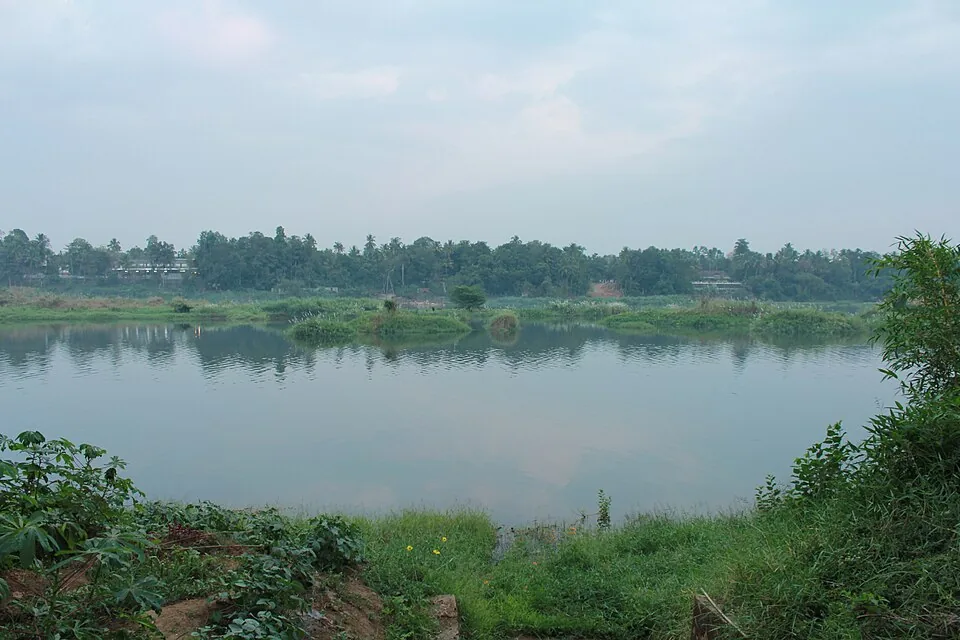
The Periyar at Kalady is a wide, slow, entirely ordinary-looking river. At one particular ghat it is called Muthala Kadavu — the crocodile ghat — and the thing that is supposed to have happened there is the hinge on which the whole life of Adi Shankara turns.
The bargain in the water
The boy was bathing. A crocodile took hold of him and would not let go. His widowed mother, Aryamba, was on the bank, and there was nothing she could do.
And the boy — this is the part that makes the story what it is — used the moment. He called out that he was going to die anyway, and that she should permit him to take sannyasa, formal renunciation, so that he could at least die a sannyasi. It is a request made from inside a crocodile’s jaws, and it is not an innocent one: she had already refused to let him renounce the world, because he was her only son and her only support.
She consented. And in the telling, the crocodile released him, and he walked out of the water a renunciate, and left.
What the legend is really about
Read it as a story about a crocodile and it is a miracle. Read it as a story about a mother and it is something harder and better.
- A widow’s only son wants to leave. She has said no, and she has good reasons.
- He obtains her consent at the one moment she cannot refuse.
- The consent is real, and it is also extracted under maximum duress.
- She spends the rest of her life alone, having agreed to it.
- He returns once — for her cremation — and is refused help by the community for doing so.
The tradition does not hide any of that, which is to its credit. Aryamba is not a background figure in the Kalady story; she is the person the whole of it costs something. The crocodile ghat and her cremation samadhi are within a few metres of each other on the same riverbank, and the two events are the two ends of the same transaction.
The other thing this river did
The Periyar carries a second Kalady legend, and it is the one that names the village. Aryamba is said to have fainted on the long walk to the river for her bath, and the boy prayed to Krishna, the family deity, and the river changed its course to run past the house so she would never make the walk again. Krishna is said to have granted that the water would flow where the child’s feet marked the ground — and kaladi means footprint.
So the same river, in the same village, is credited with moving to spare a mother a walk, and with nearly killing her son so that he could leave her. Rivers in Kerala do a great deal of narrative work.
Standing there
The ghat lies within the Sringeri Math complex at Kalady, alongside the birthplace temple and the samadhi, and is reached on foot from the main entrance. There is nothing dramatic to see: steps, water, trees, a lamp. Which is the point. Go in the early morning, when people are actually using the ghat, and give it ten minutes.
Then note what the river is now. The Periyar is Kerala’s longest, it drives a large share of the state’s hydroelectricity, and downstream of here it runs through one of India’s heavier industrial belts with a long-documented pollution record. The stretch at Kalady is the pretty part. It is worth knowing what happens to it after it leaves.
Frequently asked questions
What is Muthala Kadavu?
The crocodile ghat on the Periyar at Kalady. Tradition holds that the young Adi Shankara was seized by a crocodile while bathing there, and told his mother he would die unless she permitted him to take sannyasa. She consented, the crocodile released him, and he left to become a renunciate.
Why is the crocodile legend important?
Because it is the moment Shankara’s mother consents to his renunciation — something she had refused, since he was her only son and support. The consent was real and it was obtained at the one moment she could not refuse, which is why the story is told as a turning point rather than simply a miracle.
Where is the crocodile ghat?
Within the Sringeri Math complex at Kalady, on the bank of the Periyar alongside the birthplace temple and Aryamba’s samadhi. It is reached on foot from the main entrance and is unmarked in any dramatic way — steps, water and trees.
How did Kalady get its name from the Periyar?
Kaladi means footprint. Tradition says Aryamba fainted on the long walk to the river, the boy prayed to Krishna, and the river changed course to run past their house so she need not walk again — the water flowing where the child’s feet had marked the ground.
Can you swim or bathe in the Periyar at Kalady?
Local people use the ghats, but a visitor should be cautious: this is a large river with variable flow, no lifeguards and no marked safe area, and dam releases upstream can change conditions. Watch what local bathers do and stay well within it.
Is the Periyar clean at Kalady?
The Kalady stretch is the pleasant part of the river. Downstream, the Periyar passes through one of India’s heavier industrial belts and has a long-documented pollution record. It is Kerala’s longest river and a major hydroelectric source, and its condition varies enormously along its length.