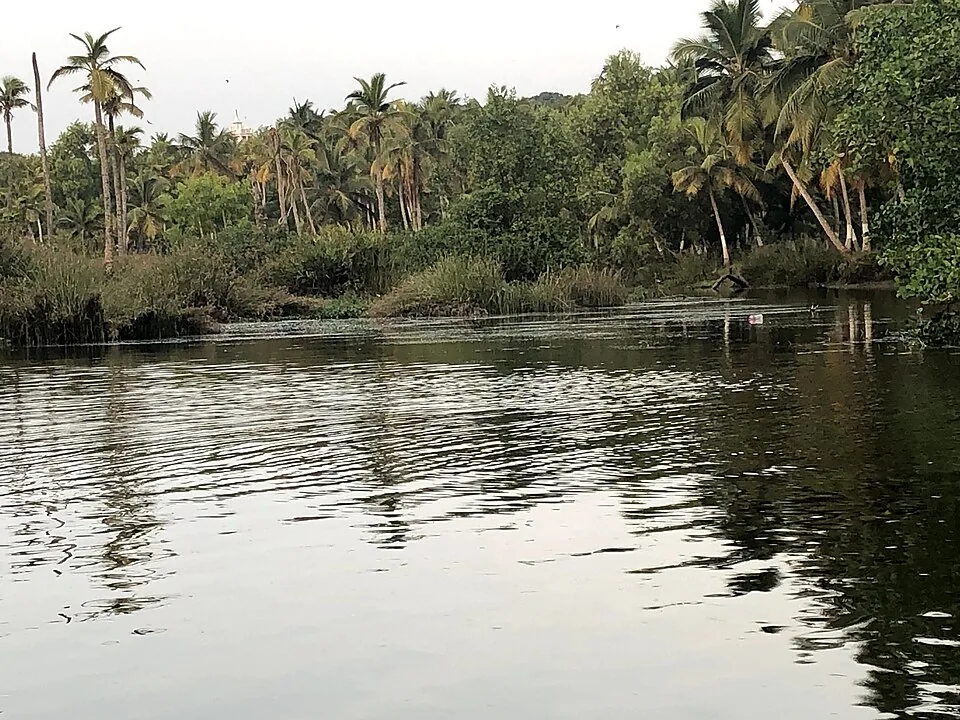
At Poovar, a narrow strip of sand can seem to separate two worlds. On one side lies the Neyyar estuary; on the other is the Arabian Sea. Monsoon weather can alter the shape of the mouth, and Kerala Tourism describes a river and sea meeting in a landscape that changes with the season. The strip looks solid underfoot, but it is a balance of moving sediment rather than a permanent wall.
Where the sand comes from
Rivers bring sediment downstream, while waves and currents move sand along the coast. At an estuary the two systems meet. Some material settles; some is carried on. This explains why a sandbar can shift position or opening without a resort moving an inch. It also makes the upstream condition of the Neyyar relevant to a beach visit.
Published research and government reporting have documented sand extraction and riverbed pressure in Kerala, including the Neyyar basin. Removing sand from a channel can change its bed and banks. It may also affect how much material reaches the coast, but the effect on Poovar’s particular sandbar needs local measurements over time. A single season’s photograph cannot establish a trend or assign a cause.
The claim that needs evidence
Travel descriptions sometimes say the river continually rebuilds Poovar’s beach after the monsoon. That is a useful picture of a natural process, not a guarantee that supply and removal still balance. To know whether this sandbar is gaining or losing ground would require repeated shoreline surveys, sediment measurements and attention to waves, storms and human activity at the mouth. Without them, a dramatic prediction would be less honest than an open question.
The uncertainty should change a visitor’s curiosity. From a boat on the backwaters, notice the channel and the sand on each side of it. At the beach, observe where the bar meets the sea, while keeping clear of strong water near the opening. The landscape is doing work even when it looks still.
A river story, not just a beach story
The mangrove creeks rely on the same meeting of freshwater, saltwater and sediment. Upstream extraction is one pressure within that connected system. It is fair to explain the mechanism and the concern; it is not fair to declare a measured local collapse without a study.
Poovar’s sandbar deserves more than the promise of an endlessly renewed “golden beach.” It is a changing landform at the end of a working river. Seeing it that way makes its beauty more precise and the unanswered questions more useful.
- Kerala State Planning Board, 2004 environment review: Neyyar basin sand survey
- Kerala Tourism, 2021: Neyyar sediment and Poovar estuary
- The published basin figure is historical. These sources do not establish a current mining rate or measured trend for Poovar Beach.