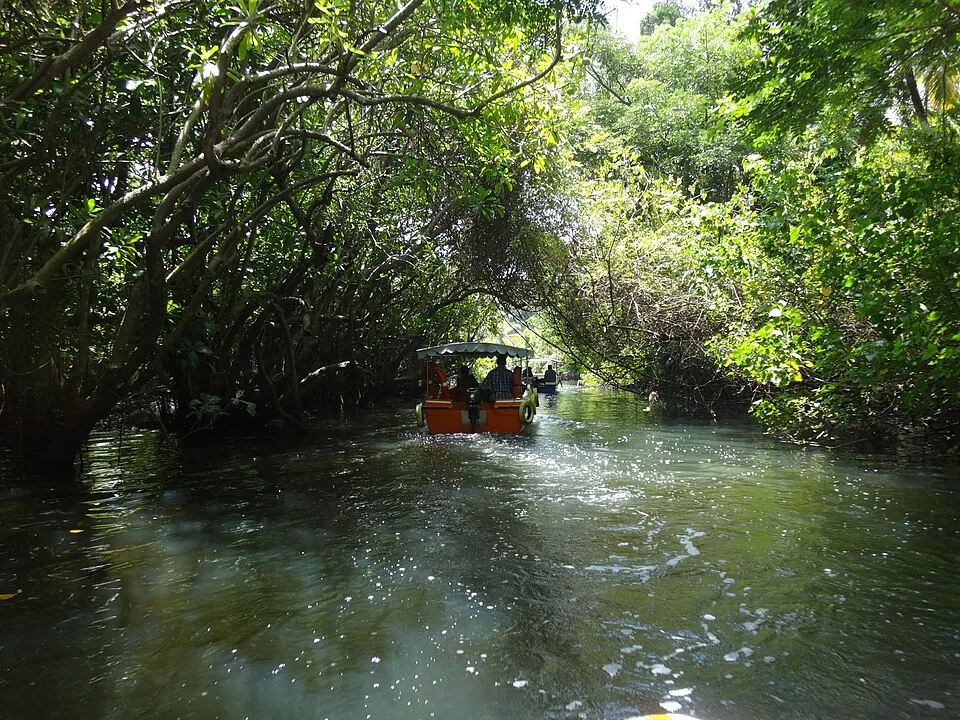
A Poovar backwater boat can leave open water and turn into a channel barely wide enough to feel like a route. Branches close overhead, roots enter the water and the view becomes a green tunnel. The quiet invites a photograph. Beneath that photograph is the reason the creek matters: it is habitat, held together by living roots.
A shelter built out of roots
Mangroves occupy the difficult margin where fresh river water and the sea meet. Their exposed root systems slow currents and trap material, creating small sheltered spaces. Research by India’s Central Marine Fisheries Research Institute describes mangroves as nursery grounds for fish and crustaceans. That does not mean every visible root holds a juvenile fish, but it explains why losing a stand can affect life well beyond the edge of the channel.
Birds make the connection easier to see. A kingfisher or egret working the water is following food, not posing for visitors. Stop the boat where permitted and look for movement along the roots and low branches. The creek changes with tide and season, so a species list from another day is no guarantee of a sighting now.
A living bank, with limits
Roots can also bind soft sediment and reduce erosion locally. It would be too much to promise that this small creek is a complete storm barrier for Poovar or that tourism has left it intact. Kerala’s mangrove habitats face pressure from land conversion and disturbance, and the local extent of change needs mapped evidence. A narrow green channel should be read as valuable habitat, not as proof that a whole coast is secure.
Boat traffic is part of the place today. Speed and wake matter in a confined creek; so do rubbish and contact with roots. Ask the operator to pass slowly, keep hands and feet inside, and leave no waste behind. A quieter trip is better for seeing the margins as well as for the creek itself.
See more than the tunnel
The mangrove is one piece of Poovar’s meeting of river, sandbar and sea. Kerala Tourism’s Poovar overview describes that wider setting. The Neyyar sediment story follows material moving toward the mouth. Read together, they show why a creek is connected to both the land upstream and the coastal water outside it.
The strongest memory of a boat ride need not be a dramatic sighting. A slow passage through roots can reveal how many small lives depend on a place that looks, from a distance, like scenery.