A small visitor area within a larger park
Rajamala is the part of Eravikulam most visitors encounter, but the two names do not describe identical areas. The national park extends across a much larger high-range landscape. The public tourism zone provides a limited route and visitor facilities through which that wider setting can be understood.
The official brochure describes the park’s main high plateau and a mosaic of montane grassland and shola forest. That context changes the meaning of the view from the visitor route. A grassy slope is not simply unused ground around an animal sighting, and a wooded patch is not merely a decorative interruption.
Interpretation gives the landscape a vocabulary
The brochure lists an interpretation centre, orchidarium, Kurinji garden and Tahr ecoshop among the tourism-zone facilities. It also describes a fernery and virtual-reality provision. These have different purposes: explaining the park, drawing attention to plants and supporting the visitor experience within the managed area.
A garden’s name should not be turned into a seasonal promise. In particular, a Kurinji garden does not mean a mass Neelakurinji flowering is underway on every visit. A plant display can help explain a subject even when the wider landscape is not in its famous flowering phase.
The same care applies to the orchidarium and fernery. Use the displays that are actually open and labelled, rather than assuming that every plant in a photograph is identified or that every facility operates continuously. The park’s current arrangement determines which spaces can be visited that day.
Connect the display to the view outside
After reading an interpretation panel, return attention to the visible landform. Notice where the open vegetation continues, where darker wooded patches occupy the terrain and how the road and visitor structures occupy only a small portion of the scene. This comparison gives the information a physical setting.
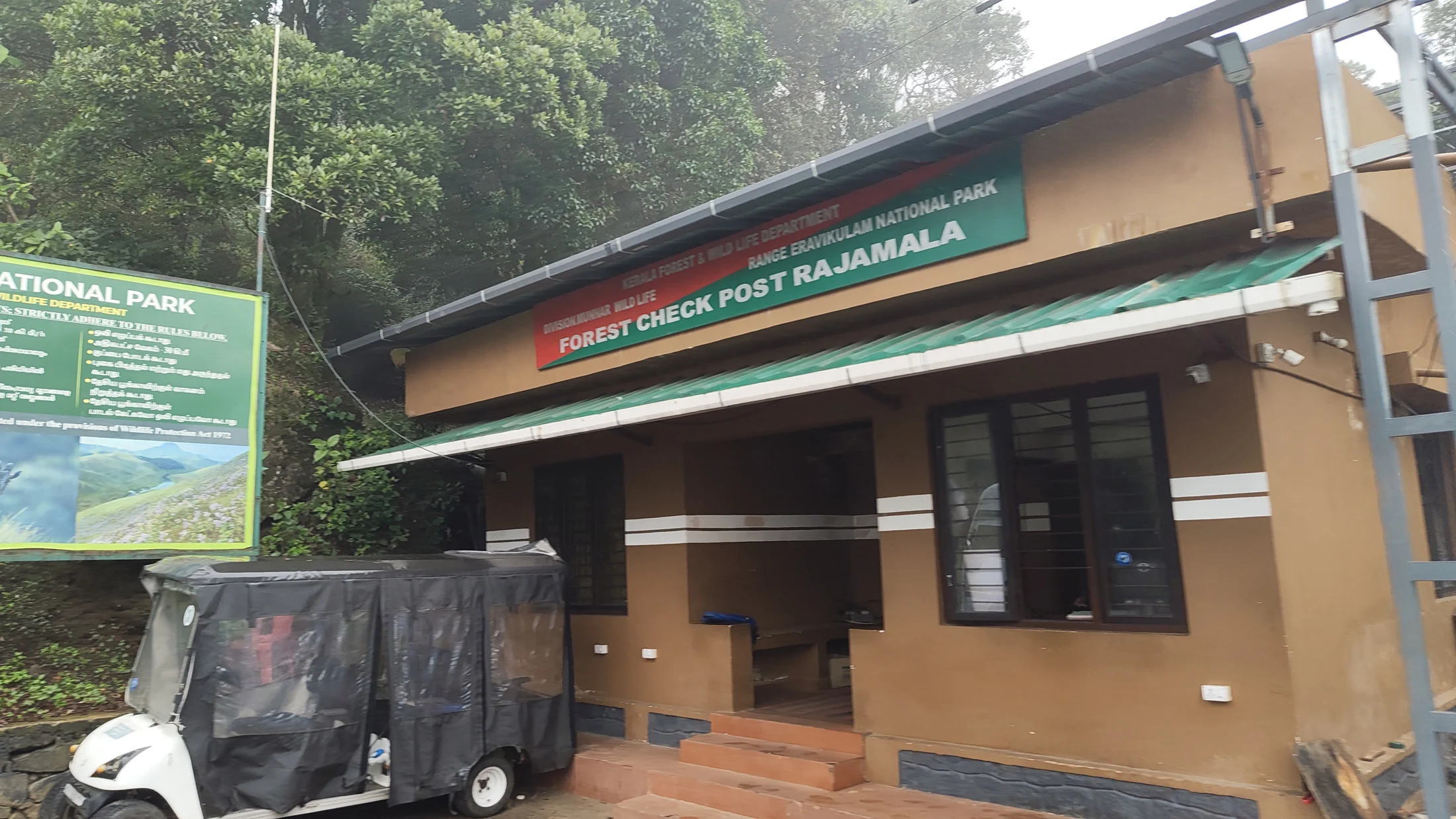
The photograph shows the building signed Forest Check Post Rajamala, with a small electric cart alongside it. The sign identifies a managed park approach. The interpretation centre and gardens belong to the visitor programme beyond the entrance arrangements; the checkpost itself should not be confused with those separate spaces.
The brochure describes the safari-bus service and an electric-cart programme as part of this tourism arrangement. Their practical role is addressed in the arrival story; here they also show that visitor movement is concentrated into a particular part of the park. The landscape beyond remains protected habitat.
A balanced Rajamala visit can therefore include three kinds of attention: the animal behaviour actually seen, the structure of the surrounding habitat and the explanations offered in the visitor spaces. None needs to be inflated into a guaranteed rare sighting or a promise that all facilities will be open.
Give the interpretation stop enough time to ask a specific question of the landscape—what is shola, why are the open slopes important, or why does the park close for calving? That makes the visit more memorable than collecting a tahr photograph and immediately returning to the bus queue.
Sources: Eravikulam National Park official visitor information and the Forest Department park brochure.
Plan the visit: Rajamala.