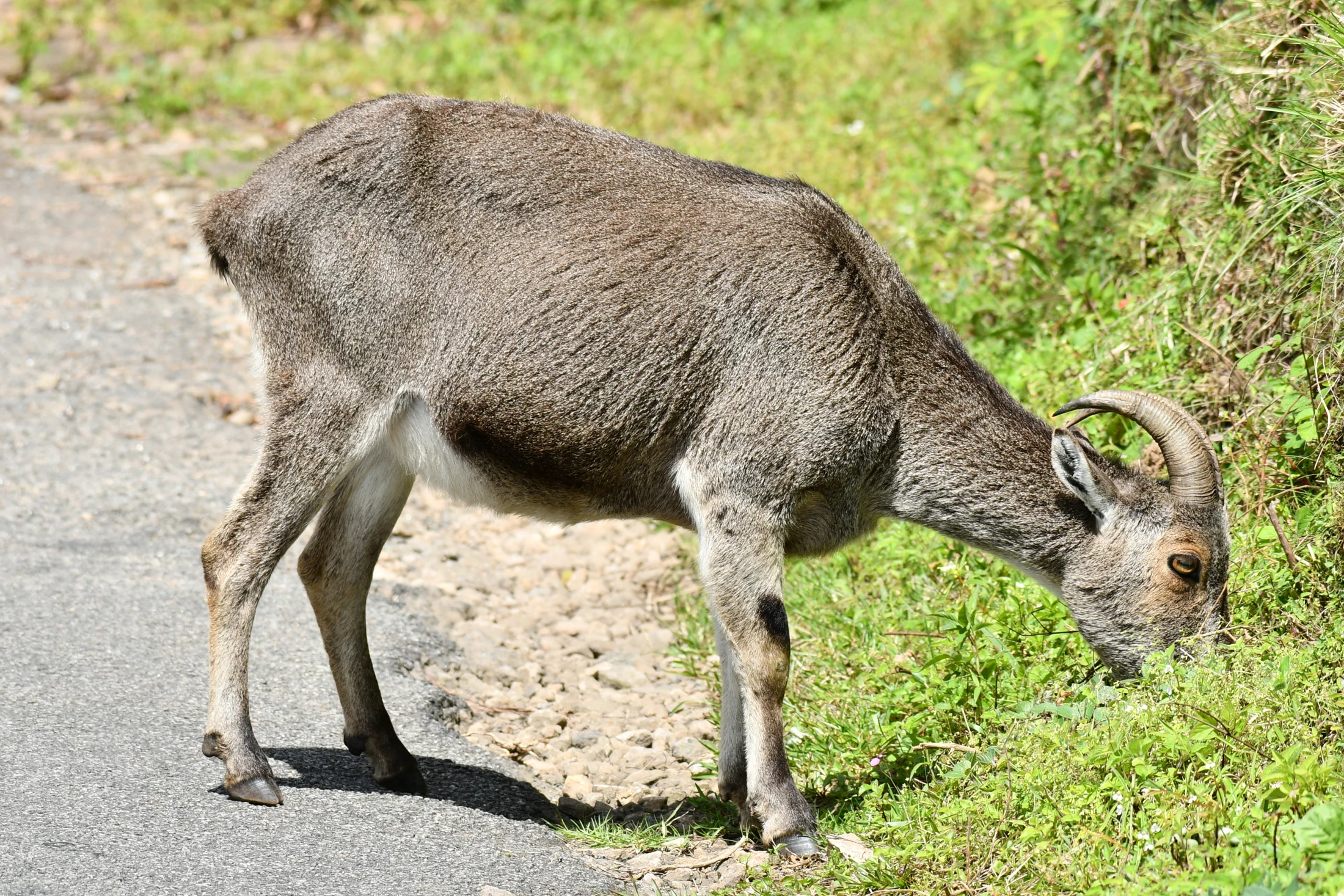
The animal and its setting belong together
The Nilgiri tahr photograph shows an animal grazing within the vegetation of a hillside. Keeping that setting in view is important. Rajamala is a tourism zone inside Eravikulam National Park, a protected landscape established with the conservation of the tahr among its central purposes, rather than an animal enclosure attached to a Munnar viewpoint.
The park brochure describes a high grassland-and-shola environment. Open slopes and wooded patches form a larger habitat mosaic than the visitor path alone reveals. The tahr may be the most recognisable subject, but the ground around it is part of the same story.
A closure tied to the animals’ year
The official park information describes a roughly two-month closure associated with the calving season, generally February and March. The current Forest Department programme record also identifies a blocked period within those months. The exact annual notice determines the visitor dates; the ecological purpose explains why the interruption exists.
This is not a closure to bypass by finding another unmarked approach. The public route is being withheld during a sensitive part of the animals’ annual cycle. A mountain view beyond the gate does not provide a separate entitlement to enter the tourism zone.
For planning, put the opening calendar ahead of a hotel itinerary built around tahr sightings. If Rajamala is closed, choose another independently authorised activity in the wider Munnar area. A neighbouring landscape may still be worth visiting, but should not be advertised as a substitute route into the closed park.
Observe without creating an encounter
When the tourism zone is open, a tahr close to the path remains a wild animal. Allow it space and follow staff directions. Do not feed it, touch it or move around it to force a particular photographic background. The fact that an animal appears calm in one frame does not establish how it will respond to a closer approach.
A useful observation can be modest: grazing, a change in posture or movement across the visible slope. Describe only the behaviour actually seen. A single photograph should not become a claim about the animal’s age, reproductive state or social role unless those details are established.
The visitor route also has value when no tahr is immediately visible. Looking at the relationship between short vegetation, rock and the larger slope helps explain why the park is more than a checklist sighting. The interpretation spaces provide another way to understand the habitat without pursuing an animal off the route.
The calving closure and the open-season visitor rules therefore belong to one approach: allowing people to encounter a protected landscape while keeping the animals’ needs central. Remembering that relationship makes Rajamala’s seasonal calendar part of the place’s meaning, not just a line of small print beneath a ticket.
Sources: Eravikulam National Park official information and Kerala Forest Department ecotourism.
Plan the visit: Rajamala.