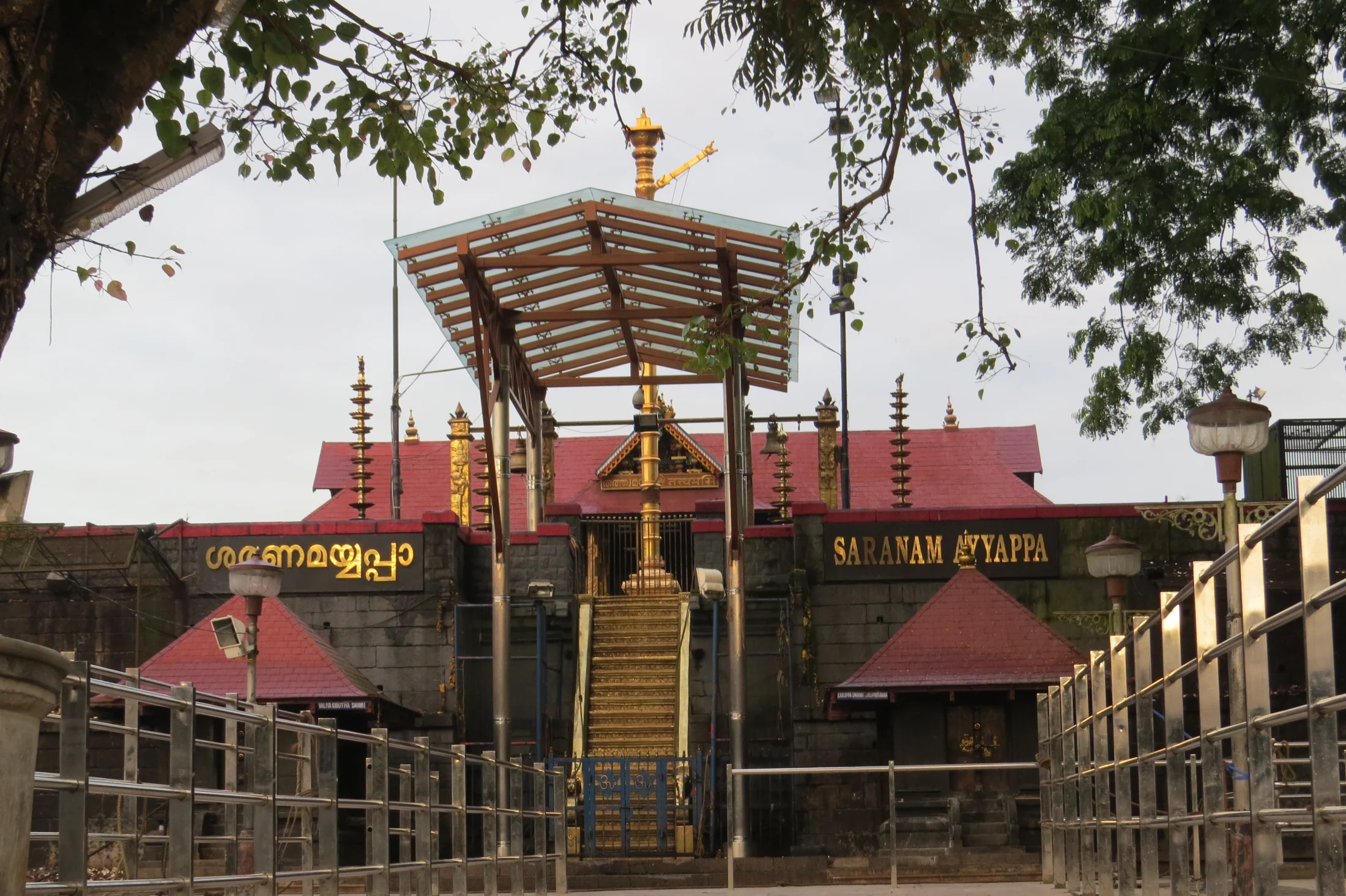
The steps have a specific rule
Pathinettampadi, the eighteen sacred steps at Sabarimala, is a ritual threshold. The government’s account connects climbing these steps with carrying Irumudi, the prepared pilgrimage bundle. It also states that other devotees use a different passage to reach the worship area.
This distinction prevents two common misunderstandings: that the steps are merely a scenic staircase for every visitor, or that they are the only physical route into the entire precinct. Their significance is tied to a particular religious preparation and the current temple directions.
Preparation begins before arrival
The official ritual description places Irumudi within Kettunirakkal, the preparation and packing of the bundle under a Guruswamy’s guidance. The bundle has separate compartments for sacred offerings and other ritual items. It should not be understood as an ordinary travel bag whose contents can be improvised at the gate.
One of its distinctive offerings is neyy-thenga, a coconut filled with ghee. The government account explains the symbolism of emptying the coconut’s water and filling it: turning from worldly attachments towards spiritual aspiration. That meaning is more important to this story than a list of quantities or a do-it-yourself packing procedure.
The preparation belongs to the wider discipline of the pilgrimage. Mandala Vrutham is described as forty-one days of prayer and self-control, marked by wearing the mala. The ascent and final steps follow a period of intentional practice rather than beginning the religious journey by themselves.
A threshold is not a place to stop for a photograph
The image shows the steps leading towards the temple frontage. It makes their position in the approach clear, but it should not be read as permission to pause on them to reproduce the same frame. The official visitor rules direct pilgrims to keep moving and not to kneel or stop on the steps.
Coconut-breaking likewise belongs only in authorised places. The meaning of the offering does not permit breaking one wherever a pilgrim reaches an emotionally significant point. Ritual participation and orderly movement have to work together within a heavily used temple approach.
Follow the staff’s direction for the passage appropriate to your visit. Someone using an alternative approach can still understand the sacred steps and their relationship to Irumudi without attempting to enter the wrong queue.
Keep explanation and practice connected
Reading about Irumudi before travelling can make the visible pilgrimage less opaque: the bundle, the mala and the steps each have a place in the sequence. That understanding should support the guidance of the relevant religious elders and the temple’s current arrangements, rather than replace them.
The most useful lesson is the relationship between preparation and threshold. Sabarimala’s eighteen steps are meaningful within a devotional practice, and the visitor rules preserve their use within that practice. Treating them as an isolated architectural feature misses what makes the place distinct.
Sources: Government Sabarimala ritual guidance and general instructions.
Plan the visit: Sabarimala.