Three names, three different functions
Sabarimala travel instructions repeatedly use Nilackal, Pamba and Sannidhanam. They are not alternative names for one destination. Nilackal is the principal vehicle-holding and onward-transfer base, Pamba is the river-side approach to the ascent, and Sannidhanam is the temple precinct on the hill.
The distinction is fundamental to the journey. A driver needs a road destination, while the pilgrim continues through transport and walking stages that a private vehicle cannot simply complete. A temple pin alone does not explain those changes.
The river base is a transition
The government access guidance describes the Nilackal–Pamba chain-bus arrangement. Its operation belongs to the pilgrimage’s current traffic plan. The journey should therefore begin with the official instructions for the selected opening period, rather than an assumption that the same private-vehicle rules apply on every date.
At Pamba, the mode and pace of movement change. Pilgrims leave the road-transfer stage and enter the directed ascent. The river’s religious importance belongs to the Ayyappa tradition, while its banks and access remain subject to practical restrictions. A ritual association does not make every part of the water or bank open for use.
The official route account names Neelimala, Appachimedu and Saramkuthi among the places associated with the climb. Those names help a pilgrim understand the route geography, but a historical description is not a substitute for the path currently directed by staff.
The hill journey needs its own time
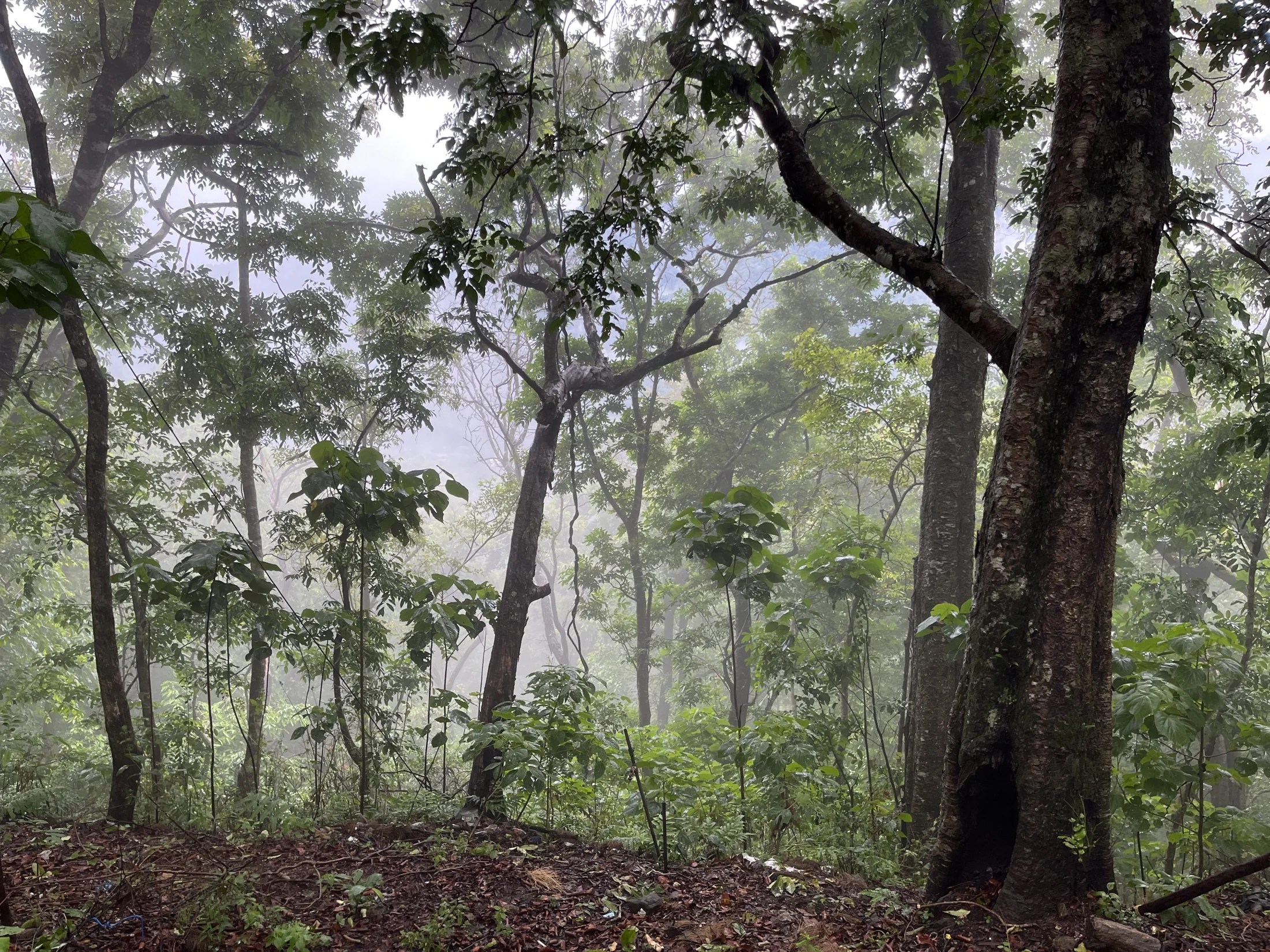
The photograph shows trees and dense foliage in mist in the Sabarimala forest landscape. It conveys the wooded setting around the pilgrimage, while the actual ascent follows the route directed for that opening period. Mist and rain can affect visibility and footing; the hill journey requires time beyond the road transfer.
Allow for rest and crowd regulation. The government identifies medical facilities at Pamba, Neelimala, Appachimedu and Sannidhanam, but their presence should not be used to minimise the physical demands. Someone who needs assisted movement must establish the actual service and its limits before travelling.
The arrival at Sannidhanam introduces another stage, the regulated approach to worship. A Virtual Q instruction and an opening date organise participation, but do not guarantee an exact minute at the sanctum. Avoid tying the completion of darshan to a tight onward flight or train.
Plan the reverse journey as carefully
After worship, follow the directed return circulation. The descent, Pamba transfer and reunion with the vehicle at Nilackal still remain. Agree that meeting arrangement before the ascent so the group does not have to resolve it while tired or separated.
A clear itinerary can be expressed with the same three names in reverse: Sannidhanam to Pamba, Pamba to Nilackal, then the longer road journey. Keeping those stages visible gives the pilgrimage enough room and reduces the risk of mistaking a temple arrival for the completion of all travel.
Sources: Government Sabarimala access guidance, pilgrim facilities and ritual route account.
Plan the visit: Sabarimala.