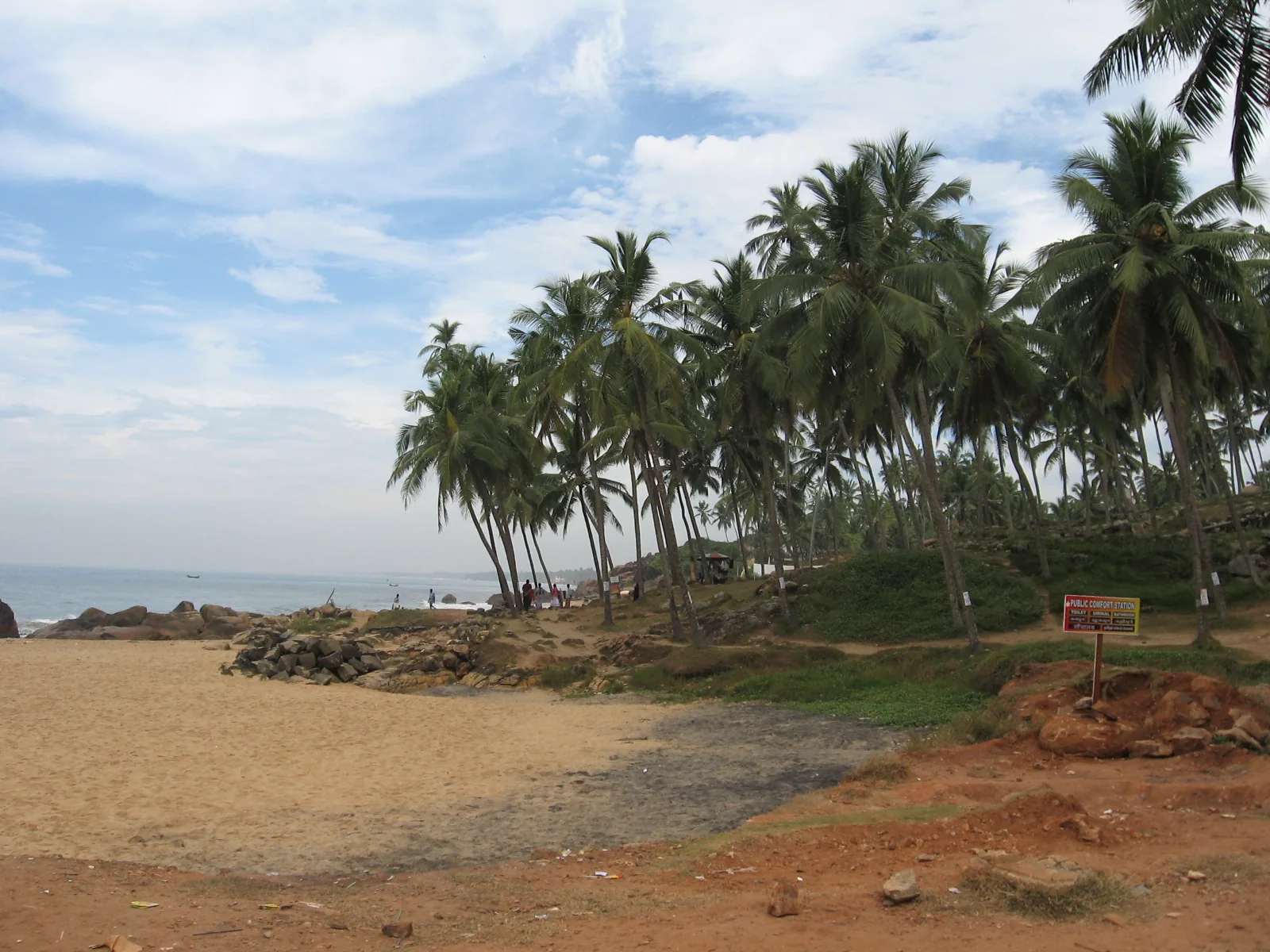
The official description of Samudra Beach contains two different pictures of the same place. Kerala Tourism calls it a tranquil retreat, then points to local fishers working with wooden boats. For a visitor the beach may be a break from busier Kovalam. For someone earning a living there, it is not an escape at all.
Why the tourism picture feels incomplete
Beach copy often turns fishing into scenery: a boat on sand, a net in a photograph, a catch carried past a café. Yet a Kerala Tourism photograph near Kovalam records crews setting a large net from small boats and hauling it back from shore. The caption calls the work physically demanding. That is a more useful way to read a fishing scene than treating it as decoration.
The photograph documents a method used near Kovalam. It does not prove that a shore seine operates at Samudra every morning, that boats are parked in particular rows, or that net repair follows a fixed schedule. Without a dated observation from this cove, those would be guesses.
How to share the shore
If you encounter boats, ropes or nets, keep an open path for the crew and stay clear of gear. Ask before photographing people at close range. A beach can be public and still be somebody’s workplace. There is no reliable visitor timetable for fishing activity at this cove, so plan a visit for the coast itself and regard any working scene as an encounter to handle respectfully.
Samudra’s relative quiet remains a useful reason to choose it. The more interesting detail is that quiet depends on whom the description is for. A holidaymaker may hear only surf. A fisher working against weather and time has a different day on the same sand.
Frequently asked questions
Is fishing part of Samudra Beach?
Yes. Kerala Tourism describes local fishers and wooden boats in its Samudra Beach profile. It does not provide a daily schedule.
Can I expect to watch net mending?
There is no source here establishing that net repair happens at Samudra on a predictable day or time. Do not plan a visit around that promise.
Can I photograph fishing work?
Keep clear of gear and working routes, and ask people before taking close photographs.