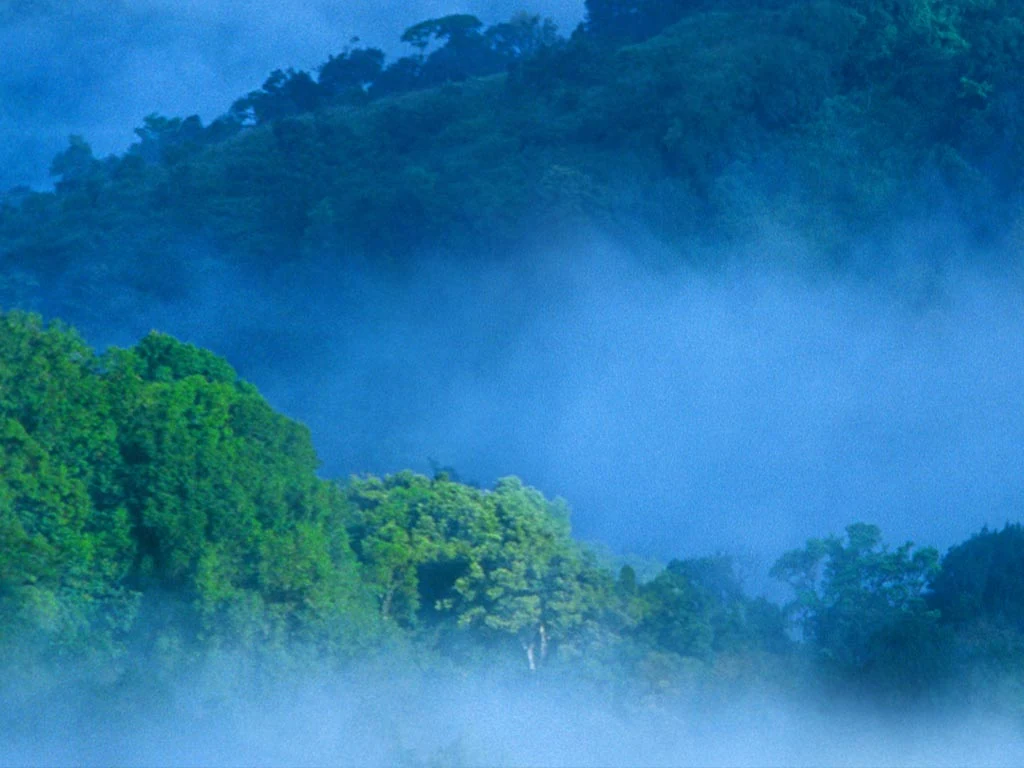
Thekkady’s best-known view combines water, standing trunks and forest. It can seem timeless, yet the lake and the protected area have distinct histories. The reservoir followed a nineteenth-century dam; the conservation landscape developed through later designations and a changing relationship with the people living around it.
A valley became a reservoir
Mullaperiyar Dam was completed in 1895. The lake formed behind it spread through a wooded valley, leaving the standing tree trunks that still help define the visitor view. Water introduced new shorelines and divided the landscape into branching reaches. The present scenery therefore carries evidence of an engineered change as well as the forest’s continuing life.
From the lake, a trunk can serve two purposes in the same moment: it is a reminder of the flooded valley and a perch for a bird. That overlap makes the scene more interesting than a simple division between natural and artificial. The reservoir became part of a landscape that wildlife uses and visitors now encounter through managed programmes.
Protection developed in stages
Periyar Lake Reserve followed in 1899. Kerala Tourism’s chronology then records Nellikkampatty Game Sanctuary in 1934, the larger Periyar Wildlife Sanctuary in 1950 and inclusion in Project Tiger in 1978. The sequence shows protection changing in scope and purpose over time, around a forest-and-water landscape that had already been substantially altered by the reservoir.
The National Tiger Conservation Authority describes a reserve extending well beyond the lake visible to most visitors. Its profile includes the Periyar and Pamba catchments and several forest and grassland types. Thekkady is the principal eastern visitor point into that much larger protected area; it is not a name for the reserve’s full extent.
Visitors encounter a selected part
Boating, nature walks and longer guided programmes open particular ways into the landscape. Their reporting points and routes concentrate the visitor activity rather than making every forest road available for independent travel. A day at Thekkady is therefore an encounter with selected parts of the reserve, shaped by the programme chosen.
NTCA also describes community participation in conservation and visitor management. Local knowledge is part of the experience on guided activities, not merely a service added to a view. A guide who can interpret a call, a track or a change in vegetation helps connect the visible landscape with lives and skills rooted in the surrounding area.
This history changes how the lake can be enjoyed. Look at the trunks without treating them as decoration, and at the shore without reducing it to a place where a large animal must appear. The reservoir, protected forest and managed visitor system belong to different moments in the same continuing landscape.
A useful visit leaves room for that layered story. The boat supplies distance and a broad view; a walk supplies detail at ground level; the town outside provides the everyday setting from which visitors arrive. Together they explain why Thekkady is both a tourism gateway and an introduction to conservation work extending far beyond the familiar photograph.
History: Kerala Tourism’s Periyar account. Protected-area context: NTCA’s Periyar profile.
Plan the visit: Thekkady / Periyar.