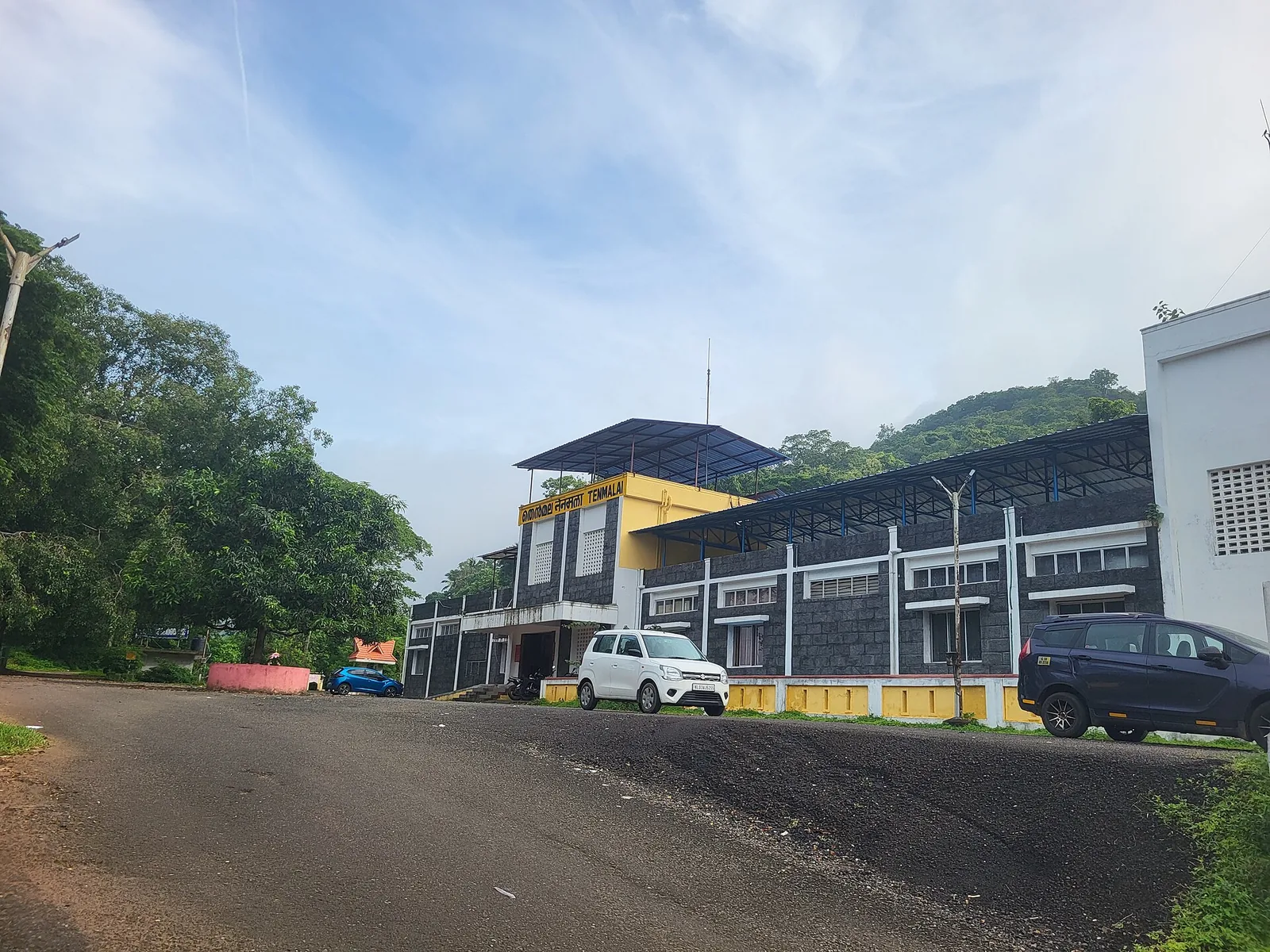
Thenmala promotes a day among forested hills, visitor zones and a dam. A short distance away, Tenmalai railway station appears in a very different public document: Southern Railway’s 2022–23 station table. It records 7,527 originating passengers for the year. Divided across 365 days, that is about 21 departures per day on average, a small number beside the destination’s tourism ambitions.
What the railway actually counted
“Originating passengers” means people whose journey began at this station in the reporting year. It does not count every person who arrived, every visitor to Thenmala or exactly 21 people on each calendar day. The table also gives a separate daily footfall figure. Those measures can move differently because they count different things. The pleasure of the statistic is its scale, not a claim that a station platform is always empty.
The station is on the Kollam–Sengottai line in Southern Railway’s Madurai division. That puts it on a historic cross-Ghat route, while the ecotourism project beside it was deliberately planned much later. A train journey can be part of the experience for people whose timings fit. The annual count does not tell us how many tourists used rail for this specific destination.
Two ways of arriving
A car or bus takes a visitor to a ticket office and zoned attractions. A train first places them at a small station, with a last-mile connection still to arrange. Those approaches produce different impressions of the same hills. The railway line has its own timetable and operating limits; a tourism brochure’s map distance does not guarantee a convenient train or a waiting onward ride.
Before choosing rail, check the current service, the station spelling in the booking system and transport to the particular Thenmala zone you want. The ecotourism park story explains why its attractions are spread across planned areas rather than one platform-side entrance.
A dated snapshot, not a verdict
The 2022–23 record is valuable because it gives a verifiable measure of the station’s use at one time. It cannot tell us whether ridership has changed since, why each passenger travelled or whether a new service would make rail more attractive to tourists. Those questions need newer data and people’s actual travel patterns.
The contrast remains striking: a railway stop carrying a modest daily average beside a destination built to bring visitors into the same landscape. It is a good reason to look at how tourism and transport meet in practice, not a reason to declare the railway irrelevant.