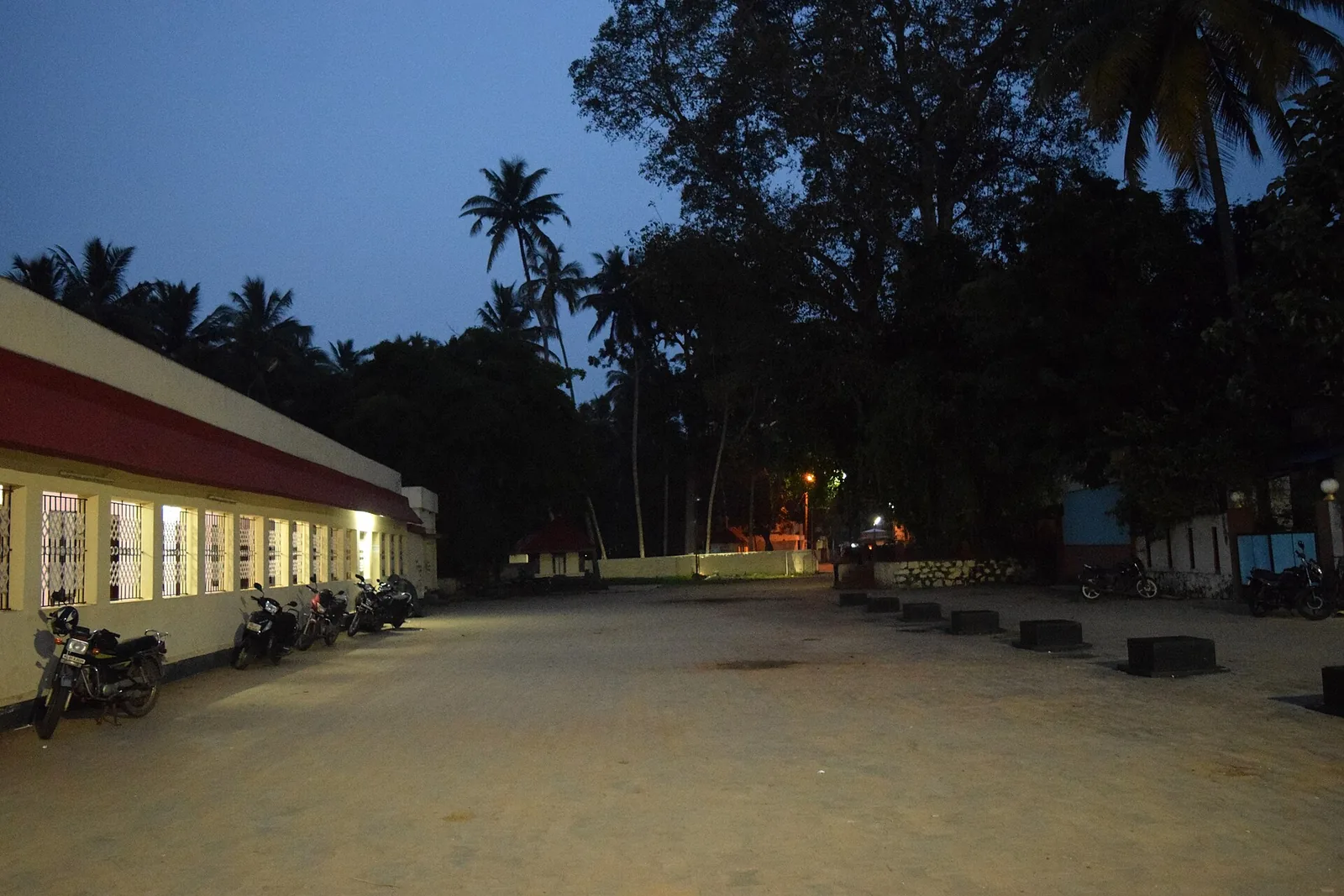
Every Malayali grows up on the same origin story: that Kerala did not always exist. That a sage in a towering rage hurled his axe from the mountains into the western sea, and the waters drew back, and out of them rose a green strip of land between the Ghats and the ocean — this land. The sage was Parasurama, the warrior-Brahmin, the sixth avatar of Vishnu. And in all of Kerala, the country he is said to have made, there is exactly one temple dedicated to him: Thiruvallam Sree Parasurama Temple, on the banks of the Karamana river just south of Thiruvananthapuram.
The axe that made a coast
The legend has an edge of penance to it. Parasurama, having rid the earth of tyrant kings in a fury of bloodshed, is said to have sought to atone — and, granted a boon, threw his axe (parasu) from Gokarna into the sea. Where it fell, the ocean retreated, and the reclaimed land became Kerala, which he gave to Brahmins to settle and consecrate with temples. That a hero of such violence should have only this single, quiet shrine to his name gives Thiruvallam a peculiar poignancy: it honours the maker of the land, and almost no one thinks to build him a second home.
An ancient shrine by the river
The temple is genuinely old — spoken of as one of the most ancient in South India, and counted among the 108 Abhimana Kshetrams of the Vaishnava tradition. Tradition credits its building to the sage-devotee Vilwamangalam Swami, and its surviving structure is placed by scholars around the twelfth to thirteenth centuries. It sits low and serene on the Karamana’s bank, its courtyard opening toward the water — and it is that water, as much as the deity, that draws the crowds.
Where the living remember the dead
For Thiruvallam is, above all, a temple of ancestral rites. Just as Thirunelli serves the north and Varanasi serves all of India, this is where the far south of Kerala comes to honour its dead. On Karkidaka Vavu — the new-moon day of the monsoon month of Karkidakam — the riverbank fills before dawn with thousands of people who take a purifying dip in the Karamana and then perform bali, the offering to departed forefathers, murmuring the names of parents and grandparents over rice and sesame and water. It is one of the most moving mornings in the Kerala year: a whole coastline, waist-deep in a river, keeping faith with the ones who came before.
Visiting Thiruvallam
The temple lies a short way south of Thiruvananthapuram city, near the backwaters where the Karamana meets the sea — an easy visit, and an unusually thoughtful one. Come on an ordinary day for the calm of the riverside shrine, or on Karkidaka Vavu to witness the great gathering for the ancestors. Details are on the Thiruvallam place page; more of the district is on the Thiruvananthapuram hub.
Frequently asked questions
Why is Thiruvallam temple special?
It is the only temple in Kerala dedicated to Parasurama, the sage-warrior avatar of Vishnu who, in legend, created Kerala by casting his axe into the sea. It is also one of the oldest temples in South India and one of the 108 Abhimana Kshetrams.
What is the Karkidaka Vavu ritual at Thiruvallam?
On the new-moon day of the Malayalam month of Karkidakam, thousands gather on the banks of the Karamana river at Thiruvallam to take a ritual dip and perform bali — offerings to departed ancestors. It is one of the most important ancestral-rite occasions in southern Kerala.
Who created Kerala according to legend?
Legend holds that Parasurama, the axe-wielding sixth avatar of Vishnu, threw his axe into the western sea; the ocean withdrew and the reclaimed land became Kerala, which he gave to Brahmins to settle. Thiruvallam is his only temple in the state.