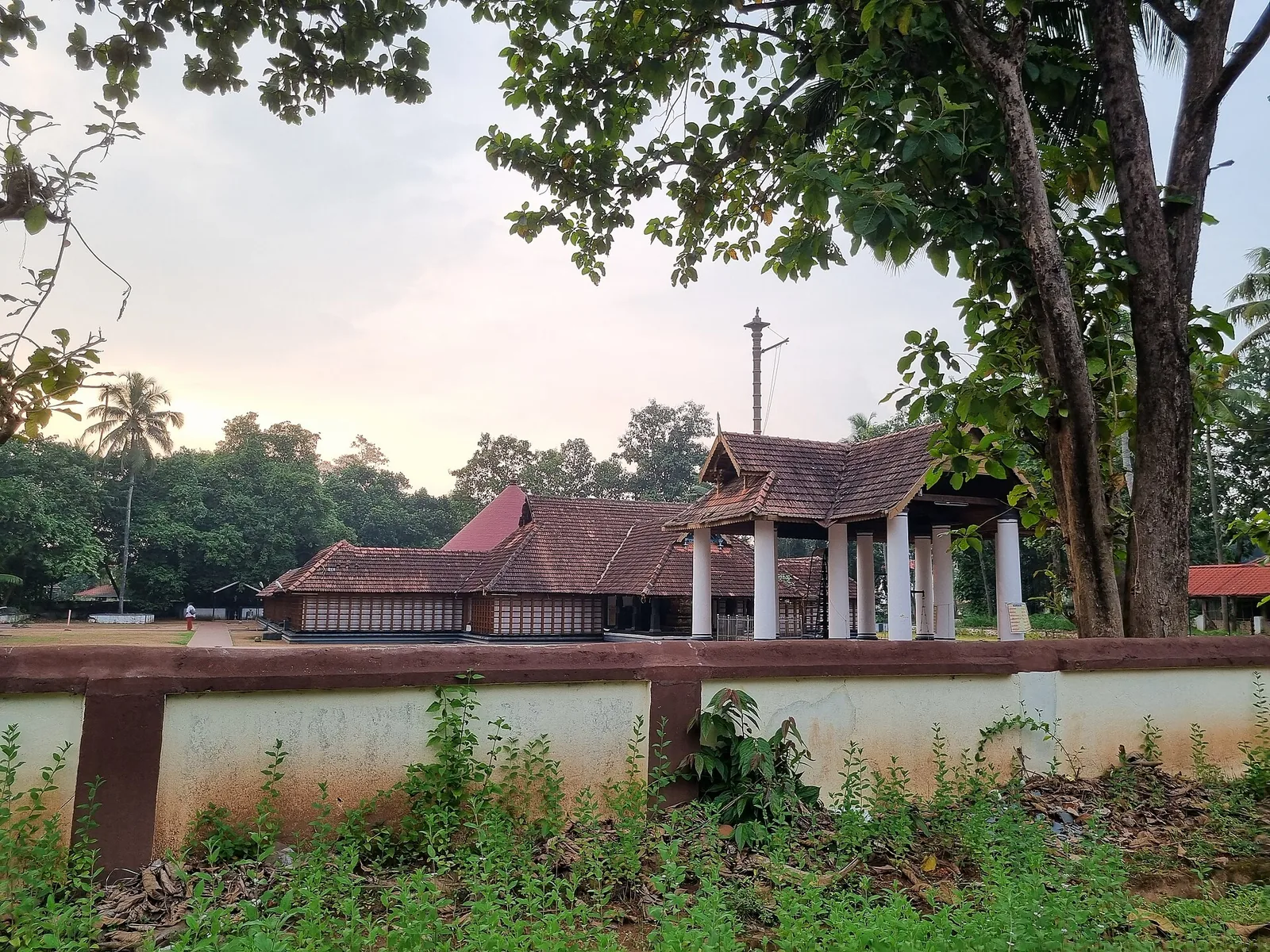
Once, the story goes, this coast was ruled so justly that there was no lie, no theft and no want — a golden age when everyone was equal and no one went hungry. And the gods, it is said, grew jealous of the happiness of a mortal king. That lost paradise, and the ruler who is believed to return to it for one day every single year, both trace back to a single temple on the edge of Kochi: Thrikkakara Vamana Temple. It is, in a very real sense, the reason an entire state throws its greatest festival. Yet most visitors to Kochi drive right past it, never guessing that the small shrine down the lane is the beating heart of Onam.
The king who was too good
Legend holds that Mahabali — Maveli, to Malayalis — was an asura king whose rule over this land was so fair and so generous that his people truly wanted for nothing. He was a devotee of Vishnu and beloved by all; but his glory kept growing, until it reached the heavens and alarmed the gods themselves. So Vishnu descended in his fifth avatar, Vamana — a small Brahmin boy, staff and umbrella in hand — and walked into the king’s great sacrifice to beg a gift. Just three paces of land, he asked, measured out by his own little feet. The proud, open-handed king laughed at so modest a request and granted it, waving away his guru Shukracharya, who alone sensed the danger and begged him to refuse.
Three steps that measured the universe
The moment the water of the vow touched his hand, the boy began to grow. He swelled beyond the hall, beyond the sky, until he filled all creation — the Trivikrama, the god of three strides. With one step Vamana covered the whole earth; with the second, the heavens. For the third step there was nowhere left in the universe to place a foot. And so Mahabali, true to his word to the last, bowed his head and offered it. Down came the divine foot upon the king’s crown, pressing him gently down into Patala, the netherworld. But moved by such unbreakable honesty, Vamana granted him two boons: rule over the netherworld, and permission to return to visit his beloved people once every year. Thrikkakara — from Thiru-kaal-kara, “the place of the sacred foot” — is where tradition says that third step came down.
The temple older than memory
The shrine is reckoned to be around two millennia old, and is honoured as one of the 108 Divya Desams — the holiest abodes of Vishnu sung by the Tamil Alvar saints. Tradition even credits its founding to Parasurama, the axe-wielding sage said to have raised Kerala from the sea. Inside the sanctum, Vamana is shown in the very act of the legend, foot lifted to press Mahabali down. It is not a grand or crowded temple; it wears its enormous significance lightly, ringed by a chuttuvilakku of countless brass lamps that, when lit, turn the whole complex to gold.
The homecoming a whole state prepares for
That yearly homecoming is Onam. When the month of Chingam opens (August–September) and the Thiruvonam star rises, Keralites welcome Maveli exactly the way you would welcome a beloved guest who must never see you struggling: swept courtyards, intricate flower carpets (pookalam) growing larger each day, new clothes, swings under the trees, and the vast vegetarian Onasadya laid out on a banana leaf. In countless homes a little pyramid of clay — the Thrikkakarayappan, moulded in the image of the deity of this very temple — is set at the centre of the flowers and worshipped as the returning king himself. This one temple gives its god’s form to every household in Kerala for those days.
Ten days, and a procession that once opened Onam for a kingdom
Thrikkakara keeps a ten-day festival of its own, timed to Onam. It begins with the Kodiyettu (flag-hoisting) on Atham; each day the deity is decorated (Chaarthu) as one of Vishnu’s ten avatars in turn; there is a grand Pakalpooram procession with a caparisoned elephant, and, on the closing days, an Onasadya that now feeds more than twenty thousand people of every faith, side by side. In older times the Maharaja of Kochi himself would lead a full ceremonial military procession — the famous Athachamayam, which still sets out from nearby Thrippunithura — to this temple, and its start is what traditionally flagged off Onam across the whole of Kerala. Records here carry some of the earliest known mentions of the festival, dating back to 861 CE.
Standing at the doorway
To stand in Thrikkakara’s courtyard is to stand at the doorway a king is said to walk through once a year — and to finally understand why Onam feels less like a festival and more like a family sitting up late, waiting for someone loved to come home. Come during Chingam and you will catch the temple at its most alive; come on any quiet morning and you will still feel the weight of the story in the worn stone. Plan your visit from the Thrikkakara place page; the wider district is on the Ernakulam hub.
Frequently asked questions
Why is Thrikkakara temple called the origin of Onam?
It is dedicated to Vamana, the avatar of Vishnu who, in the legend, sent the good king Mahabali to the netherworld but allowed him to return to his people once a year. That yearly return is Onam, and the clay Thrikkakarayappan worshipped in homes during Onam is modelled on this temple’s deity. Inscriptions here carry some of the earliest known mentions of Onam, dating to 861 CE.
When is the Thrikkakara temple festival?
The temple holds a ten-day festival in the Malayalam month of Chingam (August–September), beginning with the flag-hoisting on the Atham star and culminating around Thiruvonam, the main day of Onam. Its closing Onasadya now feeds more than twenty thousand people.
Who is Mahabali in the Onam story?
Mahabali (Maveli) is the legendary asura king whose just and generous rule over Kerala is remembered as a golden age of equality and plenty. In the legend Vishnu, as the dwarf Vamana, humbles him and presses him into the netherworld, granting him one annual visit home — which Kerala celebrates as Onam.
What is the Athachamayam and how is it linked to Thrikkakara?
The Athachamayam is a grand procession that begins at Thrippunithura near Kochi on the Atham star. Historically the Maharaja of Kochi led a ceremonial procession from his palace to the Thrikkakara temple, and its start traditionally marked the beginning of the ten-day Onam celebrations across Kerala.
What is the Thrikkakarayappan?
It is the small pyramid-shaped clay idol, modelled on Thrikkakara’s deity, that families across Kerala place at the centre of their Onam flower-carpet and worship during the festival as the returning king Mahabali and the god Vamana.