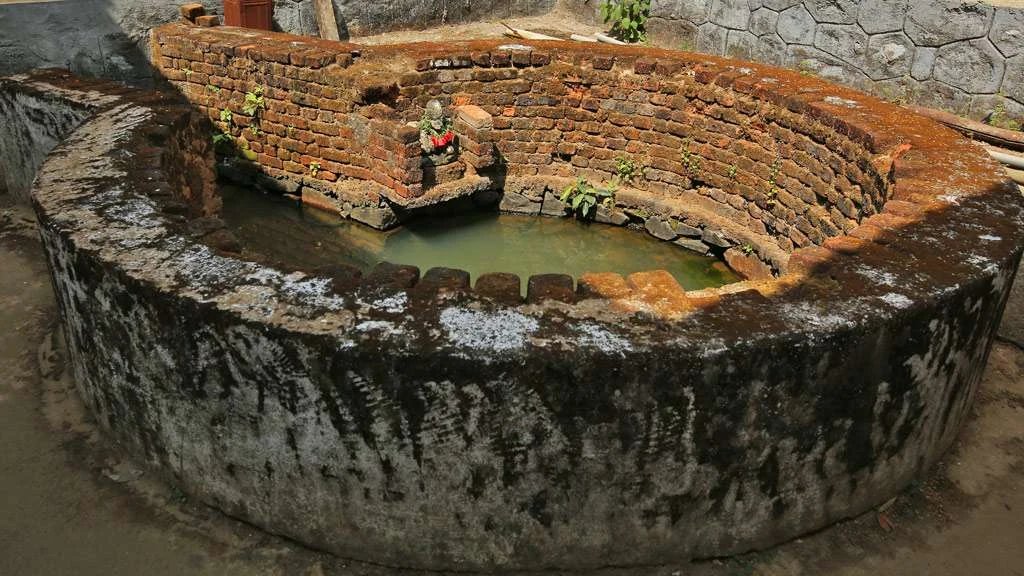
The Jala Durga image is striking because it does not begin with a large roof. A low oval enclosure holds water, weathered masonry curves around it, and a small garlanded figure occupies the interior edge. Kerala Tourism identifies this as the shrine of Jala Durga at Thrissilery Mahadeva Temple. Its scale asks for closer attention to the boundary between water, wall and deity.
Start with what the enclosure shows
The curved wall is not a straight ornamental tank edge. Its irregular surface and the small figure give the setting an intimate scale. Water occupies the space within the enclosure, making it part of the shrine’s visible arrangement. From the accepted visitor position, the relationship can be understood without leaning over the wall or touching any devotional object.
The low surrounding wall brings the water close to the small devotional figure. Weathering on the masonry and the garland within the enclosure give the shrine a different texture from the larger tiled roofs elsewhere in the courtyard. Look from the permitted edge, leaving the water and offerings undisturbed as worshippers approach.
The Papanasini connection belongs to the sacred account
Local sacred tradition connects Jala Durga’s water with Papanasini at Thirunelli and describes its level as constant. The Kerala Tourism heritage account also relates the shrine to Parasurama. These beliefs give the small water enclosure a place within the temple’s wider ritual geography.
That distinction does not remove the connection from the visit. It explains the kind of meaning being offered. Papanasini and Thirunelli are already significant within the wider ritual landscape, and the water at Jala Durga draws that landscape into the Thrissilery compound. The religious association can be understood without trying to trace a hidden stream on an ordinary walking map.
It also prevents a common confusion between the principal temple and the smaller shrine. Shiva presides at Thrissilery Mahadeva Temple, while Jala Durga is a particular devotional presence within the complex. A visitor looking only for a large Shiva shrine may miss the smaller water enclosure; a photograph labelled only “Durga temple” may lose the wider Thrissilery setting.
A small shrine needs space around it
The low wall makes it possible for several people to crowd the same view very quickly. If worship is taking place, wait away from the immediate approach and allow the participant to finish. The size of the structure is a reason to give it more room, not a reason to assume it is an informal object that can be approached from every side.
For a photograph, include the enclosure and enough of its surroundings to explain its scale. A close crop of the garland alone would lose the defining relationship with water. Permission and the accepted visitor route matter more than copying the angle of an official image, especially when the ground beside the enclosure is wet.
The larger tiled roofs of Thrissilery provide a useful contrast after this close observation. They describe the temple through shelter and courtyard form; Jala Durga introduces a different centre of attention through an open water setting. The two views belong together because they show different parts of the same complex.
Jala Durga adds a quieter focus within the Thrissilery compound. The shrine’s surrounding water and its sacred connection with Papanasini belong together in local tradition. Seen alongside the larger roof forms and the Shiva approach, this smaller space gives the temple a second scale of attention: an enclosed devotional setting within the wider courtyard.
Plan the visit: Thrissilery Shiva Temple.