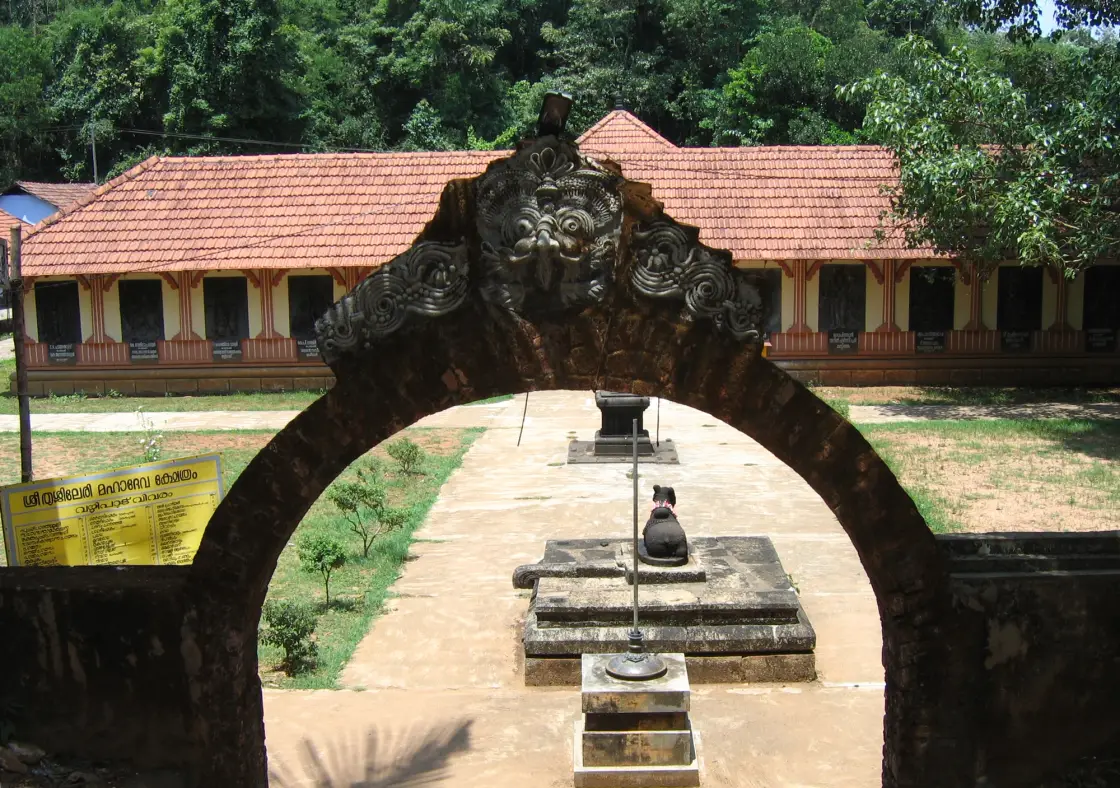
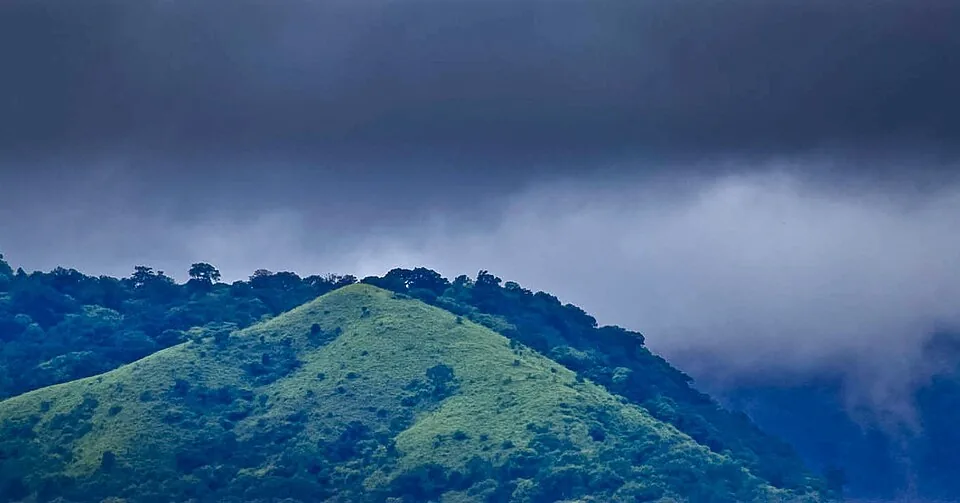
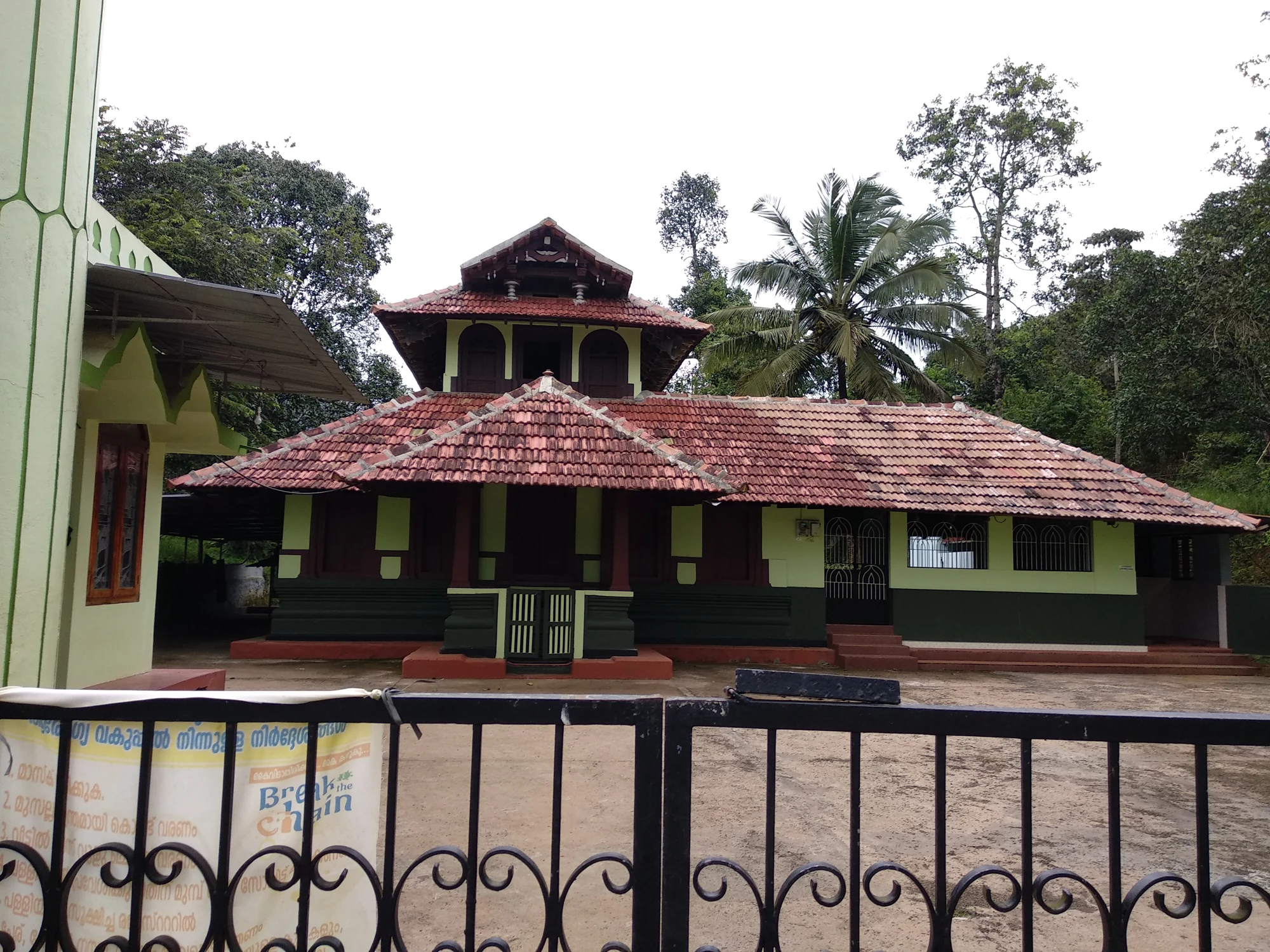
The temple is first encountered as a long, low roof against dense green trees. A decorated arch and Nandi give the approach a centre, while the outer walls unfold into a series of relief panels. The small water shrine adds a quieter scale to the same compound.
The story of Thrissilery Shiva Temple
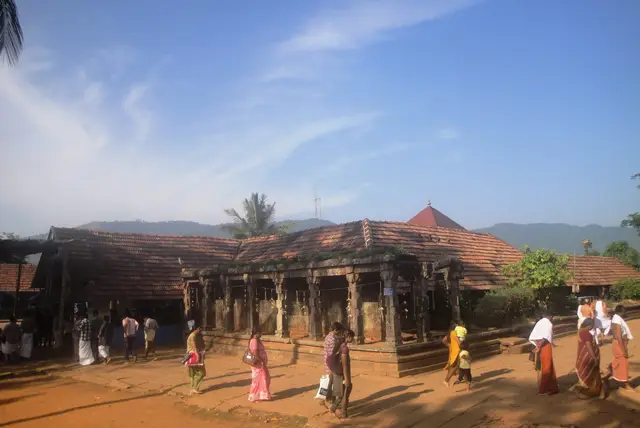
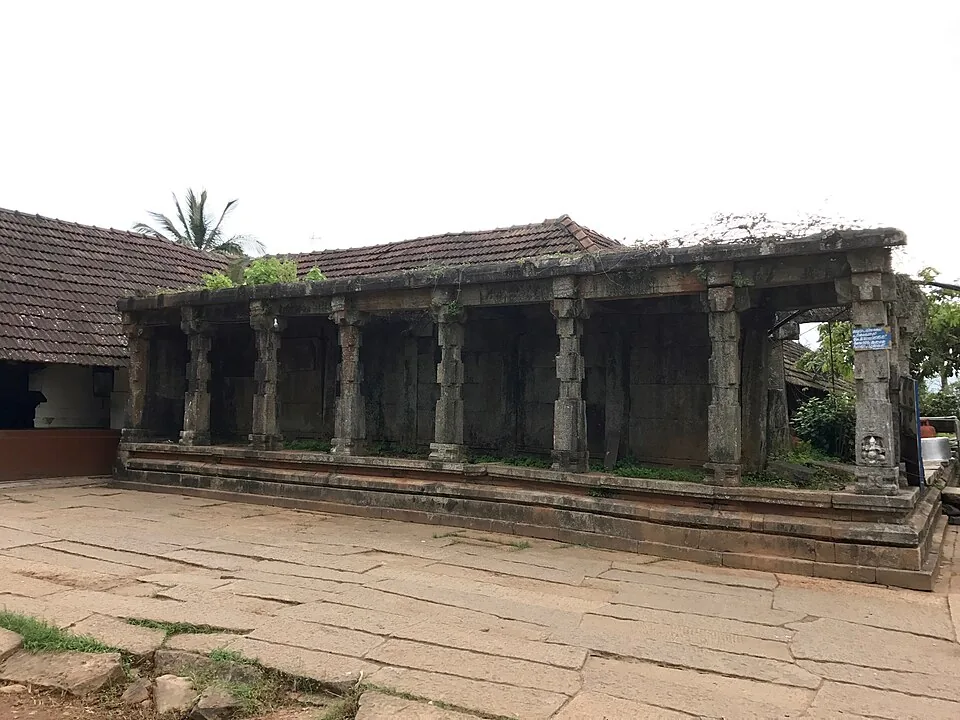
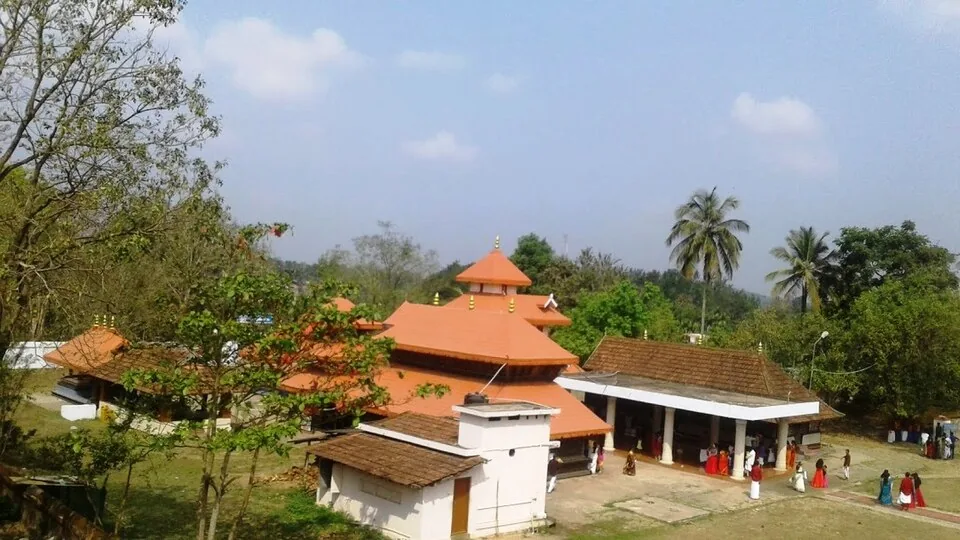
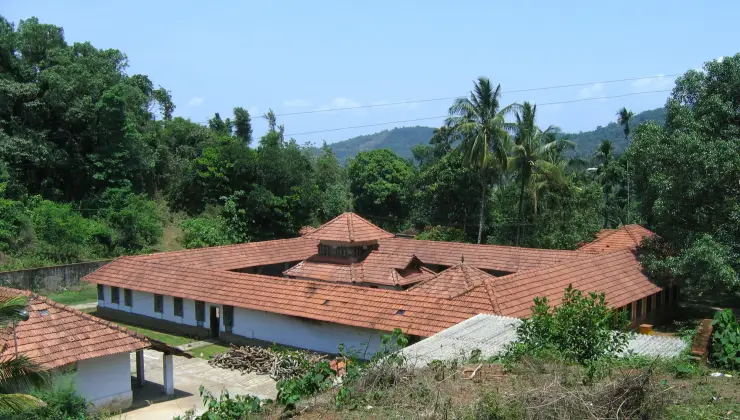
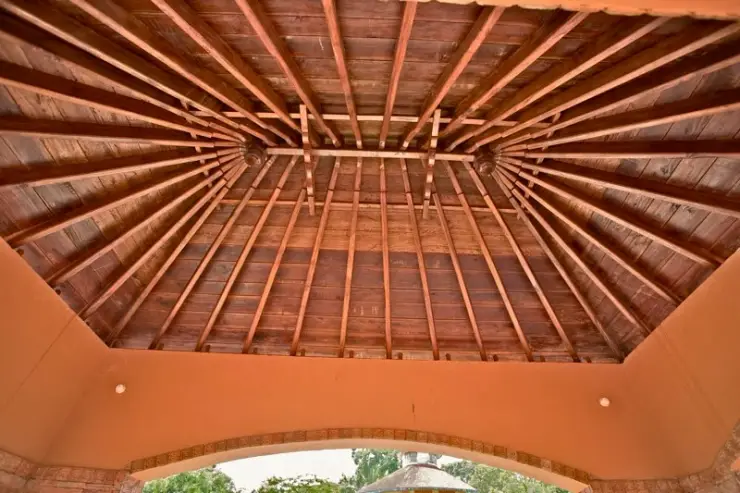
Thrissilery’s architecture is easier to understand through the enclosure than through a single tower. An elevated view shows several tiled roof slopes meeting around the inner spaces, with smaller projections rising above the long outer roof. From ground level, that arrangement becomes a succession of walls, openings and shaded edges. Both perspectives belong to the same temple, but they reveal different parts of its organisation.
An ornamental arch frames a seated Nandi and the approach towards the temple doors. Its carved crest has a broad face and curling forms, while the bull occupies a separate stone base beyond it. This sequence draws the eye inward from gateway to Nandi to shrine. The details are visible from the approach without climbing the bases or stepping into a worshipper’s path.
The relief-lined outer wall rewards a slower pace. Panels repeat beneath the tiled eaves, with pale wall surfaces and painted divisions between them. Some carry figures in active poses, others more compact seated forms. Names and donor inscriptions appear beneath several panels. Read what can actually be identified at the site rather than assigning every figure the same deity or treating the whole series as one undated ancient sculpture.
A side view makes the panel rhythm especially clear. The eaves form a continuous sloping line above the wall, while a path runs alongside the raised base. Trees create patches of shade across the approach. This is an architectural subject available at the scale of a normal walk: repetition, proportion and the relation between shelter and display, rather than a need to reach a prohibited inner space.
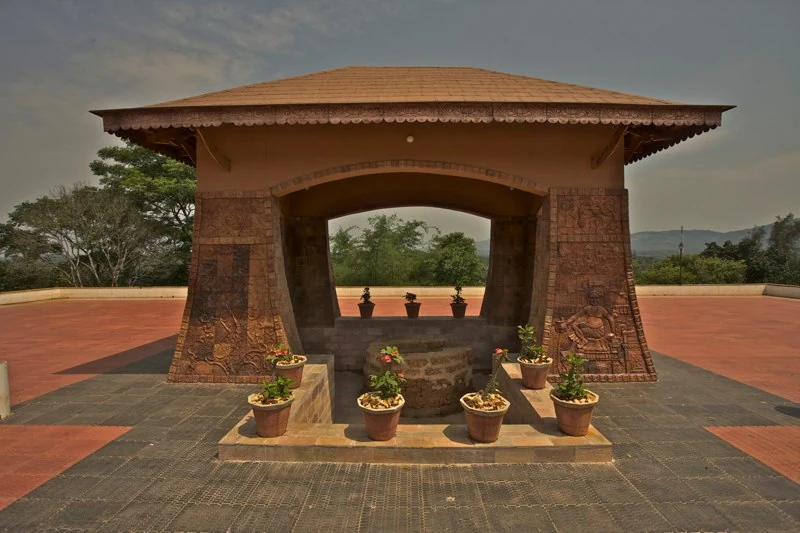
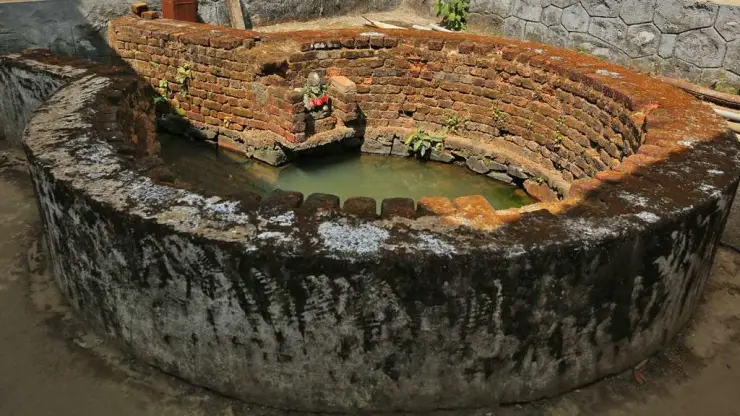
Jala Durga’s shrine looks different from the roofed enclosure. Kerala Tourism’s photograph shows a low oval water-filled structure, weathered brick and stone around its inner side, and a small devotional figure set against the wall. The water and enclosing masonry are visible physical features. Claims about its sacred source or constant level belong to the religious account associated with the shrine and should be understood in that register.
The connection with Thirunelli is central to the temple’s identity. Kerala Tourism records a belief that ancestral rites at Thirunelli are completed by an offering at Thrissilery. That is a reason devotees may visit both, but it does not establish one universal tourist sequence for every visitor. The temple’s own guidance should determine the appropriate procedure for a particular family or offering.
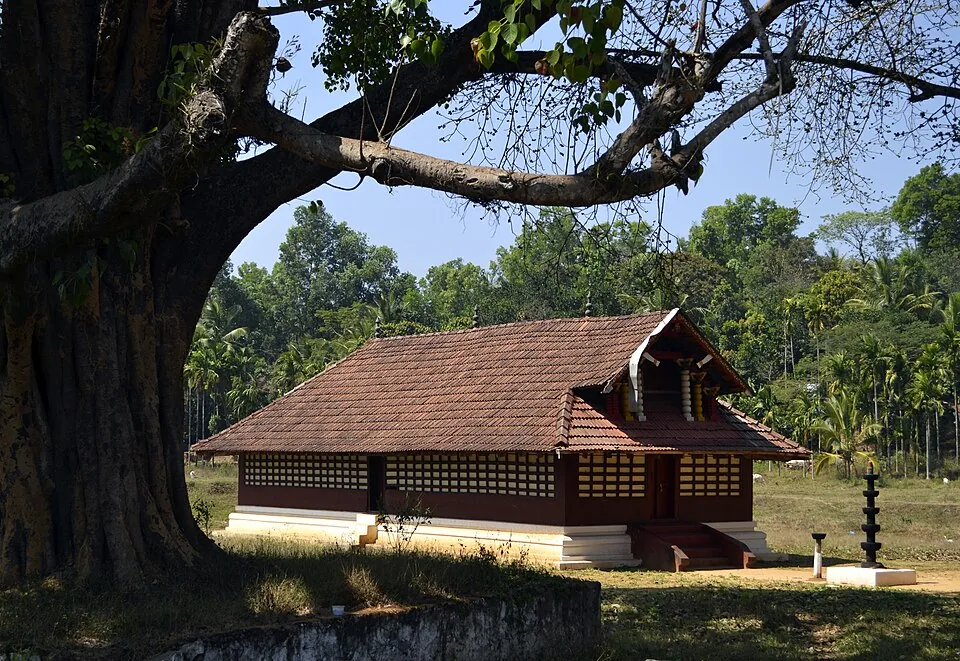
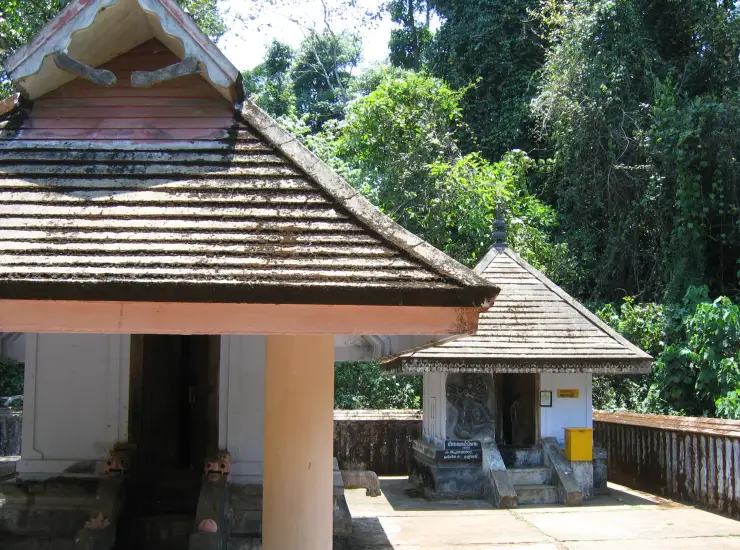
The compound has spaces at several scales: the long enclosure, smaller freestanding shrines, stone bases and a broad tree within the grounds. These features can be observed without asserting that every tree or structure has a named legend. The interest lies partly in how the large roof, smaller roofs and open ground fit together in a lived religious setting.
Festival use adds another dimension. The official festival archive associates the annual Meenam celebration with Kathakali, Chakyarkoothu, cultural programmes and annadanam. Those are named activities in the temple’s festival description. They should not be promised on an ordinary day or on an unconfirmed future date merely because the temple has a space that could accommodate a gathering.
The distinction between daily worship and festival visiting matters practically. A quieter session leaves more room to notice a wall panel or roof junction from an allowed position. A festival brings an announced programme and a larger movement of people through the compound. The visitor should choose which experience is intended and let the current temple arrangements shape it.
Mananthavady and Kattikulam provide the wider road orientation. Thrissilery itself is the specific village-side destination, with a temple-road approach. Keeping those names attached to the journey is useful if the day also includes Thirunelli, because the two shrines are separate stops rather than neighbouring doors in the same complex.
Legend & myth
A local tradition describes Shiva resting with his head at Thrissilery and his feet at Thirunelli. It gives the two temples a sacred relationship across the landscape. It is a devotional image rather than a literal geographical measurement.
Another sacred account links the Jala Durga shrine’s water with Papanasini at Thirunelli and describes the water as enduring through the seasons. The visible water enclosure can be observed directly; the claimed connection and permanence should remain identified as tradition.
Kerala Tourism also preserves a Parasurama association for the Durga shrine. As with the stories connecting the two temples, this is part of sacred memory, not an archaeological date for the present masonry.