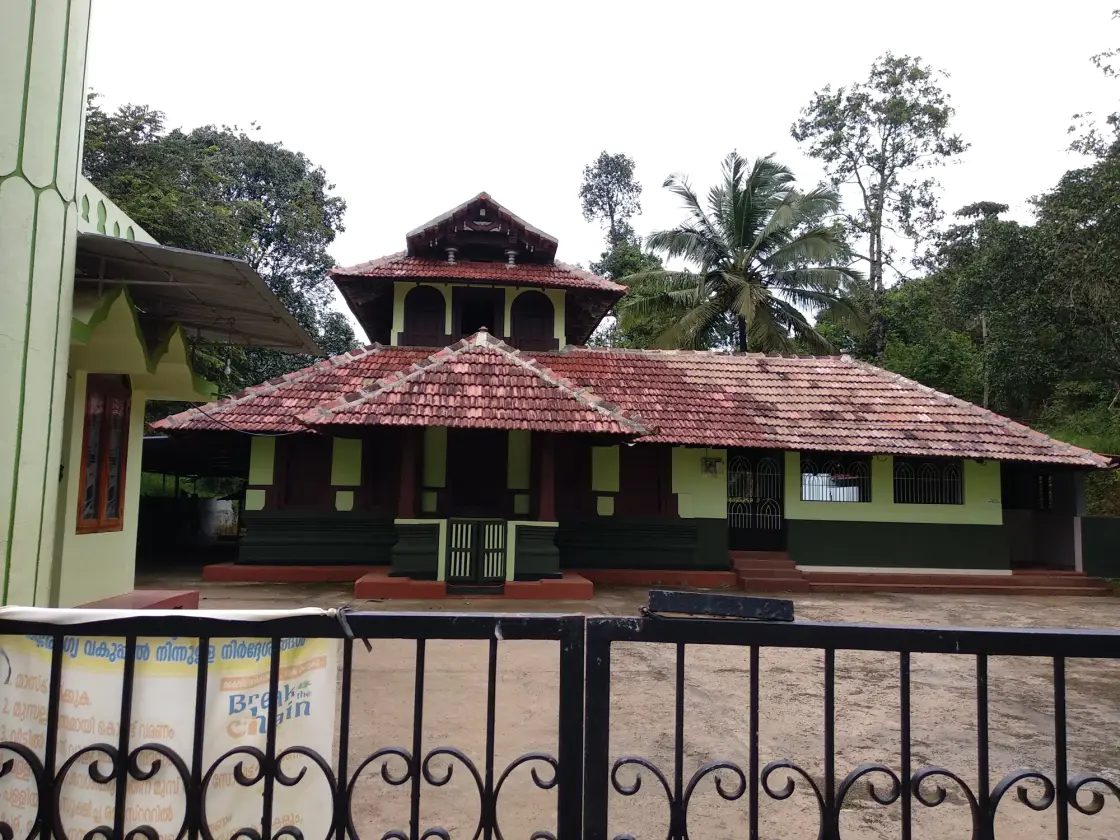
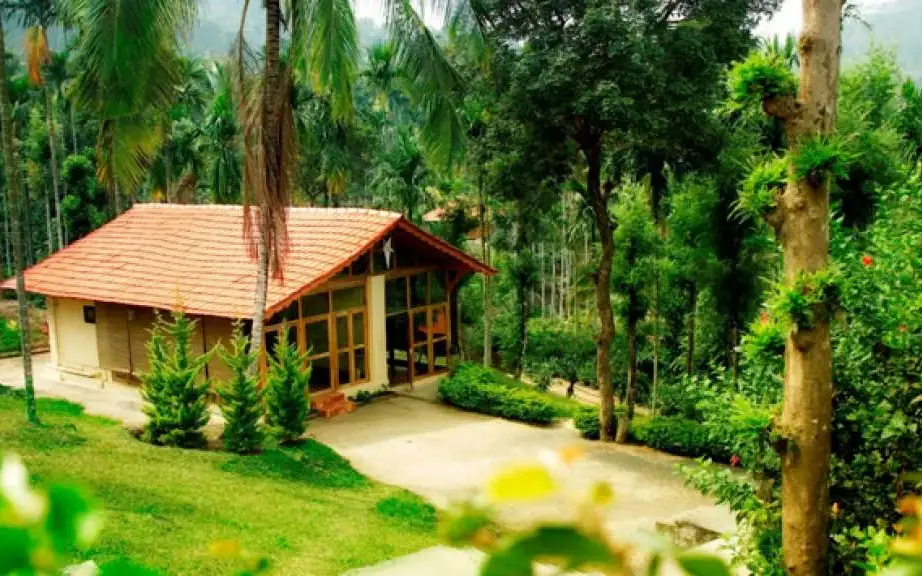
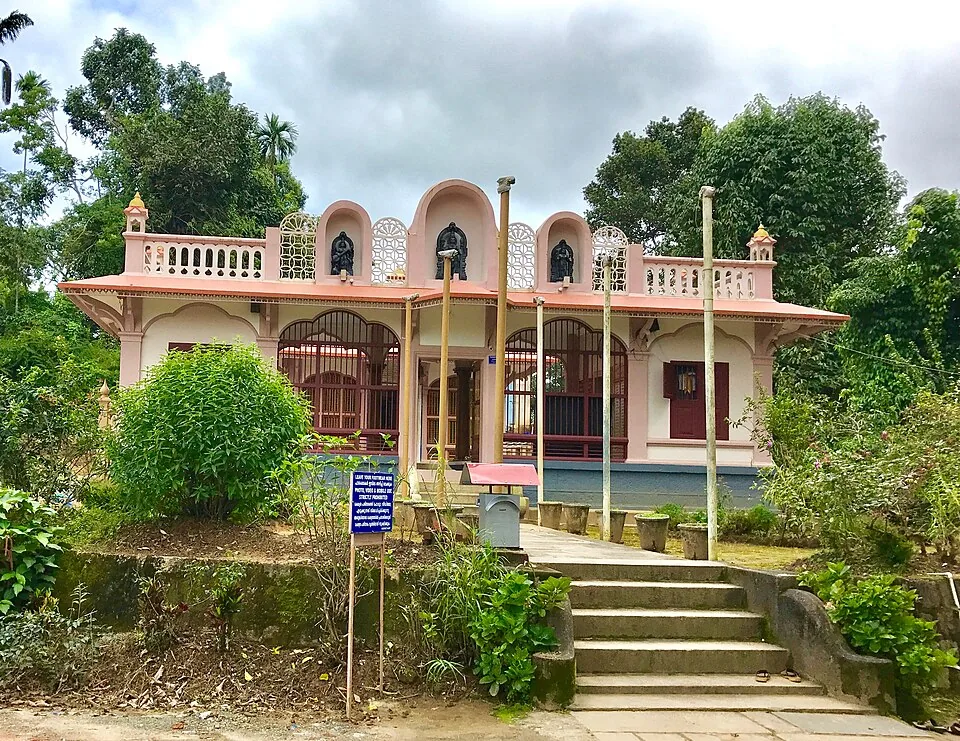
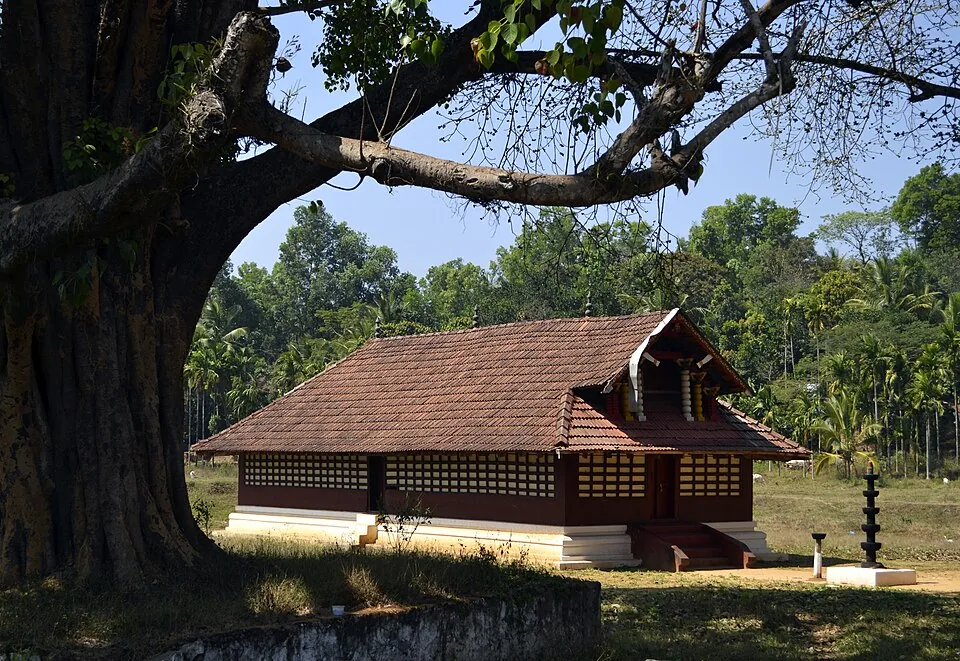
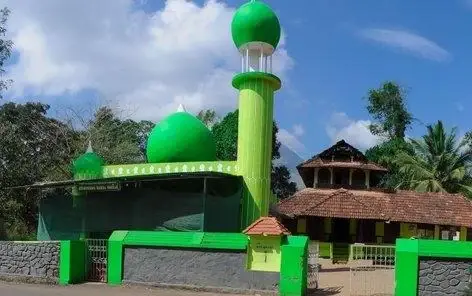
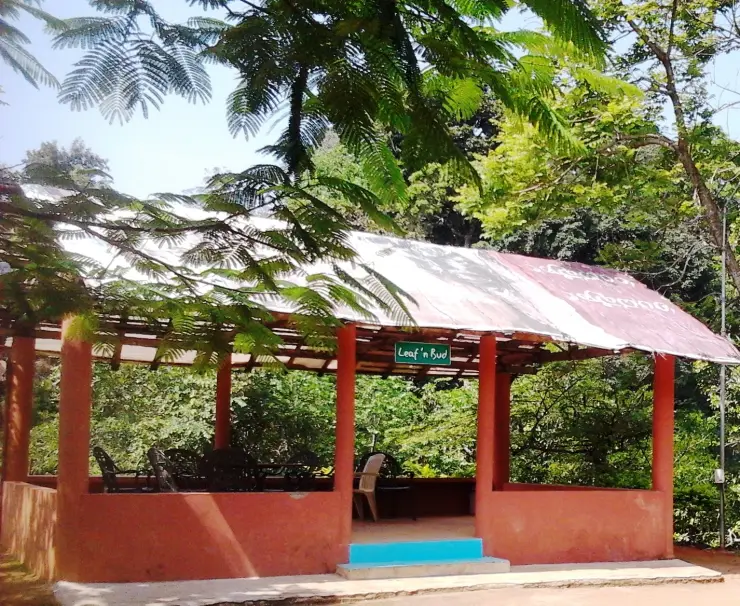
The tiled building announces itself through shelter rather than height: broad eaves over a low porch, another roof above, and dark timber openings set into green walls. Beside it, a minaret and dome introduce a different outline. Both belong to the Varambetta mosque and maqaam setting.
The story of Varambetta Mosque
The first useful distinction is between the whole compound and the building most often used to illustrate it. The tiled maqaam has a small raised porch, a central doorway and a roof that spreads well beyond the walls. In a wider official photograph, the neighbouring domed building and minaret are also visible. A visitor who has seen only the tiled structure may otherwise mistake the adjoining prayer building for an unrelated mosque.
A low gate and courtyard lead towards the porch, with the long tiled roof rising behind and a smaller upper section above the roofline. The building’s scale unfolds in these stages. From the entrance, the broad roof dominates; nearer the porch, the timber openings and deep eaves become more apparent. The sheltered lower spaces remain closely connected to the courtyard.
Dark timber contrasts with the painted wall around the openings. Arched upper windows, vertical door panels and deep eaves break the facade into smaller parts, giving the building a domestic scale beneath its long roof. Across older photographs, paint colours vary while these forms remain recognisable. The strongest details to look for are the proportions of the openings and the way the roof shelters them.
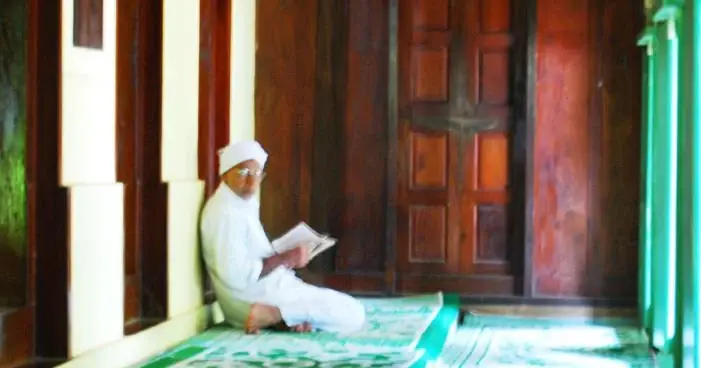
The porch is also a social threshold. An official photograph shows people seated within it and footwear left outside, while another places a reader beside panelled timber doors. These views make the building’s scale clear: spaces for sitting, reading and passing through remain close to the visitor. Their presence is a reason for restraint, especially when the desire to inspect a detail competes with someone else’s prayer or rest.
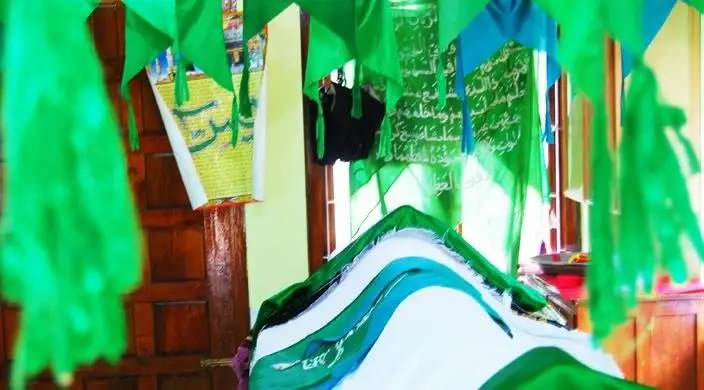
The maqaam contains a cloth-covered tomb within an interior of timber posts and hanging green fabric. It is a devotional space within the wider compound. Notice how the cloth and posts enclose the tomb more closely than the open porch outside, and follow the attendants’ directions about where to stand or sit. Leave offerings and coverings undisturbed.
The mosque’s age is usually described approximately. Kerala Tourism and the Wayanad district census account place it among the district’s old mosques and use a figure of about three hundred years. That establishes a longstanding religious presence in the locality. It does not establish a named founder, an exact construction year or the age of each building now standing in the compound.
The annual Nercha brings prayer, religious discourses and shared food together with donations for orphan welfare. Kerala Tourism’s festival account also records participation by people of different faiths. The gathering connects worship with practical care for the community: the meal and charitable contributions belong to its purpose alongside the religious programme.
An ordinary visit and a Nercha visit have different rhythms. On a quieter day, the roof forms, doorway proportions and relationship between the buildings are easier to notice. During the annual gathering, those same spaces serve a larger programme of prayer, food and community participation. Choose the occasion around the aspect of the place that interests you, while respecting its primary role in worship.
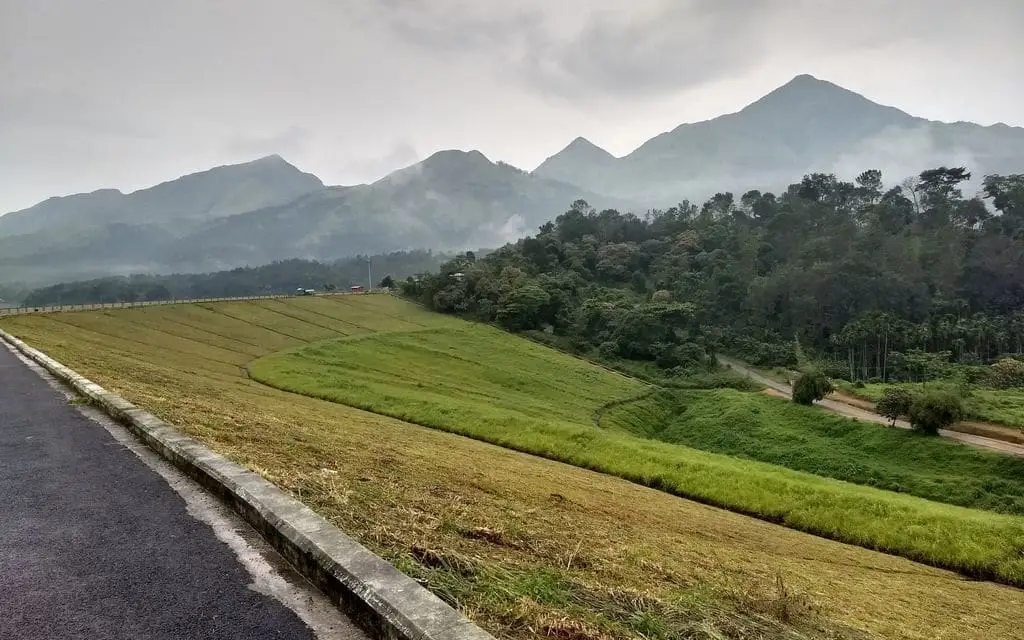
The compound sits within a wider lived landscape of roads, houses and institutions around Varambetta. Its proximity to the Padinjarathara side of Wayanad makes it possible to include in a western-district itinerary, but the mosque is not part of a reservoir admission or forest trekking ticket. Keep its arrival and visiting etiquette separate from the nearby outdoor attractions.
Leaving with a clear understanding of mosque, maqaam and Nercha is more useful than leaving with a confident but unsourced foundation date. The first concerns congregational worship, the second the shrine setting, and the third a recurring religious gathering. Those distinctions allow the architecture and community life to remain connected without reducing the place to a generic old mosque.