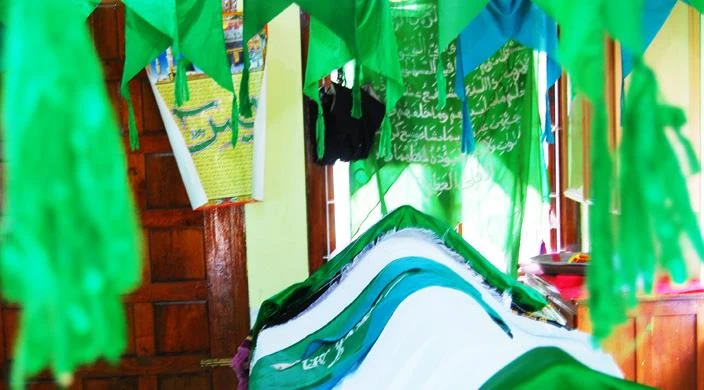
The maqaam photograph has a quiet centre: a cloth-covered tomb beneath green fabric, with timber posts holding the surrounding space. It is an interior used for devotion. The annual Nercha brings a larger programme to the same religious setting, connecting individual prayer with a gathering described in Kerala Tourism’s festival archive.
A programme with several purposes
The official record of Varambetta Nercha describes prayers, religious discourses, food distribution and contributions towards orphan welfare. These details give the event its particular shape. The gathering is not only a crowd around an old building; it combines worship, listening, service and charitable support.
Each part asks something different of a participant. A prayer has its own concentration and order. A discourse needs listeners who can remain attentive. Food distribution depends on serving and moving people through a shared space. A visitor who arrives simply to look at the architecture should notice which of these uses is taking place before choosing where to stand.
Donations for orphan welfare are part of the Nercha programme recorded by Kerala Tourism. Giving therefore stands alongside prayer, religious discussion and the shared meal. For participants, the gathering connects devotion with practical support beyond the mosque compound. Visitors who wish to contribute should use the organisers’ own arrangement at the event.
An annual season needs a current notice
The archived festival calendar places Nercha in March. Its dates belong to that record and do not establish the present year’s programme. An annual observance can retain its identity while the detailed timetable, duration and arrangements are announced separately. Travel for a specific service should be based on the mosque’s current notice.
An ordinary visit has a different scale. The tiled porch, timber doors and relationship between the buildings may be easier to see when a large programme is not under way. During Nercha, those same spaces serve people attending the gathering. The quieter day and the feast are two different ways of encountering Varambetta, with neither required to reproduce the other.
Participation across faiths
Kerala Tourism’s account describes people of different faiths attending. That is useful evidence of the event’s wider local role, but it should not be turned into a promise of unrestricted interior access. A welcome to attend and permission to enter every prayer or shrine space are different matters. The caretaker’s directions remain the guide at the entrance.
The interior photograph reinforces why that distinction is necessary. Cloth coverings and devotional objects are part of the shrine’s use; they are not exhibits to touch or move for a clearer picture. A visitor can understand the setting from an accepted position without approaching every object or interrupting someone’s prayer.
Shared food should likewise be understood within the programme. It is not evidence of a daily meal service for tourists, and a restaurant plan for the road journey should remain separate. If invited to participate, follow the organisers’ directions about the queue, serving area and clearing up.
The value of knowing these details before arrival is simple: Nercha becomes legible as a set of purposeful acts. The old mosque and maqaam provide the place; prayers, discourses, meals and giving make the annual gathering. Observing those connections is more informative than describing the event only through its size or decoration.
Plan the visit: Varambetta Mosque and Maqaam.