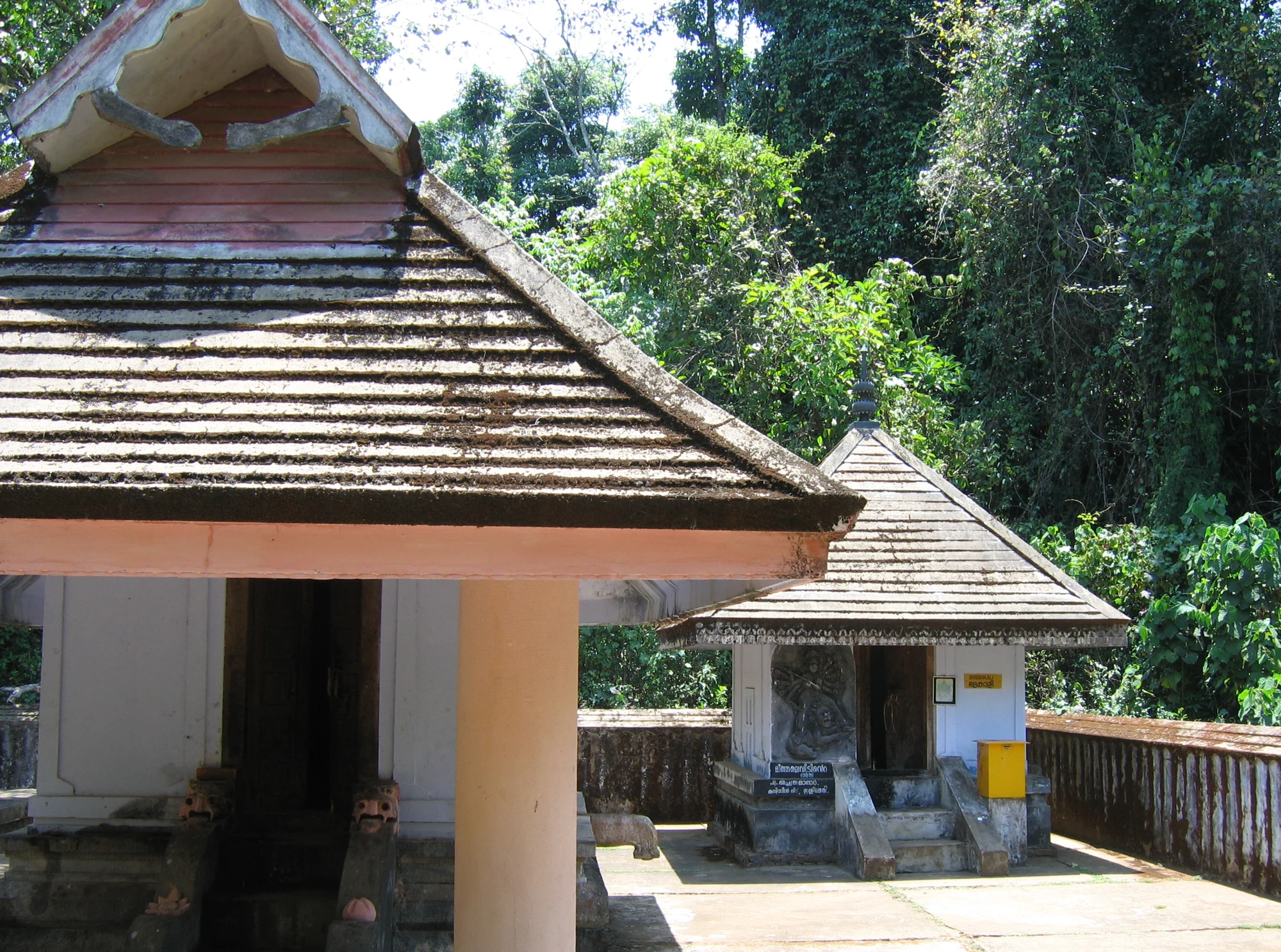
A pair of small roofed shrines sits within Thrissilery’s courtyard, beside a wall carrying painted reliefs. The photograph suggests a temple made up of several places of devotion rather than a single doorway. Its most significant connection, however, extends beyond the compound: Thrissilery’s relationship with Thirunelli Maha Vishnu Temple is part of the region’s sacred geography.
Shiva here, Vishnu at Thirunelli
Thrissilery’s presiding deity is Shiva. Thirunelli is a Vishnu temple at a separate location in Wayanad. Kerala Tourism’s heritage account explains the connection through a belief that ancestral rites associated with Thirunelli are completed with an offering at Thrissilery. The statement describes a religious understanding of completeness, not an administrative rule for sightseeing.
For a devotee, that relationship can shape the purpose of visiting both temples. Someone arranging rites should speak to the temple offices about the accepted sequence and required arrangements. A general travel guide cannot determine the appropriate observance for a family, and reaching one temple does not create a booking or appointment at the other.
A body imagined across the landscape
The Kerala Tourism festival archive records another way of expressing the link: Shiva’s head is associated with Thrissilery and his feet with Thirunelli. This is sacred tradition, a way of connecting places through the form of a deity. It is not a literal geographical measurement or an account of how the present buildings were constructed.
Such a tradition makes distance meaningful. Two distinct sites can be understood together without becoming the same place. The journey between them belongs to the practice of devotion, while the ordinary road map still needs two destinations. Keeping both ways of understanding the landscape in view prevents a temple circuit from becoming merely a list of stops.
Thrissilery also contains shrines associated with Parvati, Durga and Ayyappa in the official heritage description. That gives the compound its own religious life beyond its connection to Thirunelli. It should not be reduced to a compulsory extra on the way to a more famous temple. The principal Shiva worship and the subsidiary shrines belong to the visit here.
The festival has its own setting
The archive places Thrissilery’s annual festival in Meenam, broadly March–April, and describes a three-day programme with Kathakali, Chakyarkoothu and communal feeding among its features. These are recorded aspects of this temple’s festival. The present year’s dates and performances need the current temple programme rather than an assumption based on the old calendar.
Performance and ritual use the compound differently from an ordinary quiet visit. A courtyard that appears open in an archival photograph may be occupied by participants, seating or movement during a festival. Its temporary arrangement follows the event, so the visitor should allow the programme to determine where observation is appropriate.
The official heritage account is a useful introduction to the relationship, while the temple provides the actual guidance for worship. Read the tradition before arriving, retain the distinction between the two deities and locations, and let the local practice give the journey its order.
For someone interested primarily in culture, the same distinction remains valuable. Thrissilery demonstrates how a temple can be a complete religious setting in its own right and also a part of a wider sacred landscape. Its relationship with Thirunelli adds a second scale to the courtyard rather than replacing what is present there.
Plan the visit: Thrissilery Shiva Temple.