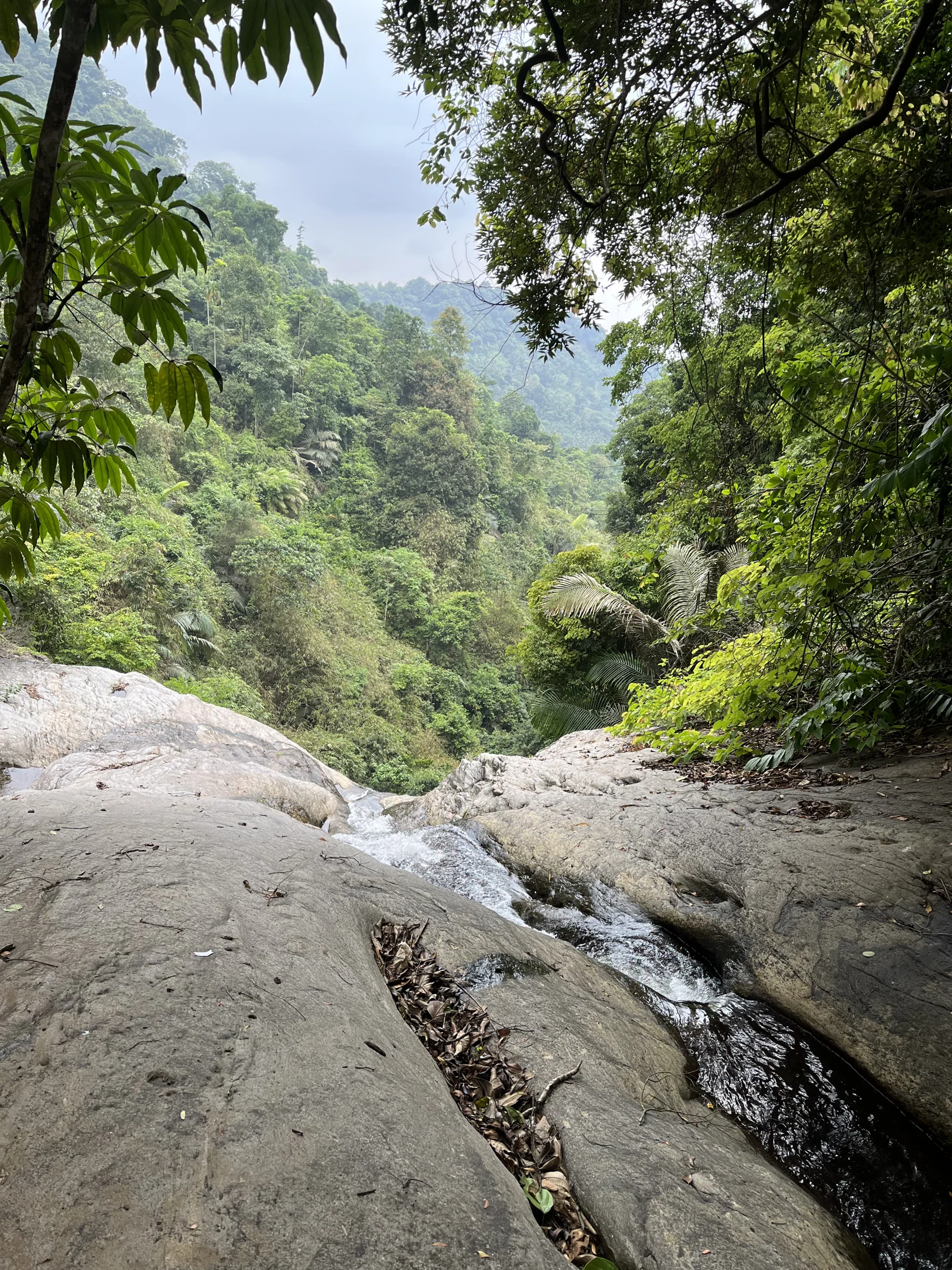
On the afternoon of 5 October 2022, more than two hundred people were at the first waterfall at Thusharagiri. Many of them were in the pool. It was, by every account, an ordinary day out.

Then the water came. Heavy rain had been falling in the forest above — not at the falls, above them — and the runoff arrived at the cascade as a sudden surge, the malavellam that anyone raised in these hills knows by name. What happened next is the reason this story is worth telling rather than mourning: the forest department’s own ecotourism guides, standing on the rock, saw it coming and moved everybody off the riverbed to higher ground. Nobody died. Malayalam coverage that evening described tourists running with their lives in their hands, and a major accident averted.

Twelve weeks earlier

The outcome had been different. On 18 July 2022 a twenty-two-year-old college student named Amal, from Beypore, drowned at Thusharagiri. He had come with four friends. Heavy rain in the hills had swollen the Chalippuzha, and entry to the falls had been prohibited by the panchayat, the forest department and the police. The group went in anyway. Two of them got into trouble; one was pulled out by his companions and by KSEB workers nearby; Amal went missing and his body was recovered around midday the following day. Local reporting noted that accidents recur at this waterfall, and put the cause plainly: visitors ignoring the restrictions.

Read together, those two afternoons describe the risk at Thusharagiri more precisely than any warning sign could. The danger here is not the gradient. It is not exposure, or route-finding, or altitude, or wildlife. It is water, arriving fast, from weather that is not happening where you are standing.

Why that is the whole problem

You can be on a sunlit rock apron at the first cascade, in perfectly pleasant weather, while a cloudburst empties itself onto a catchment five kilometres up the Ghats. The Chalippuzha is fed by streams off a steep, forested, high-rainfall slope, and the water gets down it quickly. By the time the surge is visible from the pool, the decision about whether to be in the pool has already been made for you.

Which is why the pools, not the climb, are where people die. The basin at the foot of the first fall and the natural pool at Thumbi Thullum Para are the two things everyone comes for, and they are lovely in low water — people slide down the smooth rock into the upper basin like a small roller-coaster, and photographs from the site have shown school groups standing waist-deep across the whole width of the stream. The same feature that makes a good swimming hole in February makes a good trap in July: enclosed, rock-walled, hard to climb out of quickly, with the only exit downstream.

The operating rules

They are simple and worth following literally. If entry has been restricted, do not go in — the July 2022 restriction was in force, was publicised, and was ignored. If the water is coloured, carrying leaf litter or noticeably louder than when you arrived, get out and get high; those are the three things a rising river tells you before it arrives. If it has rained hard in the hills in the past day, stay out of the pools entirely regardless of what the sky is doing overhead. And if a guide tells you to move, move first and ask afterwards. That is exactly what worked in October 2022.

The turn-back discipline for the trail itself follows the same logic. The upper section is reported to close to new starters in the mid-afternoon, around three o’clock, and the reason is not bureaucratic tidiness. It is that the walk back down crosses the stream more than once on rounded, polished stone, and doing that in failing light after rain has begun upstream is the specific combination you want to avoid. Set a personal turn-back time when you leave the counter and keep it even if you are twenty minutes short of the pool. Thumbi Thullum Para is not going anywhere.

Closures come from several directions

The panchayat, the forest department and the police can all restrict entry when the river rises, and they have. Above that sits Kerala’s statewide monsoon machinery: tourist spots across any district under a red or orange alert are placed off limits until the warnings are lifted, and Kozhikode goes under those alerts most years. A site that is open on Thursday can be shut on Friday with no notice you will see from the road. Check the district’s alert status the night before, and build the possibility of a closed gate into the plan rather than arriving determined.

There is a wider reason to take all of this more seriously than a decade of cheerful travel writing has encouraged. Thusharagiri sits on the Kozhikode flank of the same Western Ghats wall that gave way above Chooralmala and Mundakkai in Wayanad in July 2024, killing hundreds. That was a landslide, not a flash flood, and it was not here — but it changed how this entire belt of the Ghats is read by the departments that manage it and by the people who live beneath it. The era in which you simply turned up at a Kerala waterfall and wandered up the river is over, and the replacement — ticketed, guided, timed, closable — exists for reasons that have names and dates attached.

None of which should keep anyone away

On a clear morning in February the walk to Erattumukku is a hundred metres, the rock is dry, the dragonflies are out on the flat stone at the top of the trail, and there is no better half-day within fifty kilometres of Kozhikode. The point is not that Thusharagiri is dangerous. It is that its danger is invisible, arrives from upstream, and is managed almost entirely by the two things visitors are most tempted to skip: the guide, and the instruction to get out of the water.

Amal’s group went in on a day the river had been closed. The two hundred in October got out because somebody who knew the river told them to. Those are the only two outcomes on offer here, and which one you get is decided before you step off the rock.

Frequently asked questions

What is the real danger at Thusharagiri?

Water arriving from rain you cannot see. The Chalippuzha drains a steep, forested, high-rainfall catchment, so a cloudburst several kilometres up the Ghats can reach the falls as a surge while the sky above you stays clear. On 5 October 2022 exactly that happened with more than two hundred people present; forest guides cleared the riverbed in time and nobody died.

Has anyone died at Thusharagiri?

Yes. On 18 July 2022 a twenty-two-year-old student from Beypore drowned there. Entry had been prohibited by the panchayat, the forest department and the police because heavy rain in the hills had raised the river, and the group went in regardless. Local reporting noted that accidents recur here and attributed them to visitors disregarding restrictions.

How do I know if the river is rising?

Three signs come before the surge: the water discolours, it starts carrying leaf litter, and it gets noticeably louder than when you arrived. Any of them means get out and get high immediately. If it has rained hard in the hills within the past day, stay out of the pools entirely regardless of the weather overhead, and if a guide tells you to move, move first and ask afterwards.