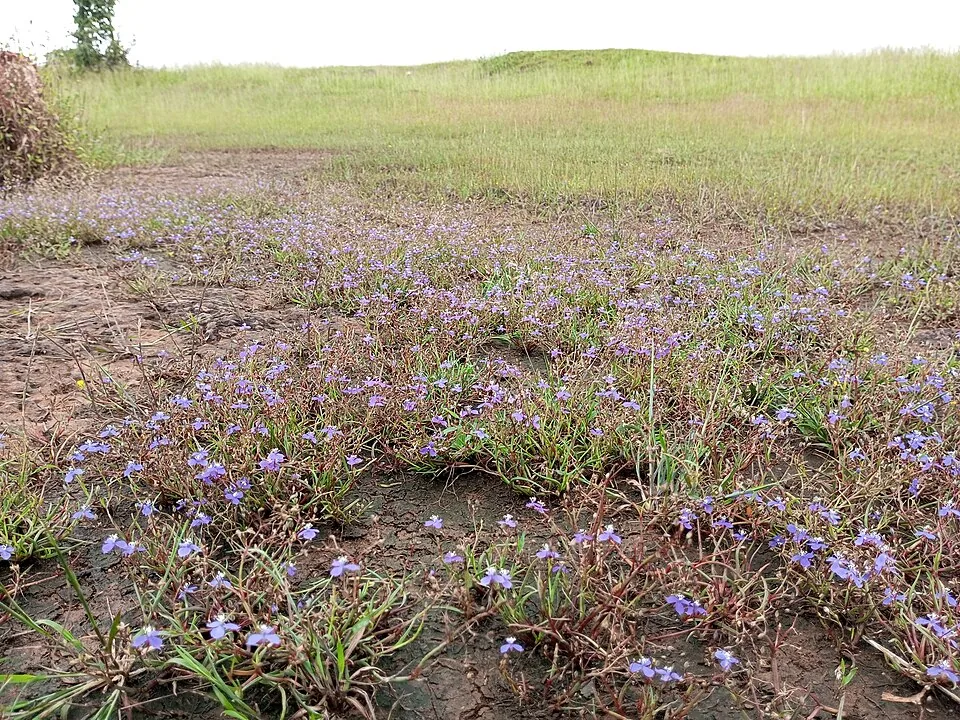
It is easy to write about Madayipara as a wildflower spectacle, and the spectacle is real — this town’s own record on this page describes it. The harder and better claim is the one botanists make, and it is not about how the plateau looks. It is that several plants were first described to science from this rock, and are named after it.
What a type locality is, and why it is a big deal
When a species is formally described for the first time, the specimen it is described from comes from somewhere, and that place becomes the type locality — the reference point for what the species is. It is the botanical equivalent of the original against which every later copy is checked. Most type localities are anonymous. Occasionally the describer names the species after the place, and then the place is carried in the name permanently.
Named endemics recorded from Madayipara
| Species | Note |
|---|---|
| Eriocaulon madayiparense | Carries the plateau’s own name — a pipewort of seasonally wet rock |
| Lindernia madayiparense | Also carries the plateau’s name |
| Nymphoides krishnakesara | An aquatic recorded from these seasonal pools |
| Rotala malabarica | Named for the Malabar coast rather than the hill |
Two species with madayiparense in the name is not a coincidence and not marketing. It is a statement that this specific hill is where the type material came from. If Madayipara were built over, those names would still exist and would refer to a place that no longer produced the plant.
The number behind it
An updated botanical checklist — Pramod and colleagues, 2017 — records over 670 flowering-plant species on the plateau. That figure gets quoted a lot. The figure that should be quoted alongside it is smaller and sharper: 24 of them are narrow endemics of Kerala, confined to laterite hillocks. Not confined to Kerala. Confined to this specific, unglamorous, easily-bulldozed landform.
- The rock is porous and iron-rich, and holds almost no nutrients. Very few plants can live on it.
- Water behaves in extremes: shallow depressions become pools for months, then bake dry. Species must be adapted to both, or to a narrow window between them.
- Each plateau is effectively an island — surrounded by farmland and forest that these species cannot cross. Islands generate endemics.
- The same properties make laterite plateaus easy to classify as waste ground, quarry, or building land. That is the conservation problem in one sentence.
Two floras, one hill
The plateau runs two entirely different plant communities through the year. From roughly May to November, in the monsoon, the depressions hold water and the flora is aquatic and semi-aquatic — the blues, pinks, whites and yellows that photographers come for. From about January the water is gone and the surviving flora is xerophytic, adapted to drought on bare rock. Between the two, the same square metre supports different life.
The practical consequence for a visitor is blunt: there is no single right time to see Madayipara, but there is a very wrong one. Arrive in March or April and you will find a hot, bare, brown expanse and conclude the internet lied to you. It did not; you came in the gap.
What to actually do on the rock
Walk slowly and look down. That is genuinely the advice. The scale of what is interesting here is centimetres, not kilometres — insectivorous bladderworts, sundews with sticky leaves, pipeworts standing in a film of water on rock. The wide view over the plateau to the Arabian Sea is pleasant; it is not what the botanists come for. It is also, at 40 to 47 metres above sea level, one of the least strenuous places in Kerala to see something genuinely rare.
And go with the assumption that everything on the ground is fragile and shallow-rooted. A footprint on rock is nothing. A footprint in a seasonal pool where a pipewort is standing is not.