Madayipara is a flat-topped laterite plateau rising above Pazhayangadi in Kannur district, where a windswept grassland unfurls one of Kerala's most extraordinary monsoon wildflower blooms and, layered into the same red rock, the ruins and shrines of an astonishingly multi-faith past — a Bhadrakali sacred grove, one of India's oldest mosques, a fort and a pond that marks a vanished Jewish settlement.
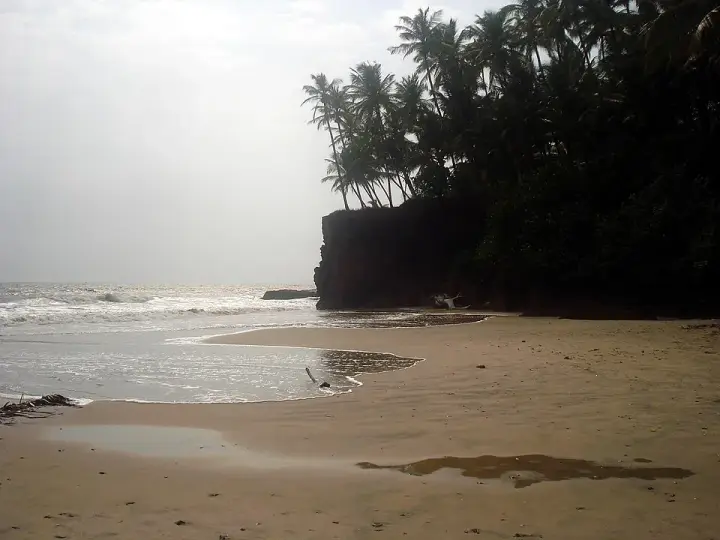
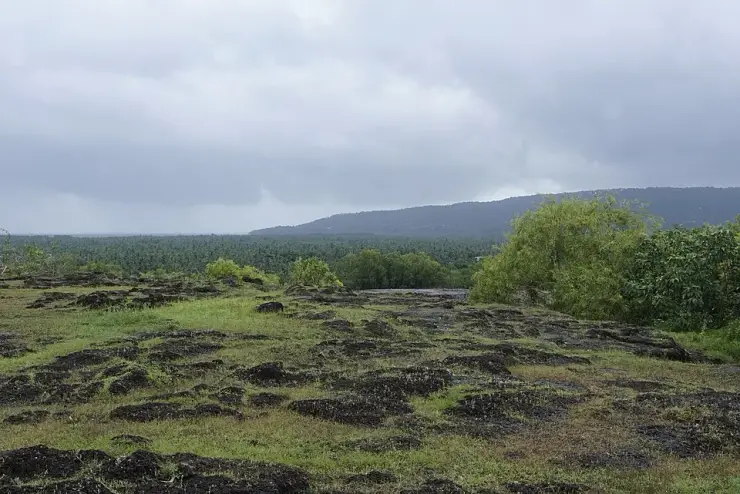
Drive up from the coastal town of Pazhayangadi and the land suddenly opens out. Madayipara is a sprawling laterite hillock — a flat, sun-baked table of iron-red rock that spreads across roughly 365 hectares (some local descriptions round it to about 700 acres) at only 40 to 47 metres above the sea. For most of the year it looks austere: cropped grassland, bare rock, a wide sky and, on clear days, the shimmer of the Arabian Sea to the west. Then the rains come, and the plateau performs the transformation that makes it famous.
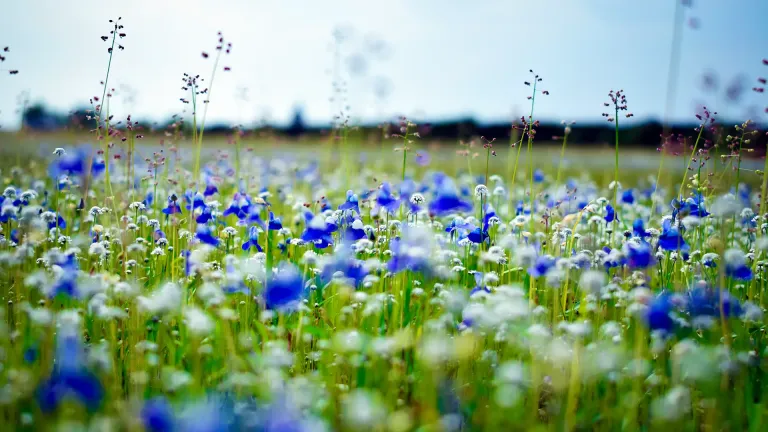
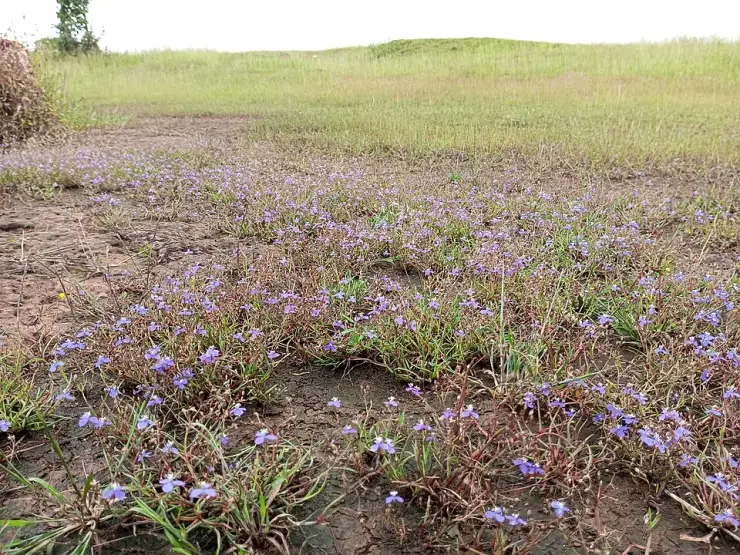
From late May through the monsoon months, water pools in every shallow depression of the rock and the whole tableland flushes into colour. The deep-blue flowers of Utricularia and the white flower-heads of Eriocaulon and Rhamphicarpa spread in drifts until, as botanists like to put it, the plateau is painted in shades of blue, violet and white. Among them grow tiny, easily-missed marvels: insectivorous bladderworts and the sticky-leaved sundew Drosera indica, which trap insects to survive in the mineral-poor laterite soil. It is a landscape that rewards walking slowly and looking down as much as out.
The biodiversity here is genuinely remarkable for such a compact site. Updated botanical checklists record around 670 flowering-plant species, more than 60 of them endemic to Peninsular India, several found almost nowhere else on Earth — plants such as Eriocaulon madayiparense and Rotala malabarica carry the plateau's own name in their scientific labels. Above the flowers flit an estimated 150 butterfly species, including the giant Atlas moth, among the largest winged insects in the world, and the grasslands and pond draw well over a hundred resident and migratory bird species, making Madayipara a quietly celebrated spot for lepidopterists and birders alike.
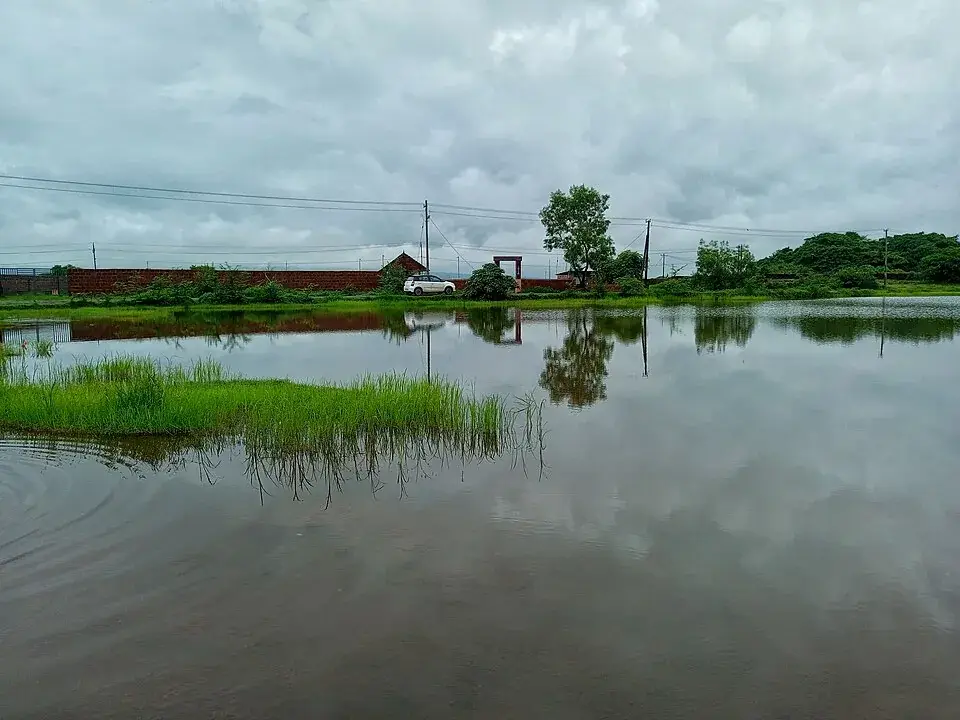
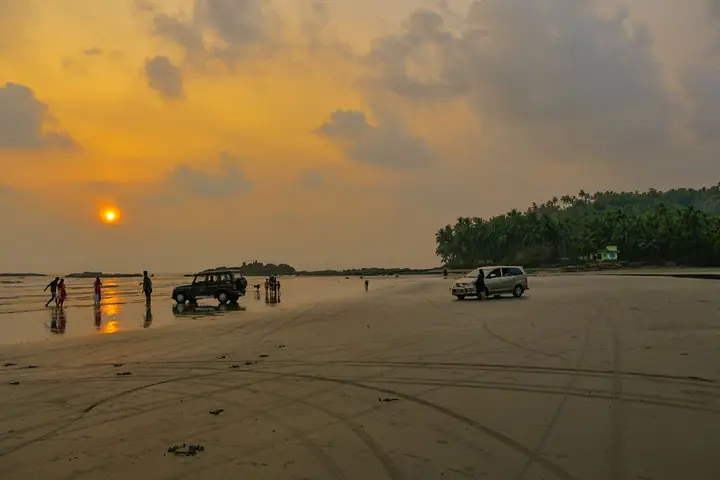
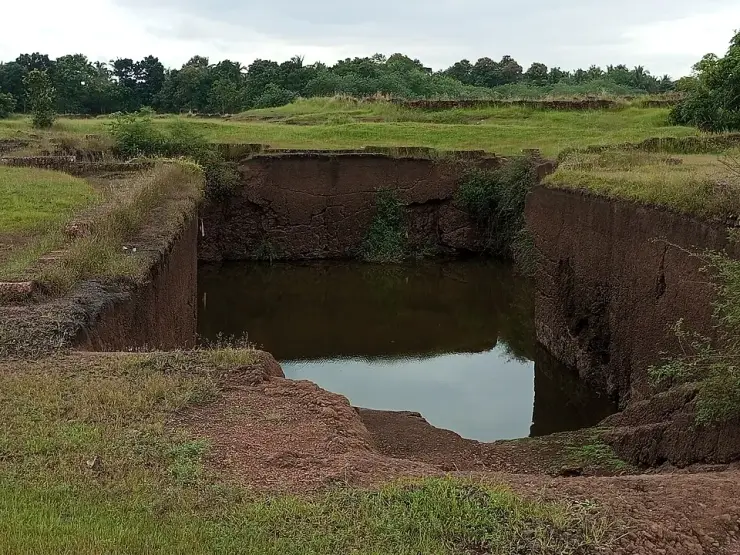
Water gives the plateau its second character. A perennial freshwater pond of around 1.5 acres sits near the Vadukunda Shiva temple, and a second, older tank — the hand-mirror-shaped Joothakkulam, or Jew's Pond — lies embedded in the rock like a piece of history you can dip your hand into. In the wet season these sheets of water mirror the moving sky, and at dusk the whole tableland, with the sea glinting beyond, becomes one of the finest sunset walks in north Kerala.
But Madayipara is far more than a bloom. Scattered across the same hill are the ancient Madayi Kavu Bhagavathy temple, the twelfth-century Malik Ibn Dinar mosque, the pond that remembers a lost community of Jewish traders, and the crumbling ramparts of the Madayikotta or Pazhi fort. Few places in India let you stand in one grassland and see a Hindu sacred grove, a pioneering Indian mosque, a Jewish memory and a colonial-era fort within a short walk of one another.
That combination — a fragile, endemic-rich ecosystem draped over a deeply layered heritage — is exactly why Madayipara feels unlike anywhere else in the region. It is a place to come with unhurried curiosity: for a botanist it is a living laboratory, for a pilgrim a place of power, for a historian a palimpsest, and for the ordinary traveller simply a high, breezy, flower-strewn plateau with the sea on the horizon.
Legend & myth
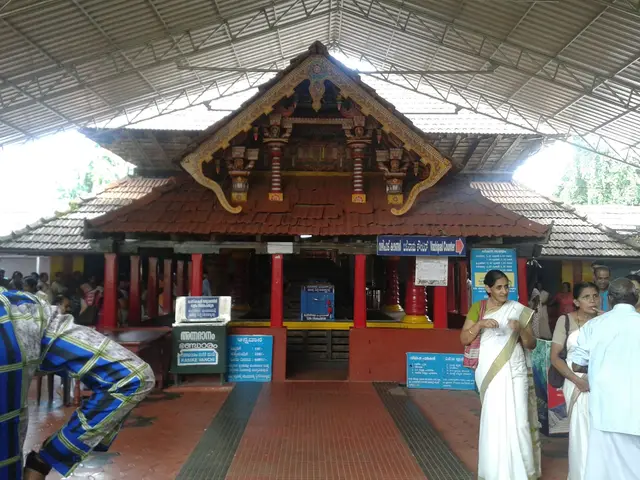
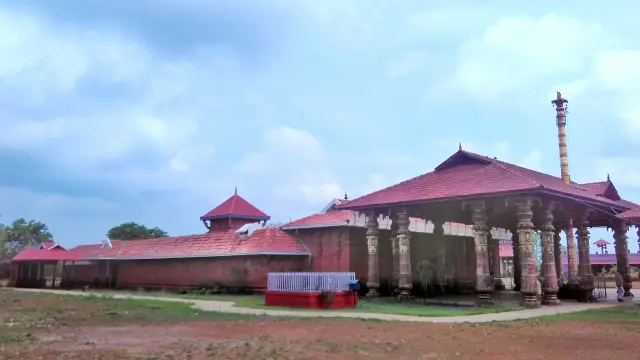
The presiding legend of Madayipara belongs to Madayi Kavu, the Thiruvarkadu Bhagavathy temple, and is told as sacred lore rather than history. According to the legend, a demon named Darika terrorised the region until the goddess Bhadrakali destroyed him in her fierce form. Having vanquished him, she is said to have asked Lord Shiva to enshrine her, and Shiva in turn is believed to have directed the sage Parashurama — the mythic creator of Kerala itself — to consecrate her shrine upon the Madayippara plateau.
A second strand of the temple legend holds that the Bhagavathy first resided with Shiva but, as a non-vegetarian deity who accepted fierce offerings, requested a separate shrine of her own — which is offered as the traditional explanation for why, within the temple, the Bhadrakali sanctum faces west while the Shiva shrine faces east. Devotees revere the goddess as Tiruvarkkad Achchi, and the shrine is spoken of as a last resort for those seeking release from sorcery and black magic. These accounts are devotional tradition, recounted here as legend.
More about Madayipara
History
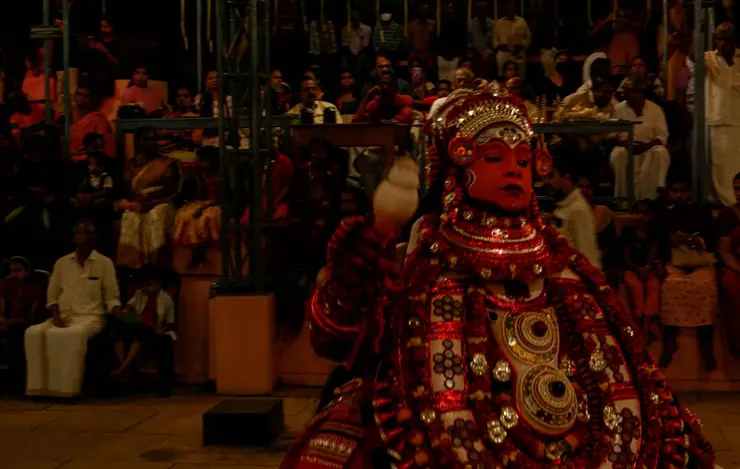
Madayi Kavu, the Thiruvarkadu Bhagavathy temple crowning the plateau, is one of the oldest and most venerated Bhadrakali shrines in Kerala, with a tradition reaching back well over a thousand years and often described as the mother temple of north Kerala's Bhadrakali shrines. It follows the tantric Koula (Kaula Shakti) tradition, was long the shrine of the Chirakkal branch of the Kolathiri royal family, and is today administered by the Malabar Devaswom Board. Its great annual festival is the Pooram, celebrated over roughly seven to ten days in the Malayalam month corresponding to March, alongside other observances through the year.
The plateau also carries the memory of the Vadukunda (Vadukunnu) Shiva temple, whose earlier structure is recorded as having been razed by the forces associated with Tipu Sultan and his father Hyder Ali during their late-eighteenth-century incursions into Malabar; it has since been rebuilt. This episode ties Madayipara into one of the most turbulent chapters of the region's history, when the Kolathunad country changed hands amid war.
On the plateau stands the Malik Ibn Dinar mosque, also called Madayi Palli, counted among the oldest mosques in India and traditionally dated to around 1124 CE and associated with the Arab preacher Malik Ibn Dinar, credited with introducing Islam to the Malabar coast. Its survival here, a short walk from an ancient Hindu grove, is a striking emblem of the coast's long, cosmopolitan trading history.
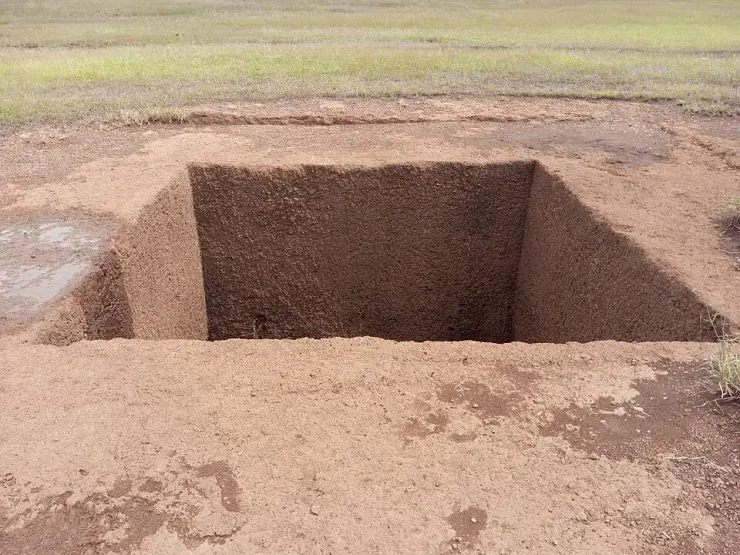
The most poignant relic is the Joothakkulam — the Jew's Pond — a rock-cut tank whose very name preserves the memory of a Jewish community that once lived and traded in the area; local tradition and heritage accounts connect it to a Jewish presence in this port hinterland in antiquity, long since vanished, leaving little behind but the pond and its name.
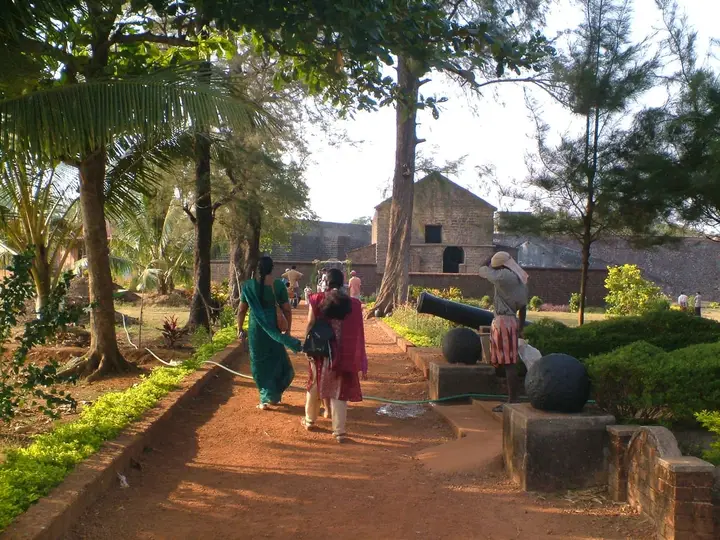
Guarding the south-eastern shoulder of the plateau are the ruins of the Madayikotta, also known as the Pazhi fort, traditionally attributed to a Vallabha king of the Kolathiri (Kolathunad) dynasty and later occupied during the Mysorean campaigns; the remains include watchtowers overlooking the surrounding country. A colonial-era British bungalow, said to date from the 1790s, on the eastern slope adds a final layer to a hill that has been fortified, worshipped upon and fought over for centuries.
Why visit
The monsoon wildflower spectacle — from around late May into the rains, the laterite tableland is carpeted in blue, violet and white blooms of Utricularia, Eriocaulon and Rhamphicarpa, a display few places in India can match.
Rare and endemic plant life, including insectivorous bladderworts and the sundew Drosera indica, plus species such as Eriocaulon madayiparense and Rotala malabarica that are found almost nowhere else on Earth.
Exceptional butterfly and bird watching — around 150 butterfly species, including the giant Atlas moth, and well over a hundred resident and migratory birds across the grassland and pond.
A rare multi-faith heritage in one landscape: the ancient Madayi Kavu Bhagavathy temple, the twelfth-century Malik Ibn Dinar mosque, the Jew's Pond marking a lost Jewish settlement, and the rebuilt Vadukunda Shiva temple.
The ruined Madayikotta (Pazhi) fort with its watchtowers, tied to the Kolathiri dynasty and the later Mysorean wars, for anyone drawn to history and views over the coast.
Sweeping open-sky walks with the Arabian Sea on the horizon, mirror-still ponds and some of the best sunset scenery in north Kerala — a plateau that rewards slow, unhurried exploration in every season.