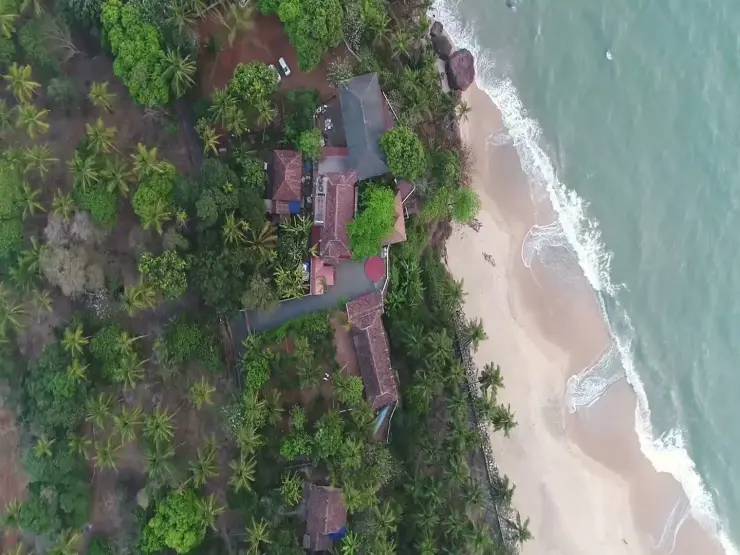
Vadukunnu Siva Temple

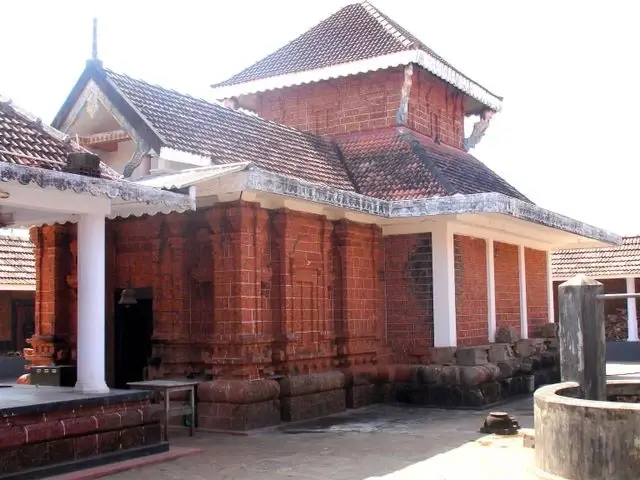
Vadukunnu Siva Temple on this route is Madai Sree Vadukunda Siva Temple at Madayipara, near Pazhayangadi in Kannur. Its red-tiled shrine, laterite enclosure and separate sacred pond belong to a low coastal plateau with a strongly seasonal landscape.

Vadukunnu Siva Temple, Madayipara
Practical guide

Plan Vadukunnu Siva Temple

Who's going?Tailor Vadukunnu Siva Temple to your trip
Before you go to Vadukunnu Siva Temple

Check entry arrangements. Ask temple staff about visitor entry, dress requirements and access to the inner shrine before you travel, especially if you are visiting as a non-Hindu.

  • The temple community’s archive describes an eight-day Dhanu Thiruvathira festival ending in a ritual bath at the pond; use the current temple programme for this year’s dates.
  • The pond’s ritual use is not permission for visitor bathing.
  • Madayikavu’s Pooram is a separate temple programme.

Checked 5 September 2026 against source 1source 2source 3. Check the institution’s current rules and visiting session before travelling.

Typetemple
AreaMadayipara
DistrictKannur
Best timeA dry morning or late afternoon is…
Time neededAllow about 60–90 minutes for the temple…
Places to visit2Listed businesses5

The visit has two scales: a compact working Shiva temple and an open plateau around it. Begin at the named temple approach, respect the worship boundary and leave time to understand the pond from its bank; a view across water is not an invitation to bathe.

The story

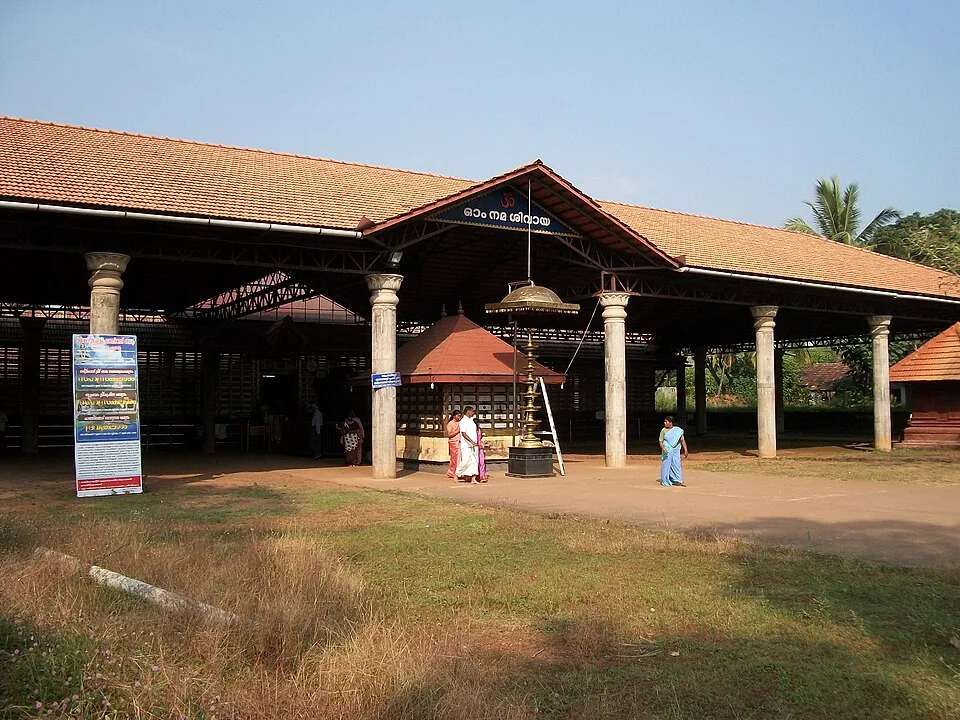
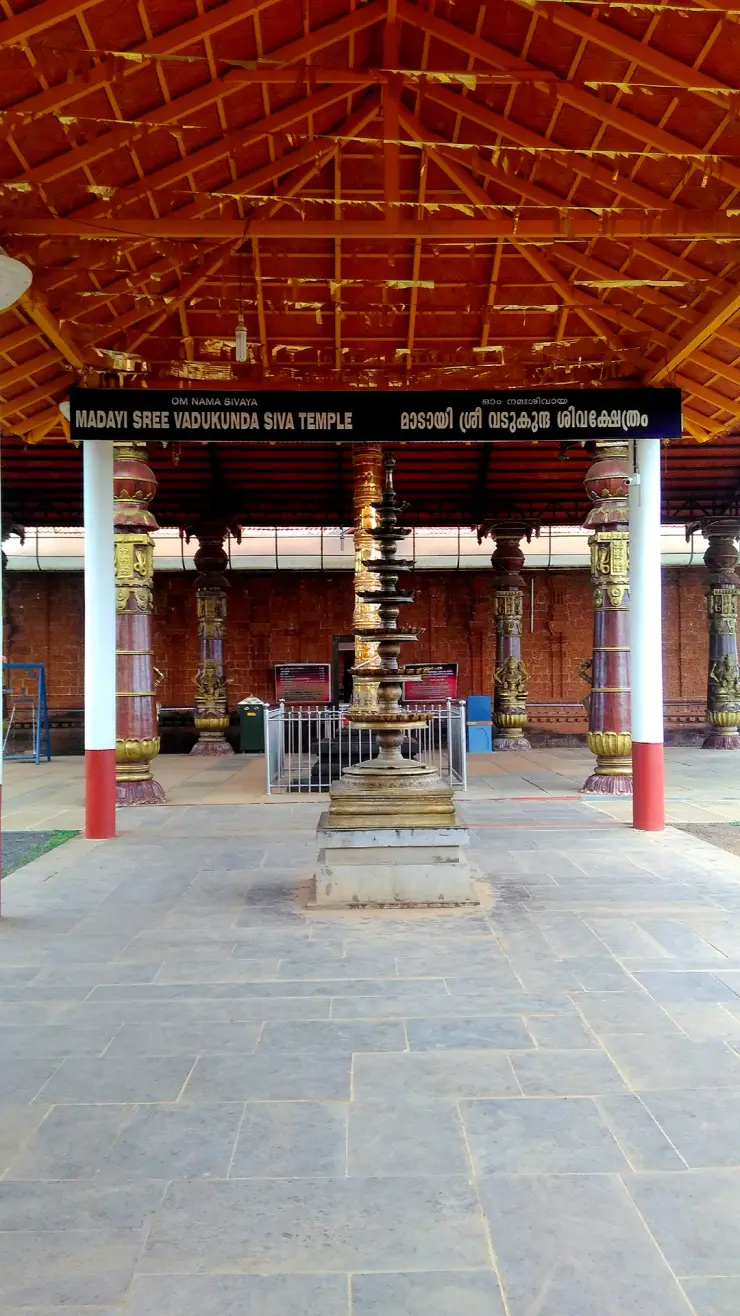
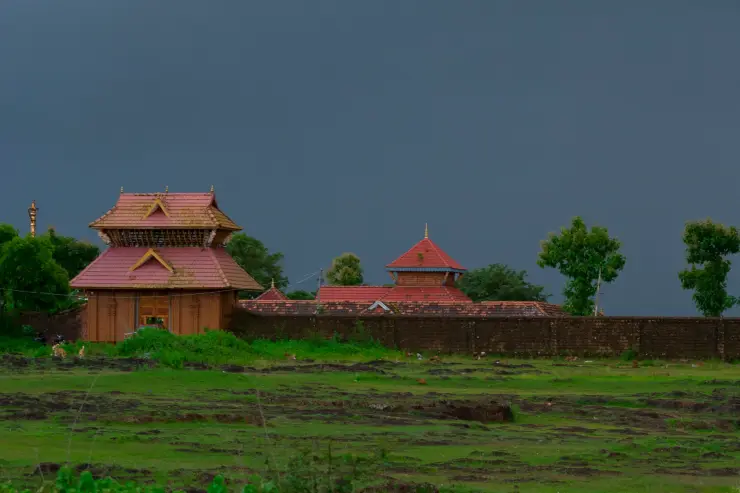
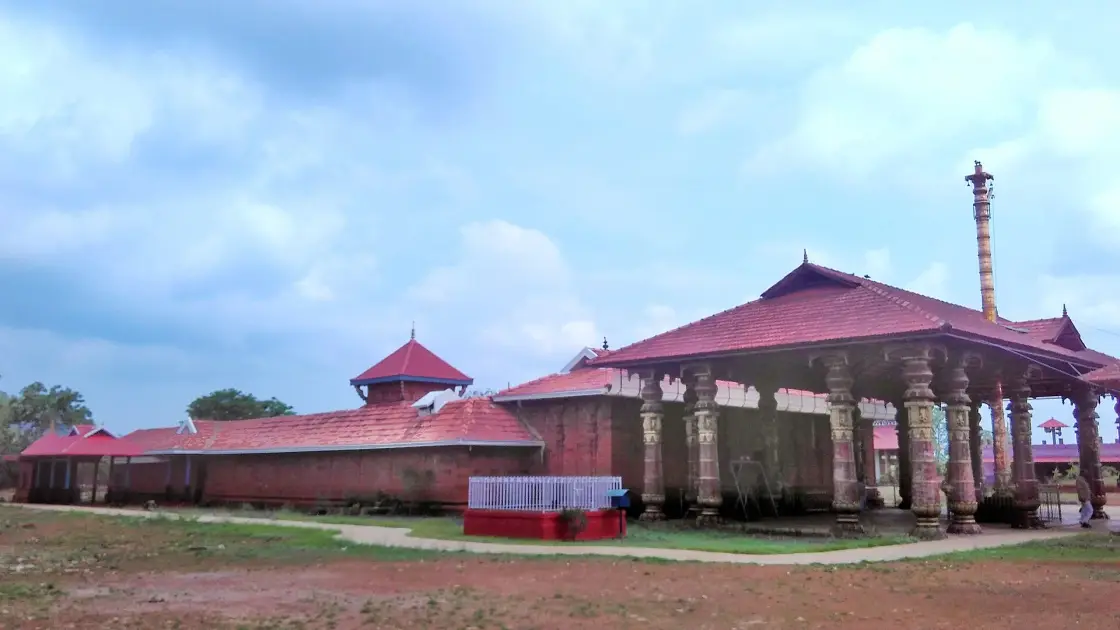
A dark laterite wall runs across the open ground, holding a cluster of red roofs within it. At the entrance, turned pillars support a broad tiled shelter; a tall lamp and flagstaff line up with the worship space beyond. Outside that enclosure, Madayipara opens again into low rock, seasonal grass and the separate Vadukunda pond.

The story of Vadukunnu Siva Temple

The name on the temple’s own entrance board is Madai Sree Vadukunda Siva Temple. This is the Shiva shrine on Madayipara in Kannur district, reached from Pazhayangadi. The spelling Vadukunnu survives in this guide’s route, but it should not lead a visitor to Vadakkunnathan in Thrissur. The names are similar enough for a careless search to cross districts; the temple board, plateau setting and local approach establish which place is intended.

The immediate landscape is low coastal laterite, not a Western Ghats mountain station. Madayipara rises above the settled country around Pazhayangadi, opening views beyond its edges while retaining broad stretches of relatively open ground on top. That combination explains the temple’s visual presence: red roofs and a dark wall stand out against a surface whose cover changes dramatically with the rains. The horizon is part of the experience, but the ground underfoot deserves as much attention.

The temple and its pond are separate features. The shrine is a roofed and enclosed worship space; the pond occupies a depression outside it. A map result for the water does not bring a vehicle to the temple entrance. For someone arriving to pray, the named temple approach is the correct base. For someone interested in the landscape, the water can be appreciated from a safe bank without entering the ritual enclosure.

The entrance photograph provides a useful orientation. A long signboard spans the porch, with English and Malayalam naming the shrine. Below it stand a multi-tiered lamp and, behind, the taller flagstaff. The carved columns are markedly different from the plain outer supports. Look at those relationships from the permitted approach: the objects organise a line towards the temple, so the space between them should be kept clear for worship rather than occupied as a photographic set.

The outer wall is more than a convenient foreground. It draws a boundary between the open plateau and the ordered space of the shrine. Red tile, laterite masonry and the smaller roofs within the enclosure form a compact group rather than a single towering urban gateway. Seeing that low profile is one reason to pause outside before entering. It also prevents the whole plateau from being misrepresented as temple premises open under one set of rules.

The community’s account identifies Shiva as the presiding deity and describes the lingam as swayambhu, or self-manifested. That is a statement of sacred tradition. The same account mentions Ganapathy and Ayyappa in the temple’s ritual setting. A visitor should not transfer the deities, legends or entry customs of another Kannur shrine simply because it stands nearby or shares a Kerala architectural vocabulary.

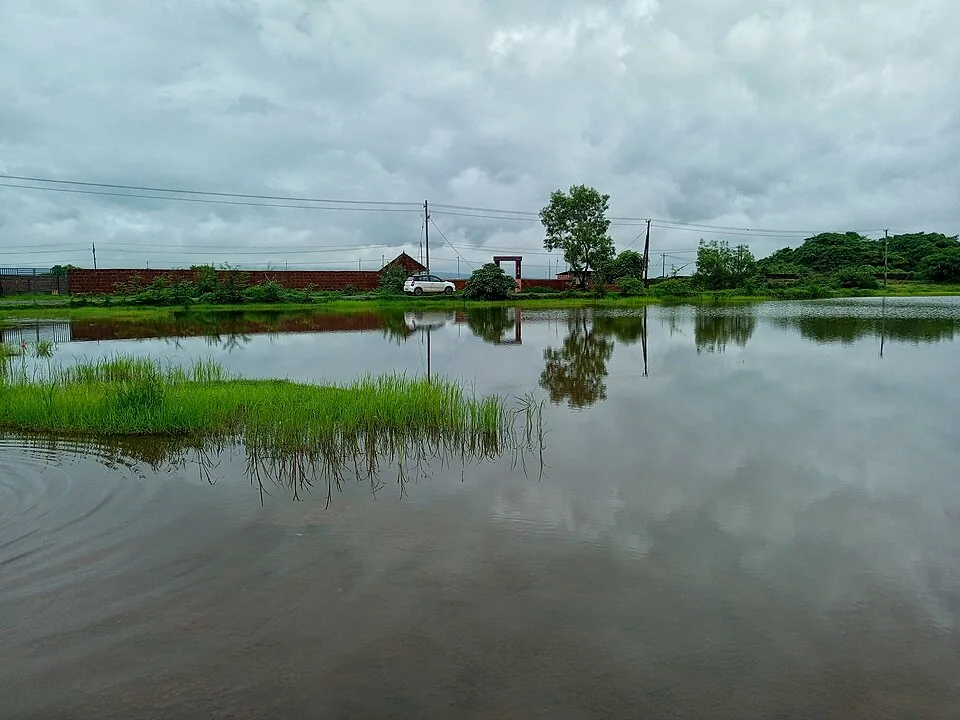
The pond has a specific place in the annual ritual account: the festival culminates in a holy bath associated with the deity. That connection gives the water a role beyond reflecting the sky. It does not turn the pond into a managed swimming area. A photograph showing someone in the water records an individual moment, not a general access policy, and an observer can understand the ritual geography without descending to the waterline.

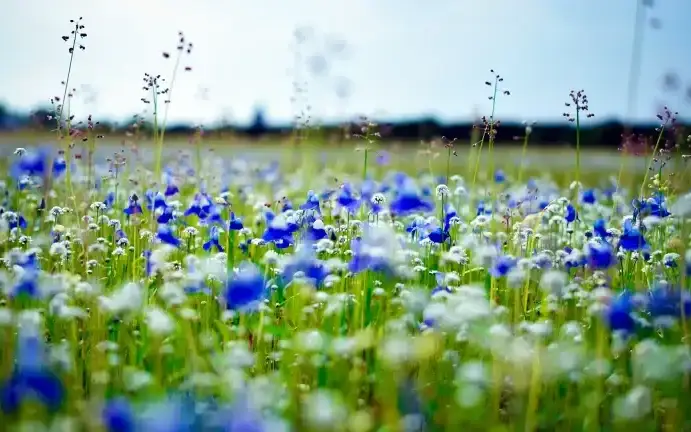
Madayipara’s wet season produces a close-grained landscape. Water sits in shallow depressions; green cover occupies thin soil around darker rock; small flowering plants can make a broad field look coloured from a distance. Those details are easily missed by someone walking straight towards a skyline photograph. The useful observation is how the ground changes over a few steps, not whether the entire plateau resembles the most colourful image on a tourism poster.

In the dry season, more of the laterite surface becomes visible and grass changes colour. The temple’s roofline can then seem more exposed against the sky. This seasonal contrast is part of the place, rather than evidence that the landscape has failed to deliver its “correct” appearance. A December photograph and a rain-season photograph may show strikingly different colours while both truthfully describe Madayipara.

The open ground also makes visitor pressure visible. A fresh vehicle track cuts across vegetation more sharply than it would on a paved urban approach, and walking around wet patches can widen a path into several parallel lines. Use the established road and foot access even when an apparent shortcut crosses open space. A small temple visit can be made without turning the surrounding plant community into an informal car park.

The plateau contains other religious and historic features, including Madayikavu. Their presence enriches a wider Madayipara outing but does not make them parts of Vadukunda’s shrine. The temple’s own archived festival page explicitly distinguishes Madayikavu’s Pooram from its own revived annual celebration. This matters for travellers choosing a date: a festival poster using Madayi in its address needs the institution’s full name checked.

The experience changes during a ceremony. The same forecourt used for a quiet weekday approach can become circulation space for participants, attendants and processional movement. Visitors should use the viewing position offered by the organisers and keep routes clear. A description of Thidambu Nrutham or Pallivetta in an older programme is a way of understanding the tradition, not a promise that a performance will occur on any casual visit.

For an architectural visit, the strongest sequence is simple: recognise the temple from its board, look at the porch and enclosure, then step back to see how the roofline sits on the plateau. For a devotional visit, the sequence is determined by the temple’s current practice. Neither requires a long hike, and neither should be sold as unrestricted access to the innermost worship space.

Pazhayangadi remains important even when the temple is the purpose of the trip. It is the transport settlement below the plateau, with a railway station and road connections. Arranging the descent from there makes a short visit more dependable than assuming a vehicle will be waiting at an isolated patch of open ground. The last-mile arrangement matters particularly if the plan ends after an evening ritual.

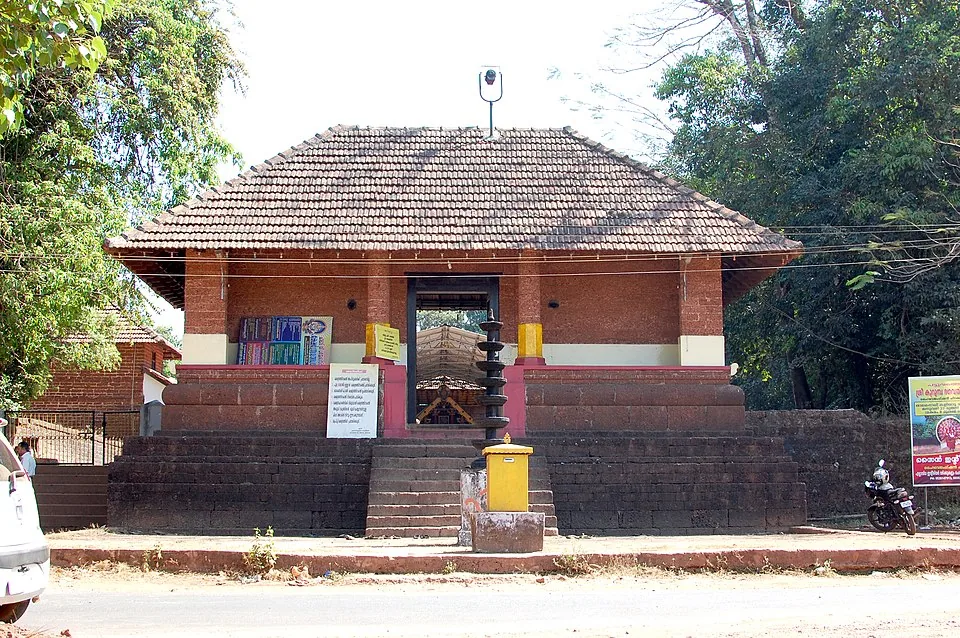
The named entrance gate is a distinct building from the pillared porch shown in many temple photographs. Kerala Tourism’s entrance frame shows carved double doors beneath two stages of red tiles, with a large tree to one side and the laterite enclosure continuing outward. A short metal railing stands in front of the doorway; the approach is earth, with puddles in the photograph. This is the gate identified by the map marker. The open pillared shelter and tall flagstaff belong to the next architectural view, rather than proving that a vehicle can drive directly to the shrine.

The difference between a gate and a porch is useful when explaining the visit to someone who needs assistance. Reaching the outside door answers only the first access question. The threshold, internal surface and route to the permitted worship area still matter. A photograph can reveal that sequence but cannot guarantee today’s arrangement at each transition. Name the gate when discussing arrival and the required interior destination when discussing assistance; otherwise two people can answer different access questions while both say that the temple is reachable.

The temple community’s archived ritual account describes worship at the main Shiva shrine and the subsidiary Ganapathy and Ayyappa shrines. It names Pradhosha Pooja, Ganapathi Homam, Mrithyumjaya Homam and Niramala among the offerings. These names describe the devotional life recorded by the community, rather than a current visitor menu. An offering requested by a worshipper and a general architectural visit are different purposes, so make any ritual arrangement through the temple itself instead of treating an old web list as a booking confirmation.

The broader plateau contains water features with very different forms. Kerala Tourism maps Vadukunda Temple Pond separately from a well and a further rock pond, and its photographs show the distinction clearly: a broad open water surface, a deep vegetation-covered opening, and water held in a separate rocky depression. None is a substitute label for another. This matters when following directions to a festival location, and when judging the edge from which to look. A deep well may be partly hidden by vegetation even while the surrounding grass appears open and easy to cross.

Madayi junction gives the landscape an everyday lower-town counterpart. Shops and traffic gather around a central island, while the temple visit takes a local approach onto the plateau. The railway and river views from above make that relationship visible at a larger scale. Madayipara is therefore not an isolated mountain destination: its exposed laterite surface stands close to settled coastal country. Using Pazhayangadi as the transport base and Vadukunda’s named gate as the final destination preserves both parts of that geography.

Legend & myth

The temple’s own tradition connects its foundation with the Kolathiri rulers and regards its Shiva lingam as self-manifested. These are sacred accounts preserved by the worshipping community. They should be understood in that register, without borrowing the Parashurama story or other legends associated with a similarly named Shiva temple elsewhere.

The pond is remembered by the community as water that endures through the dry season and is linked with the deity’s festival bath. That devotional and local memory explains its importance. It is not a scientific guarantee of a permanent water level, a statement about water quality or permission for recreational bathing.
Read the full history of Vadukunnu Siva Temple 454 more words

History

The temple community’s renovation account records the formation of a local committee in 1979 and a reconstruction effort supported by devotees. Its festival account gives 8 May 1992 for the post-renovation consecration, after an eleven-day kalasam under Kattumadom Thantri. These are dated milestones in the community’s own record. They are more useful for understanding the present shrine than assigning an unsupported age to every tile and wall.

The older story of damage is presented less firmly by that same source. It describes destruction between 1780 and 1800 and attributes it to forces associated with Tipu Sultan, using the language of belief. That attribution should remain an attributed local historical account, not a proven archaeological conclusion. The photographed rebuilt shrine cannot by itself identify when or by whom earlier structures were damaged.

A Kerala High Court judgment dated 21 May 2025 identifies Vadukunda as one of the temples under Chirakkal Kovilakam Devaswoms. The record distinguishes trustee authority, financial oversight and the renovation committee’s day-to-day role. It is a dated administrative record rather than a visitor timetable; its value here is in establishing the temple’s institutional setting without treating an old community website’s office-bearer list as current.

The 2025 judgment describes an executive officer’s appointment in 2018 for proper accounting of income and expenditure while daily management remained with the renovation committee. That limited financial role should not be expanded into a claim that every part of temple administration had been transferred. For a visitor seeking a ceremony or a permission, the relevant contact is the temple’s present on-site administration.

The reconstruction history helps explain why devotion, local fundraising and the appearance of the present building belong in the same account. A renewed roof and an active ritual calendar are not reasons to dismiss the shrine’s older sacred associations. Equally, a sacred association does not make the visible structure unchanged from antiquity. Both continuity of worship and material rebuilding can be recognised without forcing them into one date.

Why visit

To understand a Shiva temple through its own setting: a laterite plateau, a defined enclosure and a separate sacred pond, rather than a borrowed description of a large Kerala temple complex.

To see how a rebuilt shrine carries local memory. The 1979 renovation initiative and 1992 consecration give the present building a specific community history alongside its older sacred tradition.

To experience Madayipara at ground level. The shift between exposed rock, thin soil, seasonal vegetation and water is visible near the temple without claiming a forest trek or chasing a guaranteed flower spectacle.

To add a focused cultural stop to a Pazhayangadi visit. The temple and the railway town explain different parts of the same coastal landscape, while Madayikavu can be considered separately if time and access permit.

What to expect

Highlights

  • The name board identifies Madai Sree Vadukunda Siva Temple: a precise landmark when searches return similarly spelled Shiva temples elsewhere in Kerala.
  • A tiled entrance, carved porch pillars, lamp and flagstaff stand against exposed laterite, with the inner shrine enclosed separately.
  • The temple pond and the plateau’s changing plant cover connect ritual geography with Madayipara’s wet and dry seasons.
Getting there

How to visit

  • Reach Pazhayangadi first, then take the local road up to Madayipara. Tell the driver Vadukunda Shiva Temple rather than Madayikavu, which is another shrine on the plateau.
  • Use the temple approach as the arrival base. Ask at the entrance about the day’s worship and the permitted visitor boundary before proceeding into the enclosed compound.
  • If adding the pond, return by the established access rather than following wheel tracks across vegetation. Finish the open-ground portion while the route and pond edge remain clearly visible.

Distance by road

  • Kozhikode92 km
  • Mangaluru143 km
  • Mysuru179 km
  • Coimbatore267 km
  • Kochi270 km

Road km to Kannur; ghat roads and traffic vary — allow extra.

Timing

Best time

A dry morning or late afternoon is easier for the exposed plateau. The late-monsoon landscape can be green and flowering, while the dry season reveals more laterite; neither is a guarantee of a particular bloom or ritual.

Weather in Vadukunnu Siva TempleSeasonal guide

Live forecast loads in your browser.

Today at Vadukunnu Siva Temple
Sunrise6:18 am
Sunset6:17 pm
Golden hour best light5:17 pm–6:17 pm
Blue hour after sunset6:17 pm–6:42 pm
Sun sets toward compass bearingW · 265°
Moon tonight🌘 Waning crescent · 30%

Sun and moon are calculated for this location and shown in IST. Photography windows are the hour around sunrise and sunset; the sunset bearing is degrees clockwise from true north. Moon phase is accurate to about half a day.

Visitor notes

  • Vadukunda, Vadukunnu and Madai Sree Vadukunda refer to this local temple in the existing guide route. Vadakkunnathan in Thrissur is a different place with a different history.
  • A shrine visit and a botanical outing share a landscape but require different behaviour. Remain outside restricted ritual areas and stay on existing paths through the plateau vegetation.
  • The main road and temple approach have different surfaces. A vehicle that reaches the plateau road has not established a smooth, step-free route through the temple entrance.
Safety

Good to know

  • Keep back from the pond edge, especially where vegetation obscures a drop. A ritual bath described in a festival account does not establish public swimming access.
  • During lightning or heavy rain, leave the exposed plateau and use a proper building or vehicle for shelter; the isolated trees and flagstaff are not safe waiting places.
Stay · eat · do · rent · see · shop

Stays, food & things to do near Vadukunnu Siva Temple

Verified hotels, homestays, restaurants, experiences, sights, shops and rentals around Vadukunnu Siva Temple — commission-free, with direct contact. Filter by what you need.

KK Residency Payyanur — 4-Star business hotel in MadayiparaPhoto: Kerala Tourism
Top pick
4-Star business hotel · Madayipara
KK Residency Payyanur
9.8 km · ~16 min by cab

Kerala Tourism-classified 4-star business-class hotel at the Old Bus Stand in the heart of Payyanur, northern Kannur district. It offers luxury air-conditioned rooms and suites, a multi-cuisine restaurant and banquet facilities as the town’s leading upmarket hotel.

Directions Commission-freeView details
TravelKannur Homestay Madayipara — Kerala Tourism-listed homestay in MadayiparaPhoto: Kerala Tourism
Top pick
Kerala Tourism-listed homestay · Madayipara
TravelKannur Homestay Madayipara
310 m · 4 min walk

Kerala Tourism-listed Vengara homestay near Vadukunda Shiva Temple for Madayipara planning. TravelKannur, Kerala Tourism-listed homestay.

Directions Commission-freeView details
Mailanji Homestay Madayipara — Kerala Tourism-listed homestay in MadayiparaPhoto: Kerala Tourism
Top pick
Kerala Tourism-listed homestay · Madayipara
Mailanji Homestay Madayipara
3.7 km · ~9 min by auto

Kerala Tourism-listed homestay near Cheruthazham for Madayipara and Payyanur-side routes. Mailanji, Kerala Tourism-listed homestay.

Directions Commission-freeView details
Thanima Homestay Madayipara — Kerala Tourism-listed homestay in MadayiparaPhoto: Kerala Tourism
Top pick
Kerala Tourism-listed homestay · Madayipara
Thanima Homestay Madayipara
2.1 km · 27 min walk

Kerala Tourism-listed homestay near Madayipara for travellers needing a close village-side stay. Thanima, Kerala Tourism-listed homestay.

Directions Commission-freeView details
Madayipara Kerala Tourism — Laterite plateau in MadayiparaPhoto: Kerala Tourism
Top pick
Laterite plateau · Madayipara
Madayipara Kerala Tourism
440 m · 6 min walk

Madayipara is a Kerala Tourism-listed laterite plateau near Pazhayangadi with biodiversity, seasonal flowers, historic fort remains, temples and walking-route context. Public landscape; check current access · Pazhayangadi, Laterite plateau, Kannur biodiversity.

Directions Commission-freeView details

Book with the place itself. India’s cyber-crime coordination centre warned in April 2025 that convincing copies of hotel and pilgrimage booking sites are being pushed through sponsored search and social ads, taking payment for rooms the property never hears about. Every listing here links to the business’s own contact details and its own Google or Bing profile — we take no commission and sit in nobody’s payment path. If a booking page reached you through an ad, check the address bar against the property’s own site before you pay. Fraud can be reported on cybercrime.gov.in or on 1930.

Ranked

More ways to explore Madayipara

Find food, accommodation and activities across Madayipara. Browse the guides for places to eat, stay and explore along your route.

Across the whole of Madayipara

Ranked guides

Top experiences around Vadukunnu Siva Temple

4 separate places to consider after Vadukunnu Siva Temple. Open each guide before deciding: their access, hours and return arrangements are independent.

viewpointMadayipara

400 m · 5 min walk

A vast laterite plateau near Pazhayangadi that bursts into wildflower bloom after the monsoon, with the Madayi Kavu, an old mosque and a temple pond — a botanist’s and birder’s hill.

viewpointEzhimala

4.7 km · ~12 min by auto

A dramatic 286 m headland near Payyannur, now home to the Indian Naval Academy — the hill itself is off-limits, but the beach and views below are open; rich in legend and rare herbs.

templeRajarajeswara Temple, Taliparamba

11.3 km · ~19 min by cab

An ancient Shiva temple at Taliparamba, one of the 108 Shiva temples and the Dwadasha Shivalayams of old Kerala; men remove their shirt to enter and photography is restricted.

templeKalarivathukkal Temple

16.1 km · ~27 min by cab

A Bhagavathy temple near Valapattanam regarded as the mother shrine of Kalaripayattu — Kerala’s martial art — where Theyyam is performed; the goddess is guardian of the kalari.

Roampedia is commission-free — own or know a stay, eatery, guide or shop near Vadukunnu Siva Temple? List it and it appears here once verified.

Add a nearby business
Before you go

Vadukunnu Siva Temple — at a glance

TimingsA dependable current daily opening schedule is not published by the sources checked. The archived community timetable is too old to use as present-day hours; confirm the intended worship with the temple before arranging an early or late visit
Best timeChoose clear daylight for the uneven open ground and pond bank. Rain brings green cover but can make the approach slippery; dry-season grass and exposed laterite offer a different view of the same plateau.

Entry: No current visitor-admission tariff is published in the temple community archive, Kerala Tourism’s Madayipara pages or the administrative sources checked. Offerings and booked rituals are separate; no free-entry price is assumed

Festivals: The temple community’s archived account describes an eight-day Maholsav beginning with Dhanu Thiruvathira, plus separate Shivaratri and consecration-day observances. It records Thidambu Nrutham and Pallivetta in the festival tradition. Dates, performances and procession arrangements require the current temple programme; Madayikavu Pooram is separate.

Photography: Ask before photographing inside the temple boundary or during rituals. From permitted exterior positions, keep the lamp–flagstaff axis clear and avoid photographing worshippers at close range. Pond and plateau photographs should be taken from firm existing access, without climbing walls or entering the water.

Parking: Use the arrival space indicated by the temple staff and keep the approach passable. Do not park on the pond margin or create a new track across the plateau’s grass and low plants. The presence of wheel marks is not evidence of a designated visitor car park.

Getting here

How to reach Vadukunnu Siva Temple

  • ✈︎ By air Kannur International Airport is the regional airport for this visit. Continue by road towards Pazhayangadi and Madayipara. Kerala Tourism’s airport-distance figure describes the wider plateau destination; use the actual temple approach when arranging a transfer.
  • 🚆︎ By train Kerala Tourism identifies Pazhayangadi as the nearest station for Madayipara, about 2 km from the plateau, with Kannur as the larger rail alternative. That broad plateau distance is not an exact walk from a platform to the temple. Check the train’s stopping pattern and use a local vehicle for the climb if needed.
  • 🚗︎ By road From Pazhayangadi, use the local road to Madayipara and the approach to Madai Sree Vadukunda Siva Temple. The named gate has an earth approach. The map identifies this visitor entrance, not a direction to drive into the ritual enclosure.
  • 🚌︎ By bus Travel to Pazhayangadi, then arrange an auto or taxi for the plateau and the return. A bus passing through Madayi or along the plateau road does not guarantee a stop at this temple entrance. State the full shrine name so that the driver does not substitute Madayikavu.
Getting around

Getting around Vadukunnu Siva Temple

Use one agreed vehicle point at the Vadukunda entrance and return to it after the temple and pond. The open Madayipara plateau has informal-looking tracks and seasonal wet hollows, so a visible line across the grass should not be assumed to be a visitor route.

Getting back

Arrange the vehicle back to Pazhayangadi when booking the climb to Madayipara. An evening ritual can finish after the daylight landscape visit; agree the collection gate and waiting arrangement before entering the temple.

Do

Things to do

  • Identify the temple from its bilingual entrance board and compare the porch, lamp, flagstaff and enclosure from the permitted approach.
  • Look back at the low red roofline against Madayipara’s open ground to understand why this shrine has a different setting from an urban temple.
  • Observe the pond from a safe bank and notice how it sits separately from the temple compound.
  • Examine the seasonal contrast between dark laterite, thin soil and low plant cover from an existing path; leave flowers and rock surfaces undisturbed.
Included

What’s included

  • The named entrance, outer temple architecture and the worship areas currently open to visitors.
  • A view of the separate sacred pond from firm existing access, without entering the water or crossing a ritual boundary.
  • The temple’s relationship with Madayipara’s laterite ground and seasonal vegetation, read from established paths.
Plan

Good to know

  • Say Madai Sree Vadukunda Siva Temple when arranging transport; Madayikavu on the same plateau and Vadakkunnathan in Thrissur are different shrines.
  • Ask at the entrance before crossing into the inner compound or photographing ritual space; the permitted boundary can change during worship.
  • Complete the pond and plateau portion in daylight, then return by the known entrance rather than following an apparent shortcut through vegetation.
Facilities

On site

  • The temple is the reporting place for worship and current entry guidance. Offerings and ritual arrangements should be made with its present administration.
  • Pazhayangadi provides the practical town base for meals, transport and other services before or after the plateau visit.
  • The sources checked do not establish a dedicated visitor centre, accessible toilet or staffed bathing facility at the pond. Plan around the temple and town rather than assuming tourist amenities around the water.
Stay safe

Safety

  • Avoid the pond lip, concealed hollows and slick laterite when rain has darkened the surface. Children need direct supervision beside open water.
  • Leave the exposed plateau during thunderstorms; do not wait beneath the flagstaff or an isolated tree.
  • During a festival, stay behind the boundaries set for ritual movement and never cross a procession route to get a closer photograph.
Getting around Vadukunnu Siva Temple
From the entrance
Kerala Tourism’s named entrance-gate photograph shows an earth approach to carved doors beneath a tiled roof. A short railing stands before the opening. This entrance marker is separate from the pond and the eastern pillared porch.
Step-free access
Confirm the gate threshold, internal surfaces and permitted visitor route with the temple for the individual visitor. The entrance photograph does not establish a continuous step-free route to the shrine.
  • Rain leaves puddles and uneven wet ground outside the gate.
  • Keep away from the pond edge and from unmapped openings in the laterite plateau.

Checked 5 September 2026 against source 1source 2. Conditions change and surfaces vary with weather — if step-free access is essential, confirm with the site before you travel.

If you need help at Vadukunnu Siva Temple
112All emergencies (police · fire · medical)The single number to call in any emergency (ERSS).

Emergency numbers are verified against official government and state tourism sources. 112 works anywhere in India.

Eat nearby

What to eat in Madayipara

Pazhayangadi is the dependable meal base for a Vadukunda visit. The temple approach and sacred-pond landscape should not be treated as a picnic ground, and no permanent visitor food service at the entrance has been verified.

Explore food in Madayipara →
01

Eat before the climb

Choose a Pazhayangadi restaurant or tea shop before taking an auto to Madayipara when the visit overlaps a normal meal time.

02

At the temple

Accept prasadam only as it is offered and follow local practice; it is part of worship rather than a substitute for a planned meal.

03

After the plateau

Return to Pazhayangadi for food and the onward rail or road connection instead of relying on a stall being open near the entrance.

Nearby

What’s near Vadukunnu Siva Temple

viewpointMadayipara

A vast laterite plateau near Pazhayangadi that bursts into wildflower bloom after the monsoon, with the Madayi Kavu, an old mosque and a temple pond — a botanist’s and birder’s hill.

400 m · 5 min walk · straight line
viewpointEzhimala

A dramatic 286 m headland near Payyannur, now home to the Indian Naval Academy — the hill itself is off-limits, but the beach and views below are open; rich in legend and rare herbs.

4.7 km · ~12 min by auto · straight line
templeRajarajeswara Temple, Taliparamba

An ancient Shiva temple at Taliparamba, one of the 108 Shiva temples and the Dwadasha Shivalayams of old Kerala; men remove their shirt to enter and photography is restricted.

11.3 km · ~19 min by cab · straight line
templeKalarivathukkal Temple

A Bhagavathy temple near Valapattanam regarded as the mother shrine of Kalaripayattu — Kerala’s martial art — where Theyyam is performed; the goddess is guardian of the kalari.

16.1 km · ~27 min by cab · straight line
templeParassinikadavu Muthappan Temple

On the Valapattanam river, the temple of Muthappan — where the Muthappan Theyyam is performed morning and evening on nearly every day of the year, and where entry is open to all castes and religions; a snake park is nearby. The exception is the six weeks from the first of Thulam to the fifteenth of Vrischikam, when it stops, and the ritual year begins again with Puthari Thiruvappana around the first of December.

17.1 km · ~29 min by cab · straight line
heritageTheyyam performances

The ritual season of north Malabar, in which a man of the Vannan or Malayan community is dressed, painted and crowned until the shrine treats him as the deity itself. It runs from the tenth of Thulam, about mid-October, to the middle of Edavam at the end of May, at kavus and household shrines rather than on any stage, and the peak is January to April. Outside the season the kavus are quiet — the exception is Parassinikkadavu, north of the city, which performs Muthappan on a fixed daily schedule and is the anchor this page is pinned to.

17.1 km · ~29 min by cab · straight line
beachPayyambalam Beach

Kannur city’s main beach, with a landscaped garden, the mother-and-child sculpture and long sunset walkways.

20.8 km · ~35 min by cab · straight line
beachBaby Beach

A small rocky beach in the Kannur cantonment, an extension of Payyambalam and within a few minutes of St Angelo’s Fort and the Kannur lighthouse. Not a swimming beach — the draw is the rocks, the quiet and the lighthouse beam after dark.

22.4 km · ~37 min by cab · straight line
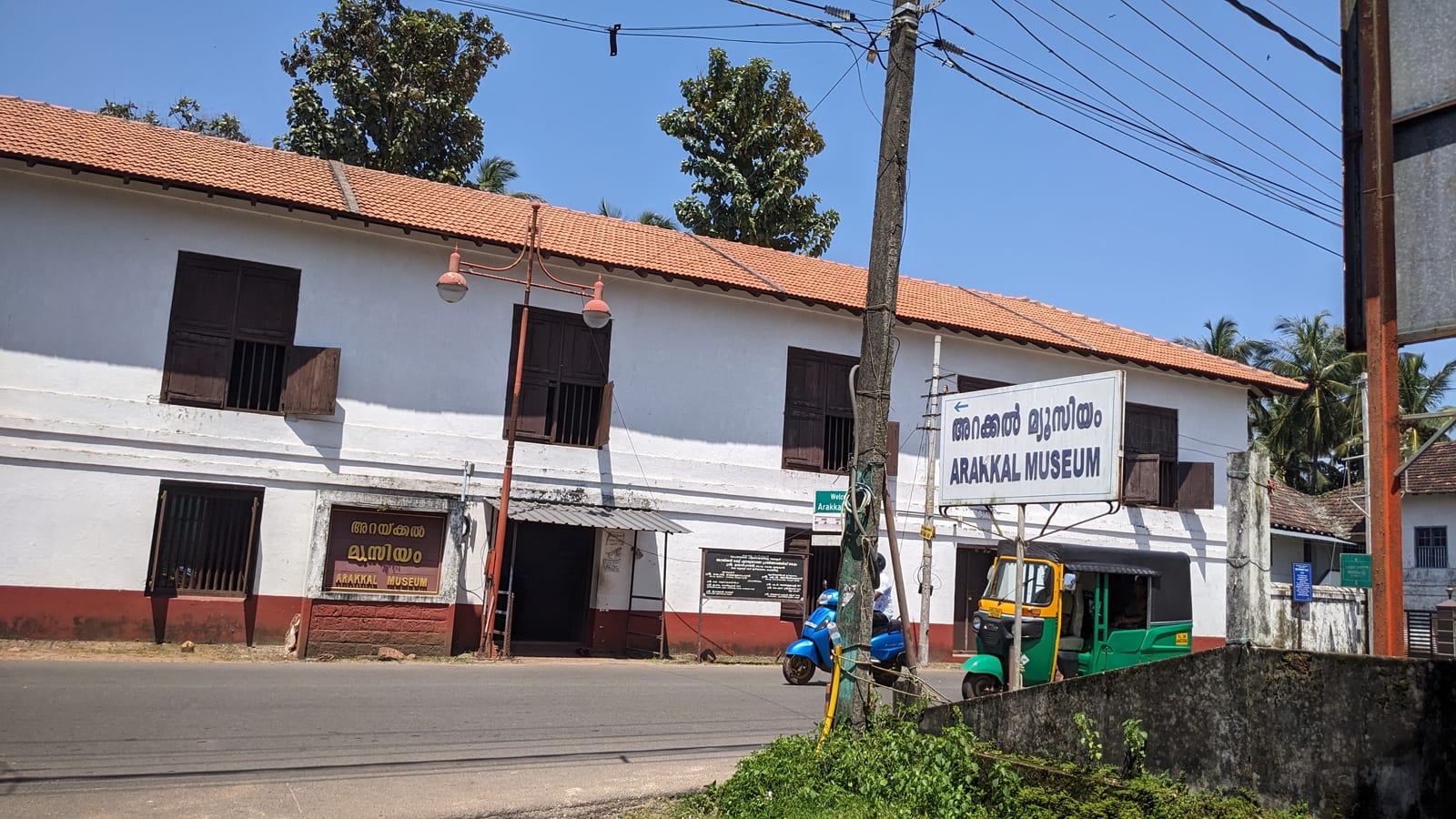
museumArakkal Museum

The Arakkal Kettu (palace museum) of the Arakkal Ali Rajas — Kerala’s only Muslim royal house, matrilineal so ruled at times by a Beevi (queen).

23.3 km · ~39 min by cab · straight line
heritageSt. Angelo Fort

Sea-facing laterite fort built by the Portuguese in 1505, later held by the Dutch, the Arakkal royal house and the British — Kannur city’s great coastal landmark overlooking Mappila Bay.

23.5 km · ~39 min by cab · straight line
beachAdikadalayi Beach

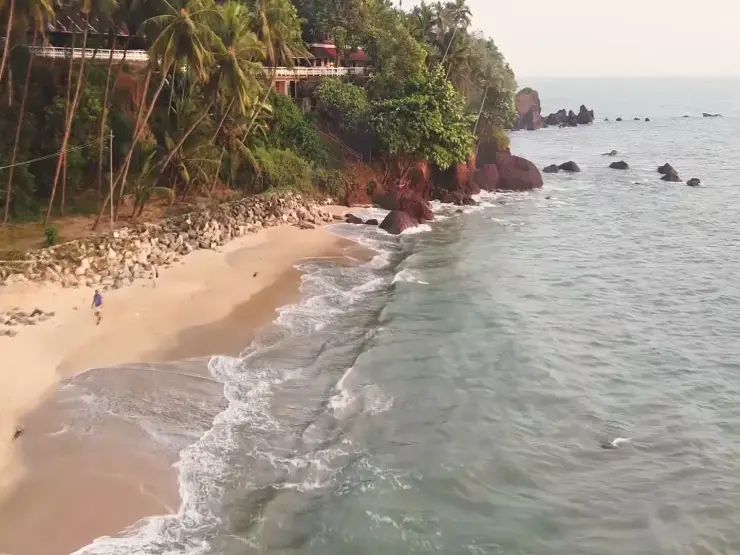
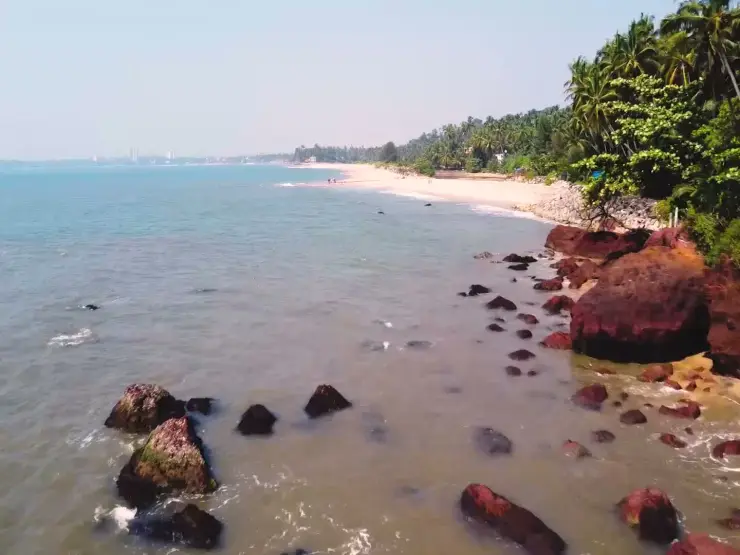
Adikadalayi Beach, also called Kadalayi Beach in Kerala’s coastal tourism study, is a Kannur shore with sandy pockets, exposed red coastal rock and palms above the water. It belongs to the Adikadalayi locality, not the separately named Thottada, Kizhunna or Ezhara beaches farther along the coast. Use the mapped public steps from Tippu Sulthan Beach Road as the arrival reference. Nearby cliff-side homestays have their own entrances and facilities, and should not be used as assumed public access.

26.0 km · ~43 min by cab · straight line
beachThottada Beach

A quiet, unspoilt cove-and-stream beach south of Kannur city, known for its homestays and calm, uncrowded sands.

27.4 km · ~46 min by cab · straight line

All 2 places to visit in Madayipara →

On the map

Where Vadukunnu Siva Temple is

Good to know

Vadukunnu Siva Temple — frequently asked

Is Vadukunnu the same as Vadakkunnathan Temple?

No. This route refers to Madai Sree Vadukunda Siva Temple on Madayipara in Kannur, near Pazhayangadi. Vadakkunnathan is in Thrissur. Use the full Madai Sree Vadukunda name and the Kannur location when arranging transport or checking a festival notice.

Is Vadukunda the same temple as Madayikavu?

No. They are distinct shrines on the Madayipara landscape. Vadukunda is the Shiva temple described here. A Madayikavu Pooram programme should not be read as the annual programme of Vadukunda merely because both use Madayi in their address.

Does the map pin mark the pond?

The arrival marker is the officially mapped entrance gate, not the water feature. The pond is a separate part of the visit. Follow the actual access on the ground rather than cutting across vegetation towards a water-centre pin.

Can visitors swim in Vadukunda pond?

Do not plan recreational swimming here. The pond has a sacred role, and its banks and submerged edges are not a visitor swimming facility. The festival account’s ritual bath describes a particular ceremony; it does not establish unrestricted bathing for tourists.

When does Madayipara have flowers near the temple?

The rain-season and later-monsoon vegetation can be especially varied, but flowering depends on rainfall, species and the particular patch of ground. A photograph is not a bloom forecast. Observe from established paths and avoid trampling small plants for a closer frame.

Do I need a trek to reach the temple?

This is a road approach from Pazhayangadi followed by the temple’s own entry, not a booked forest trek. Ground surfaces and thresholds still matter. A longer walk across the plateau is optional and should follow existing access rather than an assumed route through every open patch.

Can I combine the temple with a train journey?

Pazhayangadi is the useful nearby station for the Madayipara approach. Check that the chosen train stops there, then arrange an auto or taxi up to the temple. Kannur offers a larger rail hub if the service you need does not call at Pazhayangadi.

Is the temple suitable for a quiet visit on a festival day?

A festival is a different experience, with ritual movement and a changing crowd pattern. If the purpose is to look at the architecture or pond, an ordinary daylight visit is simpler. If attending a ceremony, follow that year’s named temple programme and the organisers’ viewing arrangements.

How do I reach Vadukunnu Siva Temple?

Ask for Madai Sree Vadukunda Shiva Temple on Madayipara near Pazhayangadi. Use the named entrance-gate marker, which is separate from the pond and from the Madayikavu shrine.

How much time do I need for Vadukunnu Siva Temple?

A temple visit and a wider plateau walk are different plans. Allow extra time for the pond and landscape only after confirming the day’s worship access and weather.

What should I know before visiting Vadukunnu Siva Temple?

Treat the enclosure as a living shrine and the pond as ritual water. Use the entrance staff’s directions for permitted areas; an open plateau does not imply unrestricted shrine access.

When is the best time to visit Vadukunnu Siva Temple?

A dry morning or late afternoon is easier for the exposed plateau. The late-monsoon landscape can be green and flowering, while the dry season reveals more laterite; neither is a guarantee of a particular bloom or ritual.

What are the entry fee and timings at Vadukunnu Siva Temple?

Entry: No current visitor-admission tariff is published in the temple community archive, Kerala Tourism’s Madayipara pages or the administrative sources checked. Offerings and booked rituals are separate; no free-entry price is assumed. Timings: A dependable current daily opening schedule is not published by the sources checked. The archived community timetable is too old to use as present-day hours; confirm the intended worship with the temple before arranging an early or late visit.

What else is near Vadukunnu Siva Temple?

Nearby you can pair Madayipara (400 m), Ezhimala (4.7 km), Rajarajeswara Temple, Taliparamba (11.3 km), Kalarivathukkal Temple (16.1 km).