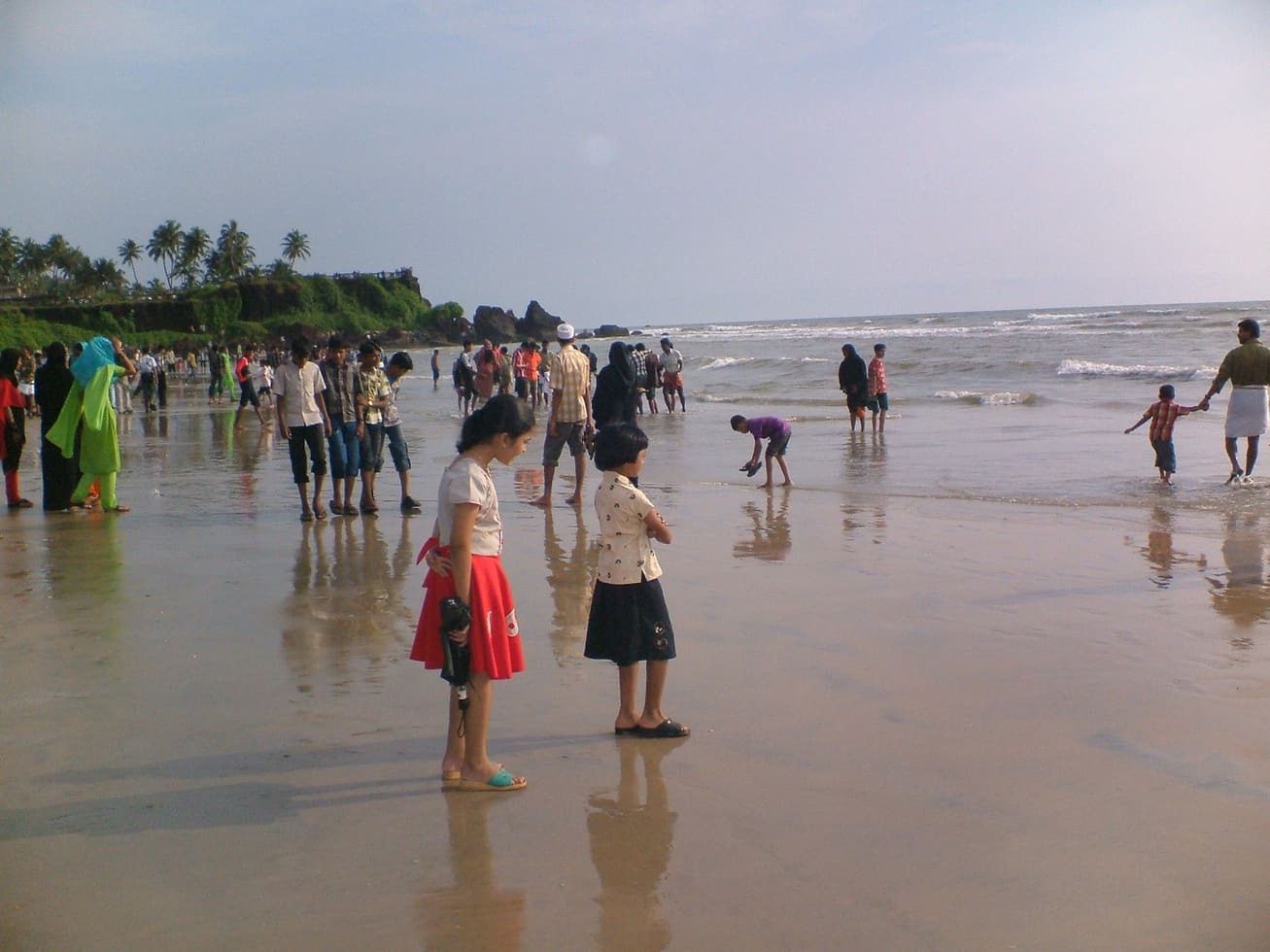
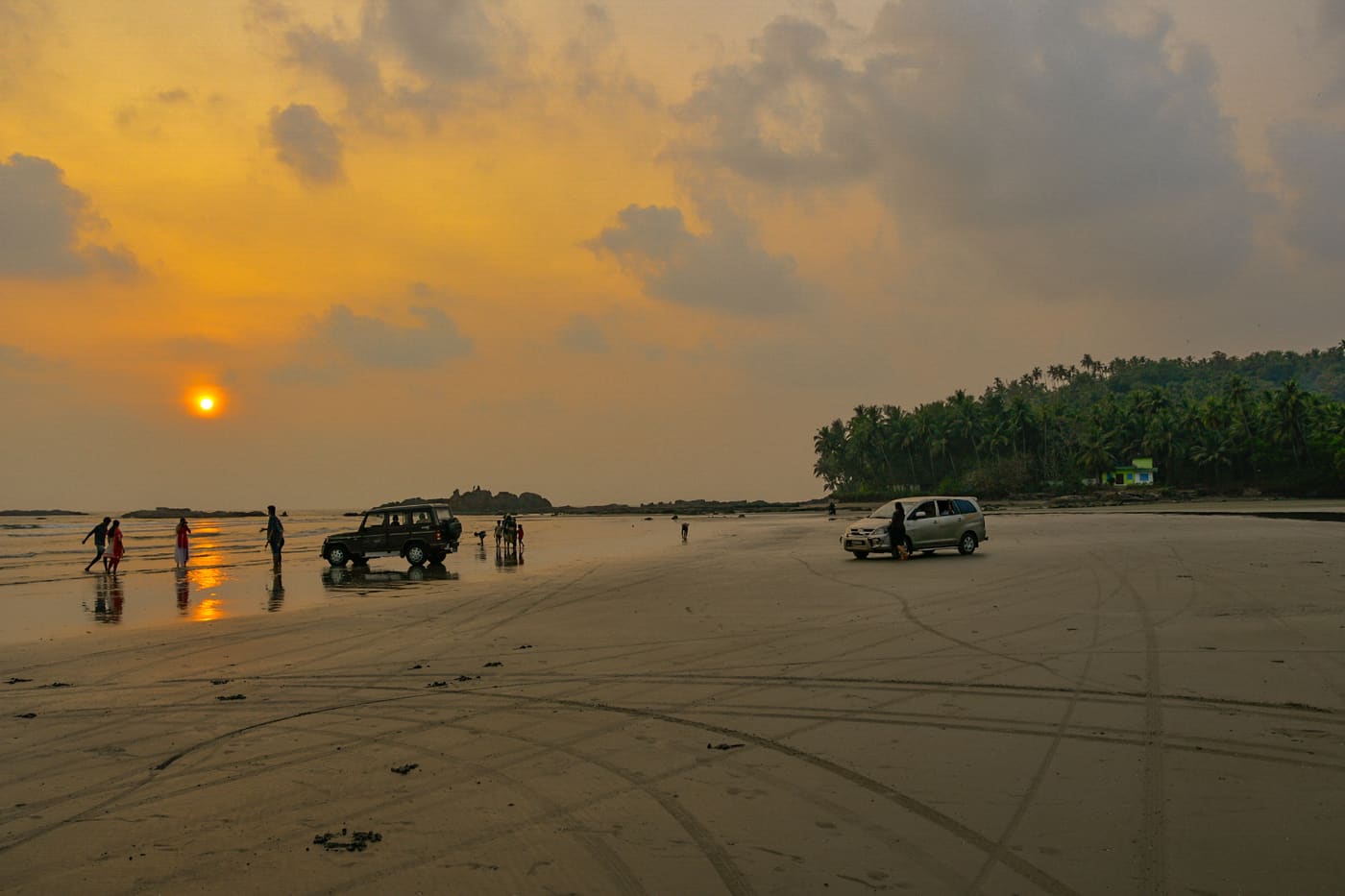
At Adikadalayi, sand meets a raised red edge with palms and houses above it. Dark rocks break the shallows, and sections of stone protection line the landward side. These visible changes in surface and level explain both the beach’s appeal and the need to choose a modest, reversible walk.
The story of Adikadalayi Beach
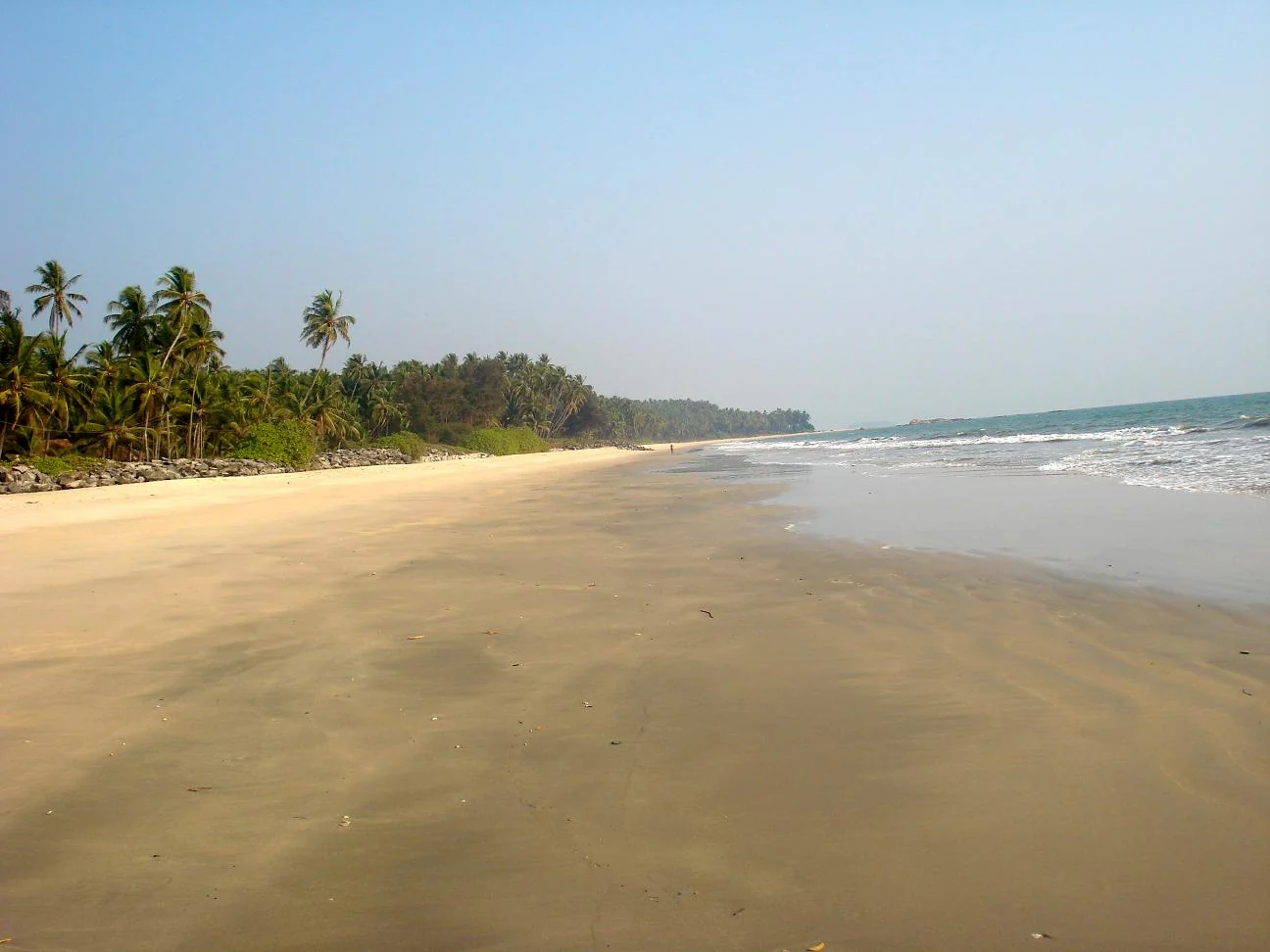
The beach is easiest to understand as a sequence of edges. There is the moving line of surf, the sand available for walking, the exposed rock and the inhabited ground above it. In the official beach photograph, wet sand catches the light below a palm-covered headland. The owner’s aerial footage gives a wider view of the same coastal relationship, including houses and a stone-protected section behind the sand.
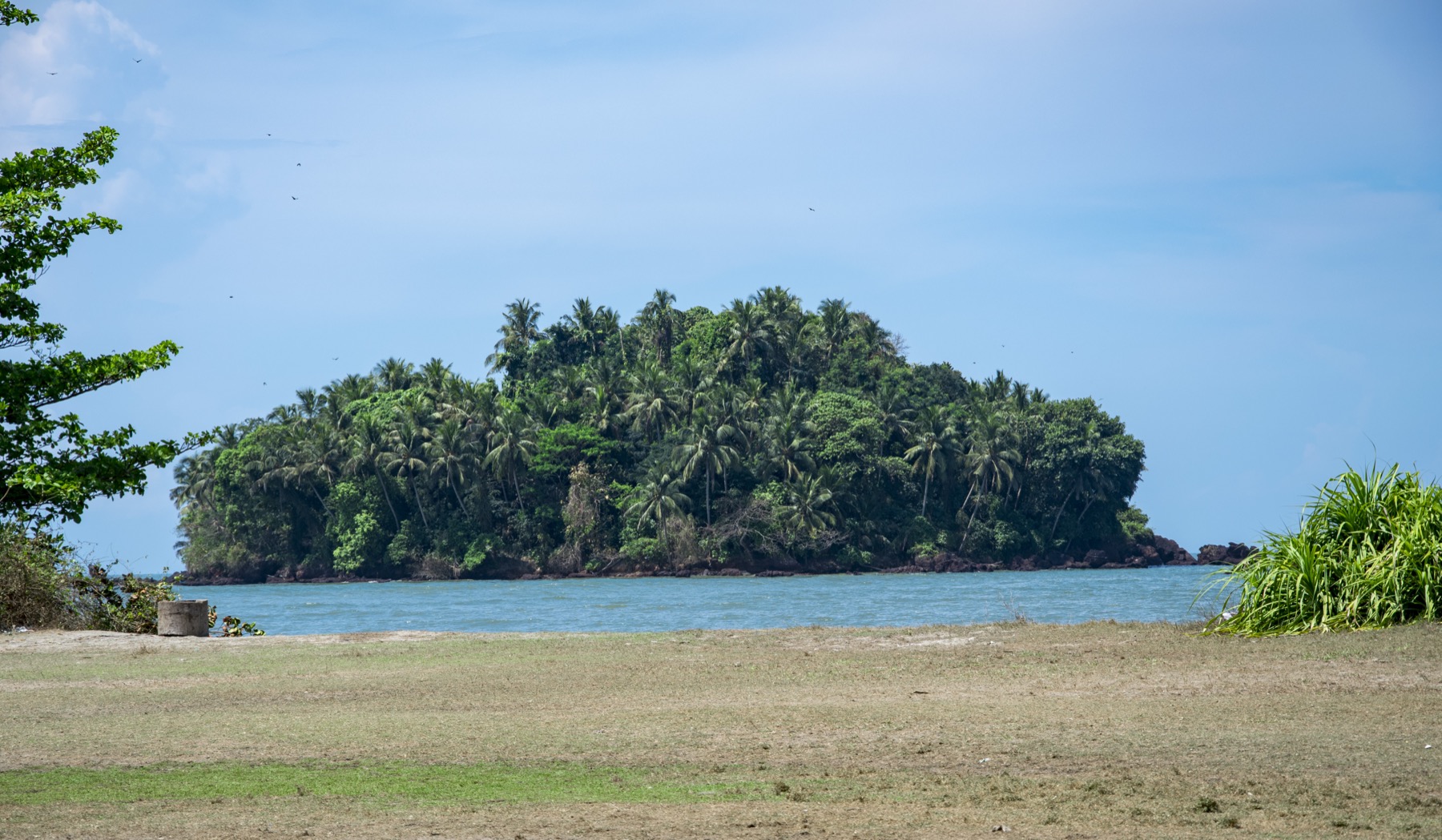
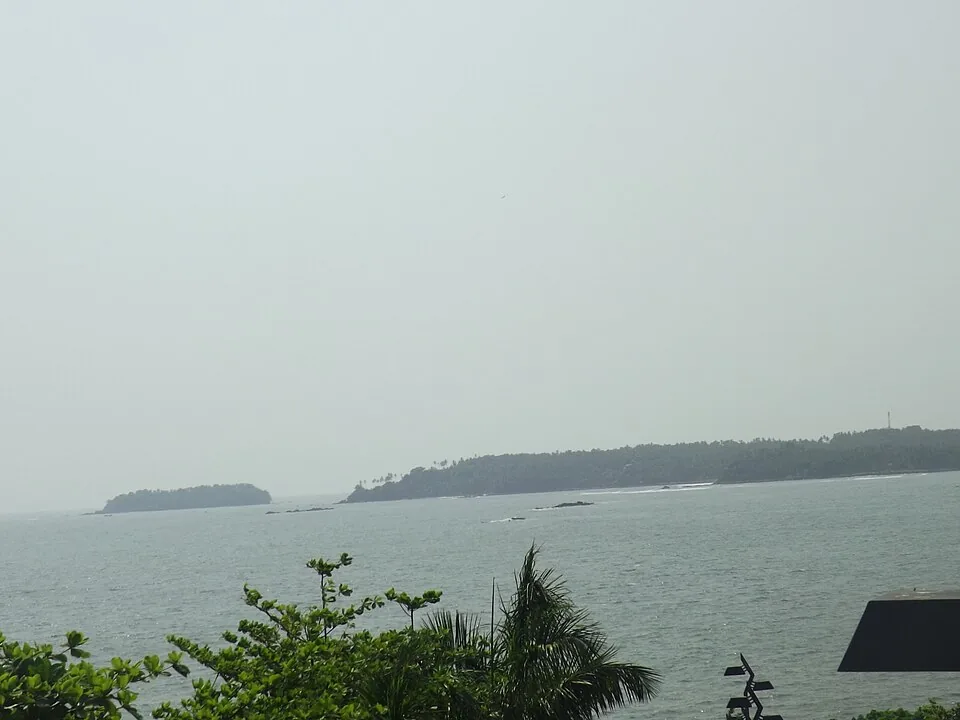
The red rock is a strong visual feature, but a visitor does not need to climb it to appreciate the landscape. Its faces and projecting sections are visible from an appropriate position on the open shore. Darker rocks stand in the shallows below. Their distribution breaks the water into smaller channels and patches of foam; that visual interest should not be mistaken for a safe route into the sea.
A raised settlement edge also changes arrival. This is not simply a road that ends flush with a broad promenade. The mapped public approach uses steps from Tippu Sulthan Beach Road. That makes the final descent and the return climb part of the visit, especially for anyone carrying equipment or needing a stable walking surface.
The names along Kannur’s southern coast can blur together in accommodation searches. Kerala’s coastal tourism study separates Adikadalayi from the Thottada-to-Ezhara stretch, which includes Thottada, Kizhunna and Ezhara. The distinction matters when matching a photograph, a public access point and a booked address. A beach house marketed through the wider Kannur area is not proof that every nearby image shows the same beach.
The study also associates the Kaanam river estuary with the wider Adikadalayi stretch. That is landscape context, rather than a direction to continue along the water until a river crossing appears. Estuary mouths and beach access points have different roles, and the public-step pin on this page is deliberately an arrival reference rather than a river-mouth marker.
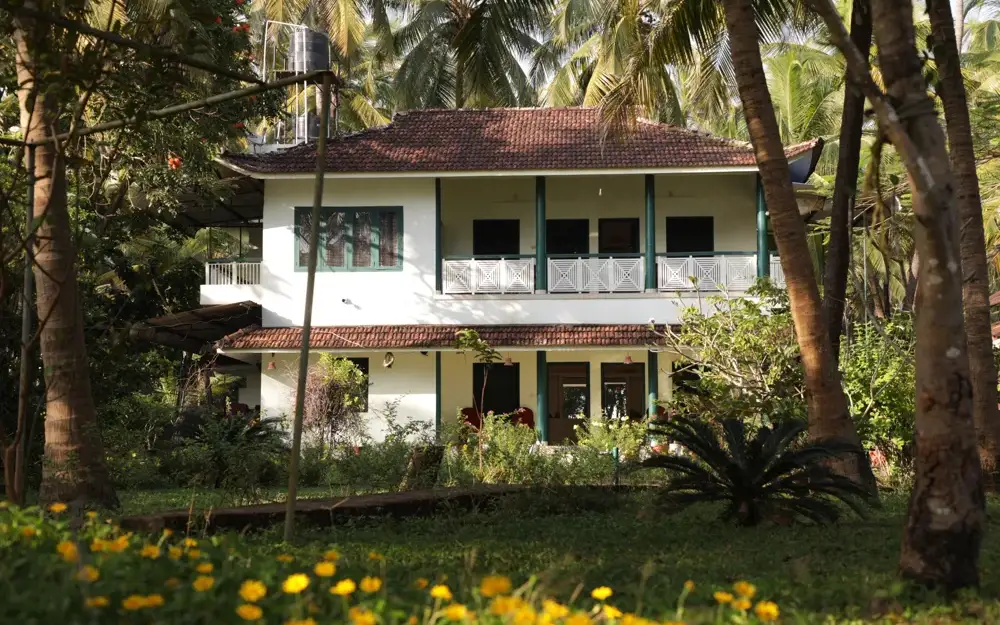
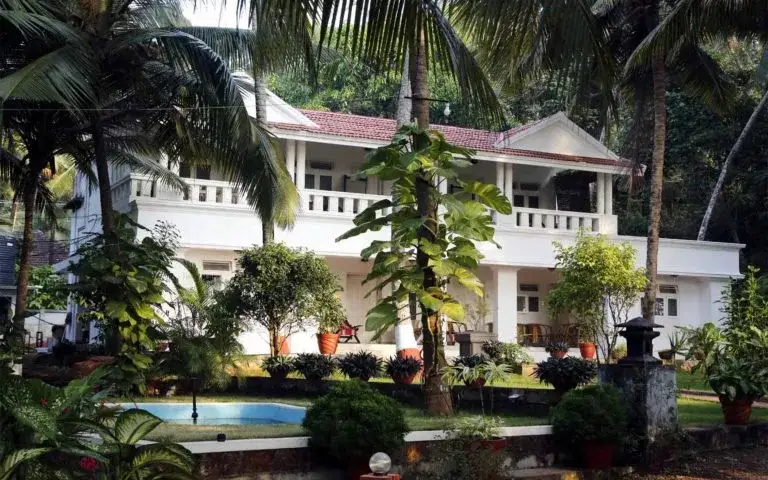
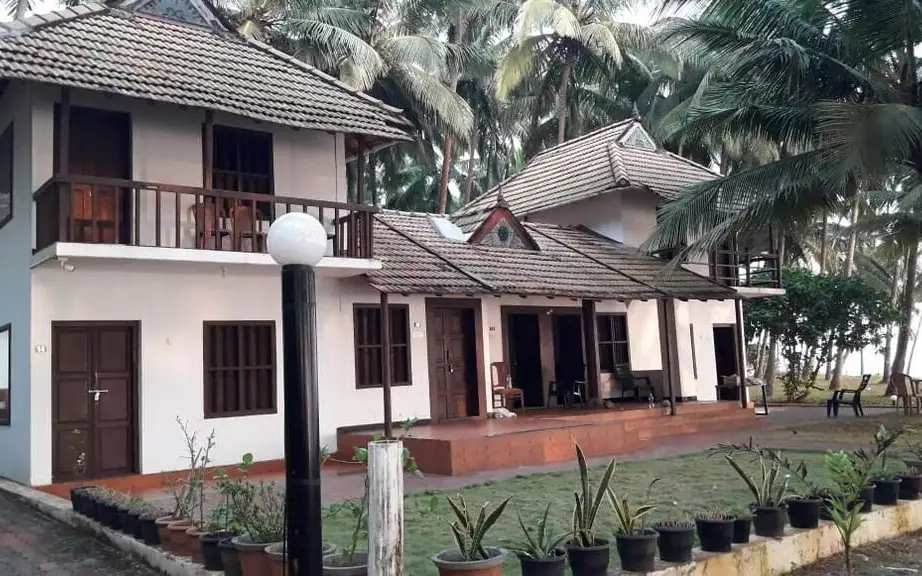
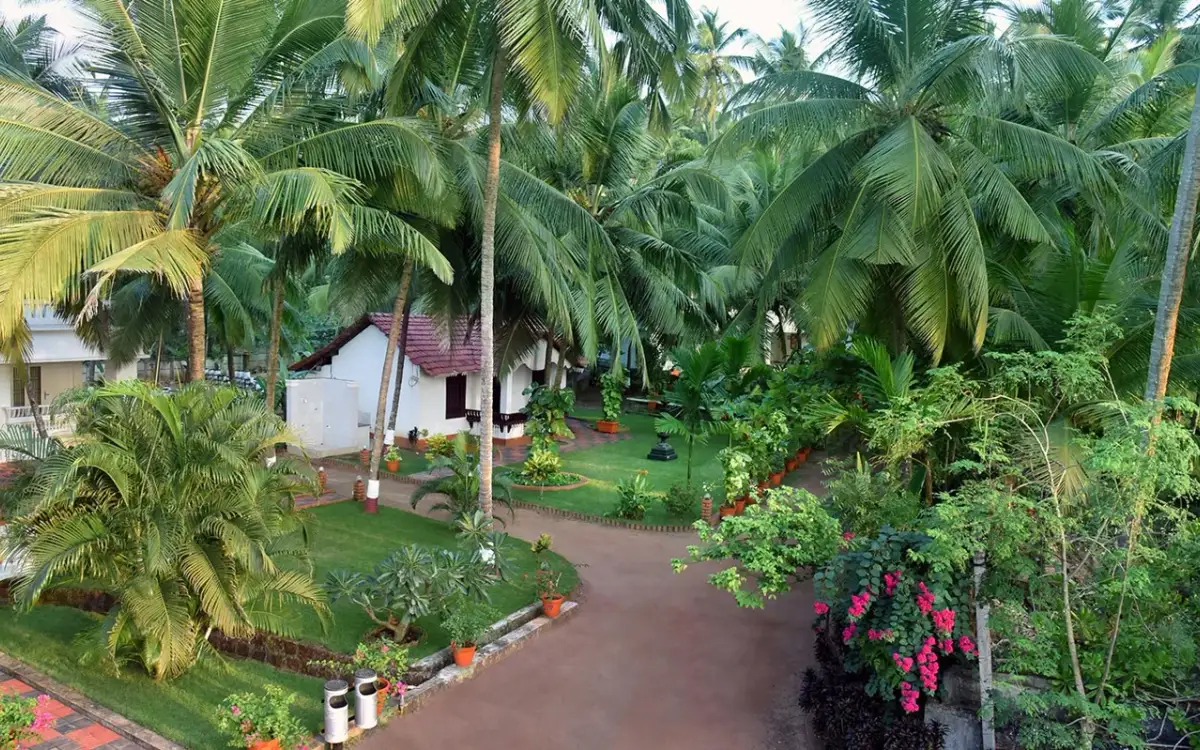
Homestays are an established part of the local visitor setting. Seashell Haris Beach Home identifies its address in Adikadalayi and describes the development of a family home into visitor accommodation from 2010. Its own aerial footage shows the property immediately above the shore, making the public-and-private boundary unusually easy to understand from above.
That accommodation history offers a small, documented story of tourism at this beach. It should not be expanded into a claim that the property founded the settlement or that all houses became homestays at the same time. The useful point is the scale: visitors stay within an inhabited coastal locality, with homes, meals and private entrances close to the sea.
The property’s photographs of meals and outdoor dining belong to its hospitality offer. They can explain what a booked stay may involve, but they do not establish a public beach café, an all-day restaurant or facilities available to a passer-by. Anyone wanting a meal there should arrange it directly and use the property’s actual arrival instructions.
A beach walk has its own simpler rhythm. Descend at the public approach, establish how far the dry sand remains continuous, and choose a return point that does not depend on rounding a wave-washed outcrop. The most rewarding observations may be close together: the colour change from red rock to dark boulders, the curved wash on the sand and the palms leaning above the protected bank.
Adikadalayi can then remain a distinct stop in a Kannur itinerary. Combining it with another beach is possible, but each needs its own road approach. A continuous coastal walk between all the named beaches is not assumed, and private stairs or compounds should never be used to bridge a gap in the public route.
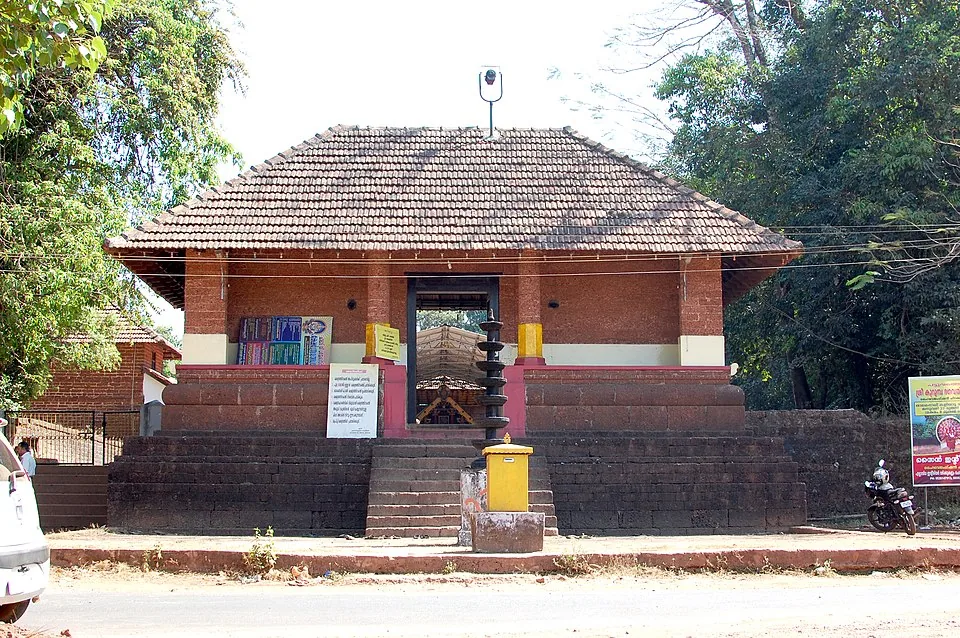
Kadalayi also appears in the religious geography of Kannur, which makes the name worth handling carefully. Kerala Tourism’s festival dossier places Kadalayi Sree Krishna Temple at Chirakkal and recounts the tradition that an image was transferred there from an older Kadalayi shrine. The local Adikadalayi temple appears separately as a landmark in tourism accommodation addresses. A visitor seeking worship should give the driver the full temple name and locality, rather than assume that a search for Kadalayi will lead to the beach-side village.
The Chirakkal dossier tells a sacred story of an image reaching the Kannur coast and being received by a Kolathiri ruler. It belongs to the temple’s devotional account of origin. It does not identify a surviving landing spot on this beach or establish an archaeological date for Adikadalayi’s red cliff. The useful connection is the continuing place-name and the distinction between the present shrines; any religious visit should use the shrine’s own entrance and programme.
The local accommodation addresses reveal how closely the coastal names overlap in everyday use. Kerala Tourism’s directory uses Adikadalayi Sreekrishna Temple as a landmark for a property described through the wider Thottada area. Other addresses use Adikadalayi Nada or Kadalayi. This is normal settlement geography rather than evidence that every stretch of sand is identical. Keep the booked property’s full address when arranging luggage transport, and use the public-step reference when the purpose is simply a beach visit.
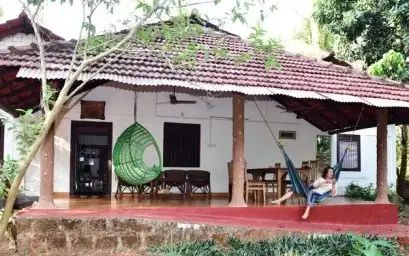
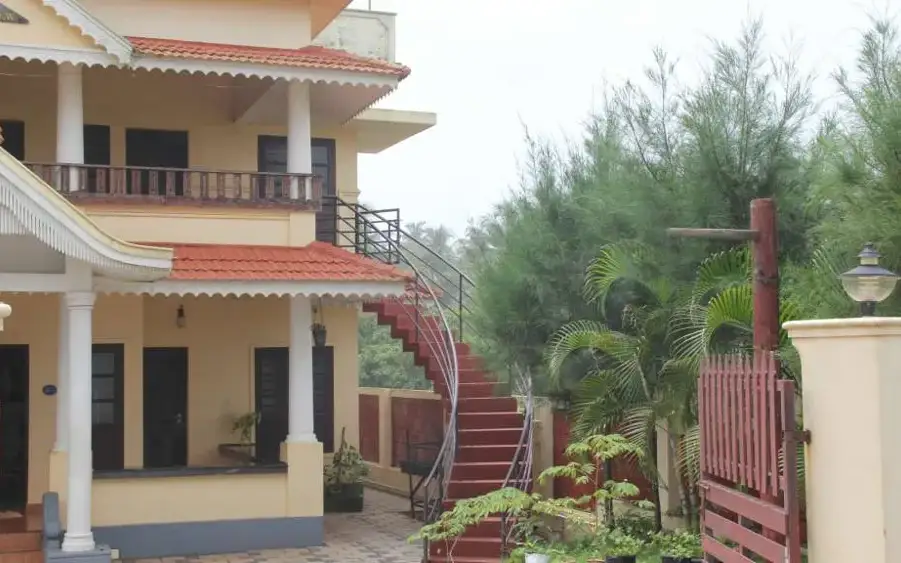
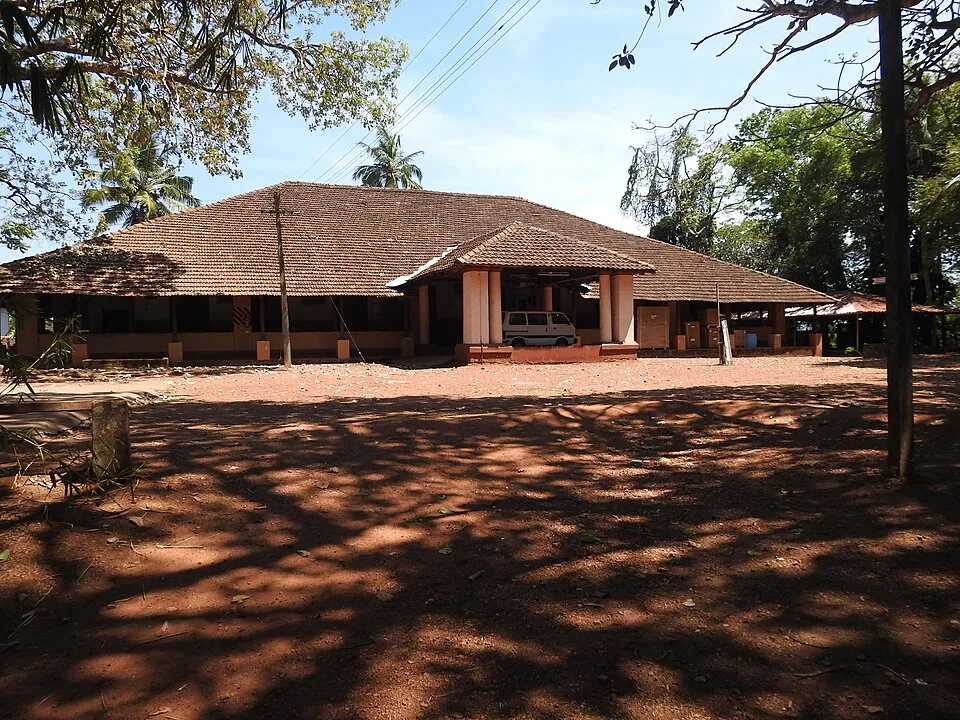
The hospitality setting has a visible architectural character. At Seashell Haris Beach Home, the owner’s photograph shows an open pavilion beneath a tiled roof, wooden seating, a spiral stair and planting around the court. The sea-facing light enters between the posts rather than through a fully enclosed dining room. That is a view of a named private property above the shore; it helps a prospective guest understand the setting without turning the pavilion into a public beach facility.
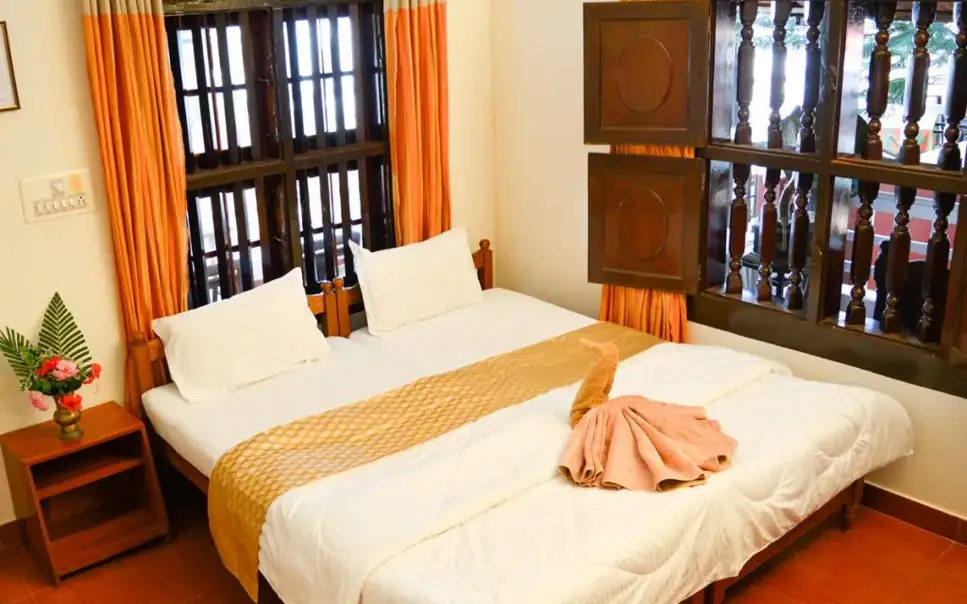
The owner describes different room arrangements, including a two-bedroom cottage and rooms with private or shared sitting spaces. For a stay with older relatives or young children, the location of the room and the route to the meal area matter as much as the general sea view. Ask for the particular room’s floor and access arrangement when booking. The spiral stair visible in one photograph is a reason to be specific about the chosen accommodation, not a claim that every room requires that stair.
Meals can be part of the social experience of staying here. In the owner’s photographs, banana leaves are laid in a row on a long table, and food is served to seated guests under the tiled shelter. This is a hosted arrangement at the property. Anyone hoping to share a meal without staying should make that arrangement beforehand; beach access and a homestay dining invitation are separate things.
The public approach offers a different experience from the view at a booked property. At shore level, the cliff rises behind the walker and the rock outcrops interrupt the line of sand. From above, the same rocks appear within a broader pattern of coast, houses and palms. Neither viewpoint replaces the other. Choose the permitted position that suits the visit, and avoid using a private garden or stair as a way to complete a coastal walking route.
For a short outing from Kannur, settle the return at the top of the public steps before descending. The road and the beach operate at different levels, so a driver waiting on the road may not be visible from the sand. A shared meeting point is especially useful if one person returns earlier or if the beach becomes unsuitable for a longer walk. Finish while the climb and the local road connection remain easy to judge in daylight.
A stay can give the same small stretch more than one kind of attention. Morning light reveals the landward detail differently from a west-facing evening view, while the available sand depends on the sea rather than the hotel schedule. Keep the shoreline walk flexible within the day and let the arranged meal or onward transport supply the fixed times. That leaves room to appreciate Adikadalayi at its own scale, without having to turn every visit into a sequence of other beaches.
Adikadalayi also appears by name in a recent community-tourism initiative. In its October 2025 announcement, Kerala Tourism included the locality among proposed locations for Fresh Up Homes under the Responsible Tourism Mission. The scheme envisaged visitor facilities in selected homes linked with village visits, homestays, farm stays and ethnic-cuisine enterprises. It is a record of a planned local tourism model, not confirmation that a particular public washroom or changing facility has opened beside the beach steps.
The distinction is useful because a neighbourhood service and a beach amenity have different entrances and expectations. A facility hosted in a selected home would be approached through that household's agreed arrangement. A person arriving for a shore walk cannot assume access to any nearby house simply because a tourism scheme names Adikadalayi. If a hosted village visit is offered, ask the organiser which named units are included and where the meeting takes place before adding it to the beach outing.
The initiative's emphasis on women-led enterprises also gives a different perspective on coastal tourism. Visitors may encounter hospitality through a meal, a small craft business or a household service rather than through a large waterfront resort. Those arrangements are most useful when the service, host and price are agreed directly. At Adikadalayi, where homes stand close above the shore, a respectful visit recognises that the settlement's daily life continues around the visitor's view of the sea.
This makes the public steps an especially helpful boundary in a simple itinerary. They provide the named approach for the beach, while a separately booked host provides the entrance for a meal or stay. Keep the two meeting points clear when several people are travelling together. A coastal walk can then remain flexible with the sea conditions, and an arranged household visit can receive the time and courtesy it needs, without expecting either to supply all the facilities of the other.