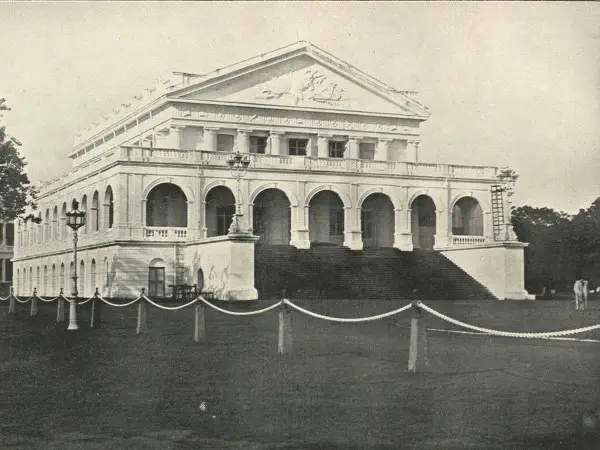
Originally the Banqueting Hall, it was built in 1802 within the Government Estate to commemorate the British victory over Tipu Sultan at Seringapatam. Designed in imposing Neoclassical style with towering Ionic columns, it later hosted state functions and lyings-in-state of Tamil Nadu leaders. It is named after C. Rajagopalachari, independent India's last Governor-General.
The story of Rajaji Hall
For Rajaji Hall, originally the Banqueting Hall, it was built in 1802 within the Government Estate to commemorate the British victory over Tipu Sultan at Seringapatam. For Rajaji Hall, designed in imposing Neoclassical style with towering Ionic columns, it later hosted state functions and lyings-in-state of Tamil Nadu leaders. For Rajaji Hall, it is named after C. For Rajaji Hall, rajagopalachari, independent India's last Governor-General. For Rajaji Hall, the useful visit is built around the specific feature described here, not around promotional superlatives or facilities that have not been verified.
Use Anna Salai as the practical starting point for Rajaji Hall, but verify the final approach before setting out. For Rajaji Hall, roadworks, worship sessions, conservation work and seasonal restrictions can change access even when the map still draws an uninterrupted route.
Spend time at Rajaji Hall separating the documented core from local memory and later alteration. For Rajaji Hall, plaques, inscriptions and official interpretation deserve more weight than repeated online claims, especially when a date, height or “oldest” label lacks a named source.
Keep the rest of the day flexible around Rajaji Hall. For Rajaji Hall, heat, rain and crowds affect small sites disproportionately, so carry drinking water, choose secure footwear and move the visit rather than ignoring a closure or unsafe surface.