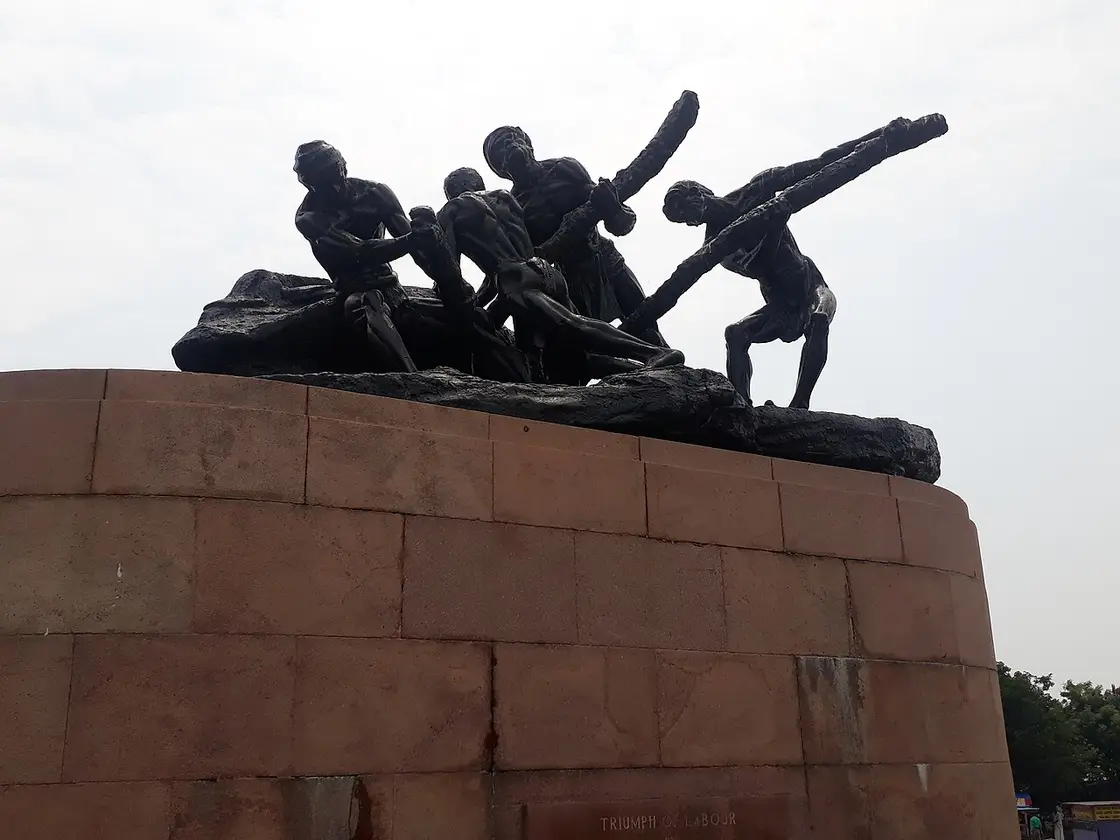
An iconic bronze sculpture on the Marina by Debi Prasad Roy Chowdhury, installed on Republic Day 1959, showing four straining men heaving a rock to symbolise the dignity of labour. It is regarded as one of modern India's most powerful public sculptures and a symbol of the working class. It stands near the Labour Statue junction on the beach.
The story of Triumph of Labour
For Triumph of Labour, an iconic bronze sculpture on the Marina by Debi Prasad Roy Chowdhury, installed on Republic Day 1959, showing four straining men heaving a rock to symbolise the dignity of labour. For Triumph of Labour, it is regarded as one of modern India's most powerful public sculptures and a symbol of the working class. For Triumph of Labour, it stands near the Labour Statue junction on the beach. For Triumph of Labour, the useful visit is built around the specific feature described here, not around promotional superlatives or facilities that have not been verified.
A sensible plan for Triumph of Labour begins in Triplicane: settle the return journey, carry water and keep time in reserve for a closed gate or a slower rural road. For Triumph of Labour, do not infer toilets, food, parking or step-free access from the existence of a map pin.
The value of Triumph of Labour lies in close observation rather than a rapid photograph. For Triumph of Labour, notice materials, setting and present-day use, while treating locked rooms, unstable remains, working premises and private homes as firm limits to the visit.
Do not make Triumph of Labour responsible for an overfilled district itinerary. For Triumph of Labour, one carefully observed visit, followed by a meal or transport break in Triplicane, is more reliable than assuming several rural sites share the same hours and facilities.