Kodumanal

Kodumanal is a major Sangam-age archaeological site on the northern bank of the Noyyal River, identified with the ancient Chera trade town of Kodumanam.

K
Kodumanal
Place
Practical guide

Plan Kodumanal

Who's going?Tailor Kodumanal to your trip
Typeheritage
Nearest baseChennimalai
DistrictErode
Best timeChoose a cooler daylight visit and…
Time neededAllow about one to two hours at…
The story

Kodumanal is a major Sangam-age archaeological site on the northern bank of the Noyyal River, identified with the ancient Chera trade town of Kodumanam. Excavations have revealed advanced iron- and steel-working furnaces, gemstone bead workshops, Roman artefacts and a bronze lion. It was a key industrial and trading centre on the route to Muziris and Kaveripoompattinam around 500 BCE.

The story of Kodumanal

Kodumanal is a major Sangam-age archaeological site on the northern bank of the Noyyal River, identified with the ancient Chera trade town of Kodumanam. For Kodumanal, excavations have revealed advanced iron- and steel-working furnaces, gemstone bead workshops, Roman artefacts and a bronze lion. For Kodumanal, it was a key industrial and trading centre on the route to Muziris and Kaveripoompattinam around 500 BCE. For Kodumanal, the useful visit is built around the specific feature described here, not around promotional superlatives or facilities that have not been verified.

A sensible plan for Kodumanal begins in Chennimalai: settle the return journey, carry water and keep time in reserve for a closed gate or a slower rural road. For Kodumanal, do not infer toilets, food, parking or step-free access from the existence of a map pin.

The value of Kodumanal lies in close observation rather than a rapid photograph. For Kodumanal, notice materials, setting and present-day use, while treating locked rooms, unstable remains, working premises and private homes as firm limits to the visit.

Do not make Kodumanal responsible for an overfilled district itinerary. For Kodumanal, one carefully observed visit, followed by a meal or transport break in Chennimalai, is more reliable than assuming several rural sites share the same hours and facilities.

Read the full history of Kodumanal 51 more words

Why visit

Visit Kodumanal for the specific feature and local history described on this page, rather than as a generic stop in Erode.

The most useful visit combines close observation at Kodumanal with a realistic return plan through Chennimalai; it does not depend on an unverified ticket, unrestricted access or a promised experience.

What to expect

Highlights

  • Read the defining surviving feature and physical setting of Kodumanal.
  • Understand how Kodumanal belongs to Chennimalai and Erode rather than treating it as an isolated map pin.
  • Separate documented evidence from local tradition, later alteration and unsupported online claims.
Getting there

How to visit

  • Reach Kodumanal from Chennimalai using the map link, then use signed public entrances and visitor paths.
  • Review the venue's published schedule, admission details and visitor rules before travel.
  • Arrange the return journey before beginning the visit, particularly outside the town centre.
Timing

Best time

Choose a cooler daylight visit and verify the current operating or worship session for Kodumanal; festivals, maintenance and weather can change access.

Weather in KodumanalSeasonal guide

Live forecast loads in your browser.

Today at Kodumanal
Sunrise6:09 am
Sunset6:02 pm
Golden hour best light5:02 pm–6:02 pm
Blue hour after sunset6:02 pm–6:27 pm
Sun sets toward compass bearingW · 261°
Moon tonight🌒 Waxing crescent · 24%

Sun and moon are calculated for this location and shown in IST. Photography windows are the hour around sunrise and sunset; the sunset bearing is degrees clockwise from true north. Moon phase is accurate to about half a day.

Visitor notes

  • Confirm the exact visitor entrance, current access and last safe return from Kodumanal on the day of travel.
  • Ask before photographing interiors, worship, residents or working areas at Kodumanal.
Safety

Good to know

  • Obey barriers and staff instructions at Kodumanal; do not climb structures, enter restricted ground or block worship and working access.
  • Use suitable footwear, carry water and keep enough daylight for the return to Chennimalai.
Stay · eat · do · rent · see · shop

Stays, food & things to do near Kodumanal

Verified hotels, homestays, restaurants, experiences, sights, shops and rentals around Kodumanal — commission-free, with direct contact. Filter by what you need.

Verified inventory is being added here.

Verified places are being added. The category filters will fill in as approved stays, restaurants, experiences, sights, shops and nature listings go live.

List your place

Roampedia is commission-free — own or know a stay, eatery, guide or shop near Kodumanal? List it and it appears here once verified.

Add a nearby business
Before you go

Kodumanal — at a glance

TimingsUse Kodumanal's published visitor schedule and admission information when planning the day.
Best timePrefer a cooler daylight session and recheck current access on the day.
Getting here

How to reach Kodumanal

Reach Chennimalai, follow the map link to Kodumanal, and enter from a signed public street or visitor path.

Do

Things to do

  • Identify the feature that gives Kodumanal its visitor value.
  • Read the site in relation to Chennimalai and Erode.
  • Distinguish documented history from living tradition and later alteration.
  • Combine it only with genuinely nearby stops that preserve a safe return margin.
Plan

Good to know

  • Save the route offline before leaving Chennimalai.
  • Carry water and sun or rain protection.
  • Accept an exterior-only visit when current access does not permit entry.
Facilities

On site

  • Carry water and weather protection suited to Kodumanal, and use designated public facilities where provided.
  • Plan dependable food, cash and essential purchases in Chennimalai.
Stay safe

Safety

  • Follow current site, worship and security instructions.
  • Do not cross barriers, climb structures or enter unstable, private or restricted ground.
  • Keep enough daylight and transport margin for the return to Chennimalai.
Getting around Kodumanal

If you need step-free access, contact the site before travelling. Ask about a level entrance, steps along the route, the nearest drop-off point, seating and accessible toilets.

If you need help at Kodumanal
112All emergencies (police · fire · medical)The single number to call in any emergency (ERSS).

Emergency numbers are verified against official government and state tourism sources. 112 works anywhere in India.

Nearby

What’s near Kodumanal

templeVijayamangalam Jain Temple

The oldest Jain temple in the Kongu Nadu region, dedicated to Chandraprabha (the 8th Tirthankara) and dated to around 678 CE — an ASI-protected monument near Vijayamangalam, Perundurai taluk.

15.2 km · ~25 min by cab · straight line
templeChennimalai Murugan Temple

An ancient hilltop Murugan shrine reached by a stairway of about 1,320 steps or a road with nine hairpin bends, roughly 28 km from Erode, linked to the Kanda Sashti Kavasam line "Siragiri Velavan".

20.6 km · ~34 min by cab · straight line
wildlifeVellode Bird Sanctuary

A bird sanctuary built around the Periyakulam tank near Vadamugam Vellode, about 12 km from Erode, drawing thousands of migratory birds — pelicans, spoonbills, storks and ducks — between November and March.

21.8 km · ~36 min by cab · straight line
templeThindal Murugan Temple

A hilltop temple to Lord Murugan (Arulmigu Velayuthaswamy) on the Thindalmalai hillock about 7 km from Erode city, known for its golden temple chariot that circles the hill during festivals.

29.0 km · ~48 min by cab · straight line
heritagePeriya Mariamman Temple, Erode

The Periya Mariamman Temple stands in the heart of Erode city, opposite the Corporation building near Panneer Selvam Park, and is dedicated to the goddess Mariamman. It is traditionally held to have been built by the Kongu Cholas around 1,200 years ago. The temple is a prominent local pilgrimage centre known for its Mariamman festival.

33.8 km · ~56 min by cab · straight line
K
Kasthuri Aranganathar Temple
Place
heritageKasthuri Aranganathar Temple

This Vishnu temple in Erode city is dedicated to Kasthuri Aranganathar (Ranganatha) and goddess Kamalavalli, and is attributed to the Chola king Parantaka I, making it about 1,080 years old. Its name derives from a legend in which a pregnant woman offered kasthuri (herbal medicine) to the deity for a safe delivery. It is counted among the historic Kongu-region temples and lies within walking distance of the Periya Mariamman Temple.

34.1 km · ~57 min by cab · straight line
museumGovernment Museum, Erode

A multipurpose government museum on Brough Road, established 1987, holding collections of art, archaeology, anthropology, numismatics and natural history, including Kongu Chola inscriptions and Thanjavur paintings.

34.2 km · ~57 min by cab · straight line
churchBrough Memorial Church

A CSI church consecrated in 1933, built by missionary Rev. Antony Watson Brough in Indo-Saracenic style within the CSI institutions campus at Erode Fort.

34.3 km · ~57 min by cab · straight line
heritageThanthai Periyar Memorial House

The childhood home of social reformer Erode Venkatappa Ramasamy, widely known as Periyar. Born in Erode in 1879, he is remembered here through personal belongings, photographs and writings.

34.5 km · ~58 min by cab · straight line
P
Pavalamalai Muthukumaraswamy Temple
Place
heritagePavalamalai Muthukumaraswamy Temple

The Muthukumaraswamy Temple on Pavalamalai hill near Gobichettipalayam is the second of the town's two Murugan hill shrines, the other being Pachaimalai. It sits on a small hill on the road toward Pariyur and is dedicated to Lord Murugan. It is a popular local pilgrimage climb offering views over the surrounding countryside.

40.0 km · ~67 min by cab · straight line
viewpointKooduthurai Triveni Sangamam

The riverside confluence and bathing ghat at Bhavani where the Kaveri, Bhavani and mythical Amudha rivers meet, adjoining the Sangameswarar Temple — a pilgrimage spot for ancestral rites, known as the Triveni Sangamam of the South.

40.1 km · ~67 min by cab · straight line
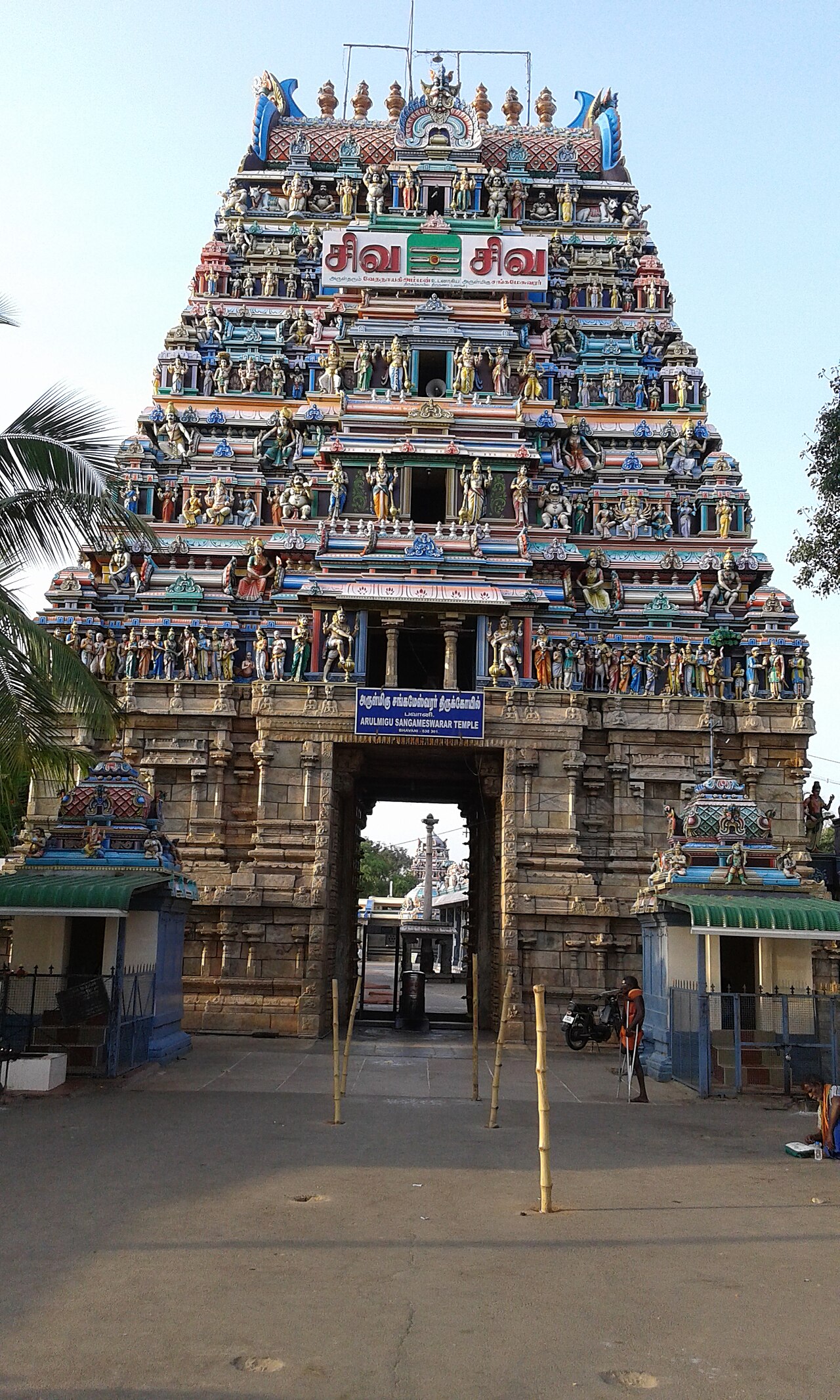
templeBhavani Sangameswarar Temple

A large Shiva temple at Kooduthurai in Bhavani town, built at the confluence of the Kaveri, Bhavani and the mythical Amudha rivers, revered as the Dakshina Triveni Sangamam ("Triveni Sangamam of the South").

40.2 km · ~67 min by cab · straight line
On the map

Where Kodumanal is

Good to know

Kodumanal — frequently asked

What should I verify before visiting Kodumanal?

Confirm the current public entrance, opening session, permission or ticket rule and return transport from Chennimalai. Site management and local notices take priority over an undated listing.

How much time should I allow for Kodumanal?

Allow about an hour at the site, plus the complete approach, any worship or security queue and a comfortable daylight margin for returning to Chennimalai.

When is the best time to visit Kodumanal?

Choose a cooler daylight visit and verify the current operating or worship session for Kodumanal; festivals, maintenance and weather can change access.

What are the entry fee and timings at Kodumanal?

Timings: Use Kodumanal's published visitor schedule and admission information when planning the day.

How do I reach Kodumanal?

Reach Kodumanal from Chennimalai using the map link, then use signed public entrances and visitor paths. Review the venue's published schedule, admission details and visitor rules before travel. Arrange the return journey before beginning the visit, particularly outside the town centre.

How much time do I need for Kodumanal?

Allow about one to two hours at Kodumanal, plus the complete approach, any queue and the return to Chennimalai.

What else is near Kodumanal?

Nearby you can pair Vijayamangalam Jain Temple (15.2 km), Chennimalai Murugan Temple (20.6 km), Vellode Bird Sanctuary (21.8 km), Thindal Murugan Temple (29.0 km).

What should I know before visiting Kodumanal?

Obey barriers and staff instructions at Kodumanal; do not climb structures, enter restricted ground or block worship and working access. Use suitable footwear, carry water and keep enough daylight for the return to Chennimalai.