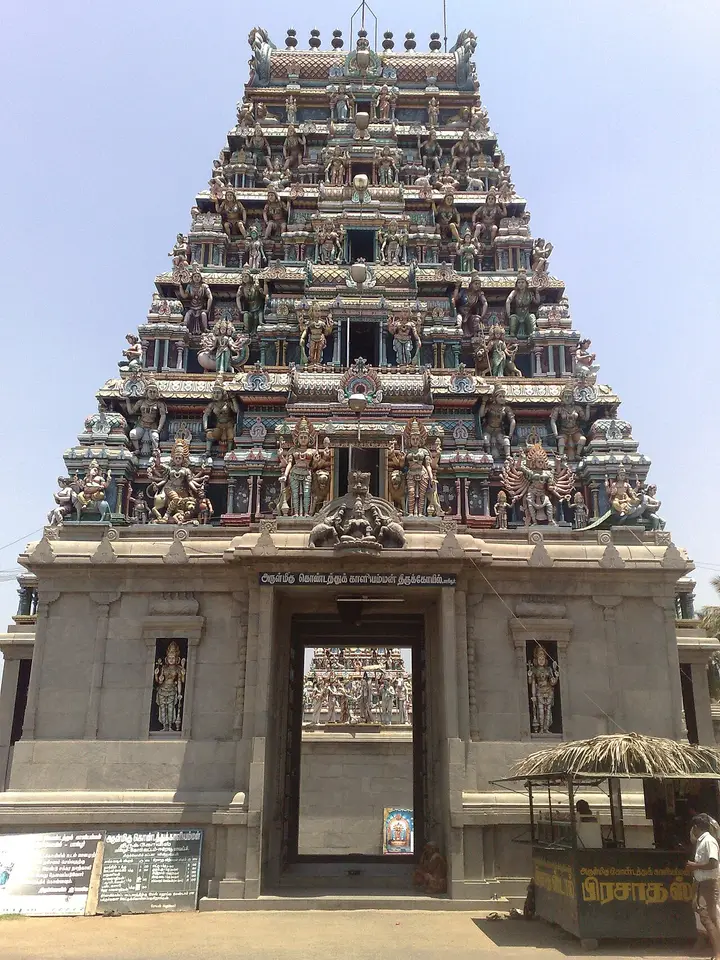
Kodumudi is a Kaveri-bank temple and market town in Erode district. This guide starts in the town centre at 11.0751963, 77.8858837 and keeps each excursion within a practical day-trip radius.
The page anchor was read directly from OSM town node 2264359120 at 11.0751963, 77.8858837; it was neither typed from memory nor reconstructed from rounded coordinates.
Kodumudi is a Kaveri-bank temple and market town in Erode district. Its value lies in the relationship between living worship, ordinary streets and the wider landscape rather than in a single photo stop.
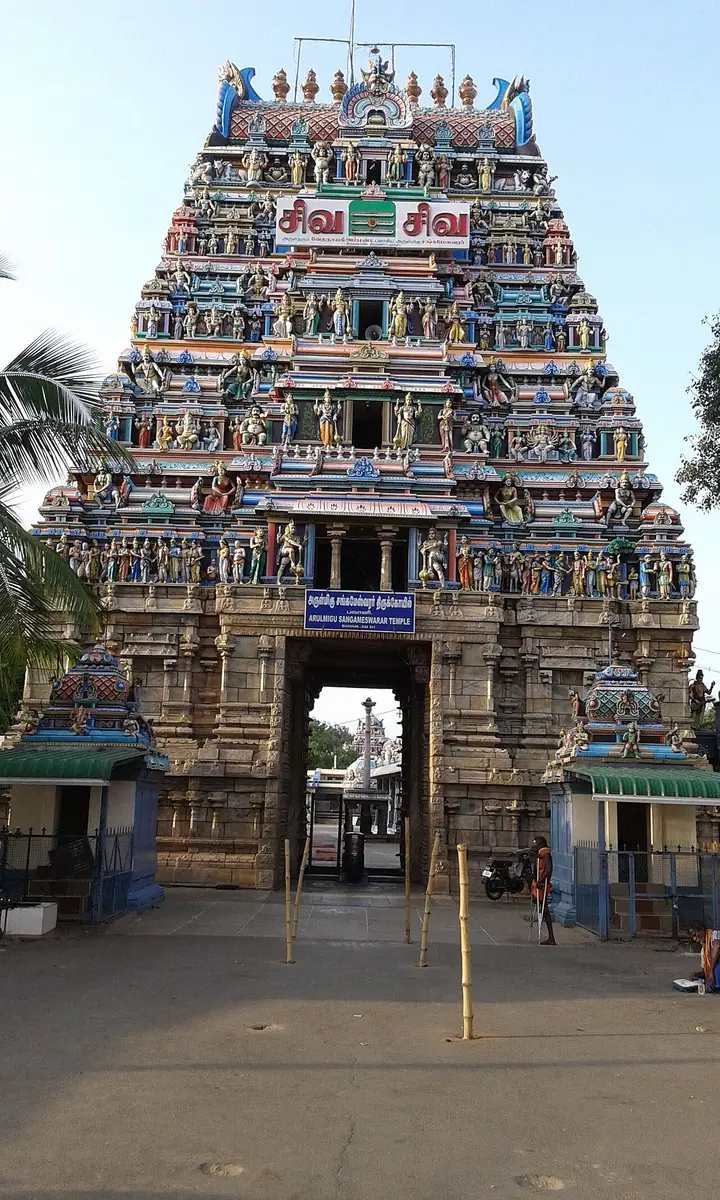
Kodumudi Magudeswarar Temple is the first selected place. Its assignment was checked as part of the Kodumudi itinerary before any road measurement was made.
Kalingarayan Canal is the second selected place. It is treated as a separate destination, not silently merged with the town centre.
Measured road results from the exact town anchor are 0.72 km / about 1 minute to Magudeswarar; 4.16 km / about 5 minutes to the canal. They describe routed vehicle distance, not permission, opening or pedestrian safety.
Kodumudi is a Tevaram-hymned Paadal Petra Sthalam in Kongu Nadu.
The temple compound brings Shiva, Vishnu and Brahma worship into one riverbank complex.
The Kalingarayan canal belongs to the region’s long history of managing Kaveri water for cultivation.
Temple tradition links the name Magudamudi, or crown-peak, with a fragment of Mount Meru.
The Trimurti presence is sacred tradition and should not be presented as a dated construction record.
Devotees regard Kaveri bathing and temple worship as one ritual journey; river conditions still govern safe access.
The best general window is November to February; use early morning in hotter months. Temple festivals can be rewarding, but access, traffic and queue conditions change substantially.
Active shrines set their own split worship hours. Confirm the current session before leaving and never infer that an open outer gate guarantees sanctum access.
Photography is permission-led. Reusable photographs on this page document the place and their licence; they do not grant a visitor permission inside a living shrine.
Eat, refuel and withdraw cash in town before a rural leg. Displayed businesses carry directions so a reader can see exactly where each one stands.
Accessibility must be checked doorway by doorway. A vehicle approach does not prove that thresholds, queues, toilets or the final worship route are step-free.
A good visit leaves time for one conversation: ask a priest, shopkeeper or resident how the local story is told, and accept that living traditions can have more than one version.
Legend & myth
Temple tradition links the name Magudamudi, or crown-peak, with a fragment of Mount Meru.
The Trimurti presence is sacred tradition and should not be presented as a dated construction record.
Devotees regard Kaveri bathing and temple worship as one ritual journey; river conditions still govern safe access.