
Few stories have shaped the sacred landscape of the Tamil south as deeply as the Ramayana. Along the coast of Ramanathaputam district, and inland towards Chengalpattu, a string of temples and natural landmarks mark episodes from the epic — the place where Rama is said to have worshipped Shiva, the shoals said to be the causeway his army built to Lanka, the shrine where Ravana’s brother is said to have surrendered. This is a trail of faith. The events it commemorates belong to sacred tradition revered by millions, not to documented history, and it is in that spirit that pilgrims walk it.
- Rameswaram — the island where, by tradition, Rama worshipped Shiva to atone after the war
- Rama Setu / Adam’s Bridge — the chain of shoals to Sri Lanka, venerated as the causeway of the epic
- Dhanushkodi & Kothandaramar — the bow’s tip and the shrine of Vibhishana’s surrender
- Gandhamadhana & the five-faced Hanuman — a hilltop footprint and a temple of floating stones
- Eri-Katha-Ramar, Madurantakam — an inland shrine of the Rama who held back the lake
The Ramayana in the Tamil south
In the Ramayana tradition, the southern coast is where the epic reaches its climax. Rama, searching for his abducted wife Sita, is said to have mustered his vanara (monkey) army at the tip of the mainland, thrown a bridge across the sea, crossed to Lanka and defeated the demon king Ravana. The places along this Tamil Nadu shore are read as a map of that campaign and its aftermath. It is worth saying plainly: these associations are matters of devotion and epic memory, not archaeology. The shrines are ancient and their traditions cherished, but the trail is best walked as an act of faith rather than a reconstruction of literal events.
Rameswaram — the lingam Rama worshipped
The island of Rameswaram is the anchor of the whole trail. By tradition, after killing Ravana — who was a Brahmin — Rama sought to atone by worshipping Shiva, and so installed a lingam here. The story tells that Hanuman was sent to fetch a lingam from Kashi; when he was delayed, Sita is said to have fashioned one from sand so the auspicious hour would not pass. That sand lingam, the Ramalingam, is worshipped to this day at the Ramanathaswamy Temple, alongside the Vishwalingam that Hanuman later brought — and by Rama’s wish the Vishwalingam is honoured first.
The temple is one of the twelve Jyotirlingas of Shiva and a Paadal Petra Sthalam sung by the Tamil saints, and Rameswaram counts as the southern seat of the Char Dham, the four cardinal pilgrimages of India. Pilgrims bathe at twenty-two theerthams (sacred wells) within the complex before darshan, and walk its immense pillared corridors, among the longest of any temple in the country.
Dhanushkodi, Rama Setu & Kothandaramar
From Rameswaram a narrow spit of sand runs out to Dhanushkodi, the “bow’s end”, a windswept ghost town at the island’s tip left in ruins by the 1964 cyclone. The name carries the legend: it is said that Rama marked the start of the causeway here with the tip of his bow, and later, at Vibhishana’s request, broke the bridge with the same bow after the war.
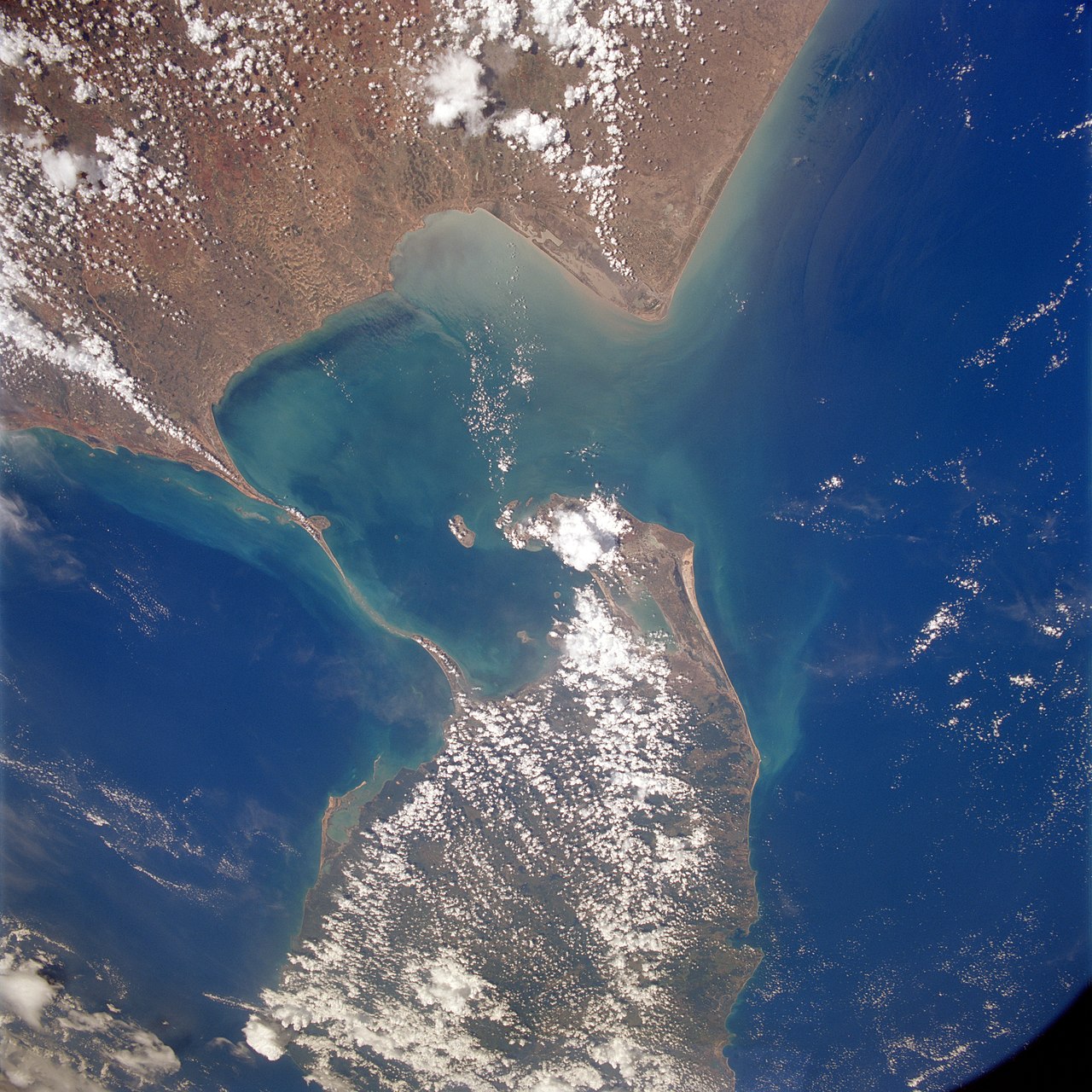
Stretching from that tip towards the Sri Lankan coast is Adam’s Bridge, or Rama Setu — a roughly 50-kilometre chain of limestone shoals, sandbanks and islets. It is a natural formation, but in the Ramayana tradition it is venerated as the Setu, the causeway raised by the vanara army so Rama could reach Lanka. Nearby, the Kothandaramar Temple is held to mark the spot where Vibhishana, Ravana’s brother, is said to have surrendered to Rama and later been crowned king of Lanka. Alone among Dhanushkodi’s buildings, this small white shrine survived the cyclone that swept the town away.

Gandhamadhana, Hanuman & beyond
On the highest point of Rameswaram island rises Gandhamadhana Parvatham, a low hill crowned by a two-storey shrine. Inside, devotees revere the Ramar Padam — an impression on a chakra-marked stone honoured in tradition as Rama’s footprint. The rise also gives one of the best views over the island and the sea towards the shoals of the Setu. A short way off stands the five-faced Hanuman temple, Panchamukhi Anjaneyar, where Hanuman is shown with the faces of Hanuman, Narasimha, Adivaraha, Garuda and Hayagriva. The shrine displays floating stones said, by tradition, to be of the kind used to build the causeway.
The epic’s presence is not confined to the island. On the mainland near Kilakarai, the Adi Jagannatha Perumal Temple is a Vishnu shrine woven into the region’s Vaishnava devotion, while far up the coast the Sthalasayana Perumal Temple at Mamallapuram carries its own Vaishnava tradition. Inland at Madurantakam stands the Eri-Katha-Ramar temple, among the oldest Rama shrines in the Tamil country, famed for a legend in which Rama is said to have held back a breached lake (eri) and spared the village — giving him the name of “the Rama who saved the tank”.
Following the trail
Most pilgrims base themselves in Rameswaram town, next to the Ramanathaswamy Temple, and give the island a full day — the temple and its theerthams in the morning, then Gandhamadhana, the five-faced Hanuman shrine and the drive out to Dhanushkodi and Kothandaramar in the afternoon. A special vehicle track now carries visitors to the very tip; the sea can be fierce, so heed local guidance about conditions and timings. Dress modestly for the temples, and remember that for those around you these are places of living faith, not sightseeing curiosities. Walked with that respect, the trail links the epic’s southern chapters into a single, unforgettable journey along the edge of the sea. To continue, see the companion guides at https://roampedia.com/india/tamil-nadu/guides/rameswaram-ramanathaswamy-story and https://roampedia.com/india/tamil-nadu/guides/deep-south-madurai-rameswaram-kanyakumari.
Frequently asked questions
Is the Ramayana trail based on documented history?
No. The sites are ancient and their traditions deeply revered, but the events they commemorate belong to sacred tradition and the epic imagination, not to archaeological or historical record. The trail is walked as an act of faith.
Why is Rameswaram so important in the Ramayana?
By tradition it is where Rama worshipped Shiva to atone for killing Ravana. The Ramanathaswamy Temple’s lingam is said to have been installed by Rama, with Sita fashioning one from sand. It is both a Jyotirlinga and one of the four Char Dham pilgrimage seats.
What is Rama Setu, and can you walk on it?
Rama Setu, or Adam’s Bridge, is a roughly 50-kilometre chain of limestone shoals and sandbanks between Dhanushkodi and Sri Lanka. It is a natural feature venerated in tradition as the causeway built by Rama’s vanara army. It is not a walkable path; it is best seen from Dhanushkodi or from the air.
What happened at Dhanushkodi and Kothandaramar?
Dhanushkodi, the “bow’s end”, is where Rama is said to have marked and later broken the causeway with his bow. The nearby Kothandaramar temple marks where Vibhishana, Ravana’s brother, is said to have surrendered to Rama. Dhanushkodi town was destroyed by a cyclone in 1964.
What is the Eri-Katha-Ramar temple at Madurantakam known for?
It is one of the oldest Rama temples in Tamil Nadu, famed for a legend in which Rama is said to have held back a breached lake and saved the village — earning the name Eri-Katha-Ramar, “the Rama who saved the tank”.
How long do I need to follow the trail?
A full day covers the Rameswaram island sites — the Ramanathaswamy Temple, Gandhamadhana, the five-faced Hanuman shrine, Dhanushkodi and Kothandaramar. Add extra time if you want to include the mainland and inland shrines such as Kilakarai and Madurantakam.