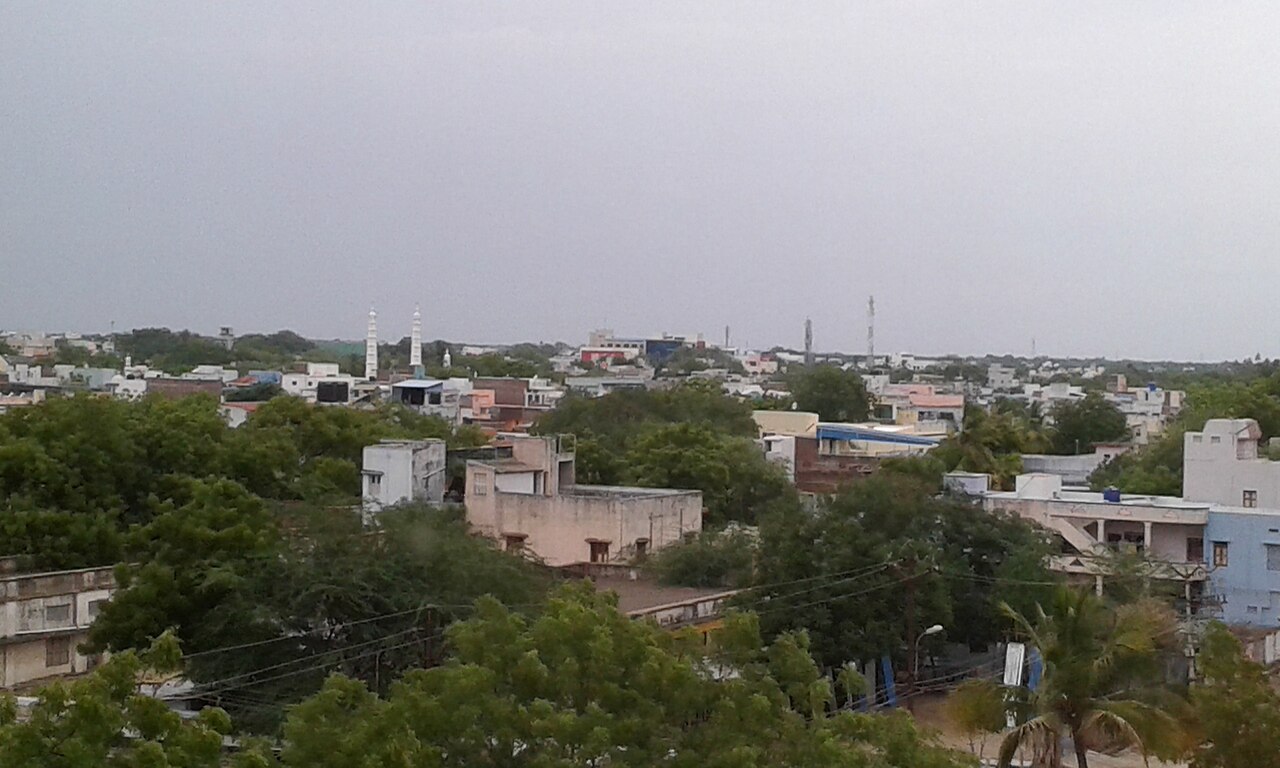
Sivakasi is not a place most travellers set out to see, and yet almost everyone in India has held its work in their hands. When a firework climbs into the Diwali sky, when a matchstick scrapes into flame, when a cheap printed calendar or a sweet-box label catches the eye — chances are it was made in this small, hot town in Sivakasi, in Virudhunagar district. Three industries — fireworks, safety matches and offset printing — grew up here almost together, and between them they turned a dry agricultural backwater into one of the busiest manufacturing towns in south India. It is a story worth telling honestly, because it is a story of remarkable enterprise and of real human cost.
- Where: Sivakasi town, Virudhunagar district, in the dry southern plains of Tamil Nadu, roughly 500 km south of Chennai
- What: India’s dominant centre for fireworks and firecrackers, safety matches and offset printing
- Industry: Reported to make the great majority of India’s fireworks, plus a huge share of its matches and printed labels
- Setting: A flat, arid, low-rainfall town — the very dryness that made it good for making matches
- Best paired with: The Sivakasi Mariamman temple in town and the hill temple at nearby Thiruthangal
How a dry town learned to make matches
The industrial story is usually traced to the 1920s, when two men from Sivakasi — by most accounts the entrepreneurs P. Ayya Nadar and A. Shanmuga Nadar — travelled to Calcutta to learn the business of match-making, then dominated by German and imported know-how. They came home and set up match factories, and the choice of Sivakasi turned out to be inspired. Making matches needs a dry climate so that the chemical heads and splints cure without spoiling, and Sivakasi, sitting on the arid plains of the south with very little rain, offered exactly that. Cheap labour and enterprising families did the rest, and within a generation the safety-match industry had put down deep roots across the town and the villages around it.
The same skills that suited matches — handling small quantities of combustible chemicals, cutting and packing by hand, running a scattered network of small units — carried over naturally into fireworks. Once workers knew how to mix and pack chemical compositions safely, making crackers and sparklers was a short step. And because both trades depended on printed boxes, labels and wrappers, a third industry followed close behind: printing. Sivakasi became a hub for offset lithography, first for its own matchbox and cracker labels and then for calendars, notebooks, diaries and packaging sold all over the country.
Little Japan and the fireworks capital
As the town’s factories multiplied, Sivakasi earned a nickname that has stuck: “Kutty Japan”, or “Little Japan”. The origin is a matter of local tradition rather than firm record — the phrase is said to have been coined after a senior national figure remarked, on visiting, that this small, humming, self-made industrial town reminded him of Japan. Whoever first said it, the label captured something true: a compact place that punched far above its size, running on family enterprise and relentless work. Today Sivakasi is routinely described as the fireworks capital of India, and by the industry’s own reckoning the town and its surrounding villages account for the great majority of the country’s fireworks and firecracker output.
That output is tied tightly to a single festival. The fireworks trade lives and dies by Diwali, when demand across India peaks, and the months before the festival are the frantic heart of the working year — even though sales now rise and fall with pollution rulings, cracker bans in some cities and the shift towards “green” fireworks. Alongside the crackers, the matchworks still turn out a large share of India’s safety matches, and the printing presses keep running through the year. It is an unusual concentration: one modest town, in one dry corner of Tamil Nadu, quietly supplying a whole nation’s celebrations.
The harder side of the story
None of this can be told honestly without the difficult part. For decades Sivakasi was associated with child labour, particularly in its match and fireworks units, where small hands were used for fiddly, repetitive and sometimes dangerous work — a fact documented by researchers, activists and the courts rather than a rumour. The dangers were not abstract: fireworks manufacture involves explosive materials, and the town has a grim history of factory fires and blasts that have killed and injured workers. A serious fire in a fireworks factory here fed into landmark litigation before the Supreme Court of India in the 1990s, which issued directions on child labour, worker welfare and safety that reached well beyond Sivakasi.
Since then there has been real, if uneven, change. Child-labour law has been tightened and enforced more seriously, campaigns and welfare schemes have pushed children out of the workshops and into school, and mechanisation has replaced some of the hand-work that once relied on cheap young labour. Safety regulation of the fireworks trade has also grown stricter after repeated accidents. The industry today is not the one of the 1970s, and it is fairer to see the town as a place that has been forced — by law, by scrutiny and by tragedy — to reform, than to freeze it in its worst chapter. The enterprise and the harm are both part of the same history.
Temples of Sivakasi and Thiruthangal
For all its factories, Sivakasi is also a temple town with a strong devotional life. Its best-known shrine is the Sivakasi Mariamman temple, dedicated to the fierce protective goddess worshipped here as Mariamman and Bhadrakaliamman — a guardian deity of exactly the kind that industrial and trading communities across Tamil Nadu turn to. Its festivals draw big crowds and give the working town a shared religious rhythm to set against the calendar of orders and dispatches.

A short way from the town lies a shrine of quite different character: the Ninra Narayana Perumal temple at Thiruthangal, a Vishnu temple set on a small hill. It is counted among the Divya Desams — the 108 Vishnu shrines celebrated in the hymns of the Alvar saints — which makes it an important stop for Vaishnava pilgrims and a reminder that this corner of Virudhunagar was a place of worship long before it was a place of workshops. Between the goddess in the town and the Perumal on his rock, Sivakasi keeps a religious life that has little to do with the trades it is famous for.
Visiting
Sivakasi is an industrial working town rather than a polished tourist destination, so come with the right expectations: dusty streets, lorries, and a place that is about making things rather than showing them off. It is reached most easily from Madurai or Virudhunagar by road, and it sits in one of the hottest, driest parts of the state, so the cooler months are far more comfortable for wandering — see /india/tamil-nadu/guides/best-time-to-visit-tamil-nadu for the seasons. The Mariamman temple is the natural anchor for a short visit, with the Thiruthangal hill temple a rewarding add-on; if goddess shrines interest you, they fit into the wider tradition covered in /india/tamil-nadu/guides/amman-and-mariamman-temples-of-tamil-nadu . Fireworks and match factories are working industrial sites, not attractions, and should not be treated as places to drop in on.
Frequently asked questions
Why is Sivakasi famous?
Sivakasi is the centre of three linked industries — fireworks and firecrackers, safety matches and offset printing. It is routinely called the fireworks capital of India, and the town and its surrounding villages are reported to make the great majority of the country’s fireworks, along with a large share of its matches and printed labels.
Why is Sivakasi called “Kutty Japan”?
The nickname means “Little Japan”. By local account it was coined after a senior national figure, visiting the town, likened its compact, hard-working, self-made industry to Japan. The exact origin is traditional rather than firmly documented, but the name has stuck as shorthand for the town’s industrious character.
How did the industries start?
The usual account is that in the 1920s two entrepreneurs from Sivakasi travelled to Calcutta to learn match-making, then returned and set up factories. The town’s dry climate suited match manufacture, and the same handling of combustible chemicals led naturally into fireworks, while the need for printed boxes and labels built up a large printing industry alongside.
Is child labour still a problem in Sivakasi?
Child labour was a serious and well-documented concern in Sivakasi’s match and fireworks units for decades, and it fed into landmark Supreme Court litigation in the 1990s. Since then, stricter law and enforcement, welfare and schooling campaigns, and mechanisation have reduced it substantially, though the town’s history on this remains an important part of its story.
When is the busiest time for the fireworks trade?
The trade peaks in the run-up to Diwali, when demand across India is highest. The weeks and months before the festival are the frantic core of the working year, although sales now also depend on pollution rulings, cracker bans in some cities, and the move towards greener fireworks.
What is worth seeing in and around Sivakasi?
The main sights are the Sivakasi Mariamman (Bhadrakaliamman) temple in the town and the hilltop Ninra Narayana Perumal temple at nearby Thiruthangal, a Divya Desam. Sivakasi is an industrial town rather than a scenic one, so the temples are the natural focus of a short visit.