What to expect
The story
Nagore Dargah deserves a planned visit as the multi-minaret Sufi shrine of Shahul Hameed and a major interfaith pilgrimage centre, with history, access and present-day visitor limits explained clearly.
The story of Nagore Dargah (Hazrat Syed Shahul Hameed)
Nagore Dargah is the shrine of the sixteenth-century Sufi saint Shahul Hameed. Nagapattinam district describes it as a sacred centre visited throughout the year by Muslims and people of other faiths.
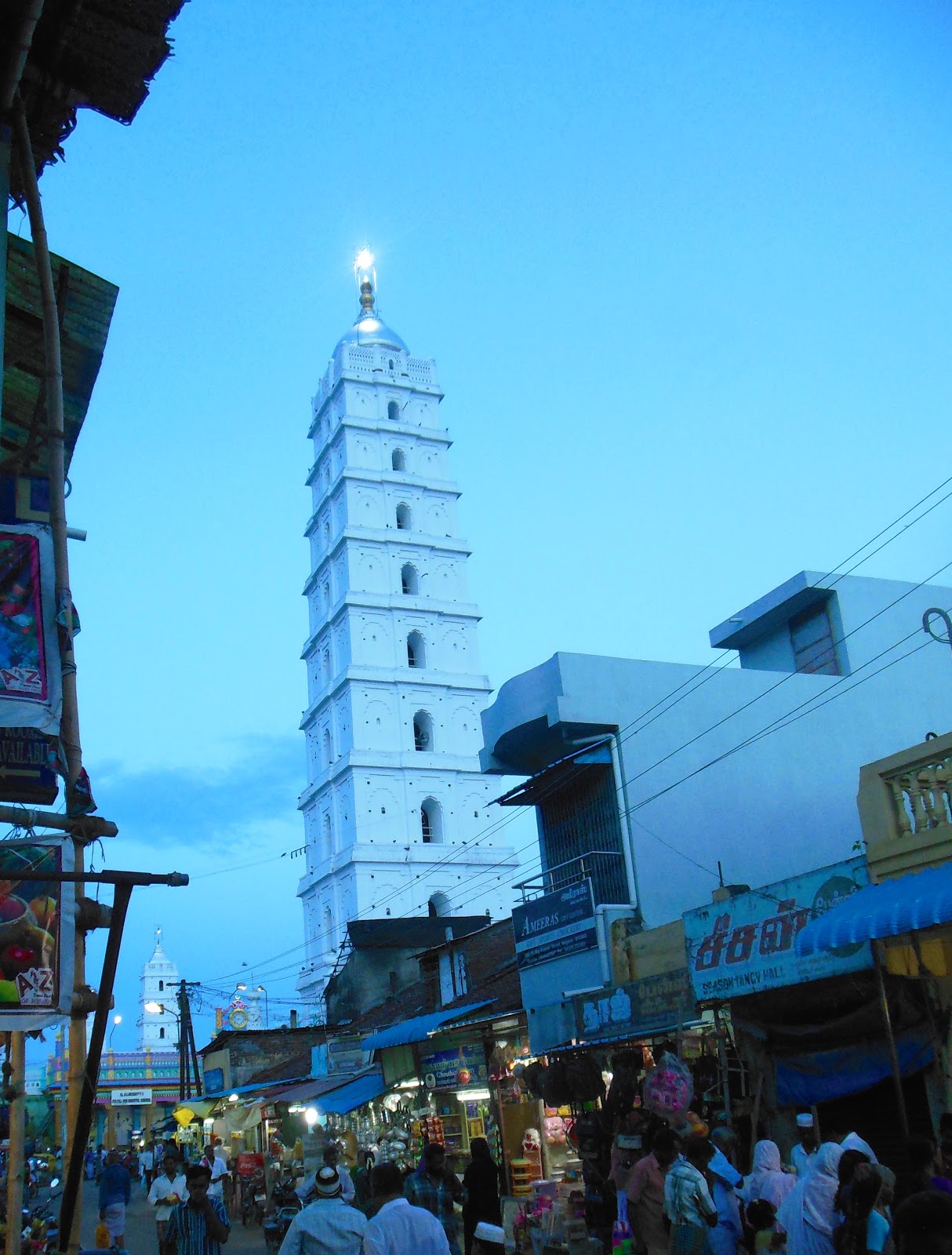
The complex is part of central Nagore rather than an isolated monument. Its courtyards, tomb precinct and minarets support an active rhythm of prayer, offerings and pilgrimage, so visitors should follow the worship flow and give way to devotees.
The complex grew around the sixteenth-century saint’s tomb, with patrons from different communities contributing to its buildings and festival life.
Use directions to Nagore Dargah in the centre of Nagore and follow local traffic signs for the active public approach. Festival diversions can move vehicle drop-off points away from the immediate precinct.
The annual Kanduri observance fills Nagore’s streets with processions and large crowds. It is culturally significant but requires substantially more time and a conservative transport plan.
Dress modestly, remove footwear where directed and ask before photographing people, prayer or the tomb precinct. Religious participation and interior access take priority over sightseeing.
For step-free access or assistance, contact the dargah office before travel and confirm the permitted drop-off, thresholds and route through the complex.
Legend & myth
Accounts of healing and protection are devotional testimony; label them as belief and never promise an outcome.
Observe worship and local practice respectfully; photography never takes priority over a service or restricted sacred space.
Read the full history of Nagore Dargah (Hazrat Syed Shahul Hameed) 120 more words
History
The complex grew around the sixteenth-century saint’s tomb, with patrons from different communities contributing to its buildings and festival life.
Read changes in masonry, enclosure, repair and visitor control as different historical layers rather than assigning the whole site to one date.
Modern lighting, barriers, ticketing and transport belong to the visitor-management history and should not be mistaken for original fabric.
Why visit
Visit one of Tamil Nadu’s best-known Sufi pilgrimage centres in its living religious setting.
Read the dargah’s minarets, courtyards and tomb precinct as additions made through centuries of patronage.
See how an Islamic shrine became a shared devotional destination for visitors from several communities.
Experience the Kanduri tradition if you welcome major crowds and plan specifically for festival conditions.