Rasipuram is a compact railway-and-bus town between Salem and Namakkal, not shorthand for the whole district. Its strongest visit pairs two living temples with a documented Valvil Ori oral tradition, an unusually photographable set of ritual and sculptural details, and the layered bun parotta closely identified with the town.
Every distance on this page begins at Rasipuram railway station, code RASP. It is a practical arrival point in the compact town centre rather than an estimated locality midpoint.
Rasipuram Municipality records 8.158 square kilometres, twenty-seven wards and 50,244 people in the 2011 census. It was constituted on 1 October 1948 and became a first-grade municipality on 22 May 1998. Those figures describe a dense service town where the station, market streets, bus stand and temples sit within a short urban circuit.
The municipality places both Salem and Namakkal about twenty-five kilometres away. Rasipuram nevertheless has its own railway station and a central bus stand, so it works as a small independent base rather than a suburb of either city.
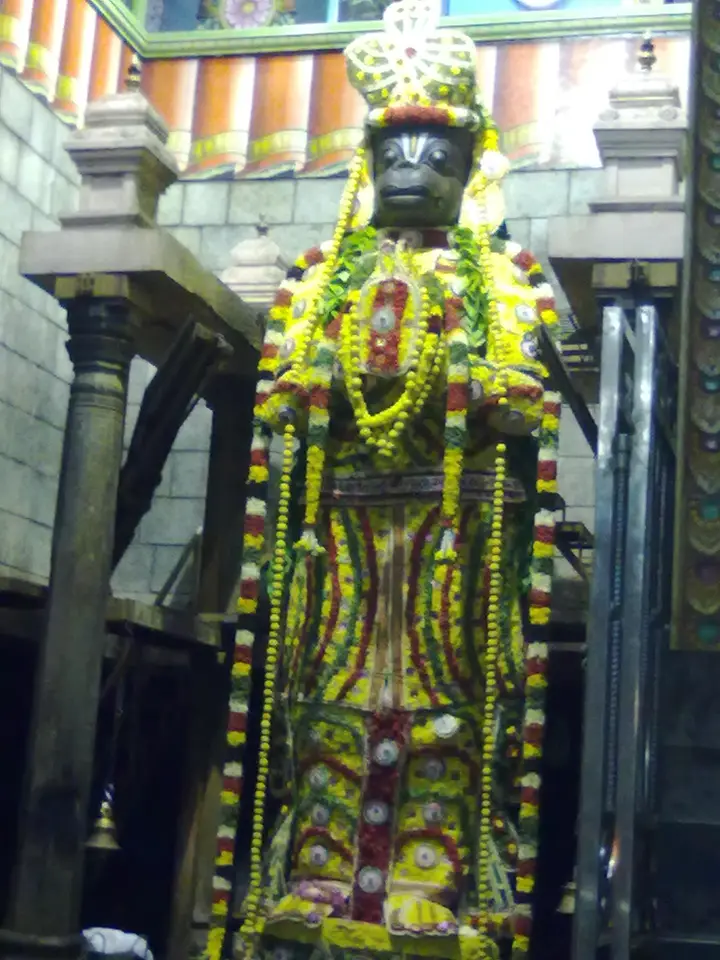
Kailasanathar is the town’s principal historical stop. The municipality calls the consort Dharma Samvarthini and explicitly presents the foundation account as oral tradition: Adhan Ori, ruler of Kolli Malai and Rasipura Nadu, hunted a boar into an ilandhai grove and stumbled upon a lingam.
That story is sacred memory, not a dated archaeological report. The honest visit keeps both registers visible: Ori’s image and the arrow-marked lingam belong to the worshipping community’s account, while the gopuram, metal Nayanmar figures, guardian sculpture and accumulated repairs are material things a visitor can examine.
The exact temple point used here comes from the geotag embedded in the opened Commons photograph of the gopuram, 11.461594, 78.183292. OSRM measured 1.40 kilometres by public roads from the station. The line is short, but town traffic, heat and broken footways make an auto sensible for many visitors.
Mariamman Temple is the closer shrine, about 1 km by road from Rasipuram railway station. It remains an active neighbourhood temple, so festival access, photography and queue patterns are set by worship rather than tourism.
The bus stand is civic history in everyday use. The municipality says it was built in 1985 on two acres with fifty bus bays, toilets, drinking water, high-mast lighting, a police outpost and cloak room. Its page also discusses a proposed replacement; a proposal is not treated here as a terminal already open.
Food supplies the least monumental and perhaps most immediate town experience. Rasipuram bun parotta is folded and cooked so its interior pulls apart in soft layers. The free photographs opened for this page show the actual bread at a Rasipuram counter, not a generic dish borrowed from another city.
A useful visit begins at the station, reaches Mariamman first, then Kailasanathar, and leaves the market and a bun-parotta stop for the return. Temple opening sessions vary and often close around midday; confirm locally rather than building the day around an unverified timetable.
Rasipuram is hot plains country. November to February is easiest for walking. In warmer months use the early morning and evening reopening, carry water and allow shade breaks. Monsoon showers can make smooth temple paving and uneven street edges slippery.
The station’s wheelchair tag says limited, not fully accessible. No continuous step-free street route or temple interior has been verified. Ask rail staff about platform assistance and contact the temple directly if thresholds, seating or vehicle access will decide the visit.
This is a one-day town, not a padded district itinerary. Kolli Hills, Namakkal fort and Tiruchengode are separate destinations. Keeping them off this card grid lets Rasipuram’s own scale, worship and food remain legible.
The name Rasipuram is sometimes allowed to disappear beneath the better-known Namakkal district label. That is a planning mistake. A district result may place a hill waterfall, a fort rock and this railway platform in one list even though each demands a different road and day. The town page stays deliberately narrow so that an arriving traveller can understand what is possible without hiring a car for a district circuit.
Read the route numbers as evidence of that scale. Mariamman is less than a kilometre from the platform and Kailasanathar is 1.40 kilometres away. Both can fit between two railway movements if the temples are open, but neither should be promised as a comfortable pavement walk. The measured road line establishes proximity; it does not manufacture shade, safe kerbs or a universally usable footway.
The railway photograph matters for more than decoration. It shows the low, functional station from which this page is measured, and the OSM object supplies the code RASP. Together they let a visitor distinguish Rasipuram from similarly named stops and give an auto driver an unambiguous collection point. Always check the live train enquiry because old civic pages preserve schedules long after service patterns change.
The bus stand tells a parallel story about scale. Fifty bays on two acres sound generous until market-day movement fills the approaches. Drinking water, toilets, high-mast lights, a cloak room and police outpost are facilities recorded by the municipality, not a guarantee that each is maintained, staffed or accessible at every hour. Inspect conditions before leaving a bag or relying on a late connection.
The proposal for a larger stand belongs in the archive of municipal ambition. It must not become a present-tense direction. Projects move, stall, change site or open under a different name; map services can display a planned label before local operations shift. Ask at the current stand where your bus actually departs and leave enough margin to change platforms or pickup points.
Kailasanathar rewards looking at relationships. The gopuram frames arrival, the Ori image embodies an oral account, the Nayanmars assemble a devotional lineage and the ash-gourd lamps show inexpensive organic material made sacred through use. No single item proves the age of the entire complex. Their value is cumulative: they demonstrate a temple repeatedly maintained, interpreted and inhabited.
The guardian with a face upon its stomach is visually arresting, but a responsible caption stops at what the opened image establishes. It does not invent a deity name or claim a doctrinal meaning from appearance alone. The same restraint applies to Moodevi behind the grille: identify the source’s description, observe the setting and seek local explanation before repeating a confident story.
The oral tradition also locates the discovery in an ilandhai grove. Ilandhai is generally the jujube tree, and the free Rasipuram photographs in this gallery show fruiting jujube within the modern town. They are contemporary botanical records, not pictures of Ori’s grove and not evidence that the present trees descend from it. Their usefulness lies precisely in keeping image and tradition adjacent without collapsing one into proof of the other.
Other opened botanical photographs record Basella and Mukia vines along Rasipuram fences. They are modest town details, not ranked attractions. Including them broadens the visual record beyond towers and food while making no claim that a visitor should trespass into a garden. Roadsides, courtyards and cultivated edges are part of the ordinary town landscape, but private boundaries remain private.
Mariamman’s full mapped name, Shri Nithya Sumangali Maariyamman Temple, distinguishes it from countless Mariamman shrines. Save that wording for directions. The photograph shows a temple integrated into a street rather than isolated in a monumental precinct. Arrive with the expectations appropriate to neighbourhood worship: limited space, changing queues, local festival priority and no guaranteed visitor service desk.
Festival days transform practical conditions. Buses may be fuller, streets may be diverted, footwear areas overflow and a five-minute approach becomes slow. The energy can be the reason to attend, but it is not automatically the best choice for somebody sensitive to crowds or needing an unobstructed entrance. A quiet weekday and a festival evening are different experiences, neither universally superior.
Bun parotta offers a useful midday interval only if a counter is actually serving. Its folds hold fat, and the salna served beside it may contain meat or share utensils even when the bread looks vegetarian. Ask direct dietary questions. The municipal directory confirms names and streets, not hygiene inspection results, menus or today’s opening hours, so every business card is written as a lead to verify rather than an endorsement.
Five of the six municipal directory entries share Cutchery Street. That clustering is useful for an exploratory food stop but should not be mistaken for five verified lodging choices. In Tamil usage “hotel” often means a restaurant. The cards therefore use address-backed Directions while refusing to promise rooms, air conditioning, toilets, card payment or step-free access that the source never stated.
Attur Road’s Ramalingam Hotel is the one directory entry away from that Cutchery Street cluster. The address is sufficient for a live map search, not for an invented pin. A destination query preserves the municipality’s exact wording and lets the map provider resolve current street data; telephone or inspect locally before making it the hinge of a meal or overnight plan.
Accessibility needs the same discipline. Wheelchair=limited on the station node tells us that somebody mapped a partial constraint, not which platform, ramp or assistance procedure works today. The temples may have thresholds, crowds and footwear practices that change a mobility plan. Contacting the station and shrine is not an empty disclaimer here; it is the only honest step before a journey dependent on level access.
A companion who can walk easily should not translate a short distance into an accessibility verdict. Heat, road camber, drainage gaps, traffic and nowhere to rest can matter more than kilometres. An auto door-to-door between station, Mariamman and Kailasanathar is a reasonable adaptation, while a visitor who needs a hoist or accessible toilet must confirm those specific requirements separately.
Photography is possible without making worship into spectacle. The selected Commons record succeeds because each image has a distinct subject: gopuram, Ori, saints, guardian, lamp or street shrine. On site, follow signs and spoken instructions, never block a circumambulatory path, and avoid photographing a person receiving worship merely because the object behind them is interesting.
A strong half-day sequence starts after breakfast at Kailasanathar, continues to Mariamman, pauses for food and returns to the station or bus stand before the hottest hours. Reverse it if a local opening check demands. The order is a planning suggestion, not a ritual rule. If either door is closed, use the time for the public streets rather than pressuring attendants to admit a tourist.
For an overnight stop, verify the nature of accommodation before arrival. The six civic directory names are valuable primary-source records but insufficient room evidence. Salem and Namakkal offer broader fallback inventories; choosing one does not diminish Rasipuram’s value as a day visit. It simply separates what the town can prove from what a traveller may need.
Departure is the final hand check. Confirm the correct RASP platform or the bus bay, keep a buffer for centre traffic and retain the Tamil town name on your phone. A page that makes arrival vivid but misses the last connection has failed at practical travel. Rasipuram’s virtue is manageability, and that depends on respecting actual service rather than an old timetable.
The municipality’s population table also rewards careful reading. Its 2011 total separates 24,922 men and 25,322 women, a small female majority. Those numbers are not a visitor attraction, but they keep the town from becoming an empty heritage backdrop. The streets and shrines serve more than fifty thousand residents whose journeys, worship and meals take priority over a photographer’s preferred angle.
Likewise, the municipal area of 8.158 square kilometres explains density without defining an exact walking boundary. Administrative polygons include residential and service streets that a visitor need not cover. The practical circuit is smaller: station, central transport, the two named temples and the Cutchery Street cluster. Compact planning is a selection from the municipality, not a claim that every ward is walkable in an afternoon.
Rasipuram’s relation to Kolli Malai belongs to history and orientation, not to a same-day promise. Ori’s title turns the visitor’s attention east towards the hill country, but the modern road into Kolli Hills has its own bends, weather and access questions. Let the oral tradition connect landscapes without using it to drag distant hill attractions into the town’s ranked cards.
The gallery’s civic school image makes a similar point. It is labelled as townscape and not offered as a place to visit. Schools require particular privacy around children, entrances and daily routines. The image can show the scale and texture of a Rasipuram institution while the guide explicitly tells visitors not to treat a campus as open sightseeing ground.
Public-space etiquette is simple: keep clear of station work, bus movements, shop deliveries and temple processions; ask before portraits; carry away waste; and spend locally without expecting every counter to perform the town’s identity. Bun parotta, the Ori account and the gopuram are entry points. The town is larger than any of them and need not stage itself for a one-day visitor.
The best result is therefore modest and specific. You leave knowing which station anchored the numbers, why two temples rather than twenty district sites define the circuit, how an oral tradition differs from an architectural date, why a municipal hotel list does not prove rooms, and what access questions remain unanswered. That is enough structure to travel safely without pretending uncertainty has disappeared.
Morning light is the practical choice for more than temperature. Streets are easier to read before the busiest commercial movement, temple stone is less punishing underfoot and a missed opening still leaves time to reverse the order. Many shrine interiors require bare feet, and sun-heated paving can become the limiting part of an otherwise short visit.
Water and toilets should be planned rather than assumed. The municipality records facilities at the bus stand, but condition and access can change. Buy sealed drinking water from a normal shop, use bins, and never leave plastic near a shrine or roadside plant. A traveller with medical needs should identify a pharmacy before the circuit instead of depending on a temple stall.
Language is unlikely to be a barrier if the destination is shown clearly. Keep the English and Tamil names, a screenshot of each temple card and station code RASP. Say “Kailasanathar kovil” or show the gopuram photograph because Shiva temples with similar names recur across Tamil Nadu. For Mariamman, the mapped Nithya Sumangali wording provides the useful distinction.
A solo visitor should return towards the station or bus stand before streets empty, particularly after an evening session. Share the vehicle number for a late pickup, keep valuables unobtrusive in festival crowds and choose a well-lit public collection point. These are ordinary small-town precautions, not a suggestion that Rasipuram is unusually unsafe.
Families can make the day easier by separating observation from obligation. Children may enjoy the railway, tower, lamps and layered bread without being pushed through a long ritual queue in heat. Older travellers may prefer an auto waiting between the shrines. Nobody needs to complete every circuit or photograph every object for the visit to count.
The town is also a lesson in source quality. A municipal page can establish civic dates, bus-stand facilities and a recognised oral tradition; an OSM object can establish a coordinate and access tag; a Commons file page can establish photographer, licence and geotag. None alone proves current opening, universal accessibility or a business’s service today.
Notice what has not been promised: no guaranteed temple timetable, no invented walk, no operational new bus stand, no packaged food tour and no room claim for an ambiguous “hotel”. Those omissions are part of useful planning. They leave space for direct confirmation and prevent a confident interface from turning an old directory into a traveller’s costly mistake.