What to expect
Highlights
- Early structural stone temple
- Muttaraiyar/Chola transition
- Narthamalai rock setting
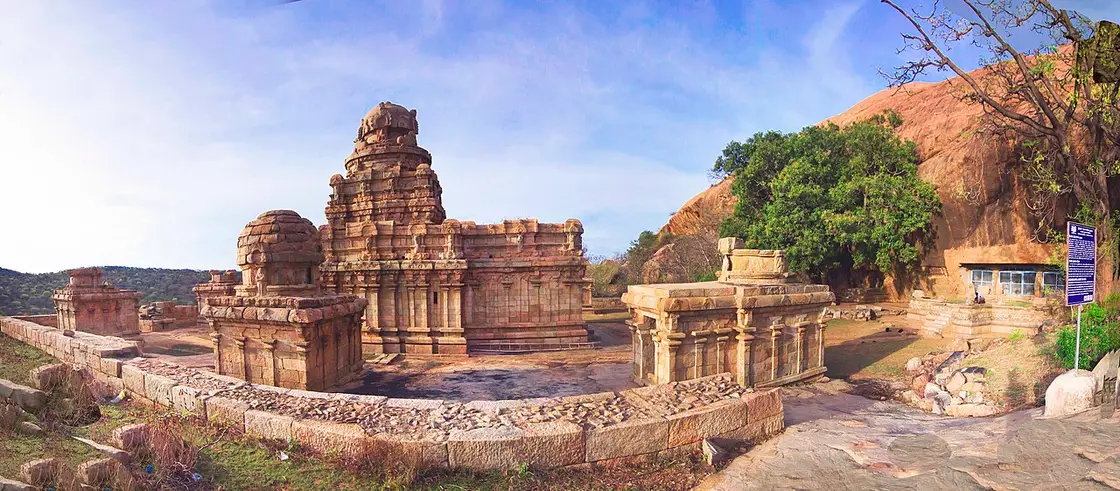
Vijayalaya Choleeswaram is Narthamalai’s early structural stone temple, notable for its compact circular inner form and dramatic rock setting.
Check entry arrangements. Ask temple staff about visitor entry, dress requirements and access to the inner shrine before you travel, especially if you are visiting as a non-Hindu.
Dress respectfully and follow the institution’s admission and photography rules.
Vijayalaya Choleeswaram is Narthamalai’s early structural stone temple, notable for its compact circular inner form and dramatic rock setting. Navigate within the Narthamalai monument route, not to a generic Viralimalai point. The page’s town grouping does not change the temple’s actual location.
The temple is associated with the Muttaraiyar-to-early-Chola transition. Attribution is more complex than its later name alone suggests.
Its structural masonry should be compared with the nearby rock-cut shrines without calling one an extension of the other.
Approach only by the maintained path, avoid leaning on walls and leave enough daylight for the descent.
For the visit itself, allow one to two hours within a wider Narthamalai visit. The best time is cool dry morning. Follow the Narthamalai protected route. Read the temple separately from nearby caves. Exposed sloping rock becomes dangerous in rain.
Cool dry morning.
Live forecast loads in your browser.
Sun and moon are calculated for this location and shown in IST. Photography windows are the hour around sunrise and sunset; the sunset bearing is degrees clockwise from true north. Moon phase is accurate to about half a day.
Verified hotels, homestays, restaurants, experiences, sights, shops and rentals around Vijayalaya Choleeswaram, Narthamalai — commission-free, with direct contact. Filter by what you need.
Verified places are being added. The category filters will fill in as approved stays, restaurants, experiences, sights, shops and nature listings go live.
List your place3 more places around Viralimalai. Open a guide to plan the visit and onward journey.
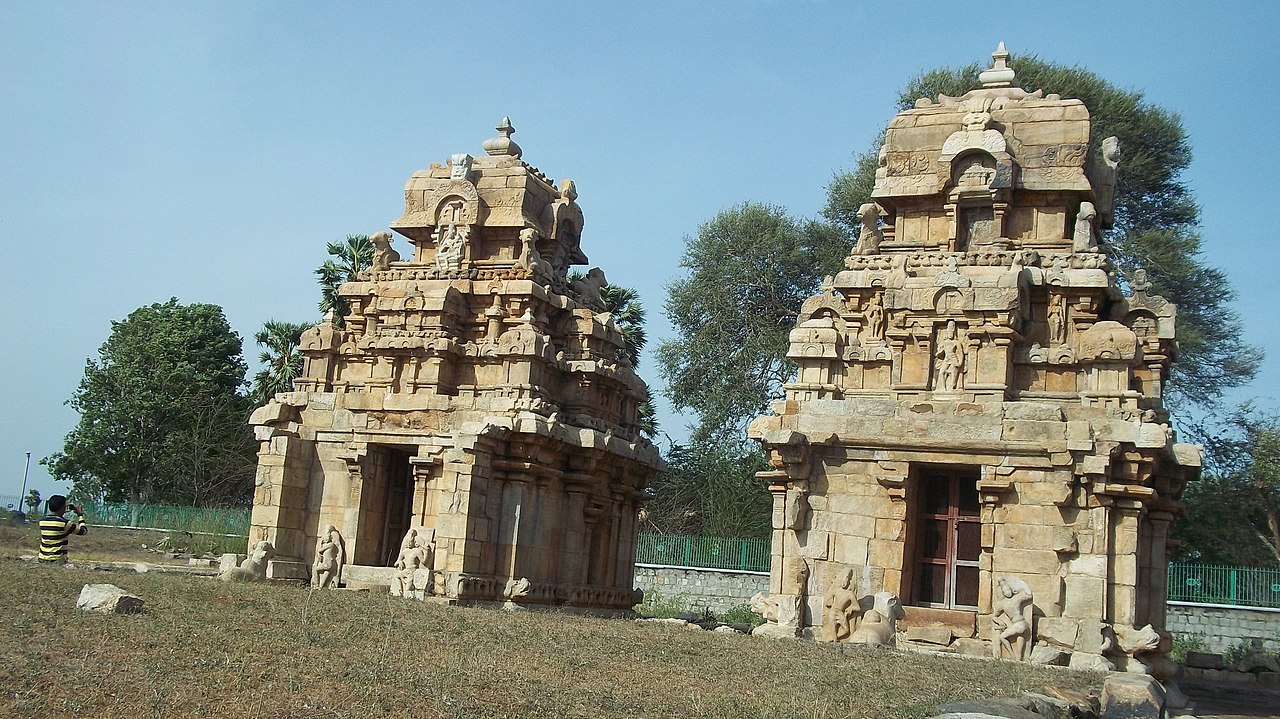
The ruined 'three-shrine' Chola-era temple built by the Irukkuvel chiefs, originally three vimanas of which two survive, prized for its refined early Chola sculpture.

A hilltop Murugan temple reached by about 210 steps, traditionally attributed to the Cholas and a well-known pilgrimage shrine in the district.
A protected peafowl habitat around Viralimalai hill where several hundred wild peacocks roam the temple hill and surrounding scrub. The birds are associated with the hilltop Murugan temple, whose vehicle is the peacock, and are locally protected. October to April is the best season to see them displaying.
Roampedia is commission-free — own or know a stay, eatery, guide or shop near Vijayalaya Choleeswaram, Narthamalai? List it and it appears here once verified.
Add a nearby businessEntry: Use authorised site arrangements.
Navigate to the Narthamalai visitor approach, not Viralimalai centre.
If you need step-free access, contact the site before travelling. Ask about a level entrance, steps along the route, the nearest drop-off point, seating and accessible toilets.
Emergency numbers are verified against official government and state tourism sources. 112 works anywhere in India.
A natural cavern in the Narthamalai hill group containing polished rock-cut stone beds where Jain ascetics practised austerities, similar to those at Sittanavasal's Ezhadippattam. The facade bears Tirthankara relief sculptures and early inscriptions, marking Narthamalai as a significant ancient Jain centre. Broken Jaina idols and further reliefs are found near the nearby Palli-k-kulam tank.
820 m · 10 min walk · straight lineA cluster of temples at the foot of Kadambarmalai hill in the Narthamalai group, distinct from the better-known Vijayalaya Choleeswaram. It includes the Kadamba Nayanar (Shiva) shrine, a shrine to the goddess Mangalambikai and another called Nagarisvaram. The complex reflects the layered Chola and Pandya religious activity across the Narthamalai hills.
3.6 km · ~9 min by auto · straight line
A natural cavern on the Sittanavasal hill with polished rock beds and Tamil-Brahmi inscriptions used by Jain ascetics, part of a Sramana pilgrimage centre active from the 1st century BCE to the 9th century CE.
5.0 km · ~13 min by auto · straight line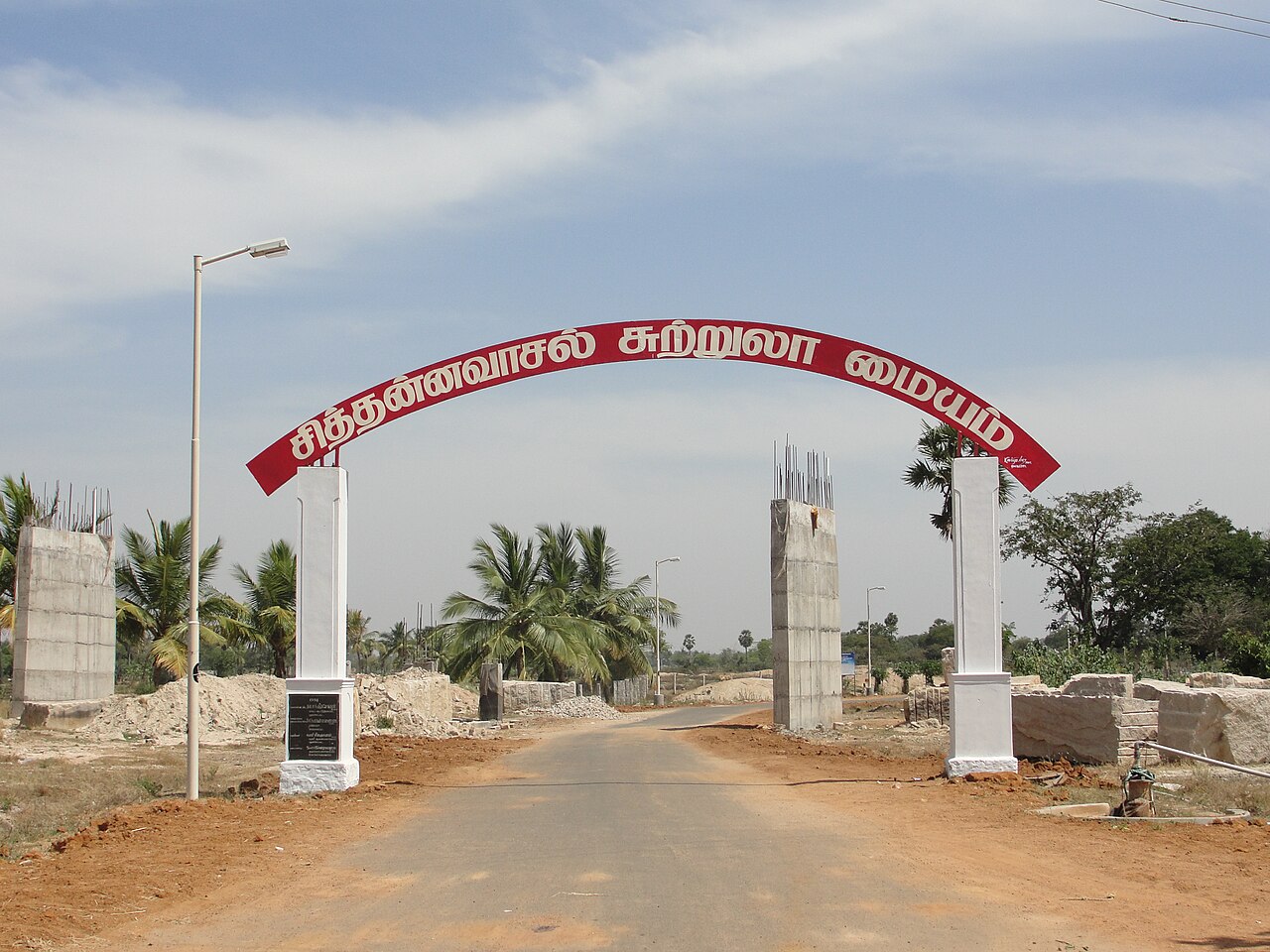
A 2nd-century Jain rock-cut cave temple famed for its Pandya-era fresco murals of a lotus pond, dancers and animals, regarded as second only to Ajanta among Indian cave paintings.
6.7 km · ~17 min by auto · straight line
A Pallava rock-cut Shiva temple carved around the mid-7th century by Mahendravarman I, with goddess Brihadambal as the tutelary deity of the Tondaiman kings of Pudukkottai.
13.4 km · ~22 min by cab · straight line
A major museum founded in 1910 with 18 galleries spanning archaeology, bronzes, sculpture, geology and anthropology, housing the former princely state's art collection.
13.7 km · ~23 min by cab · straight lineThe palace of the Thondaiman rulers of the former princely state of Pudukkottai, built in 1930 by Raja Rajagopala Thondaiman, the last monarch, in an Indo-Saracenic Dravidian style. It today houses the District Collector's office. It is the surviving royal landmark of the town's heritage core, whose planned layout was itself an early example of formal town planning in the region.
15.1 km · ~25 min by cab · straight line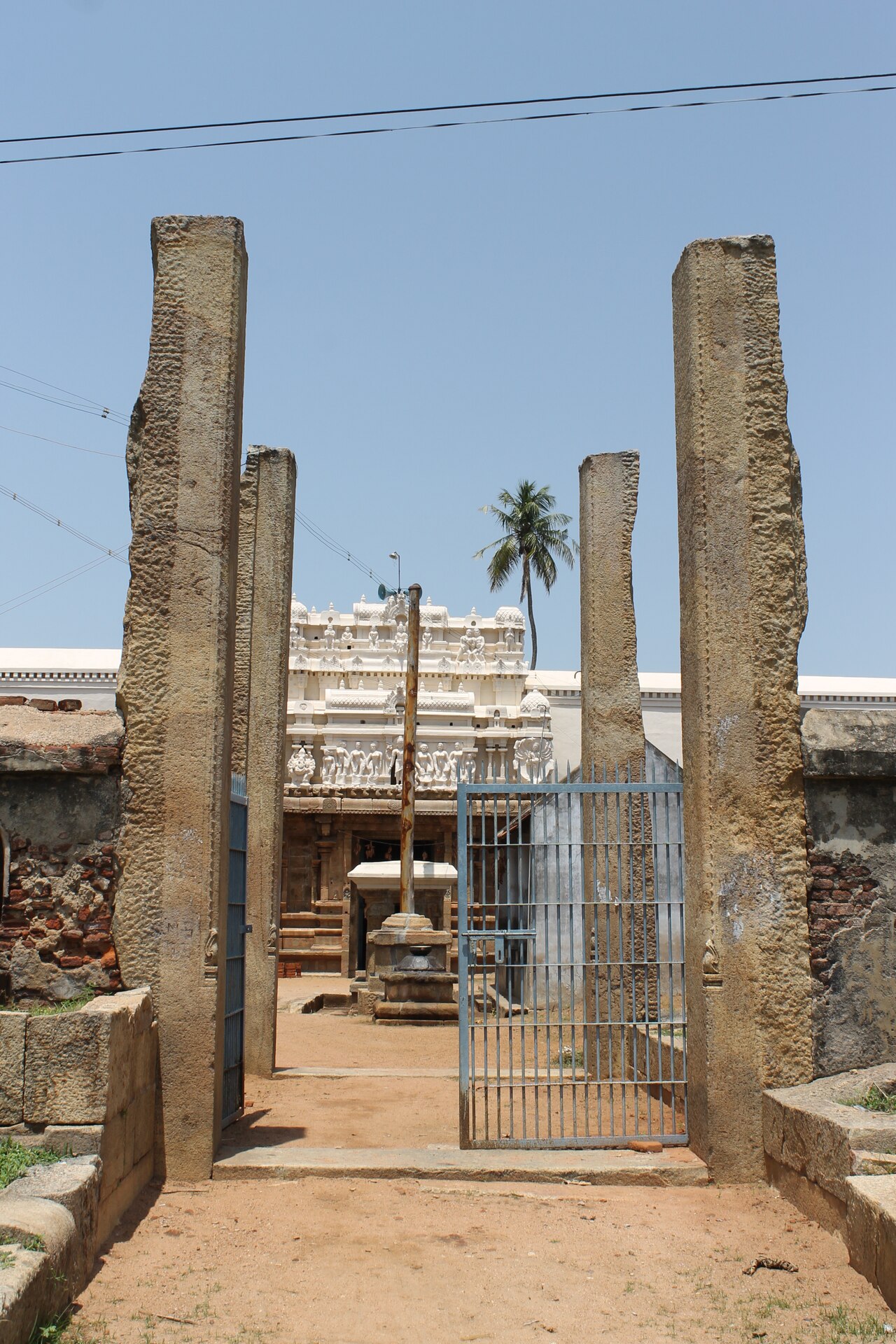
An 8th-century Muttaraiyar rock-cut Shiva cave temple with a hundred-pillared mandapa and over 60 inscriptions, prized for its early bronze images.
17.5 km · ~29 min by cab · straight line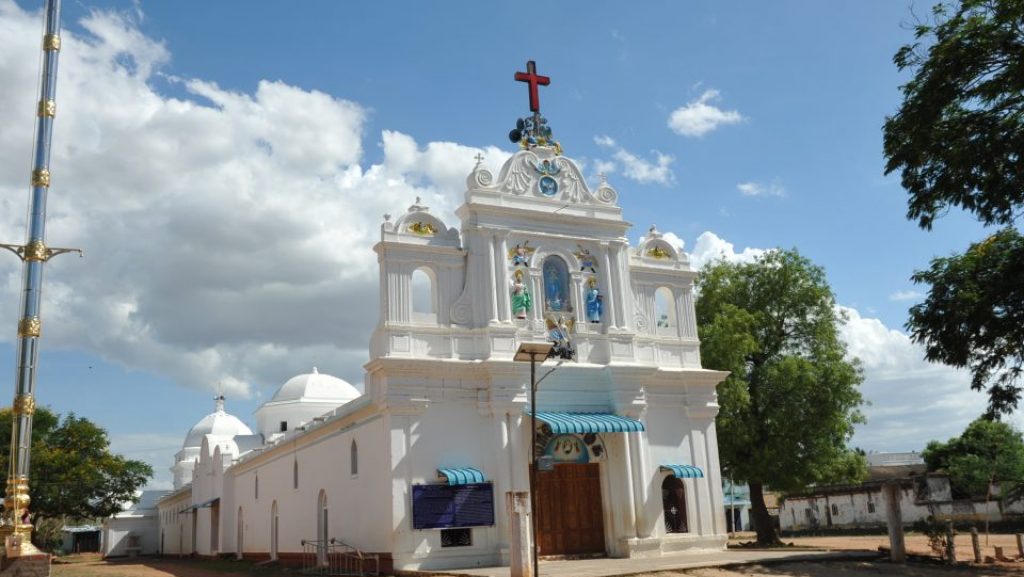
A Roman Catholic shrine dedicated to Our Lady of Good Health, first built in 1547 and rebuilt in 1747. It is associated with the Italian Jesuit missionary and Tamil scholar Constanzo Beschi (Veeramamunivar), who served here. The church is a well-known Christian pilgrimage centre with an annual September feast.
19.6 km · ~33 min by cab · straight line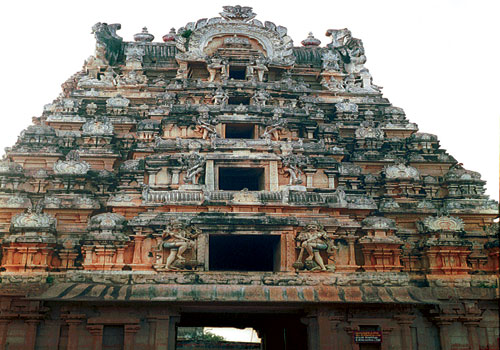
A Shiva temple where the deity is worshipped as Arangulanathar with his consort Brahadambal (Periyanayaki). It is a Vaippu Sthalam praised in the Tevaram hymns of Sambandar and is traditionally linked to the Sangam-era Chola king Karikala. The temple has a large hundred-pillar hall, and a superb Nataraja bronze from here is now displayed at the National Museum, New Delhi.
20.8 km · ~35 min by cab · straight line
A rock-cut Vishnu cave temple with a large reclining Anantapadmanabha figure, painted stucco reliefs and 10th-century inscriptions, cut into a granite hillock south of the village.
22.5 km · ~38 min by cab · straight line
An 8th-century Pallava-era rock-cut Shiva cave temple on the same Malayadipatti hillock as the Vishnu shrine, the older of the two, with carved reliefs and early inscriptions.
22.5 km · ~38 min by cab · straight lineNo. It is at Narthamalai; the URL grouping is only a travel-base classification.
Its attribution is debated and includes strong Muttaraiyar context.
Cool dry morning.
Entry: Use authorised site arrangements. Timings: Confirm current Narthamalai monument access.
Follow the Narthamalai protected route. Read the temple separately from nearby caves.
Allow one to two hours within a wider Narthamalai visit.
Nearby you can pair Aluruttimalai Jain Beds (820 m), Kadambar Malai Temple Complex (3.6 km), Ezhadippattam Jain Beds, Sittanavasal (5.0 km), Sittanavasal Cave (Arivar Koil) (6.7 km).
Exposed sloping rock becomes dangerous in rain.
We have not published a story about Vijayalaya Choleeswaram, Narthamalai itself yet. These cover Viralimalai and the wider district, with separate journeys between stops.
Route-level itineraries and practical guides for the rest of Tamil Nadu.
Photographs: RameshM (CC BY-SA 4.0). Wikimedia Commons.