Arangulanathar Temple (Haratheertheeswarar)

A Shiva temple where the deity is worshipped as Arangulanathar with his consort Brahadambal (Periyanayaki). It is a Vaippu Sthalam praised in the Tevaram hymns of Sambandar and is traditionally linked to the Sangam-era Chola king Karikala.

Arangulanathar Temple (Haratheertheeswarar), Thiruvarangulam
Practical guide

Plan Arangulanathar Temple (Haratheertheeswarar)

Who's going?Tailor Arangulanathar Temple (Haratheertheeswarar) to your trip
Typeheritage
Nearest baseThiruvarangulam
DistrictPudukkottai
Best timeChoose a cooler daylight visit and…
Time neededAllow about one to two hours at…
Places to visit3
The story

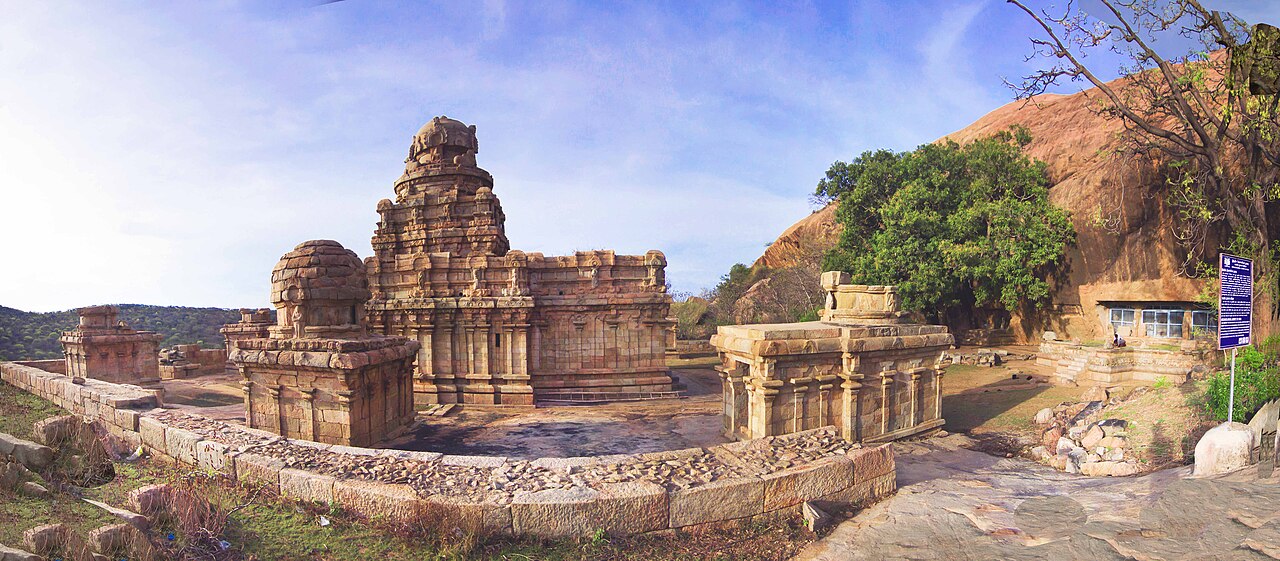
A Shiva temple where the deity is worshipped as Arangulanathar with his consort Brahadambal (Periyanayaki). It is a Vaippu Sthalam praised in the Tevaram hymns of Sambandar and is traditionally linked to the Sangam-era Chola king Karikala. The temple has a large hundred-pillar hall, and a superb Nataraja bronze from here is now displayed at the National Museum, New Delhi.

The story of Arangulanathar Temple (Haratheertheeswarar)

For Arangulanathar Temple (Haratheertheeswarar), a Shiva temple where the deity is worshipped as Arangulanathar with his consort Brahadambal (Periyanayaki). For Arangulanathar Temple (Haratheertheeswarar), it is a Vaippu Sthalam praised in the Tevaram hymns of Sambandar and is traditionally linked to the Sangam-era Chola king Karikala. For Arangulanathar Temple (Haratheertheeswarar), the temple has a large hundred-pillar hall, and a superb Nataraja bronze from here is now displayed at the National Museum, New Delhi. For Arangulanathar Temple (Haratheertheeswarar), this is a living place of worship, so its architecture and history should be read without turning devotional tradition into proven chronology.

Approach Arangulanathar Temple (Haratheertheeswarar) from Thiruvarangulam with enough daylight to identify the recognised entrance and return by the same lawful route. For Arangulanathar Temple (Haratheertheeswarar), check current opening, local transport and any permission at the source responsible for the site; an old listing cannot confirm what is operating today.

Inside Arangulanathar Temple (Haratheertheeswarar), follow the current worship circuit, remove footwear where directed and keep the sanctum approach clear. For Arangulanathar Temple (Haratheertheeswarar), ask before photographing interiors, icons, ceremonies or people; festival crowds and midday closures can make the visit very different from an ordinary weekday.

For Arangulanathar Temple (Haratheertheeswarar), allow roughly an hour on site, then adjust for queues, walking and the return to Thiruvarangulam. For Arangulanathar Temple (Haratheertheeswarar), pair it only with nearby stops that leave a safe daylight margin, and verify food, toilets and accessible drop-off separately when those are essential.
Read the full history of Arangulanathar Temple (Haratheertheeswarar) 55 more words

Why visit

Visit Arangulanathar Temple (Haratheertheeswarar) for the specific feature and local history described on this page, rather than as a generic stop in Pudukkottai.

The most useful visit combines close observation at Arangulanathar Temple (Haratheertheeswarar) with a realistic return plan through Thiruvarangulam; it does not depend on an unverified ticket, unrestricted access or a promised experience.

What to expect

Highlights

  • Read the defining shrine and living worship tradition of Arangulanathar Temple (Haratheertheeswarar).
  • Understand how Arangulanathar Temple (Haratheertheeswarar) belongs to Thiruvarangulam and Pudukkottai rather than treating it as an isolated map pin.
  • Separate documented evidence from local tradition, later alteration and unsupported online claims.
Getting there

How to visit

  • Reach Thiruvarangulam, then enter Arangulanathar Temple (Haratheertheeswarar) through the public worship entrance indicated locally.
  • Plan around the shrine's published worship sessions and allow for footwear storage, security checks and festival queues.
  • Keep the return journey separate from darshan time, especially for an evening visit.
Timing

Best time

Choose a cooler daylight visit and verify the current operating or worship session for Arangulanathar Temple (Haratheertheeswarar); festivals, maintenance and weather can change access.

Weather in Arangulanathar Temple (Haratheertheeswarar)Seasonal guide

Live forecast loads in your browser.

Today at Arangulanathar Temple (Haratheertheeswarar)
Sunrise6:03 am
Sunset5:57 pm
Golden hour best light4:57 pm–5:57 pm
Blue hour after sunset5:57 pm–6:22 pm
Sun sets toward compass bearingW · 261°
Moon tonight🌒 Waxing crescent · 24%

Sun and moon are calculated for this location and shown in IST. Photography windows are the hour around sunrise and sunset; the sunset bearing is degrees clockwise from true north. Moon phase is accurate to about half a day.

Visitor notes

  • Confirm the exact visitor entrance, current access and last safe return from Arangulanathar Temple (Haratheertheeswarar) on the day of travel.
  • Ask before photographing interiors, worship, residents or working areas at Arangulanathar Temple (Haratheertheeswarar).
Safety

Good to know

  • Obey barriers and staff instructions at Arangulanathar Temple (Haratheertheeswarar); do not climb structures, enter restricted ground or block worship and working access.
  • Use suitable footwear, carry water and keep enough daylight for the return to Thiruvarangulam.
Stay · eat · do · rent · see · shop

Stays, food & things to do near Arangulanathar Temple (Haratheertheeswarar)

Verified hotels, homestays, restaurants, experiences, sights, shops and rentals around Arangulanathar Temple (Haratheertheeswarar) — commission-free, with direct contact. Filter by what you need.

Verified inventory is being added here.

Verified places are being added. The category filters will fill in as approved stays, restaurants, experiences, sights, shops and nature listings go live.

List your place
Ranked guides

Top experiences around Thiruvarangulam

2 more places around Thiruvarangulam. Open a guide to plan the visit and onward journey.

A
Aranthangi Fort
Place
heritageAranthangi Fort

A ruined fort built by the Tondaiman chieftains who ruled the area as feudatories under the Vijayanagara and Pandya kingdoms around the 16th-17th century. Its most distinctive feature is that the outer ramparts were built largely of mud rather than stone or brick. Little of the interior survives, but the earthen walls make it an unusual example of regional fort construction.

V
Vijaya Raghunatha Thondaman Palace (Pudukkottai Palace)
Place
heritageVijaya Raghunatha Thondaman Palace (Pudukkottai Palace)

6.6 km · ~17 min by auto

The palace of the Thondaiman rulers of the former princely state of Pudukkottai, built in 1930 by Raja Rajagopala Thondaiman, the last monarch, in an Indo-Saracenic Dravidian style. It today houses the District Collector's office. It is the surviving royal landmark of the town's heritage core, whose planned layout was itself an early example of formal town planning in the region.

Roampedia is commission-free — own or know a stay, eatery, guide or shop near Arangulanathar Temple (Haratheertheeswarar)? List it and it appears here once verified.

Add a nearby business
Before you go

Arangulanathar Temple (Haratheertheeswarar) — at a glance

TimingsUse Arangulanathar Temple (Haratheertheeswarar)'s published worship schedule and expect festival days to alter queues or visitor movement.
Best timePrefer a cooler daylight session and recheck current access on the day.
Getting here

How to reach Arangulanathar Temple (Haratheertheeswarar)

Reach Thiruvarangulam, follow the map link to Arangulanathar Temple (Haratheertheeswarar), and use the entrance indicated for worshippers and visitors.

Do

Things to do

  • Identify the feature that gives Arangulanathar Temple (Haratheertheeswarar) its visitor value.
  • Read the site in relation to Thiruvarangulam and Pudukkottai.
  • Distinguish documented history from living tradition and later alteration.
  • Combine it only with genuinely nearby stops that preserve a safe return margin.
Plan

Good to know

  • Save the route offline before leaving Thiruvarangulam.
  • Carry water and sun or rain protection.
  • Accept an exterior-only visit when current access does not permit entry.
Facilities

On site

  • Use refreshments and toilets in Thiruvarangulam before the visit if needed, and respect Arangulanathar Temple (Haratheertheeswarar)'s rules for food and drinking water in worship areas.
  • Use the shrine office or staff on duty for darshan, offerings or accessibility assistance.
Stay safe

Safety

  • Follow current site, worship and security instructions.
  • Do not cross barriers, climb structures or enter unstable, private or restricted ground.
  • Keep enough daylight and transport margin for the return to Thiruvarangulam.
Getting around Arangulanathar Temple (Haratheertheeswarar)

If you need step-free access, contact the site before travelling. Ask about a level entrance, steps along the route, the nearest drop-off point, seating and accessible toilets.

If you need help at Arangulanathar Temple (Haratheertheeswarar)
112All emergencies (police · fire · medical)The single number to call in any emergency (ERSS).

Emergency numbers are verified against official government and state tourism sources. 112 works anywhere in India.

Nearby

What’s near Arangulanathar Temple (Haratheertheeswarar)

V
Vijaya Raghunatha Thondaman Palace (Pudukkottai Palace)
Place
heritageVijaya Raghunatha Thondaman Palace (Pudukkottai Palace)

The palace of the Thondaiman rulers of the former princely state of Pudukkottai, built in 1930 by Raja Rajagopala Thondaiman, the last monarch, in an Indo-Saracenic Dravidian style. It today houses the District Collector's office. It is the surviving royal landmark of the town's heritage core, whose planned layout was itself an early example of formal town planning in the region.

6.6 km · ~17 min by auto · straight line
museumGovernment Museum, Pudukkottai

A major museum founded in 1910 with 18 galleries spanning archaeology, bronzes, sculpture, geology and anthropology, housing the former princely state's art collection.

8.9 km · ~15 min by cab · straight line
templeKokarneswarar Temple, Thirukokarnam

A Pallava rock-cut Shiva temple carved around the mid-7th century by Mahendravarman I, with goddess Brihadambal as the tutelary deity of the Tondaiman kings of Pudukkottai.

8.9 km · ~15 min by cab · straight line
heritageThirumayam Fort

A seventeenth-century hill fort above Thirumayam, with a separate visitor route from the living temples below.

18.0 km · ~30 min by cab · straight line
caveSathyagirisvarar Rock-Cut Cave Temple, Thirumayam

A Shiva rock-cut cave temple hewn from the same hill as the Vishnu shrine, dated to the 8th-9th century and noted for sculptures of Mahishasuramardini and the Sapta Matrikas.

18.1 km · ~30 min by cab · straight line
templeSathyamurthi Perumal Temple, Thirumayam

A rock-cut Vishnu temple within Thirumayam Fort, home to one of the largest reclining-Vishnu (Anantasayana) rock-cut sculptures in India.

18.2 km · ~30 min by cab · straight line
heritageEzhadippattam Jain Beds, Sittanavasal

A natural cavern on the Sittanavasal hill with polished rock beds and Tamil-Brahmi inscriptions used by Jain ascetics, part of a Sramana pilgrimage centre active from the 1st century BCE to the 9th century CE.

19.5 km · ~33 min by cab · straight line
caveSittanavasal Cave (Arivar Koil)

A 2nd-century Jain rock-cut cave temple famed for its Pandya-era fresco murals of a lotus pond, dancers and animals, regarded as second only to Ajanta among Indian cave paintings.

19.6 km · ~33 min by cab · straight line
K
Kadambar Malai Temple Complex
Place
heritageKadambar Malai Temple Complex

A cluster of temples at the foot of Kadambarmalai hill in the Narthamalai group, distinct from the better-known Vijayalaya Choleeswaram. It includes the Kadamba Nayanar (Shiva) shrine, a shrine to the goddess Mangalambikai and another called Nagarisvaram. The complex reflects the layered Chola and Pandya religious activity across the Narthamalai hills.

20.2 km · ~34 min by cab · straight line
templeVijayalaya Choleeswaram, Narthamalai

An early-medieval structural Shiva temple in the Narthamalai monument landscape, set on an exposed rock slope.

20.8 km · ~35 min by cab · straight line
A
Aluruttimalai Jain Beds
Place
heritageAluruttimalai Jain Beds

A natural cavern in the Narthamalai hill group containing polished rock-cut stone beds where Jain ascetics practised austerities, similar to those at Sittanavasal's Ezhadippattam. The facade bears Tirthankara relief sculptures and early inscriptions, marking Narthamalai as a significant ancient Jain centre. Broken Jaina idols and further reliefs are found near the nearby Palli-k-kulam tank.

20.8 km · ~35 min by cab · straight line
templeThirukkattalai Sundareswarar Temple

A 9th-century Shiva temple attributed to Aditya Chola I, one of the earliest structural (as opposed to rock-cut) temples in the region, with fine sculptural panels on all four vimana faces.

25.1 km · ~42 min by cab · straight line

All 3 places to visit in Thiruvarangulam →

On the map

Where Arangulanathar Temple (Haratheertheeswarar) is

Good to know

Arangulanathar Temple (Haratheertheeswarar) — frequently asked

What should I verify before visiting Arangulanathar Temple (Haratheertheeswarar)?

Confirm the current public entrance, opening session, permission or ticket rule and return transport from Thiruvarangulam. Site management and local notices take priority over an undated listing.

How much time should I allow for Arangulanathar Temple (Haratheertheeswarar)?

Allow about an hour at the site, plus the complete approach, any worship or security queue and a comfortable daylight margin for returning to Thiruvarangulam.

When is the best time to visit Arangulanathar Temple (Haratheertheeswarar)?

Choose a cooler daylight visit and verify the current operating or worship session for Arangulanathar Temple (Haratheertheeswarar); festivals, maintenance and weather can change access.

What are the entry fee and timings at Arangulanathar Temple (Haratheertheeswarar)?

Timings: Use Arangulanathar Temple (Haratheertheeswarar)'s published worship schedule and expect festival days to alter queues or visitor movement.

How do I reach Arangulanathar Temple (Haratheertheeswarar)?

Reach Thiruvarangulam, then enter Arangulanathar Temple (Haratheertheeswarar) through the public worship entrance indicated locally. Plan around the shrine's published worship sessions and allow for footwear storage, security checks and festival queues. Keep the return journey separate from darshan time, especially for an evening visit.

How much time do I need for Arangulanathar Temple (Haratheertheeswarar)?

Allow about one to two hours at Arangulanathar Temple (Haratheertheeswarar), plus the complete approach, any queue and the return to Thiruvarangulam.

What else is near Arangulanathar Temple (Haratheertheeswarar)?

Nearby you can pair Vijaya Raghunatha Thondaman Palace (Pudukkottai Palace) (6.6 km), Government Museum, Pudukkottai (8.9 km), Kokarneswarar Temple, Thirukokarnam (8.9 km), Thirumayam Fort (18.0 km).

What should I know before visiting Arangulanathar Temple (Haratheertheeswarar)?

Obey barriers and staff instructions at Arangulanathar Temple (Haratheertheeswarar); do not climb structures, enter restricted ground or block worship and working access. Use suitable footwear, carry water and keep enough daylight for the return to Thiruvarangulam.

Read before you go

Arangulanathar Temple (Haratheertheeswarar) guides, stories & itineraries

Stories & history of Arangulanathar Temple (Haratheertheeswarar)

Written about Arangulanathar Temple (Haratheertheeswarar) itself — its history, its legends and the arguments about them.

Around Thiruvarangulam

These reads cover nearby destinations, each with its own arrival point and visit arrangements.

Tamil Nadu-wide guides & itineraries

Route-level itineraries and practical guides for the rest of Tamil Nadu.

See all 17 Pudukkottai guides & stories →

Image credits

Photographs: Govind india (CC BY-SA 3.0). Wikimedia Commons.